We have a new paper out today in Perspectives on Psychological Science!
"Flexible Cultural Learning Through Action Coordination"
https://t.co/7R6Ae3pZJJ
Link to preprint and 🧵 in the QT from first author @matcharbonneau1
Our results indicate that LLMs, particularly GPT-4, show impressive performance on standardised tests of Theory of Mind, but that they also show key differences in how they appear to behave 7/7
Our follow-up experiments indicated that GPT's poor performance was driven by an overly conservative stance as it claimed uncertainty despite being able to generate correct answers when probed (5/7)
Very pleased to see this out now Open Access in Nature Human Behaviour
We investigated how well different LLMs performed on tests of Theory of Mind and compared their results against human performance (1/7)
Systematically testing language models on a broad battery of Theory of Mind tasks with comparison to human data, a study by @jamesstrachan et al. demonstrates human-like performance by AI chatbots such as GPT-4. @ASTOUND_project
https://t.co/mHrcFYZ5ew
GPT-3.5 also performed at or only slightly below human levels on most tests, while LLaMA2-70B performed below human levels
The only task where this pattern didn't hold was the faux pas, where GPT models performed significantly worse than humans while LLaMA did better (4/7)
Humans (unsurprisingly) found more complicated tasks more challenging than simpler tasks
What was more surprising was how well the LLMs did. Particularly GPT-4, which performed significantly better than humans on 3/5 tests (irony, hinting, Strange Stories, 3/7)
We tested a broad range of Theory of Mind tests, including false belief, irony comprehension, faux pas, hinting, and the Strange Stories
We also made sure to test humans and LLMs in as similar a way as possible to ensure a species-fair comparison of their performance (2/7)
Excited to share the first paper out of my PhD, now published @CognitionJourn! The joint outcome of work with David Dignath and Günther Knoblich.
https://t.co/tQS0BdhbxF
We find new evidence that co-actors represent joint actions on a group level. WE > ME.
Thread: 1/
I am very excited to share with you the news that our book ‘The Evolution of Techniques: Rigidity and Flexibility in Use, Transmission, and Innovation’ is coming out in exactly 2 months.
https://t.co/iyehWl6bvX
1/5
As we move into 2024, time for some shameless self-promotion. Check out our paper in Perspectives on Psychological Science:
"Flexible Cultural Learning Through Action Coordination"
Paper: https://t.co/1koWyEpc88
Preprint: https://t.co/ZaKlYnXXp3
🧵👇 1/10
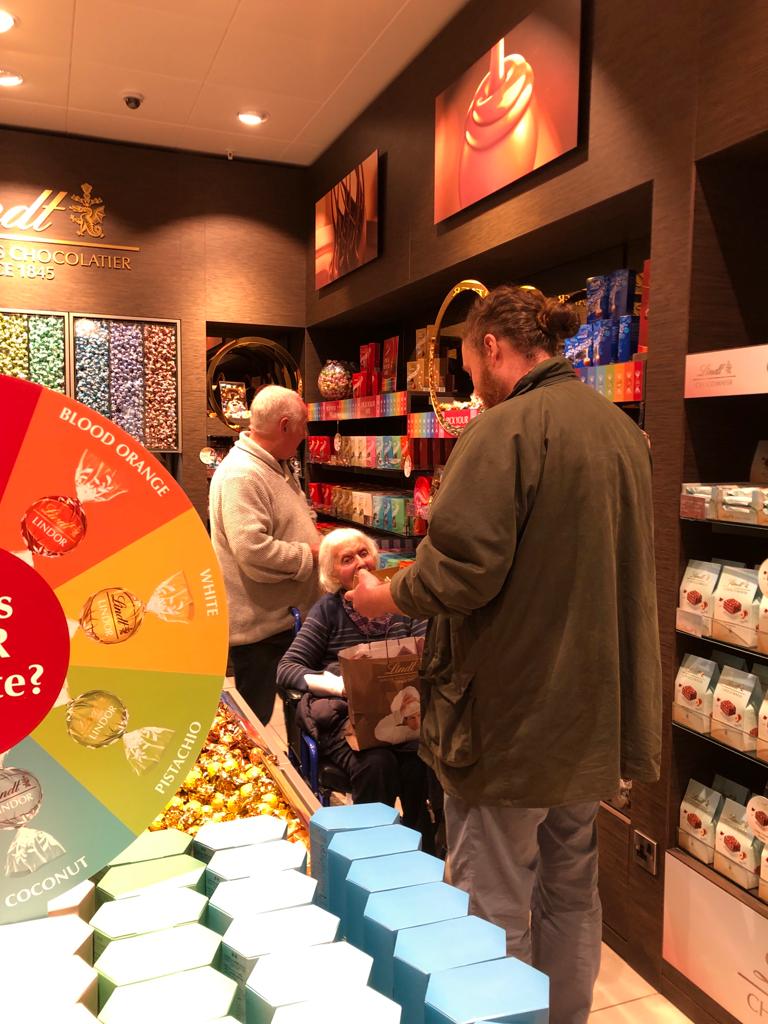
Huge thanks to @Lindt and the team at @GloucesterQuays who made my Granny's 100th birthday special with a surprise gift of 100 of her favourite white chocolates 💜
Here she is picking out some additional decoy chocolates to protect her new stash
Quote of the Day: "If I'd known being 100 was this fun I'd have done it ten years ago."