Avi Wigderson is the only person in history to have won both a Turing Award (computer science) and Abel Prize (math). I interviewed him all about his field. We discussed:
• His intuition on a proof of P vs NP
• Why we use SAT solvers for most NP problems
• Zero knowledge proofs and their impact
• Quantum computation and implications
• Math and computer science's relationship
Where to watch:
• YouTube: https://t.co/zViqAulFCo
• Spotify: https://t.co/iat08Xob17
• Apple Podcasts: https://t.co/jOYDGtGVnt
• Transcript: https://t.co/k4zS7yOhnw
Thank you to this episode's sponsors for supporting my work:
• WorkOS: makes your app Enterprise Ready with easy to use APIs to add SSO, SCIM, RBAC, and more in just a few lines of code, check them out at https://t.co/y8noBzFEem
Timestamps:
00:00 - Intro
01:08 - P vs NP
14:51 - What if you relaxed correctness
25:38 - Why NP complete problems are equivalent
30:33 - Space vs time complexity
43:06 - Why people use SAT solvers
45:53 - Randomness is a resource
55:48 - Randomness depends on computational power
01:21:20 - Zero knowledge proofs and their significance
01:38:30 - Quantum computation and why it matters
01:56:24 - Math vs computer science
02:08:16 - Major breakthroughs and his experience
02:12:31 - Advice for his younger self
02:14:48 - Outro
Attention @arxiv authors: Our Code of Conduct states that by signing your name as an author of a paper, each author takes full responsibility for all its contents, irrespective of how the contents were generated. 1/
Excited to see my student’s work on Flux Matching out. It turns out you can learn a much broader class of vector fields with the data distribution as stationary (not just the score). This lets you enforce useful properties like fast mixing, and it already works on high-dimensional image datasets!
Ten years in academia and the best part has not been what many value most ie freedom to pursue your ideas. It’s experiencing your students grow and go on to incredible trajectories.
What I’ve come to know about myself is that I value permanence, presence, and people. And for all the illusions that institutions, titles, awards etc offer, none at all come close to this: watching a human absorb, even in tiny amounts, the care and effort you’ve put into trying your best to just be there for them.
I'm excited to be at #ICLR2026 this week presenting joint work with Elif Ertekin, Peter Orbanz, and @ryan_p_adams on "A Single Architecture for Representing Invariance Under Any Space Group." (1/3)
The workshop will highlight both foundational advances and real-world applications in domains where online experimentation is costly, unsafe, or infeasible, including scientific discovery, engineering design, healthcare, education, recommender systems, and beyond.
We’re hiring!
Oregon State University is recruiting a Tenure-Track Faculty Position in Robotics.
https://t.co/G0KNti8tT2
Hard to beat the Pacific Northwest + excellent robotics graduate program combo.
Come to our @RealAAAI AAAI-2026 tutorial tomorrow morning.
Title: Black-Box Optimization from Offline Datasets
Date and Time: Jan 21 @ 8:30am in Room Opal 107
Slides: https://t.co/pNmI4iouVZ
w/ Azza @azza_fadhel,Aryan @deshwal_aryan,Nghia @htnghia1187
check out our new paper on adaptively allocating Monte Carlo samples of MOF-adsorbate configurations for efficient, multi-fidelity computational screening of MOFs for an adsorption property using molecular simulations.
we view each MOF as a slot machine, then apply top-K arm identification algorithms, developed for the multi-armed bandit problem in reinforcement learning, to sequentially and adaptively allocate the Monte Carlo samples among the MOFs, in a data-driven manner, to obtain the most accurate top-K subset under a fixed sample budget. we propose our own heuristic, narrowing exploration.
🙏 led by my PhD student Qia Ke, co-advised by @janadoppa, @scobo06, @huazheng_wang.
https://t.co/PbvFrTtF16
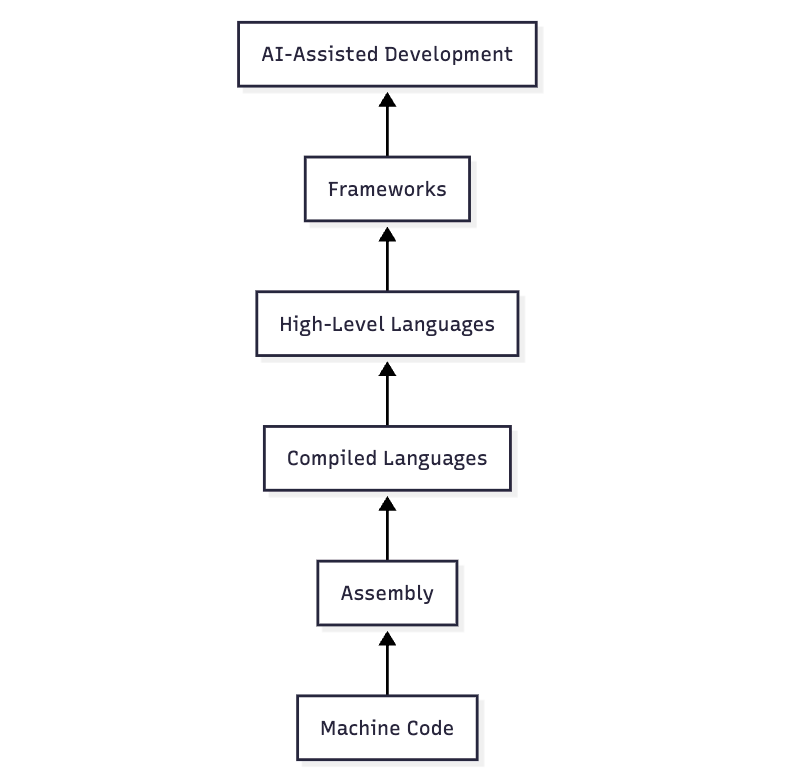
Today's conversations about AI-assisted programming are strikingly similar to those from decades ago about the choice between low-level languages like C versus high-level languages like Python. I was in college back then and some of our professors reassured us that the same issues had come up in the assembly-vs-compiled-languages debate from their own student days!
(If I were to guess, the switch from machine code to assembly even earlier must have led to similar discussions as well.)
The trade-off is always the same: productivity versus control. And the challenge is how to switch to the new paradigm in a way that enhances your skills (at least the ones you care about) instead of offloading too much and letting your skills atrophy.
Some approaches prove too hasty. Vibe coding is turning out to be a dead end because it offloads too much, just as WYSIWYG editors were a dead end for building web apps. But that doesn't mean we were forced to stick to raw HTML/JS: frameworks turned out to be the way forward.
When a new paradigm comes along, it takes months if not years of practice to figure out how to make it work for you. There are always many people dismissing the new thing too quickly. I was one! There are some embarrassing mailing list posts from the early 2000s in which I complained about Python and kids who can't code like real programmers do 🤦
While it's good to be open-minded, I'm not saying everyone needs to jump on the bandwagon. After all, low-level programming languages haven't gone away.
Of course, some people claim that AI is unlike previous waves of automation and can replace programmers. Maybe. The reason I disagree — and see AI as parallel to previous waves of productivity improvements in software engineering — is fourfold. (1) It's a matter of accountability, not just capability. (2) Writing the code was never the bottleneck. (3) I think we're underestimating the ability of experts to stay on top of even rapid AI capability increases by using these tools to dramatically expand what they can build, how well, and how quickly. (4) As these productivity improvements take shape, the potential growth in _demand_ for software is practically infinite, unlike trades where there is a fixed amount of work that needs to get done. For example, the idea that a car would contain ~100 million lines of code would have seemed head-explodingly implausible in the early days of programming.
Many people have observed that software seems to be one of the only fields that is undergoing a rapid transformation due to AI. The usual reason they give is that capability improvements in AI coding have been particularly rapid. I think this is only part of the story. The bigger factor is structural. Software has a history of repeatedly undergoing seismic shifts in the technologies of production, so it has never had time or the cultural inclination to ossify institutional processes around particular ways of doing things.