Activist: "Every cow adds carbon to the atmosphere."
Farmer: "Only if the total number of cows is increasing."
Activist: "What?"
Farmer: "Stable populations are carbon neutral. Methane breaks down in twelve years back to CO2. Same CO2 the grass absorbed last year."
Activist: "But it's still emissions..."
Farmer: "It's a cycle. Carbon goes: grass to cow to methane to CO2 to grass. Round and round."
Activist: "That's not how it works."
Farmer: "That's exactly how the biogenic carbon cycle works."
Activist: "I've never heard of that."
Farmer: "Because admitting ruminants are climate neutral doesn't sell plant-based products."
Activist: "You're making this up."
Farmer: "Published research. Look up 'biogenic carbon cycle.' I'll wait."
This is fascinating... the HEIGHT of the ceiling in the room you're working in has a DIRECT impact on how creative you are
It's called the Cathedral Effect
How it works: Your brain borrows metaphors from the physical world (space is one of the strongest)
When a room feels tall and open, your mind unconsciously associates that with freedom and possibility - you zoom OUT
When a room feels tight or enclosed, your mind goes into precision mode… attention narrows. You notice typos, spot mistakes, and hone in on details - you zoom IN
Researchers found that people in high-ceiling rooms perform better on creativity. People in low-ceiling rooms perform better on detail orientation and error detection
Churches and museums have soaring ceilings - meant to inspire awe. Libraries and war rooms are tighter - meant for concentration
Startup brainstorms love lofts, and accounting teams love small rooms with doors
Even coffee shops do this. The ones designed for deep work tend to be lower and quieter. The ones designed for conversation tend to feel more open
So if you’re doing creative stuff - writing, designing, brainstorming - do it in a LARGE room with high ceilings. Then move to a smaller room to edit and proofread.
Marriage tip: ❤️
Keep in-laws, friends, family & colleagues OUT of your marriage.
It’s smart to lean into your parents for wisdom AT TIMES.
However, no one gets a VOTE BUT YOU TWO!
•Be United as a team always.
•Never argue & share details with others.
Keep it in house!
TeaSwap army is eager to showcase the importance of TeaSwap to the world.
To do that, we're hosting a $20 giveaway for the best TeaSwap meme!
The winner will be determined by the number of likes their meme receives.
This is from The Tonight Show with Johnny Carson aired on May 20th, 1977.
Carl Sagan says something very important, a strong message that didn't lose any validity since then.
🚜🚨Pas op voor framing van de boerenprotesten.
Als de boerenprotesten worden doorgezet en het hele land plat komt te liggen, zullen gevestigde politiek en mainstream media het proberen te doen voorkomen alsof de boeren de voedselzekerheid bedreigen door distributiecentra te blokkeren en dat het hun schuld is als u vertraging oploopt omdat de wegen door hen geblokkeerd zijn.
Trap daar niet in: het is juist de zelfbenoemde elite die met haar aanval op de boeren de voedselzekerheid bedreigt. Sterker nog, zij stuurt bewust aan op voedselschaarste.
De boeren proberen met hun protest juist te voorkomen dat dit lukt. Ze verdedigen niet alleen hun eigen bedrijf en voortbestaan maar ook onze voedselzekerheid. Niet voor niets: “no farmers, no food”.
We zouden alleen om die reden al massaal achter de boeren moeten staan. Een beetje vertraging of even vaststaan op de weg is niets in vergelijking met wat ons te wachten staat als de boeren niet succesvol zijn in hun acties en dus langzaam zullen verdwijnen uit ons land.
De boeren verdienen AL onze steun. Blijf dit onthouden, wat de gevestigde politiek en mainstream media ons ook wijs gaan willen maken.
The more absurd, the more “impossible” the question, the more profound the answers.
Take, for instance, a question that investor Peter Thiel likes to ask himself and others: “If you have a 10-year plan of how to get [somewhere], you should ask: Why can’t you do this in 6 months?”
For purposes of illustration here, I might reword that to: “What might you do to accomplish your 10-year goals in the next 6 months, if you had a gun against your head?”
Now, let’s pause. Do I expect you to take 10 seconds to ponder this and then magically accomplish 10 years’ worth of dreams in the next few months? No, I don’t.
But I do expect that the question will productively break your mind, like a butterfly shattering a chrysalis to emerge with new capabilities.
The “normal” systems you have in place, the social rules you’ve forced upon yourself, the standard frameworks—they don’t work when answering a question like this.
You are forced to shed artificial constraints, like shedding a skin, to realize that you had the ability to renegotiate your reality all along. It just takes practice.
My suggestion is that you spend real time with the questions you find most ridiculous. Thirty minutes of stream-of-consciousness journaling could change your life.
On top of that, while the world is a gold mine, you need to go digging in other people’s heads to unearth riches. Questions are your pickaxes and competitive advantage.
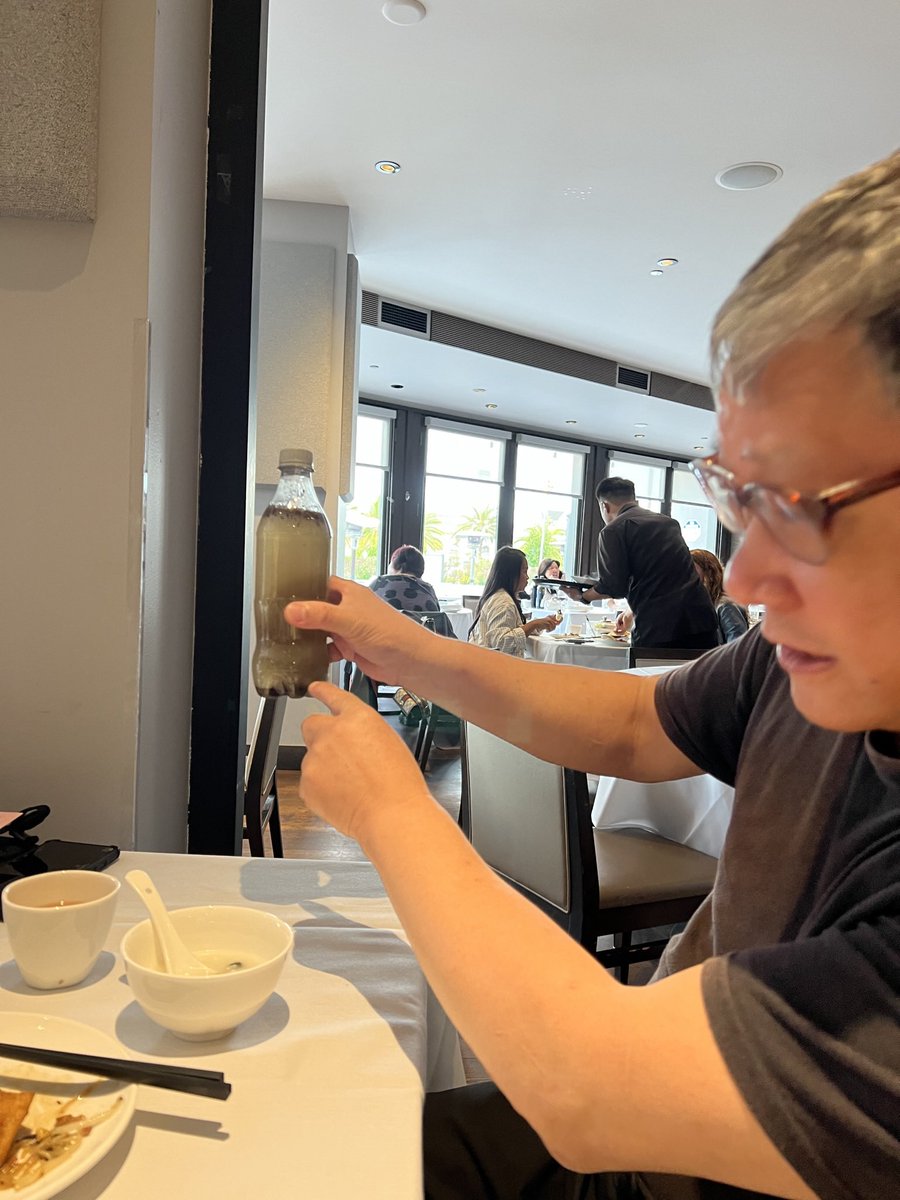
For my birthday this year, my dad gifted me a dirty bottle of water. Not kidding.
In the past he’s gifted me: a first aid kit, pepper spray, an encyclopedia, a key chain, dedicated a book he wrote to me, etc. good ol dad gifts.
He told me this years gift was extra special as no money could possibly buy it: a valuable life lesson. A shaken dirty bottle of water symbolizes life when you’re flustered. Everything appears dirty. But when the mind settles, dirt only represents less than 10% of the bottle. It’s important to maintain perspective.
Later that weekend I took the bottle to the ocean and poured it back in - sharing a lesson with him in the process: “You are not a drop in the ocean, you are the ocean in a drop.”
In effect, I one-upped his cliche 😌 the point of this post is that I am very obviously the child of this man.
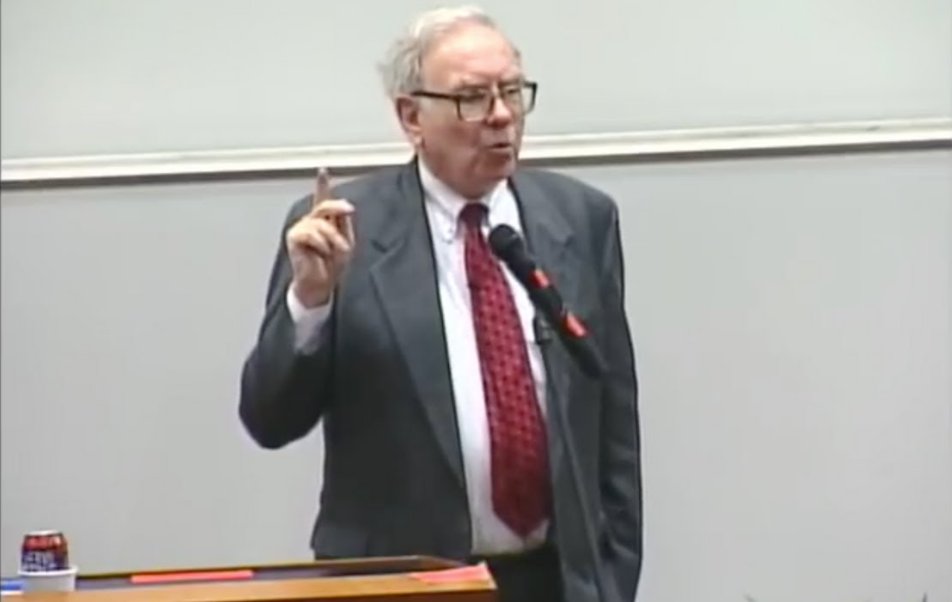
In 2001, Warren Buffett gave a talk at the University of Georgia.
He asked them the most Warren Buffett question ever:
• If you could invest in a friend and get 10% of their income for life -- who would you pick?
Once the students answered the question, he then asked this:
• Why would you invest in that person?
• What character traits do they have?
Now they have a list of character traits to adopt.
Shortly after this, Buffett asked:
If you could short a friend's earnings, who would you pick and why?
Now you have a list of character traits to avoid.
----
1. Do not think this thought experiment is only about money.
You can use it for whatever currency you value.
E.g. Happiness coin
If you could get 10% of a friend's happiness, who would you invest in and why?
If you could short someone's happiness, who would you pick and why?
You can run the same thought experiment with Fitness coin, Friendship coin, Romance coin, etc`
2. This thought experiment is genius because it hacks a bug in life's video game:
Humans are terrible at self-awareness.
But we are great at spotting things in other people.
E.g. If your friend is in the wrong relationship, you can realize in 10 minutes what may take them 10 years.
Daniel Kahneman summarised his book on cognitive biases with the following:
“The premise of this book is that it is easier to recognize other people’s mistakes than our own.” - Daniel Kahneman
3. Nuance - It has to be purely from merit.
Buffett says it can't be because someone will inherit a large sum from their parents.
It has to be based on their behavior.
E.g. If you want 10% of someone's fitness coin, it's not because of incredible genetics -- is because of the actions they take.
Jackie Chan and his daughter crying while watching some of his old movie scenes is the most wholesome thing you’ll watch today.
Thanks for our childhood legend ❤️
I asked ChatGPT "What does love look like?"
Then, I prompted Midjourney with its responses.
So let's /imagine {"What does love look like?"}
Here are 9 results.