You can’t defend what you can’t see.
Reaper AI continuously maps exposed identities, leaked data, and reconnaissance signals across your organization.
Early access → https://t.co/55LwbRKEai
Kernel is a residency for technologists pursuing high-quality work – from research to production – in crypto & beyond.
We offer:
▷ A technical & philosophical culture
▷ Accountability, refinement, & distribution
▷ A network of unusually talented peers
KB12 apps are open. Apply early by 12/31.
https://t.co/ezZ9cWqlx8
The $GBM Initial Distribution Auction is LIVE on @base
Bid to win $GBM token bundles or earn up to 10% in USDC every time you get outbid.
Experience a new kind of token launch where everybody wins!
https://t.co/HcPhN8VuBX
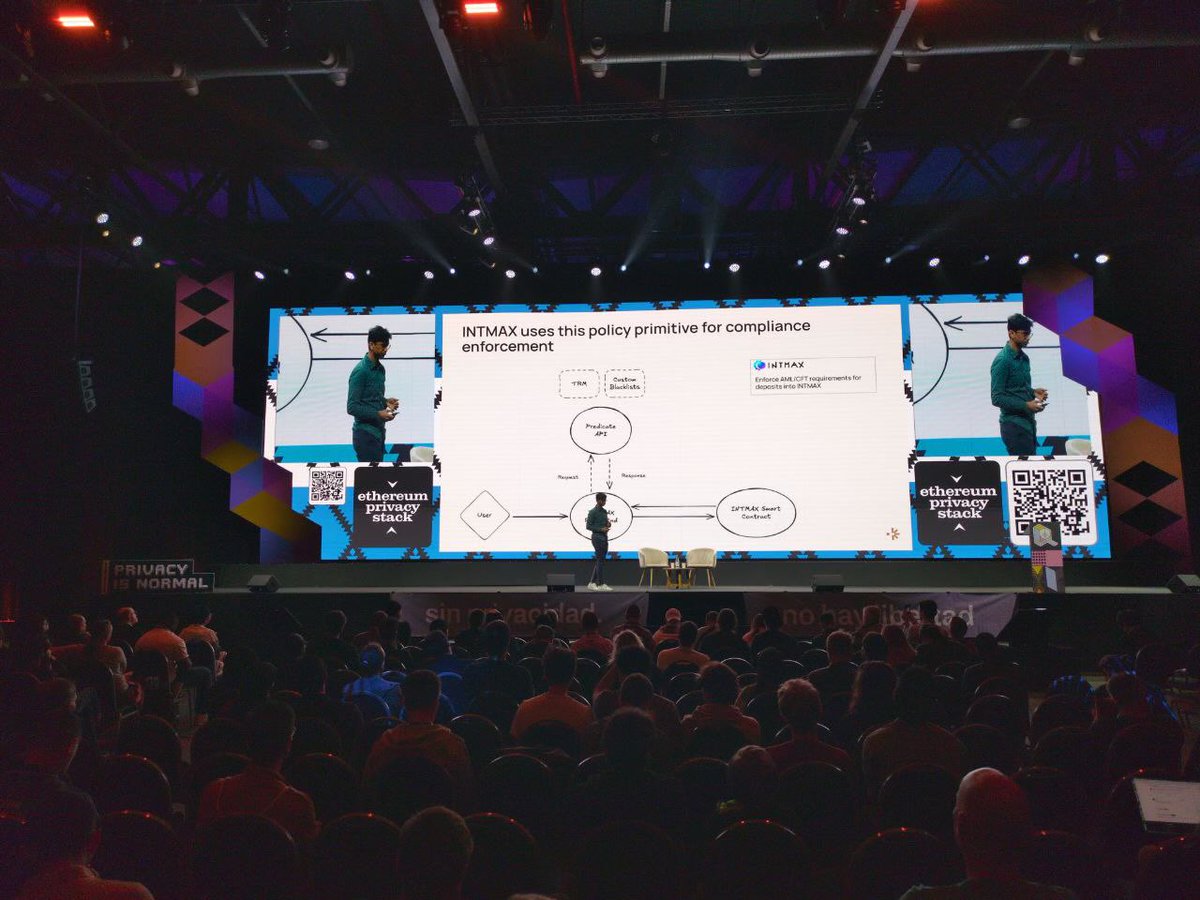
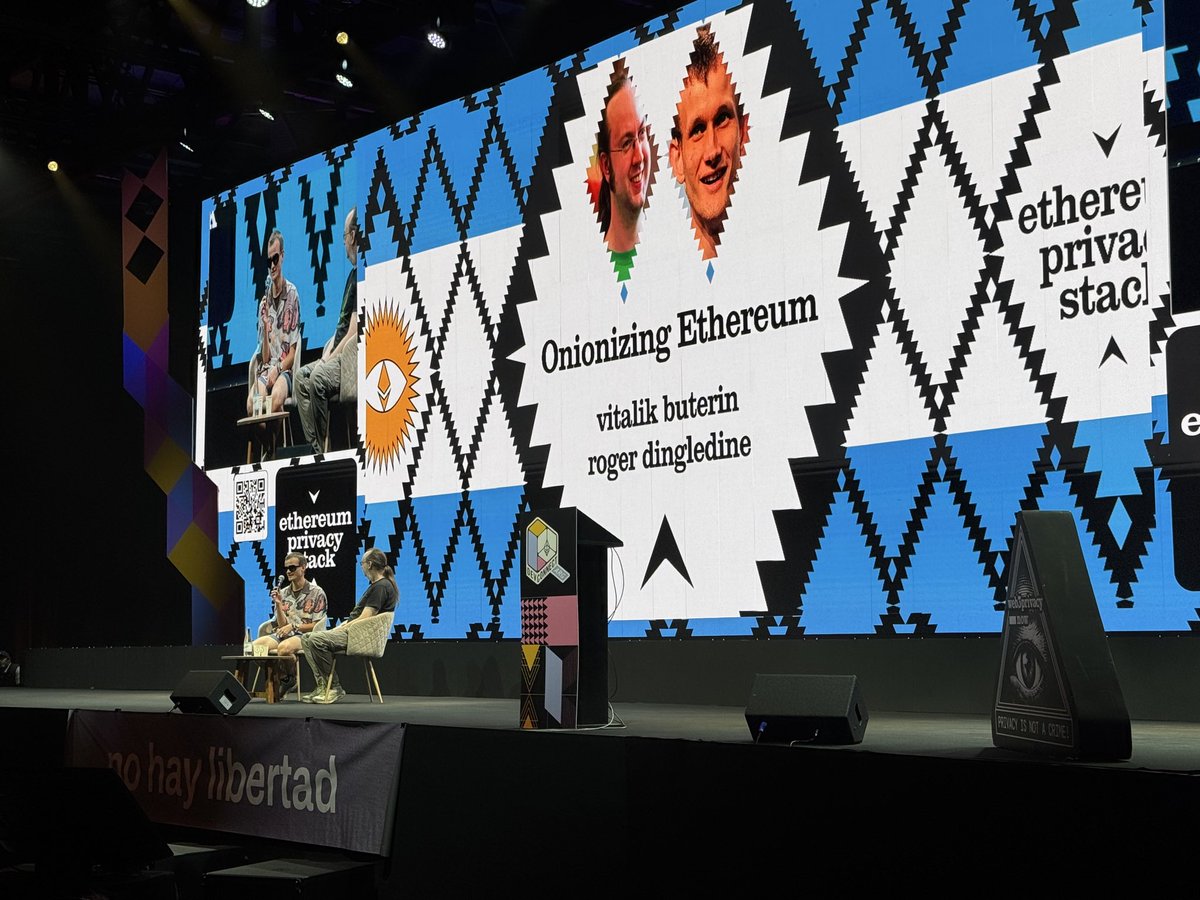
Never would have expected I’d speak on privacy and compliance just before @VitalikButerin. Scaling Ethereum from @Celo years ago to Predicate today.
Also shout out to @intmaxIO on this slide
For the first time, we can converse with computers about our intents.
@serensandikci and @hyperseref (co-founders of @indexnetwork_) shared their vision for the first intent graph for social coordination.
It works like this:
► People express intents in natural language ("find: others learning modular arithmetic, founders who like jazz, investors exploring ZK")
► Intents are stored privately (and contextually)
► AI agents ("context brokers") recommend mutual matches, in the "fastest" routes
► Agents stake financial claims on predictions – correct matches get rewarded, wrong ones lose stake
The theory is contextual integrity in a noisy web. A middleware layer for social intent fulfillment. A private discovery engine for finding your people.
They’re looking for community ecosystem partners and hiring AI and full-stack engineers to bring Index to life. Curious interns also welcome.
Say hello: [email protected].
Prediction markets were the first experiment in monetizing belief.
Intuition goes beyond binary/narrowly defined info into general information markets.
Think obsidian with bonding curves. This is the most exciting attempt at on-chain reputation I've seen.
Welcome to Season 1 of the Intuition Airdrop.
Airdrop Claim link will go live at UTC 10:00, along with claiming.
Read our post below to get prepared.
https://t.co/m3vIA7XTx5
$TRUST
👁️
We’ve seen it again this week: liquidity shocks, exploit contagion, and protocols forced into suspension because the verification layer is missing.
When data inputs, oracles, or curator incentives aren’t verifiable, the entire yield layer becomes an opaque risk-transfer game.
The truth is, the fragility we’re seeing isn’t unique to any specific protocol like @MorphoLabs or @eulerfinance. When visibility into positions, liabilities, and incentives depends on trust instead of proof, markets drift into opacity.
That’s the paradox of DeFi today: code is open, but information still isn’t. Yields are composable, but risk isn’t traceable.
That’s literally why we've built @AccountableData, to replace probabilistic trust with verifiable truth. To ensure solvency, collateral, and incentives are verifiable continuously.
After building for over 3 years, we’re proud to announce our $3.2M seed round led by Tim Draper and joined by Borderless, Semantic, Smape, VeryEarly, Reverie, and angels including Anatoly Yakovenko and Joe McCann.
See our feature on CNBC: https://t.co/GrysYyq5NP
Friday’s market shock highlighted a structural weakness across digital finance: no one has real-time visibility into solvency. Here's a quick POV from the trenches, building infrastructure to solve this in a comprehensive way and hopefully soon set a new industry standard:
Protocols, oracles and risk systems all operate on delayed or assumed data about who holds what and who owes what. When prices dislocate, that lack of visibility turns volatility into systemic risk.
The problem isn’t the technology that moves assets btw - it’s the data that describes them. Current oracles quote market prices but cannot verify what those prices are backed by. For asset-backed tokens like stablecoins, RWAs, and liquid-staking assets, value depends on reserves, counterparties and redemption mechanics - details that price feeds don’t capture. So as a result, markets can react to noise while staying blind to real exposures.
What’s needed is continuous verification of financial truth = assets and liabilities proven cryptographically as they change.
Proof-of-Reserves was the first step in that direction, showing that assets exist and can be verified on-chain. But solvency depends on more than assets; it depends on obligations.
So what PoR should evolve into is Proof of Solvency, a model that extends to the full balance sheet, confirming that what’s held exceeds what’s owed and doing so in real time.
This shift matters A LOT because it turns solvency from an assumption into a verifiable data stream. Oracles can reference proven balance-sheet facts, risk engines can adjust exposure dynamically and auditors or regulators can see integrity without pausing the system.
That’s the direction @AccountableData is building toward: continuous verification as infrastructure. When markets can rely on live, verifiable solvency data instead of static disclosures, stability stops being a matter of luck or timing and becomes a property of the system itself.
Volatility will always be part of markets. But not being able to see what’s real doesn’t have to be 🤝