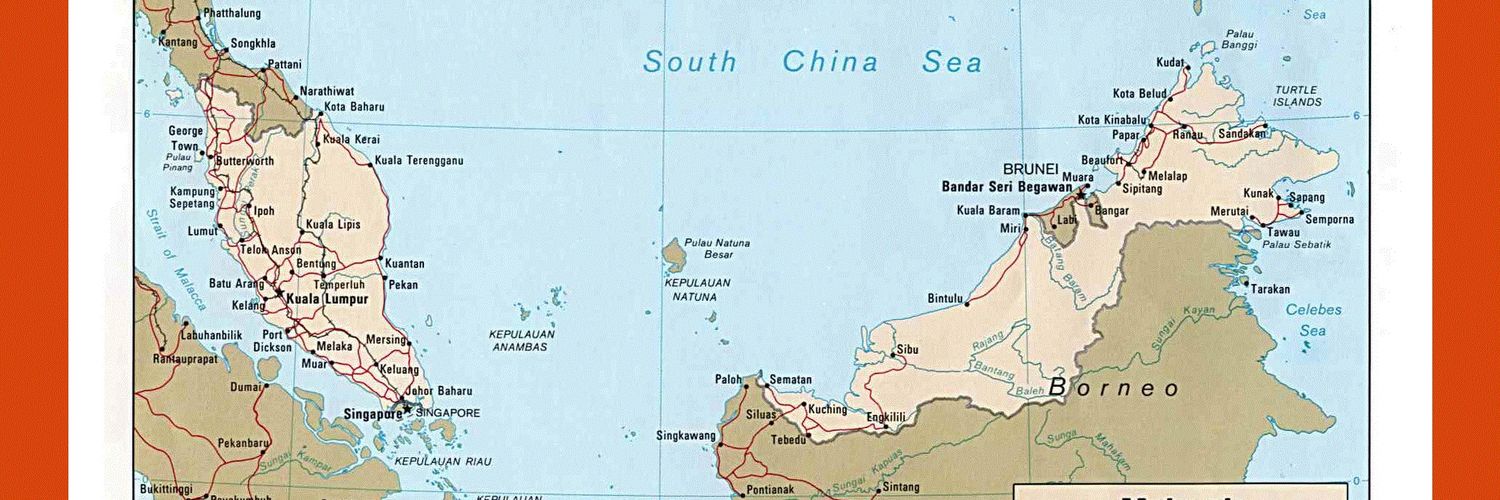
This is how a nation's leader should speak - for his/her people. It's a delicate art of balancing national self-interest with diplomacy.
“If you impose a condition on the [US] company that it cannot export to China, fair. We will observe that because that is the agreement you have with your company,” he [Anwar] said.
“But that will not preclude our decision to work with the Chinese, with Chinese investments and with Chinese companies making their own decisions."
Any foreign investor demanding dedicated government oversight to safeguard its supply chain would have to foot the bill as well, the prime minister said.
“You want our help? Yes. You pay. We are getting smart as a business,” he added.
Malaysia’s Anwar says easier to deal with China than US amid tech tensions
https://t.co/p6qgEOXiFT via @scmpnews
BREAKING: On 24 November, Malaysia said it would advise every data centre in the country against hosting 7 companies.
One had prepaid about $4.2 billion for computing power across Southeast Asia, according to Reuters.
Another had pledged computer equipment to that customer.
The customer was Apex Enterprise Solutions, Alibaba’s Singapore subsidiary.
A person familiar with the arrangement told Reuters that Apex paid Megaspeed and other providers.
How much of the $4.2 billion went to Megaspeed remains undisclosed.
The company that pledged the equipment was Speedmatrix, Megaspeed’s Malaysian subsidiary.
Under an agreement dated 18th June 2024, Apex had a claim on specified computer and network equipment, intellectual property and related rights if Speedmatrix failed to meet certain obligations.
The Straits Times found the pledge still active in Malaysian corporate records on 11 November 2026.
The filings cited by Reuters do not say how much it secured.
Speedmatrix is a tenant.
Malaysia’s trade ministry says it brings its own servers and AI chips into data centres run by other companies.
Those landlords are the ones Malaysia now plans to advise against renting space or providing services to Speedmatrix and the six other firms.
The ministry announced no eviction or shutdown.
The US Commerce Department named all seven in a rule filed on 23 November.
It cited the risk that advanced computing equipment could reach unauthorised users or be put to unauthorised uses.
Covered shipments involving the listed companies require a licence.
Commerce will presume applications should be denied.
Alibaba disputes the listing and says Apex never diverted advanced chips subject to US export restrictions.
On 24th November, Singapore’s prime minister, Lawrence Wong, said the NVIDIA chips Megaspeed bought never entered Singapore.
His government was still working with US officials to establish where the end users were.
In Malaysia, the trade minister told The Star that his ministry was still gathering details from data centre operators about their customers based in China.
Two days earlier, the Wall Street Journal had traced at least $300 million in hardware containing NVIDIA chips to a Malaysian unit of Novagate Cloud.
People familiar with the business told the paper that the team behind Megaspeed now runs Novagate.
Its reporting leaves open who, if anyone, rented those machines.
Novagate did not respond to the paper and is absent from the seven names in the US filing.
Apex bought time on working computers. Its equipment pledge could help it recover money if its supplier defaults.
Even if Apex recovered every asset it was promised, it would still need a data centre willing to house and power the machines.
My father passed away & our family is currently arranging funeral details. Will share more infomation as things are confirmed.
Ayah saya, A. Samad Said telah meninggal dunia & keluarga kami sedang menguruskan pengebumian Allahyarham. Saya akan berkongsi maklumat nanti.
Az Samad
The man who predicted the 2008 crash explains, in plain English, exactly how his Big Short bet worked, and why you didn't even need to own the bonds
@realsteveeisman
Good news on paper. But let's not pretend money and power suddenly stopped working. Where there's enough money involved, there's always a loophole, a middleman or a little something happening under the table.
A ban is one thing. Enforcing it is another.
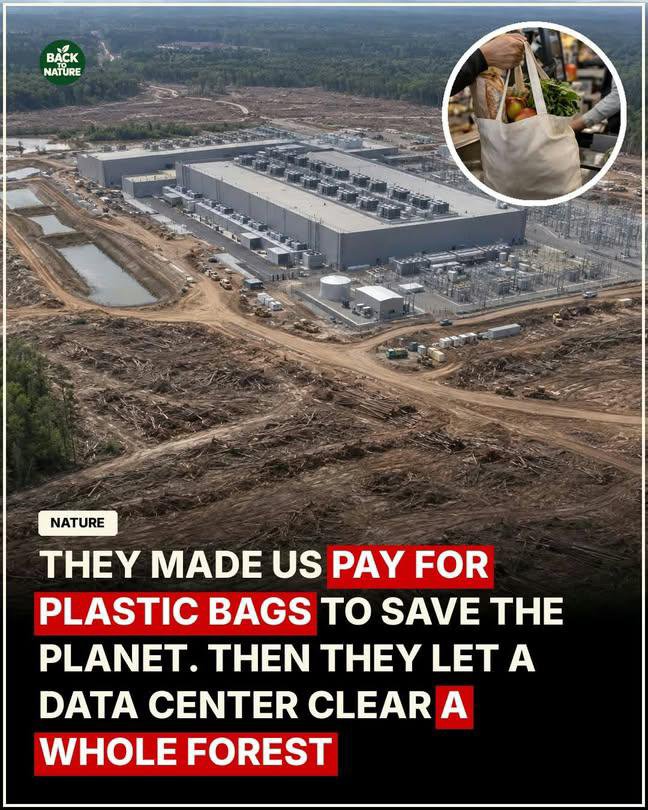
Somehow, bringing your own reusable bag or, when you forget one, juggling your groceries like a circus clown is how we're expected to save the planet. Meanwhile, clearing an entire forest to make way for a data centre is apparently called progress. Priorities, right? 🙃
🚨 BREAKING: Europe can no longer dump its plastic waste on poorer countries
An EU ban took effect this weekend, stopping shipments to places like Malaysia, Indonesia and Vietnam
I left my Google Pixel with the default OS installed connected to my computer overnight. I monitored all apps' external activity via my self-hosted VPN. Overnight, it sent about 43 MB of data out to servers, without a single tap from me. About half of that was from my own setups. About 25 MB of unsolicited telemetry, monitoring, and updating, with all updates settings turned off, still seems staggering.
Google made 20 connections an hour. It even relayed something from my phone and messages apps, even though I got zero calls or messages. Microsoft Authenticator around 40-46. Proton Drive sent telemetry. Instagram also fired off here and there. One time, it contacted Muse Agent, something I've never actually touched. Nearly all other apps went quiet without any use.
Apps like Spotify, Discord, Reddit, Substack, and Wise all do quiet research on you. These trackers link you across ad networks and/or analyze your behaviour in their apps.
Actually using the apps sends even more. Daily. Maybe around 10 GB of data per person in a year. Across a few billion Android users, that's at least a few millions of 1 TB laptop drives' worth stored in data centers every year.
Are we all okay with this?