According to Researcher and Research LLC, the global EV market sold 540,952 units in April 2022, with a YoY growth of 29.0% and a MoM decline of 33.0%. The proportions of BEV and PHEV were 69.8% and 30.2%, respectively. (1)
The solution that South Korean battery makers are against the surge of LFP batteries is to exclude cobalt and ramp up the proportion of manganese to lower the battery price, such as cobalt-free batteries or LGES’s NCMA batteries.
https://t.co/nbnZwxfMPi
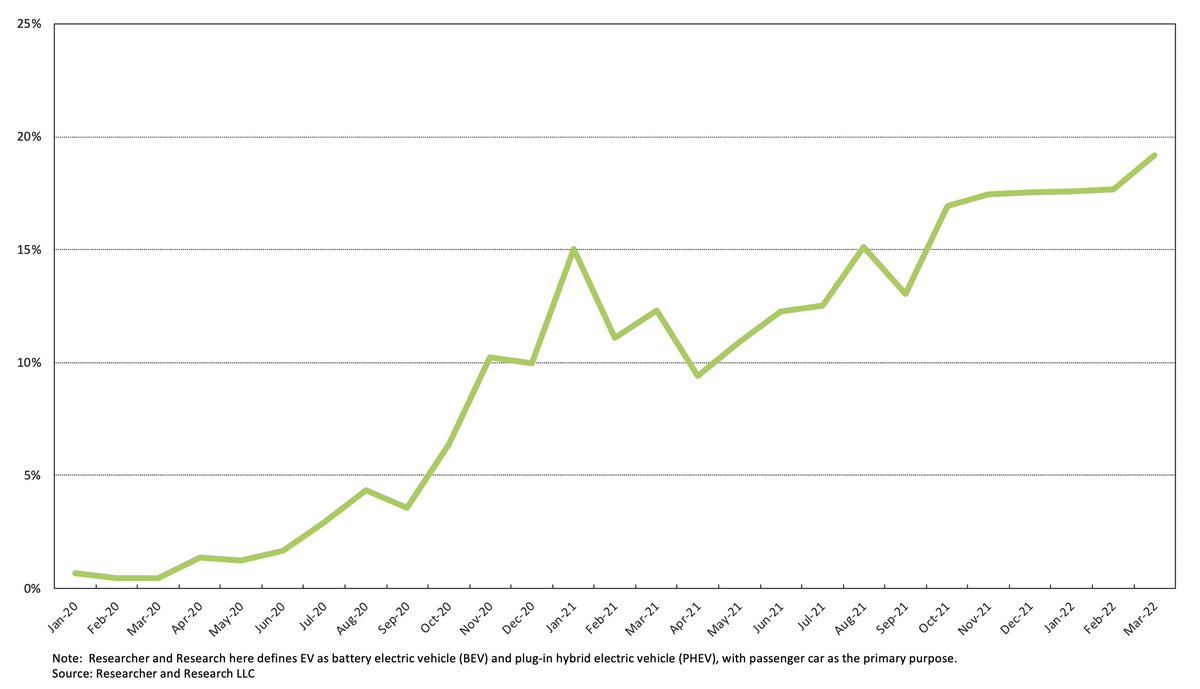
According to Researcher and Research LLC, a new high share of LFP battery in EV market (in terms of MWh) was 19.2% in March 2022, as shown in figure. We expect the share of EV using LFP battery continues to reach new highs this year. (1)
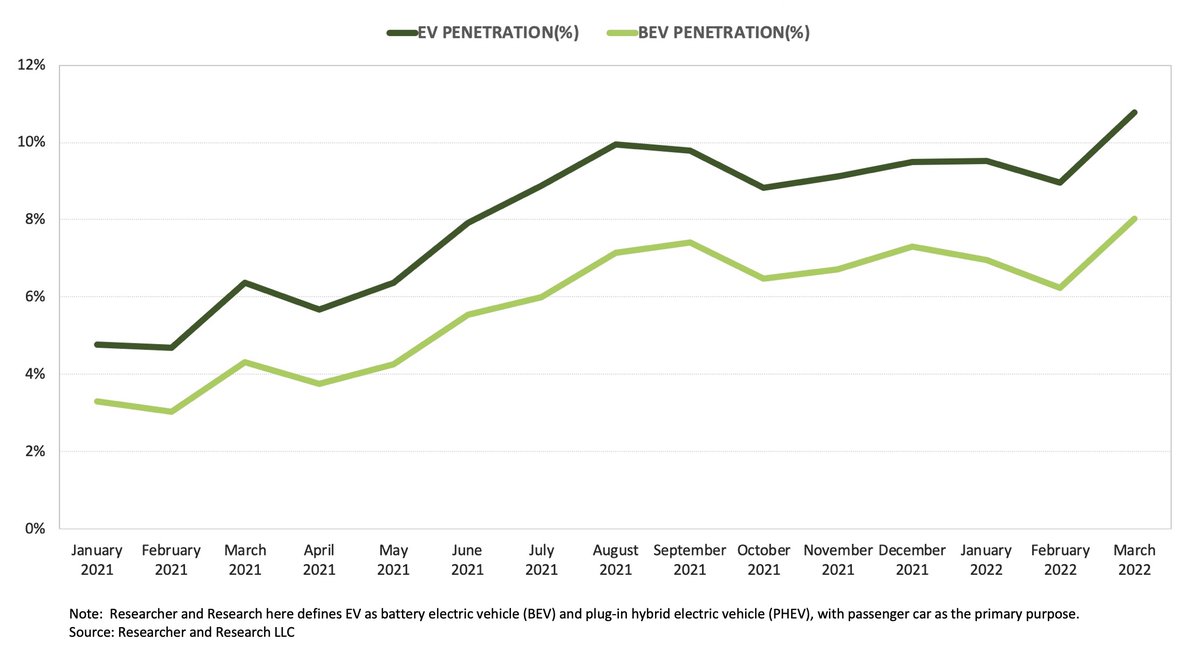
After approaching 10% in August last year, the global EV penetration finally surpassed 10% in March this year. The global BEV penetration also reached 8%. Both hit new highs.
Steve warned that we have entered a lithium shortage crisis. Although this heats up a global race for securing raw materials for batteries, EV automakers will need progressive steps to develop a long-term advantage, which seeks autonomy in the battery material supply chain.
World nickel and lithium production will be enough for 3.8 million EVs this year—fewer than half the 7.7m that automakers say they want to make. By 2030, metals will be enough for 15.6m EVs. But stated EV production is over 40m. 1/2 The Electric. https://t.co/MuwDEra1c0
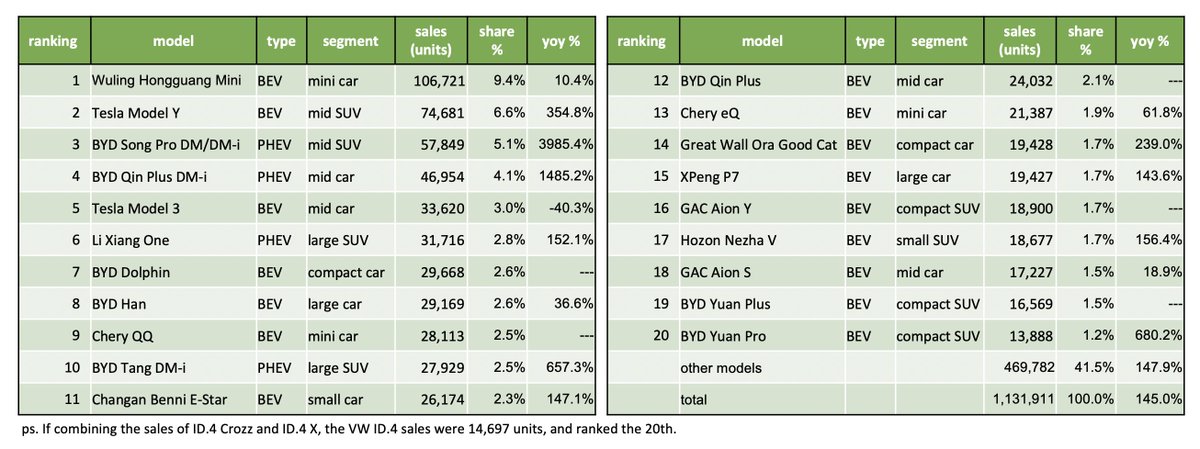
According to Researcher and Research LLC, China's EV market reached 1.131 million units in Q1 2022, with an annual growth rate of 145.0%.
The top 20 sold 662,129 units in terms of best-selling models, with a market share of 58.5%, a slight decrease from 59.0% a year ago. (1)
@stevelevine You are welcome. Our estimate for the Chinese BEV market in 2022 is 4.65 million units. Regarding the sales proportion of BEV and PHEV, the figures for 2022 are 80.1% and 19.9%, respectively, and compared with 82.6% and 17.4% in 2021, PHEV shows growth.
This quarter for the EV market is shaping up to be grim because of supply chain disruptions and inflationary pressures. Here is our opinion of China's EV market: (1)
China’s intentions in battery materials supply chains are different from other countries. As a battery gatekeeper, it is eager to control critical links of related supply chains.
https://t.co/hjE4fWgnUe
We have seen sales results for several cities in China coming in weaker for April, but indications are that the weakness is not carried into H2 of May. And one bright spot is demand in the Chinese EV market in H2 of this year is 8.5% higher than our last month's projection. (2)
A growing number of start-up EV automakers are falling short of production targets. Combined with the supply chain issues, they are having trouble keeping up with the demand and, as a result, will be likely to miss the growth of the EV market......
https://t.co/pjnFeahIa3
Recently, CATL and LGES's investments reveal Indonesia's potential to help the supply chain security and realize global manufacturing plants diversification. By the way, its EV (four-wheeler passenger car) sales were around 1,000 units in 2021.
https://t.co/9XCyExj7TJ
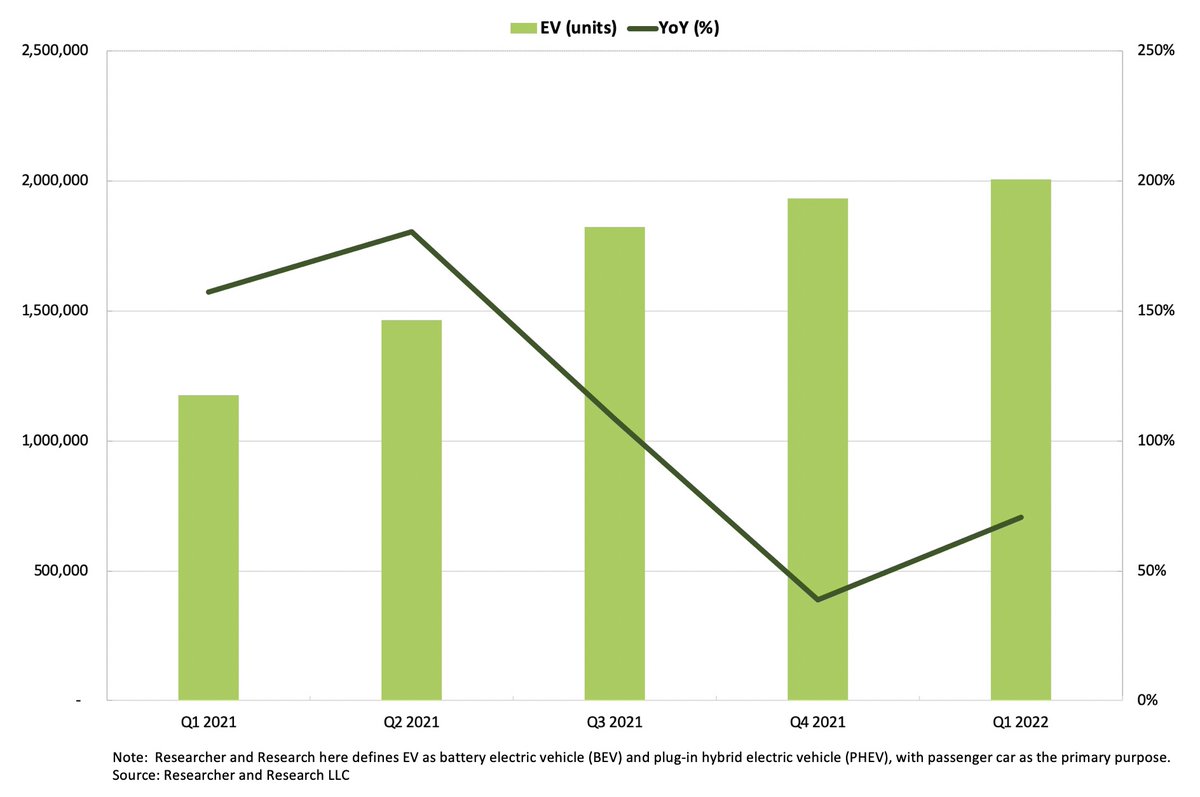
According to Researcher and Research LLC, the global EV market grew to 2.004 million units in Q1 2022, with a YoY growth of 70.7%, as shown in figure. The proportions of BEV and PHEV were 72.8% and 27.2%, respectively, compared with 67.5% and 32.5% of same period last year. (1)
Cheaper cars are disappearing due to supply chain issues, carmakers' profit-making strategies and environmental regulations. But actual consumer purchasing power may decrease after Covid-19, making consumers more likely to accept cheaper Chinese EVs. (1)
https://t.co/sjtcEAKOpd