My son grew up in Hong Kong with zero interest in Indian politics. I’ve tried for years.
Today he calls:
“Dad, tell me more about India and the economy.”
I know exactly why.
Modi’s marketing team absolutely cooked with this one. 🫡
Ramayana is in the news so Audrey is “loosely translating” with her lurid takes again…
Valmiki never wrote "harem pet" or "furniture cover." Just as he never said Sita calls Rama a “misogynist pig.”
Here's what the text says.
On the living deer, Aranya Kanda 3.43.16:
अन्तःपुरविभूषार्थो मृग एष भविष्यति antaḥpura-vibhūṣārtho mṛga eṣa bhaviṣyati
"This deer will be an ornament of the inner palace." Not “harem.” Sita is talking about after the exile, when they're back in Ayodhya. The word is vibhūṣā, ornament. It's a marvel to bring home to Bharata and the queen mothers. It isn't a "pet," and it isn't a harem plaything. We also know that Rama never took another wife, let alone kept a harem.
On the slain deer, 3.43.19:
शष्पबृस्यां विनीतायामिच्छाम्यहमुपासितुम् śaṣpa-bṛsyāṃ vinītāyām icchāmy aham upāsitum
"I wish to sit on its golden skin, spread over a seat of tender grass." A bṛsī is an ascetic's grass seat. She's a forest-dweller in exile, picturing herself sitting beside Rama. That isn't upholstery or a "furniture cover." Rama even pictures the same scene himself a few verses later (3.43.34).
So "harem pet" and "furniture cover" aren't translations. Each one picks the most lurid or trivial reading available so that Sita comes off as decadent and vain. The text doesn't support either.
We've seen this before. In 2018 Truschke "loosely translated" Sita at the agnipariksha as calling Rama a "misogynist pig." Robert Goldman, the translator she cited, disowned it.
She starts from a Sanskrit word, takes the most loaded English you can find, and presents it as scholarship. That's academic malpractice.
And it’s a pattern.
Hello India, relax. Trump losing is not India winning. Just as his winning was not India losing. Similarly democrats winning is not India winning. It's American democratic system of checks and balances at play. At peak popularity Obama faced Republican majority in both the houses of the U.S Congress. Similarly, Bush faced Democrats controlled Congress.
We have to stay the course on what works best for us. There would be spin offs for us, like for the rest of the world, hopefully beginning with West Asia...
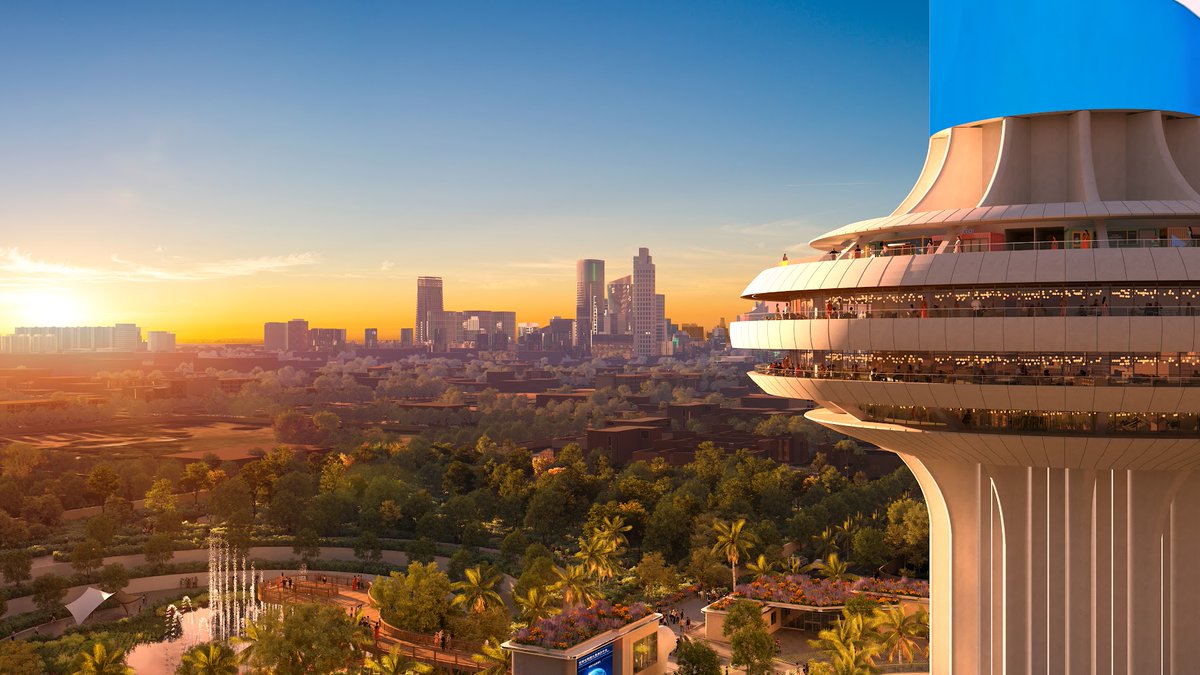
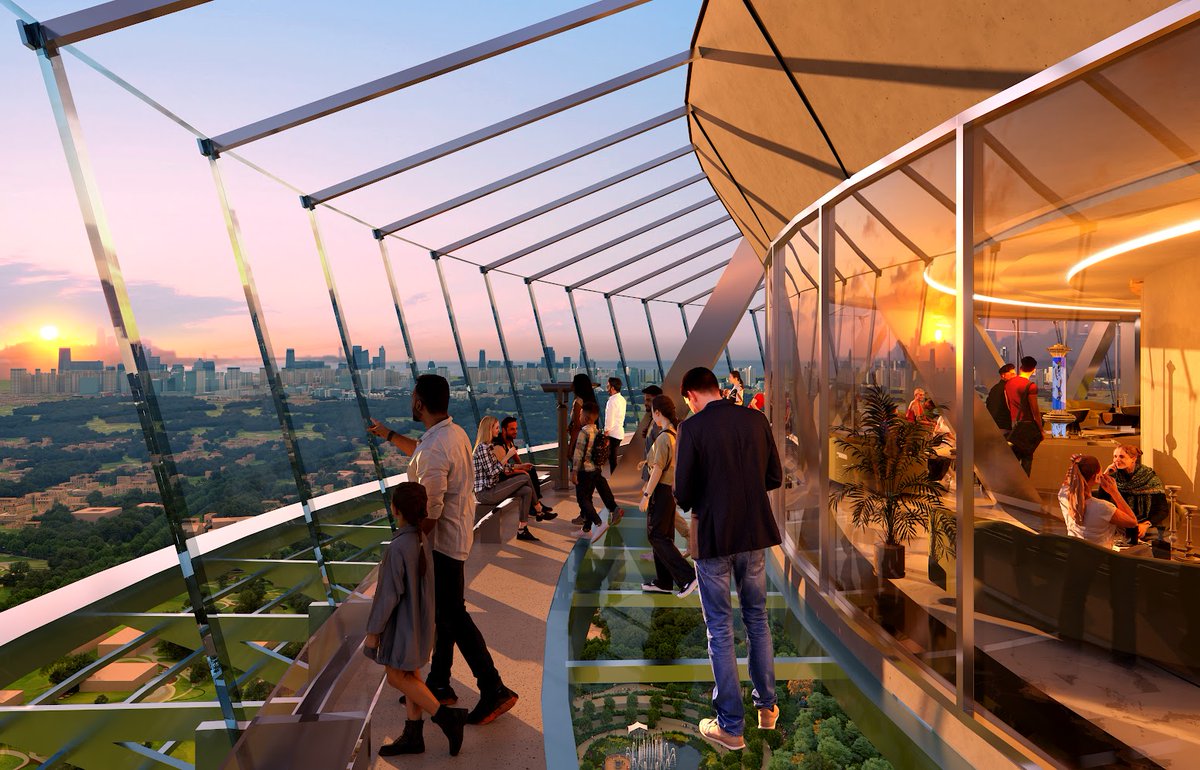
Better if they had ideated it chabutara (parabdi) shaped for thematic reflection to match city’s distinct heritage. Also Riverfront could be better location. Anyways.
Having seen some iconic towers globally, I gather they are iconic due to their theme, inspiration and design. Burj Khalifa themed on spider lily flower, Pearl tower Shanghai is themed on Chinese poetry on pearls. This Ahmedabad tower largely looks like a flat cigarette and lacks required elegance. Aesthetics hope are not as what they appear in conceptual
Images.
According to World Bank's latest report, India's extreme poverty has fallen from 27.6% to just under 2.6%.
And for Indians living under Rs. 400 a day (lower middle income), it has come down from 57.7% of the population to 16.1%.
Remarkable achievement by India given the rupee depreciated and the inflationary pressure of a fast growing economy.
There is a very different energy in Bihar right now, and I felt it strongly on this visit.
For perhaps the first time in years, political gossip and competitive exams no longer seemed to dominate every tea-stall conversation. People were talking about homes, cars, businesses, lifestyle, investments and where the next opportunity would come from.
That may sound trivial elsewhere. In Bihar, it is not.
This was, for a very long period of Indian history, one of the richest and most consequential regions of the subcontinent. The poverty and humiliation of the last 70-80 years are the anomaly, not the civilisational default. Somewhere inside every Bihari, I think that older memory survives.
And this time, it felt like it was beginning to wake up.
A generation spent leaving Bihar to work elsewhere, often doing the hardest jobs for the least respect. That has taken a toll. Millennials are increasingly putting money back into their hometowns, while Gen Z seems far less willing to accept that success automatically requires a one-way ticket out of the state.
The opportunities are still nowhere near enough.
But the mindset has changed before the economy has fully caught up.
That matters.
Patna itself looks dramatically different. JP Ganga Path, the so-called Marine Drive, looks so futuristic in parts that it feels AI-generated. Atal Path cuts through the city cleanly and efficiently. Defenders and BMW i7s no longer look like alien objects on Patna roads.
Even traffic surprised me.
Cars that once crawled through chaos are now moving at ridiculous speeds, and at multiple crossings I saw people stopping at red lights despite no traffic policeman standing there.
For Bihar, that is not a small behavioural change. That is civilisation.
Then came the highways.
I did roughly 500 kilometres from Patna to Kaimur and back, leaving around 5 AM and returning by 6 PM. I could almost count the potholes on one hand.
That sentence would have sounded like satire twenty years ago.
The social change was even more striking during Durga Puja. Women were everywhere, moving around freely, late into the evening, without that old visible anxiety of constantly looking over their shoulders.
Police deployment was heavy, but what struck me was how little it seemed to matter. Men were mostly doing what normal men at a Puja should be doing: moving from pandal to pandal, bowing before the deity, collecting prasad and getting on with their lives.
Again, this should be completely ordinary.
In Bihar, the fact that it now feels ordinary is extraordinary.
Then there is commerce.
While scouting for a warehouse in Bihta, a local builder showed me the new warehousing clusters coming up around the area, including facilities linked to companies such as Amazon and Blinkit.
Big companies do not invest in nostalgia.
They invest where they expect consumption, logistics and purchasing power to grow.
And that is why I think Bihar is much closer to a serious breakout than most Indians realise.
Governance has improved, infrastructure has improved, law and order has improved, but the biggest change is psychological.
Biharis seem tired of being treated as labour for somebody else’s growth story.
At the current pace of urbanisation and capital returning home, I genuinely think the reclamation is less than a decade away.
And when Bihar finally arrives, I suspect a lot of people who have spent decades laughing at it will discover something uncomfortable.
They were laughing at a sleeping giant.