High temperatures are projected to linger on in Japan past the summer to the end of October, making for a particularly warm fall. https://t.co/74BYWuuDXW
Despite it still officially being the rainy season, Japan continued to see temperatures above 37 degrees Celsius in numerous places Monday, raising the prospect that the government could issue a newly created top-level special heatstroke alert any day. https://t.co/WThN5VCgsQ
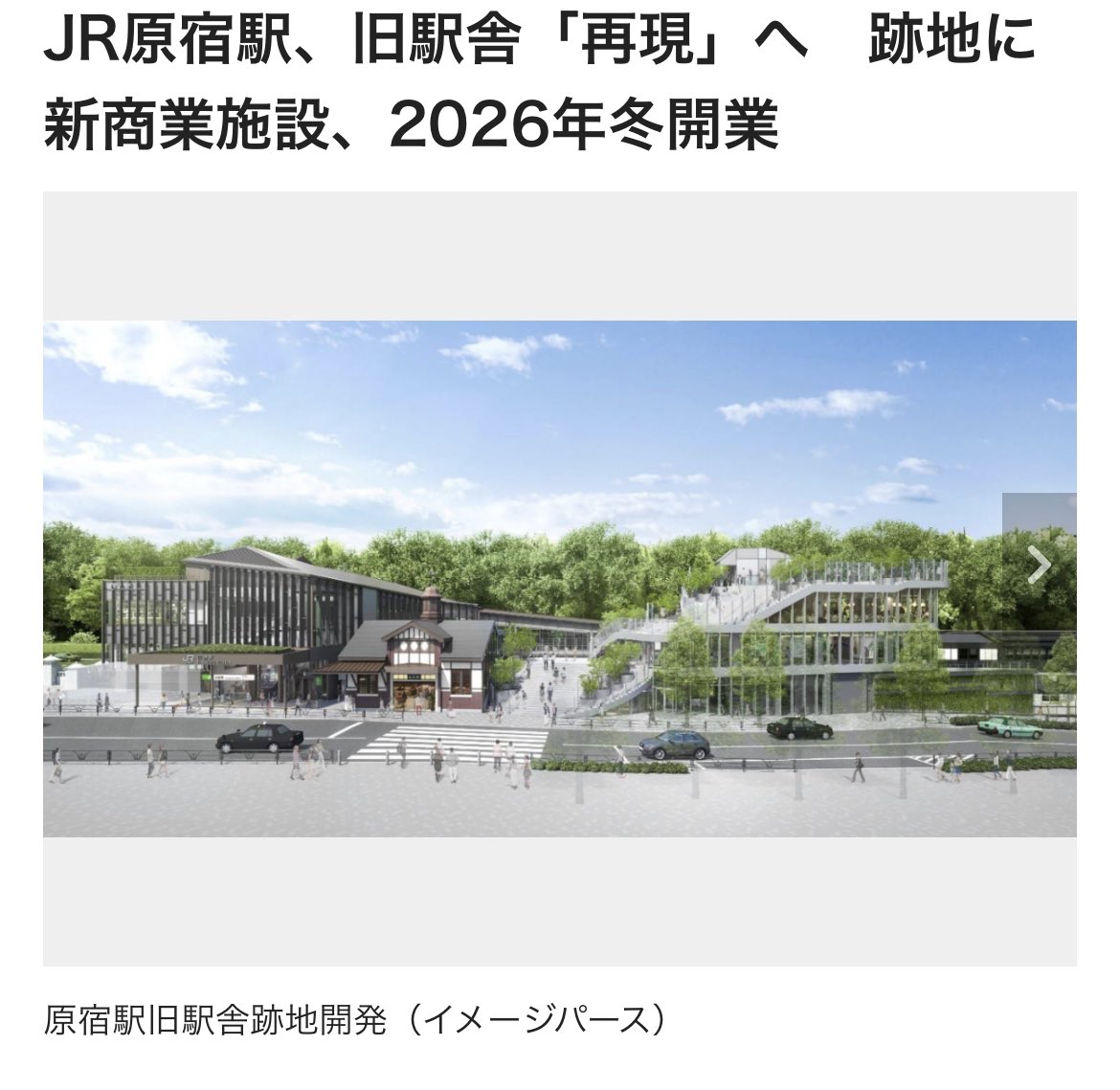
Remember how cool the old Harajuku Station was? And how bummed everyone was when they tore it down? Responding to the backlash, Japan Rail says it’ll recreate the charming building from 1924 as part of a new planned shopping annex. It’ll open in winter 2026.
It's been really great to get more and more offers to write for media outlets. Who would have thought that a decision to start blogging all those years ago would lead to opportunities like this... https://t.co/SIjgHp9b0f
4 reasons you aren't improving in Japanese
If you're not improving it's probably because you're failing a particular area.
Even if everything else is great, if you're missing just one of these things, your progress will be slow or even non-existent.
Here are the problems you might be facing and what to do about them.
————————————————
1. Lack of routine
The very first thing you absolutely must make sure you're doing is showing up.
Before you worry about optimising or getting the right stationery or textbooks or even enjoying it, make sure you're showing up.
If you can't master this step, you won't become fluent. It will not happen.
If you're not on a holistic self-improvement journey already then chances are your self-discipline and ability to create new habits has atrophied.
So start very light. Just 1 minute per day. Yes, only 1 minute.
You can gradually grow it over time, but it's much more important to build the habit of showing up than risk biting off too much and falling back to square one.
Get this sorted as your highest priority.
————————————————
2. Lack of a plan
The next thing to look at is creating a plan. You need structure. It's all well and good showing up, but each time you show it up has to be in a way that actually moves you closer to your goals.
How do you create a plan?
By starting from your goals and working backwards.
So ask yourself, what are your goals? Why are you learning Japanese?
Visualise it in your mind. The lifestyle, the things you want to do in Japanese, the skills and level required for to do them (e.g. conversational speaking, passing a job interview, playing your favourite video games, etc).
Now write it down in terms of the concrete actions needed to get there. Those are your targets.
For example, if you want a solid vocabulary, that might mean studying 10,000 vocab flash cards. If you want to be conversational, then you might aim to clock up 300 hours of conversation in Japanese.
The important point is to make targets centred around actions, not the outcomes.
You can control the number of flash cards you study. You can't control whether you'll be able to pass a test or read a book you've never read before.
Finally, break the targets down into mini weekly targets. For example if your target is to study 10,000 vocab flash cards, and you want to achieve that target in 1 year, then break it down into a mini target of 200 per week.
————————————————
3. Lack of volume
If you're showing up and you have a plan, then the next problem you might be facing is lack of volume.
Japanese takes a lot of exposure to get good at. If you're studying 10 minutes a day, that's a first step, but it will still take you forever to reach competency at that rate.
You want to add Japanese into your life in as many ways you can. Not just when you're studying but in general.
Watch Netflix in Japanese, read manga, play video games, make Japanese friends, join Japanese discord servers, read books, listen to podcasts, look up Japanese recipes, etc.
It doesn't matter as much in the beginning, but by the time you're coming into intermediate level, you want to be consuming as much as you can.
Don't worry about understanding everything. Just get it flowing into you.
Volume is the name of the game. More is always better.
————————————————
4. Lack of breadth
Finally, if you have a routine, a plan and volume, but still aren't progressing, you should look at whether you're getting enough variety.
You have to cover Japanese deeply and broadly.
To begin with, make sure you're covering all the 7 pillars of Japanese (at least the ones relevant to your goals):
- Kanji
- Vocab
- Grammar
- Reading
- Writing
- Listening
- Speaking
Secondly, make sure the content you're consuming is varied. Don't just use Japanese at work and think that's enough. Don't just watch endless episodes of One Piece. You'll plateau. Your progress will slow to a halt because you'll adapt to it.
You need new stimulus to force growth.
To keep making progress you have to consume a variety of different genres and mediums. You have to experience and use Japanese in a variety of different situations. At least insofar as they're relevant to your goals.
————————————————
Those are the problems I see people struggling with time and time again.
If you can nail all 4 of those areas, you'll be well on your way to mastering Japanese.
What challenges have you faced learning Japanese?
Let me know in the comments!
Cheers
Matt
#langtwt #nihongo
Beware of these Japanese words!
Japanese borrows a lot from English.
And most of the time it's great - it's just free vocab.
But sometimes they change the meaning completely.
Here's a list to save you some pain.
————————————————
マンション ("mansion")
In Japan, a mansion is not a massive house. It's a usually quite modestly sized flat or apartment.
アパート (from "apartment")
This is not just any apartment. It's a apartment in a building made from lighter materials. Think just light enough so that you can hear your neighbours.
コンセント (from "consent"?)
This doesn't mean consent, it means a power socket or electrical outlet. The spot in the wall you can plug in your electric devices.
ホーム (sounds like "home")
It sounds like home, but actually it comes from "form" in the word "platform". It means a platform at a train station.
タレント ("talent")
This doesn't mean talent as in what separated Mozart from his peers. It means a media personality, for example a TV show host, comedian or idol.
スマート ("smart")
It doesn't mean smart as in clever or sharply dressed. It means "slim". That's why smart cars are tiny.
パンツ ("pants")
If you're American you might assume this means trousers, but Japan agrees with the British English where it means underwear.
サイン ("sign")
This isn't a sign that would give you a warning or directions. It's actually a person's signature.
ドライバー ("driver")
No, this isn't a driver of a car or vehicle. It's a screwdriver.
バイキング ("Viking")
Chances are if you see this word in Japan, it doesn't mean Viking or even something to do with bikes. It means a buffet meal.
サービス ("service")
Service in Japan doesn't mean the same as in English. It means that something is free of charge. For example if the restaurant gives you a free bottle of wine, it's サービス.
テンション ("tension")
It doesn't refer to stress, it means the energy or spiritedness of a situation. You can say ハイテンション ("high tension") or テンションが上がる (this means something like "to get exciting and high energy").
シャープペンシル ("sharp pencil")
This isn't a well sharpened pencil. It's a mechanical pencil (i.e. a pencil you can pump out more graphite from when it gets worn down).
トランプ ("trump")
This refers to (a set of) playing cards. If you add 氏 (shi) on the end then it will be referring to the person.
イメージ ("image")
You'll often see on packaging "写真はイメージです" ("the picture is an image"). When I first came to Japan this was amusing to me because... of course the photo is an image. All photos are images. But it means more like "the photo is just a depiction of the product, not the exact thing."
サイダー ("cider")
It's not the alcoholic beverage we love in Europe. It's basically a kind of fizzy soda. Not a fan of it myself.
ホットケーキ ("hot cake")
It's not a hot cake. It's a pancake. Quite delicious.
シーチキン ("sea chicken")
Let's end on a funny one. You probably won't encounter this much, but if you do, just know it's not chicken. It's the chicken of the sea, aka tuna.
————————————————
As you can see, Japan takes some creative liberties.
Do you know any others? Let me know them in the comments!
Cheers
Matt
#langtwt #nihongo
As the interest in sustainable living in Tokyo grows, so does the number of markets in Japan offering fun ways to achieve that lifestyle. Here's our guide to organic markets across the capital: https://t.co/zY2oYwkmem
A red aurora has been observed in Hokkaido, with the phenomenon visible to the naked eye for the first time since October 2003. https://t.co/c1MUdyRm5E
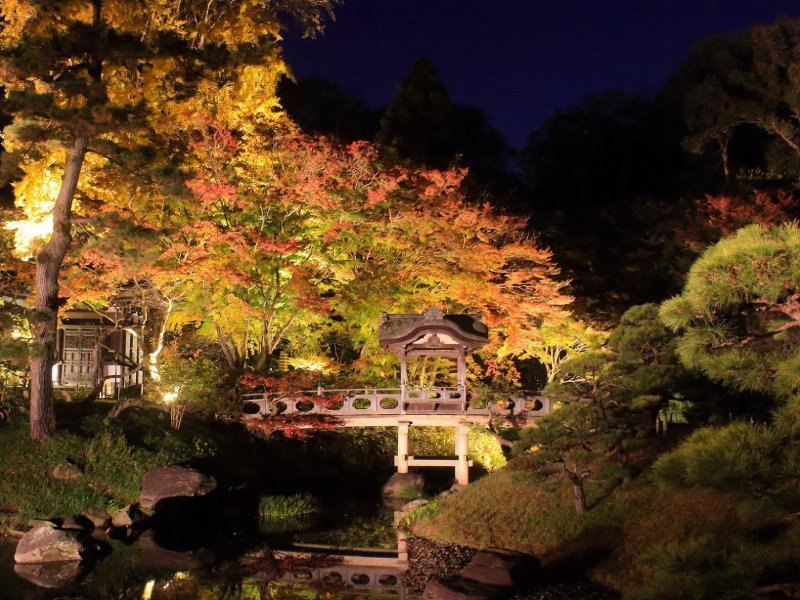
#Yokohama's Sankeien Garden usually closes at 5pm daily, but they're extending their hours from November 23rd until December 10th for an #autumn illumination event.
More info: https://t.co/Lml7poLeKq
Authorities are serious enough about trying to deter the annual mass gatherings on the streets of Shibuya for Halloween that the ward has plastered this poster near Shibuya Station. No street-drinking allowed from the 27th to the 31st.
https://t.co/HnR1xCdeWC
Somehow, it completely slipped my mind that this weekend is the Kawagoe Festival in Japan. If you're here now and in or around Tokyo, you'd be a fool to miss this epic celebration!
The Kawagoe Festival
An Epic Celebration of Dueling Floats
https://t.co/oNBgvEelzF
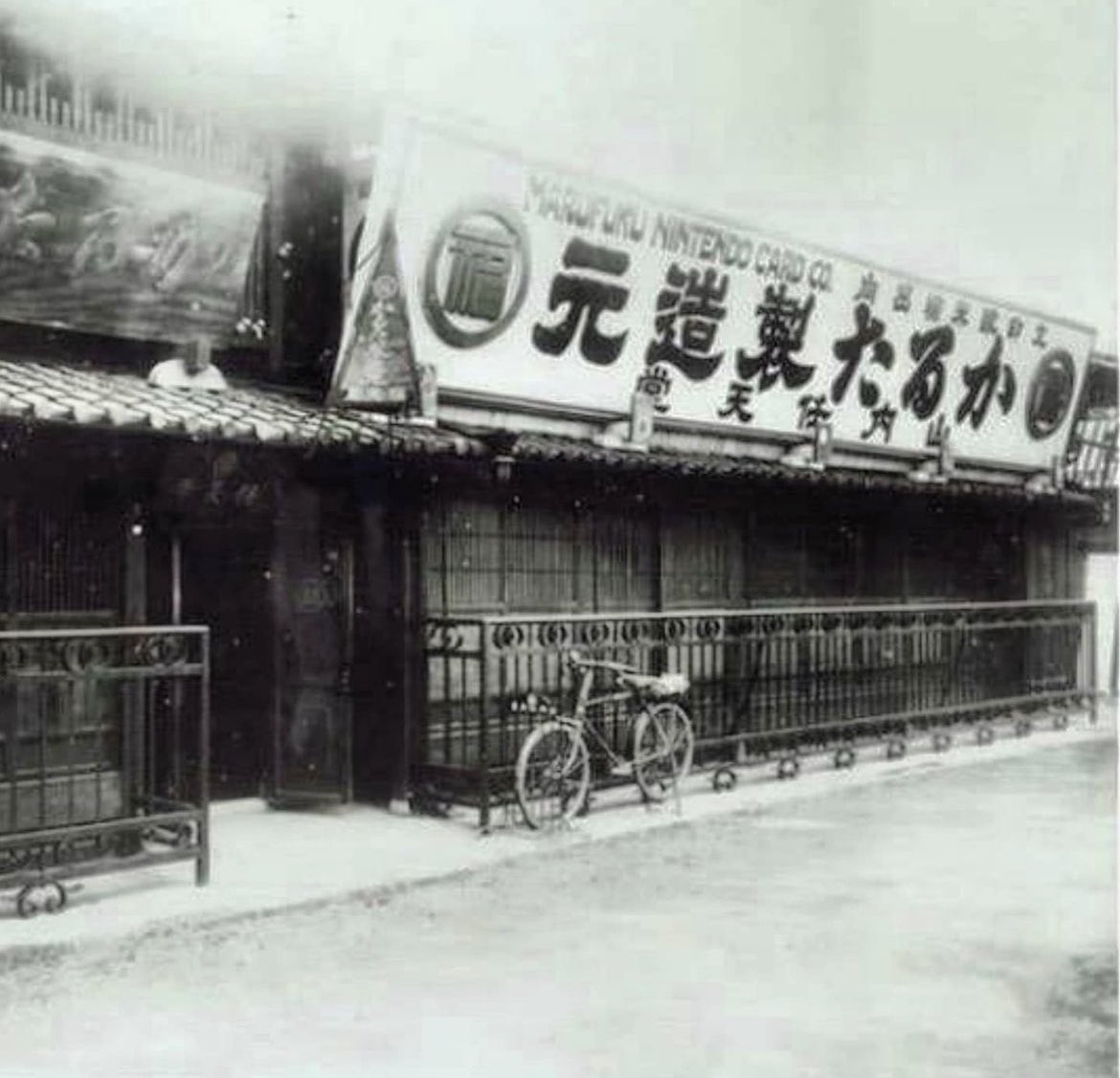
This is Nintendo's first office in Kyoto, 1889. Nintendo initially started out producing and selling Japanese playing cards. They did just that for nearly 75 years.
In 1963, Nintendo began to branch out to other types of businesses, investing money into a taxi service business, love hotels, a TV company, and an instant rice company. All these business ventures failed, and to make matters worse, after the 1964 Tokyo Olympics, playing card sales had dropped drastically.
Starting in the late '60s, Nintendo pivoted to making toys. One of their employees was a maintenance engineer by the name of Gunpei Yokoi, whose job was to repair conveyor belts. During his free time, he had made extendable tongs for his amusement. Nintendo asked him to make a few prototypes and decided to market his toy as the "Ultra Hand," which went on to sell more than 1 million units. The toy literally gave a hand to Nintendo and lifted it out of near financial ruin.
Yokoi was moved to product development and went on to create several other successful toys before jumping into making video games. During the early '80s, Yokoi began working with a young product developer named Shigeru Miyamoto. They were under pressure to develop a best-selling game for Nintendo and were competing against the likes of Namco's Pac-Man.
Miyamoto wanted to develop a video game that used the characters Popeye, Olive Oyl, and Bluto but was unable to obtain a license. So he went on to create his own characters, Donkey Kong and an unnamed character. In the early development stages of Donkey Kong, the unnamed character was unable to jump, and the goal of the game was to escape a maze. Miyamoto decided to give the unnamed character the ability to jump, stating: "If you had a barrel rolling towards you, what would you do?"
In Japan, the unnamed character eventually received the name Jumpman. However, when the video game was introduced to American audiences, the name was changed. According to legend, Nintendo in America was confronted by warehouse owner Mario Segale about unpaid rent. After a heated exchange, Nintendo assured Segale he would get his money. After the incident, Nintendo decided to rename Jumpman to Mario.