This week was a big one for CoLab.
We announced a new multi-year, multimillion dollar contract with @Bombardier 🛫
We're working with their design and engineering teams to accelerate development of business jets with AI.
More details here: https://t.co/fVKfTHVxpL
The reports of violence, arbitrary arrests, and intimidation tactics by the Iranian regime against its own people are profoundly concerning. Canada strongly condemns the killing of protesters, and urges Iran to allow for freedom of expression and peaceful assembly without fear of reprisal.
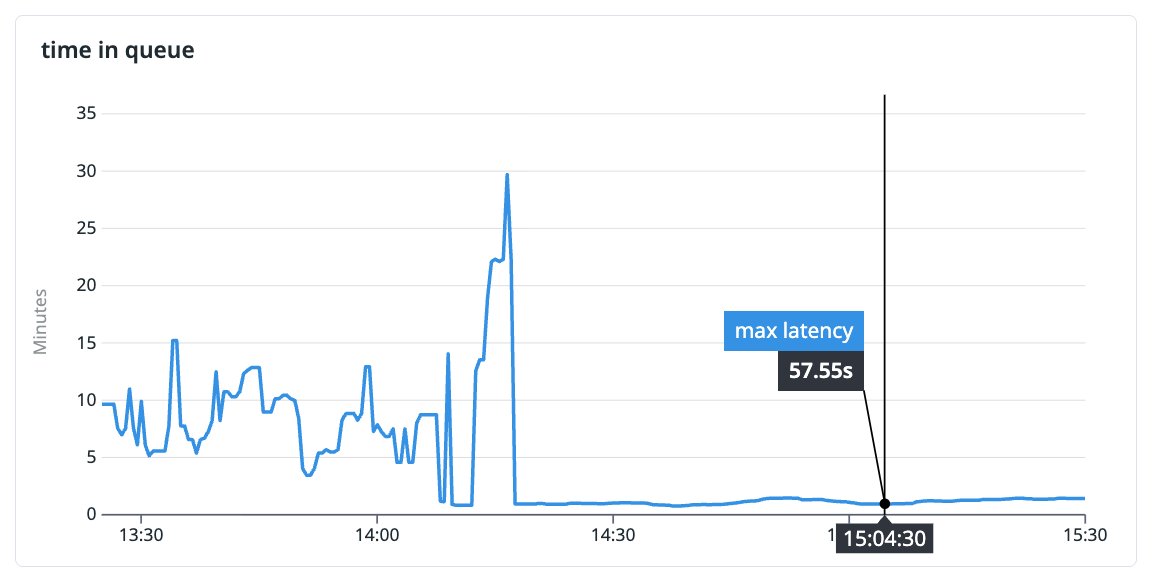
we rolled out a new indexing queue on all tpuf shared regions
~10x lower index queue time → new documents get indexed sooner → faster queries on new data with less WAL scanning
built entirely on object storage, no kafka
(chart: max create_index time in queue, gcp us-east4)
What you are actually doing here is to bribe nokia to put these jobs into Canada by paying hundreds of thousands of dollars per job from taxpayer money. What this does is to lower the cost basis of nokia per employee. This has been going on for decades, called FDI which all civil servants think is a good thing. I spent a lot of time explaining to civil servants in ottawa that its not good for our economy that American and Oversees branch offices can employ Canadians at half the cost to all the canadian companies around them due to these subsidies. We should not do them at all, they are toxic, at least in the tech sector.
It's never meat to be this way, but the situation that very often arises is: It's strictly worse inside of Canada to be a Canadian company compared to a company headquartered everywhere else.
This is a bad situation, because the fruits of the subsidized labor will accrue to the wealth of other countries and not Canada. It's tax payer money invested into locking up scarce high tech talent in jobs where they no longer contribute to the Canadian economy directly. Why
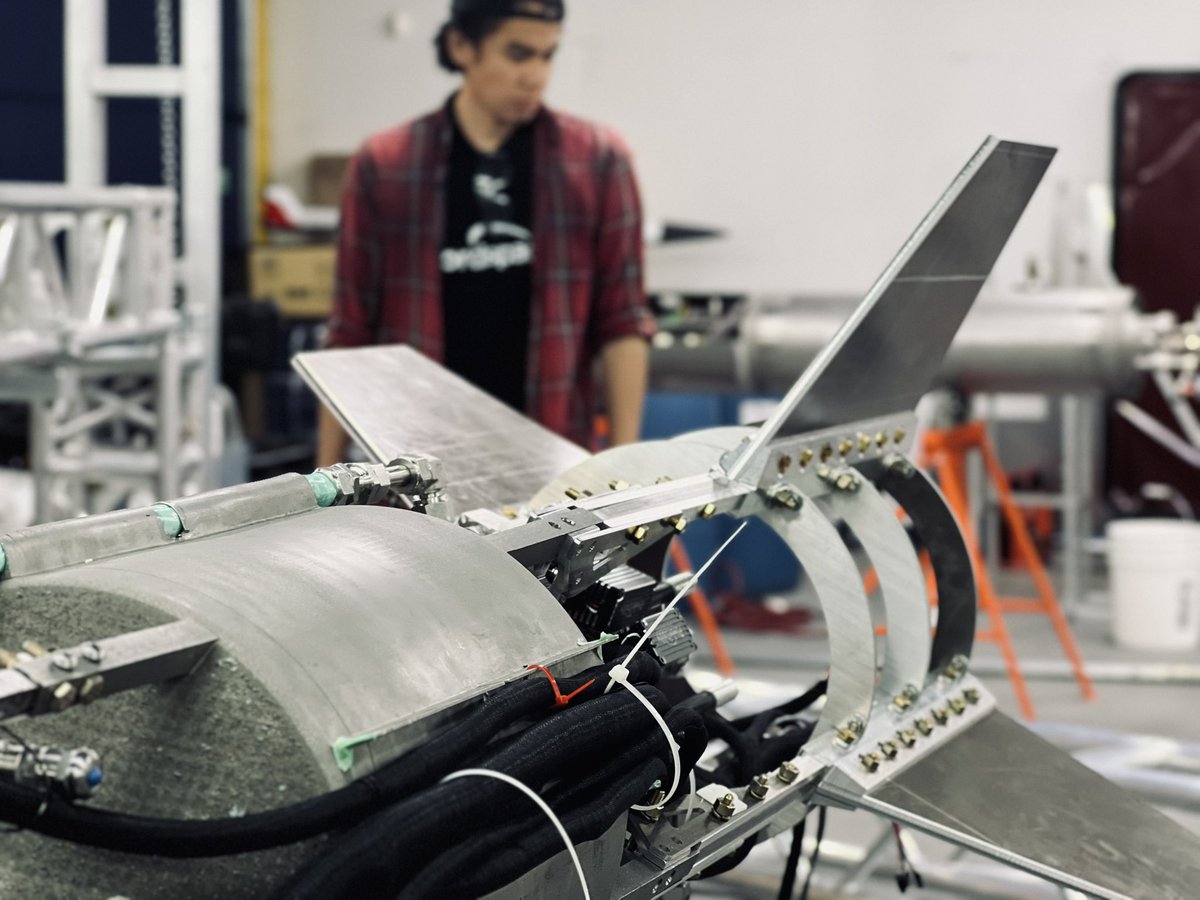
Final integration checks over the next 2 days before we roll out on Monday for the Atlantic Spaceport Complex - right on schedule! Spaceport construction going great tonight against the setting sun, launch is imminent, a new era for Canada’s future in space is on the horizon 🚀🇨🇦
The new @SlackHQ API rate limits are absolutely insane:
For accessing messages, you can now only make 1 request per minute, with a maximum of 15 messages 🤯
And yes this applies to ALL apps, not just public ones. We can't build internal tools on our OWN data.
@Benioff this is wrong and hostile to your customers. Please reverse this immediately.
If you are worried about abuse, just limit APIs for public apps. Companies must always have unlimited access to their own data in your products.
Christina is one of the founders who most effectively got help from investors who weren't even part of her company.
Was cool to hear tactically about how she did it.
An interesting undocumented API just hit my automation. Looks like AWS is planning a Vector DB for S3? Or some kind of storage Vector storage offering? Operations include:
- QueryVectors
- PutVectors
- PutVectorBucketPolicy
- ListVectors
- ListVectorBuckets
Thrilled to welcome @windsurf_ai founders @_mohansolo & Douglas Chen and some of the brilliant Windsurf eng team to @GoogleDeepMind. Excited to be working with them to turbocharge our Gemini efforts on coding agents, tool use and much more. Great to have you on board!
The premiers are right on: Canada has what the world needs, and we need to get back into the business of exporting it to new markets.
We’re building one united Canadian economy, and there’s more to come.
I strongly recommend turning this off.
It's unbelievable that they quietly enabled this while everyone was focused on their 'Recall' AI feature. Now they're collecting and using everyone's Microsoft Word and Excel data to train their AI models.
We need to be doing everything we can to turn Canada into the best place for entrepreneurs to build 🇨🇦
What's proposed in the federal budget will do the complete opposite. Innovators and entrepreneurs will suffer and their success will be penalized -- this is not a wealth tax, it's a tax on innovation and risk taking.
Our policy failures are America's gains. At a time when our country is facing critically low productivity and business investment our political leaders are failing our country's entrepreneurs.
Please start listening to the people in the arena.
I think AI agentic workflows will drive massive AI progress this year — perhaps even more than the next generation of foundation models. This is an important trend, and I urge everyone who works in AI to pay attention to it.
Today, we mostly use LLMs in zero-shot mode, prompting a model to generate final output token by token without revising its work. This is akin to asking someone to compose an essay from start to finish, typing straight through with no backspacing allowed, and expecting a high-quality result. Despite the difficulty, LLMs do amazingly well at this task!
With an agentic workflow, however, we can ask the LLM to iterate over a document many times. For example, it might take a sequence of steps such as:
- Plan an outline.
- Decide what, if any, web searches are needed to gather more information.
- Write a first draft.
- Read over the first draft to spot unjustified arguments or extraneous information.
- Revise the draft taking into account any weaknesses spotted.
- And so on.
This iterative process is critical for most human writers to write good text. With AI, such an iterative workflow yields much better results than writing in a single pass.
Devin’s splashy demo recently received a lot of social media buzz. My team has been closely following the evolution of AI that writes code. We analyzed results from a number of research teams, focusing on an algorithm’s ability to do well on the widely used HumanEval coding benchmark. You can see our findings in the diagram below.
GPT-3.5 (zero shot) was 48.1% correct. GPT-4 (zero shot) does better at 67.0%. However, the improvement from GPT-3.5 to GPT-4 is dwarfed by incorporating an iterative agent workflow. Indeed, wrapped in an agent loop, GPT-3.5 achieves up to 95.1%.
Open source agent tools and the academic literature on agents are proliferating, making this an exciting time but also a confusing one. To help put this work into perspective, I’d like to share a framework for categorizing design patterns for building agents. My team AI Fund is successfully using these patterns in many applications, and I hope you find them useful.
- Reflection: The LLM examines its own work to come up with ways to improve it.
- Tool use: The LLM is given tools such as web search, code execution, or any other function to help it gather information, take action, or process data.
- Planning: The LLM comes up with, and executes, a multistep plan to achieve a goal (for example, writing an outline for an essay, then doing online research, then writing a draft, and so on).
- Multi-agent collaboration: More than one AI agent work together, splitting up tasks and discussing and debating ideas, to come up with better solutions than a single agent would.
I’ll elaborate on these design patterns and offer suggested readings for each next week.
[Original text: https://t.co/y4McIAjD2m]
Our Response to the 🇨🇦 Canadian Government to the absurd proposal of Flipper Zero ban.
We need the community's help to fight this:
https://t.co/4yFDBGybDw
I’m excited to announce that today I’m joining @Microsoft as CEO of Microsoft AI. I’ll be leading all consumer AI products and research, including Copilot, Bing and Edge. My friend and longtime collaborator Karén Simonyan will be Chief Scientist, and several of our amazing teammates have chosen to join us.
@InflectionAI will continue on its mission under a new CEO, and look to reach more people than ever by making its API widely available to developers and businesses the world over.
It’s been an amazing journey, with so much more to come. Thank you to everyone for your support. Things really are just getting started.









![AndrewYNg's tweet photo. I think AI agentic workflows will drive massive AI progress this year — perhaps even more than the next generation of foundation models. This is an important trend, and I urge everyone who works in AI to pay attention to it.
Today, we mostly use LLMs in zero-shot mode, prompting a model to generate final output token by token without revising its work. This is akin to asking someone to compose an essay from start to finish, typing straight through with no backspacing allowed, and expecting a high-quality result. Despite the difficulty, LLMs do amazingly well at this task!
With an agentic workflow, however, we can ask the LLM to iterate over a document many times. For example, it might take a sequence of steps such as:
- Plan an outline.
- Decide what, if any, web searches are needed to gather more information.
- Write a first draft.
- Read over the first draft to spot unjustified arguments or extraneous information.
- Revise the draft taking into account any weaknesses spotted.
- And so on.
This iterative process is critical for most human writers to write good text. With AI, such an iterative workflow yields much better results than writing in a single pass.
Devin’s splashy demo recently received a lot of social media buzz. My team has been closely following the evolution of AI that writes code. We analyzed results from a number of research teams, focusing on an algorithm’s ability to do well on the widely used HumanEval coding benchmark. You can see our findings in the diagram below.
GPT-3.5 (zero shot) was 48.1% correct. GPT-4 (zero shot) does better at 67.0%. However, the improvement from GPT-3.5 to GPT-4 is dwarfed by incorporating an iterative agent workflow. Indeed, wrapped in an agent loop, GPT-3.5 achieves up to 95.1%.
Open source agent tools and the academic literature on agents are proliferating, making this an exciting time but also a confusing one. To help put this work into perspective, I’d like to share a framework for categorizing design patterns for building agents. My team AI Fund is successfully using these patterns in many applications, and I hope you find them useful.
- Reflection: The LLM examines its own work to come up with ways to improve it.
- Tool use: The LLM is given tools such as web search, code execution, or any other function to help it gather information, take action, or process data.
- Planning: The LLM comes up with, and executes, a multistep plan to achieve a goal (for example, writing an outline for an essay, then doing online research, then writing a draft, and so on).
- Multi-agent collaboration: More than one AI agent work together, splitting up tasks and discussing and debating ideas, to come up with better solutions than a single agent would.
I’ll elaborate on these design patterns and offer suggested readings for each next week.
[Original text: https://t.co/y4McIAjD2m]](https://pbs.twimg.com/media/GJN6yJRaIAExh4D.jpg)


