Today the first in a two-parter (I think, maybe three) about some similarities in the poetry — and translational challenges thereof — of the twelfth century in Europe and India. Link in bio and first reply.
Today the first in a two-parter (I think, maybe three) about some similarities in the poetry — and translational challenges thereof — of the twelfth century in Europe and India. Link in bio and first reply.
Naguib Mahfouz's Cairo Trilogy is a wonderful achievement. At once an intimate family drama and a vast epic of the twentieth century, it also has a Nabokovian sense of time as a living, dynamic force. Masterpiece.
Do please come to the launch of The Cambridge History of Later Latin Literature in Edinburgh on 20 April. A colloquium runs from 13.30 to 18.00 in Seminar Room 1, Chrystal Macmillan Building (programme on next slide); also online -- just write to one of the editors (1/3)
The first person to try reforming English spelling was a 12th-century priest named Orm.
His system: double every consonant after a short vowel. "God" became "Godd." His own name became "Orrm." He wrote an entire book this way, but his system was never copied.
Later reforms were even more drastic.
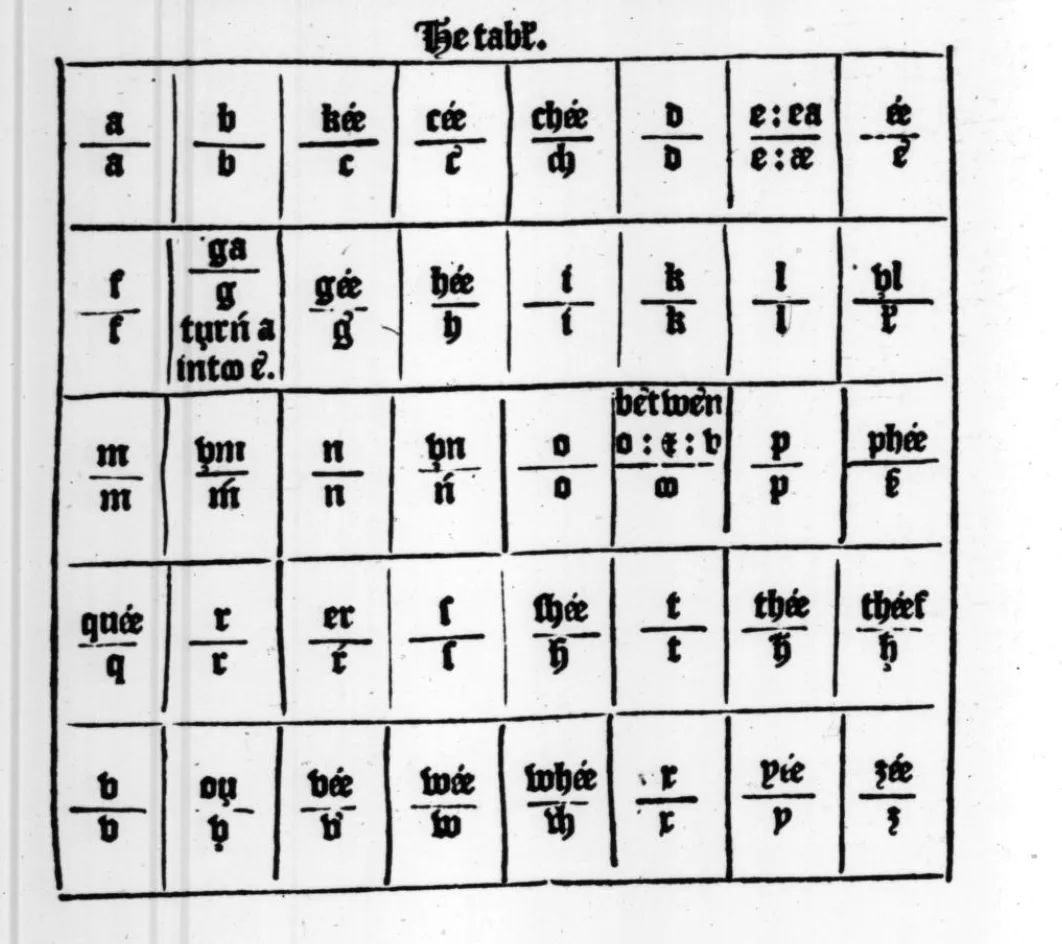
One reformer invented a letter so strange it still can’t be typed on any modern keyboard. Another proposed a new, 40-letter alphabet (pictured).
But despite nine centuries of attempts, almost nothing has stuck. The question is: why not?
this is Middle English & delightful to read; as you can see, it is not so difficult.
Old English is more difficult of course but there is fascination in the evolution of language -- how do languages evolve? why do languages evolve? where do words "come from"?--language being a creation of the human brain, so mysterious, & anonymous.
in graduate school in English, it used to be the case that some students would fall in love with Old English, & never want to leave; others, Middle English. vocabularies are small, the very world seems small, as if in miniature.
pushing on, into centuries to come, especially the 19th century, felt like opening a door to a cyclone-- & the roof is blown off....
but you have to read Chaucer in Middle English!--that will take some preparation & commitment.
the best way to approach Chaucer is to take a course with a devoted Chaucerian. they are in a class by themselves & will make you fall in love with "The Canterbury Tales."
not sure that anyone can just pick up Chaucer & start reading... some great works, like "Ulysses" also, are terrific in a group led by someone who knows the work well.
otherwise, you may be in a boat with no oars, just aimlessly gliding past a beautiful landscape, & very likely the boat will overturn. end of adventure.
There's absolutely no shortage of opportunities to produce 'new knowledge' in the humanities; vast swathes of medieval, early modern and modern texts remain untranscribed, unedited, untranslated. The failure to take these opportunities is partly a skills issue; (cont.)
Broke: Melville is the greatest American novelist
Woke: Melville is the greatest American short story writer
Bespoke: Melville is the greatest American poet
“All thine is Clement's varied page;
And Dionysius, ruler sage
In days of doubt and pain;
And Origen, with eagle eye;
And saintly Basil's purpose high
To smite imperial heresy,
And cleanse the Altar's stain.”
—John Henry Newman
it's crazy how this one italian guy wrote a bunch of poems about wanting to literally FUCK classical antiquity and the rest of europe collectively decided that this is what literature should be for the next 300 years
yes when I put the rose in my hair like the Andalusian girls used or shall I wear a red yes and how he kissed me under the Moorish wall and I thought well as well him as another and then I asked him with my eyes to ask again yes and then he asked me would I yes to say yes my moun