GPT6 Astra has me in a chokehold...
asked it how to explain moon phases to my kid nina she is 4, and three hours later we have got spinning planets, moving shadows, and a paper spaceship she will not put down.
here’s the tour 👇
didn't expect Nina's little universe to get this much attention 😅
someone spotted the missing Earth tilt. fixed 🌍
try it with your kid: https://t.co/RkCEKoaUIN
what space question has your kid asked that left you Googling?
@OpenAIDevs didn't expect Nina's little universe to get this much attention 😅 someone spotted the missing Earth tilt. fixed. try it with your kid:
https://t.co/8WgoBoNOgp
space question has your kid asked that left you Googling?
@OpenAIDevs asked it how to explain moon phases to my kid nina she is 4, and three hours later we have got spinning planets, moving shadows, and a paper spaceship she will not put down. here’s the tour 👇
https://t.co/uXy8PAdx2K
@OpenAIDevs asked it how to explain moon phases to my kid nina she is 4, and three hours later we have got spinning planets, moving shadows, and a paper spaceship she will not put down. here’s the tour 👇
https://t.co/uXy8PAdx2K
sure, here it is:
Art direction: Handmade cardboard universe
Style the entire experience as a charming handcrafted cardboard cartoon made for young children. It should look like Nina opened a magical space-themed pop-up book or shoebox diorama.
Use:
Layered cardboard planets with visible corrugated edges
Hand-painted paper textures with small imperfections
Soft, rounded shapes without sharp edges
Paper-cut clouds, stars, orbit lines, arrows, and labels
Craft materials such as cardboard, colored paper, felt, cotton, string, wooden sticks, and child-safe paint
A smiling Sun made from layered yellow and orange cardboard
A friendly Earth with painted oceans, raised paper continents, cotton clouds, and tiny cardboard houses
A cute Moon made from grey paper layers and shallow crater cutouts
Stars hanging from visible strings at different depths
Cardboard UI buttons that depress like physical paper tabs
Handwritten-style labels that remain highly readable
Warm miniature-theatre lighting with soft shadows
Subtle paper grain, fingerprints, brush strokes, folds, glue marks, and cut edges
Animate everything like a polished stop-motion children’s film:
Slight handcrafted wobble during movement
Gentle bouncing and expressive character reactions
Cardboard pieces sliding, rotating, folding, and unfolding
New chapters opening like pages in a pop-up book
Eclipse explanations assembled from movable cardboard pieces
Celebration effects made from paper stars and confetti
Smooth interactions despite the stop-motion-inspired appearance
The camera should move through a miniature tabletop universe. Occasionally pull back slightly to reveal that the planets, stars, shadows, and orbit paths are part of a lovingly constructed cardboard model.
Keep the science correct beneath the stylized appearance. Use real directional lighting so Earth’s illuminated side, night side, Moon phases, and eclipse shadows remain accurate.
Avoid:
Photorealistic planets
Glossy plastic materials
Metallic science-fiction interfaces
Neon cyberpunk colors
Realistic or frightening darkness
Overly complex menus
A generic mobile-game appearance
Direct imitation of Pixar, Disney, or another studio
The final visual identity should feel warm, playful, tactile, homemade, imaginative, and safe—like a premium animated cardboard storybook that Nina can touch and control.
@EvanOtero asked it how to explain moon phases to my kid nina she is 4, and three hours later we have got spinning planets, moving shadows, and a paper spaceship she will not put down.
here's the tour 👇 https://t.co/FhG8Qg2BSM
GPT6 Astra has me in a chokehold...
asked it how to explain moon phases to my kid nina she is 4, and three hours later we have got spinning planets, moving shadows, and a paper spaceship she will not put down.
here’s the tour 👇
One week of building in public: the most reusable lesson is that constraints create the product.
No ads. No loot boxes. Parent control. Local first.
Every no made Star Chart easier to trust.
#BuildInPublic#IndieBuilder
Halfway through launch day on Product Hunt! ⭐
Your upvote = a giant gold star for our tiny team. Takes 10 seconds:
https://t.co/VhKGEfoIJi
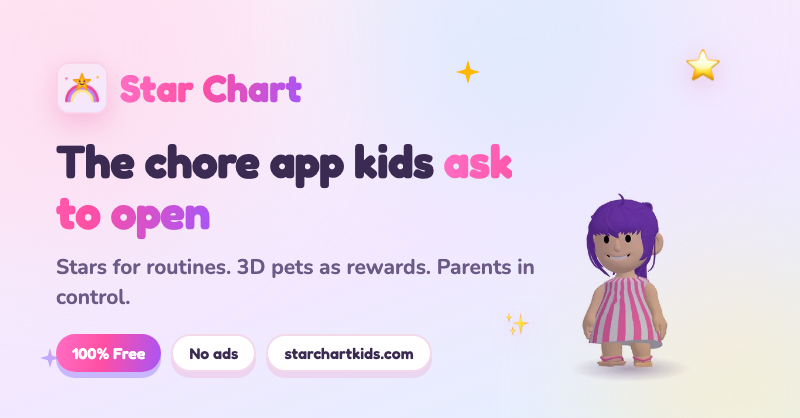
Star Chart Kids — chores that feel like play. Free, no ads, parents in control.
I built a printable chore chart too.
Not every family wants another screen, and a useful product should respect that.
No email gate. Just the PDF.
https://t.co/rc6gbbnaWD
#BuildInPublic#ProductBuilder
🚀 StarChartKids is officially LIVE on @ProductHunt!
Built this while sharing the whole journey publicly. Super excited (and nervous) to finally put it out there.
If you have been following along, your upvote would mean the world 🙏
https://t.co/FtkZNPWLFg
#buildinpublic #producthunt
motion should communicate, not decorate.
I cut the animations that were just showing off — calmer paths, less live 3D, heavy dashboard moments turned into still posters.
delight only works when the interface stays fast.
What is one feature you removed that made your product stronger?
For me, it was streaks.
The app became calmer, more honest, and better aligned with families.
#BuildInPublic#IndieBuilder
A short product demo forced a useful builder question.
Can someone understand the value without narration?
Tasks, stars, pets, parent control: that is the whole story.
https://t.co/rc6gbbmD75
#BuildInPublic#ProductBuilder
Star Chart now spans web, app wrappers, and a native mobile build.
The trick was not sharing screens. It was sharing the product rules while each platform owns storage, effects, and navigation.
#BuildInPublic#ProductBuilder
Paper chore charts do not give kids much reason to come back.
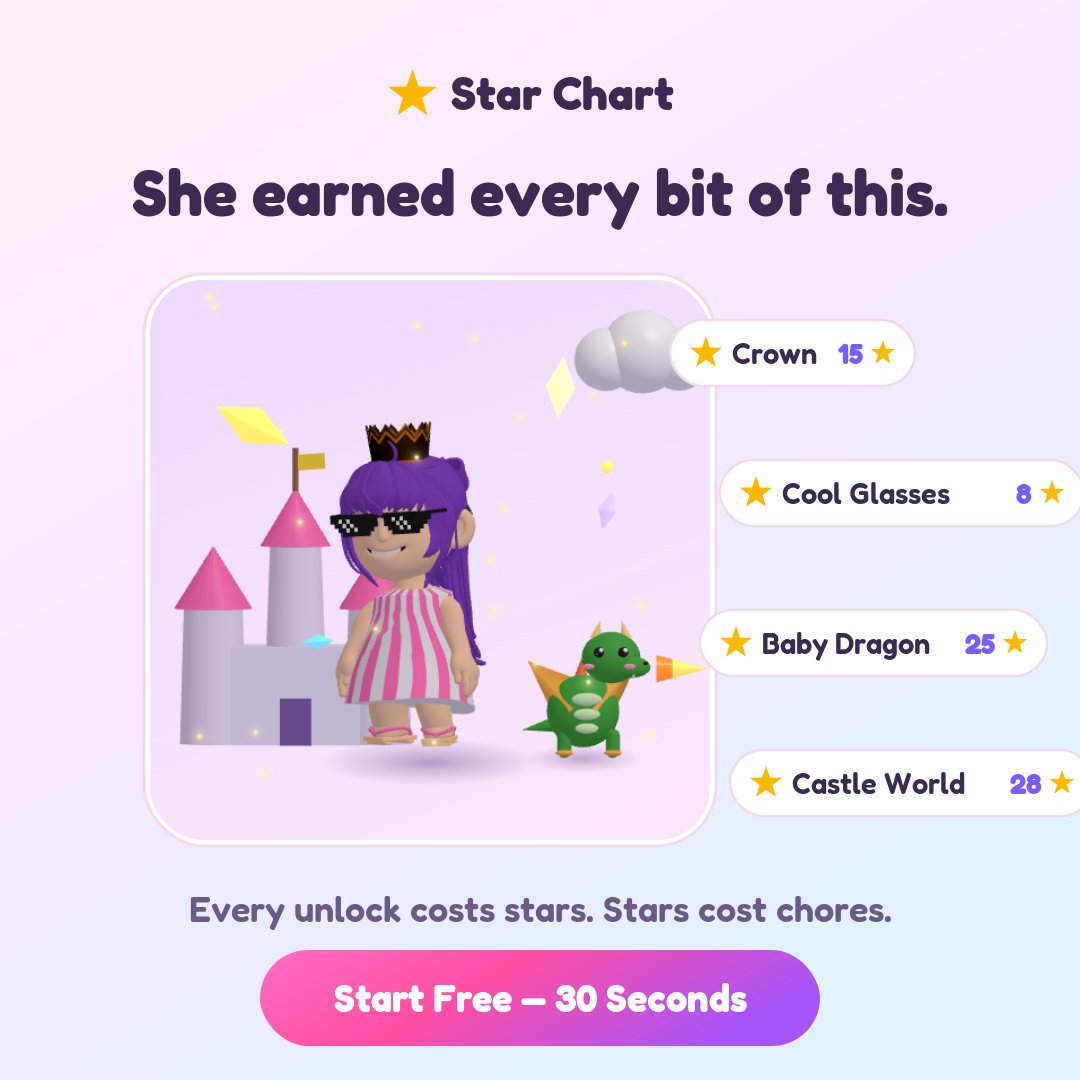
Star Chart does: task done, star lands, next reward gets closer.
Parents choose tasks and approve rewards.
Free. No ads. No loot boxes.
https://t.co/WTqGIX14MZ
#BuildInPublic#ProductBuilder