@natalieyeo@irvinxyz The resources are too finite to do slop hardware. Imagine if we discover AI when we are a space faring civilization. A 17 year old might make a factory in planet Kepler and we get to watch it here instead of the simulation🤣
@jes5199 Best guess: OP might found a planet nobody know existed. My research can generate hundreds of GBs of data. I research the knowledge inside an AI. Now imagine NASA recording the universe. The data is not in TB but undefined because the space always expands.
@XiaojieLiu1993@plazined Frontier has millions or at least thousands to burn. It’s a money game now. A short paper costs at least 500 RMB to rent 4x 3090 for 5 days. Each 3090 is to benchmark methods. i.e., 500 RMB is just to fill 1 subsection of the paper and doesn’t include trial and error cost, etc.
@IanL556@0xCE7E5 It depends on the training tokens per parameter and stage. We don't know both your and OP tokens/parameter; or is this fine-tuning or pre-training.
For context, for pretraining, 3773 tokens/parameter (0.026%) is minimum; for fine-tuning 0.7 tokens/parameter (70%) is minimum.
Claude Opus 5.5 designed a robot dog from scratch. Every part, every wire, the path planner.
618 parts. 62 cable runs, each one going to a real connector.
Watch what it does when a crate drops in its way.
@schneidenbach This price hike made me double check. 1) have access to rent $0.2/hr/3090. Even though I spent $19/day/4x 3090, it’s not every week without stop. 2) DGX Spark only has 24 MB L2 cache, forcing to use smaller batches or risk multiple GPU<->VRAM round trip for pp/batch
Dorothy Vaughan adapted from a NASA human computer to a programmer, mastering IBM technology and helping her colleagues transition with her.
Technology has made great strides since then, making quite literally anything possible for companies and everyday users of AI.
@KieranLeeDoyle@chubock@MovieplugTV The key nuance is “if we disagree, then there might be a variable that we have not realized yet”. In this case, the host will only open the door with a goat.
@InterCeptorLOL@tomshardware AMD dethroned Intel. I don’t know what Intel did wrong except alienate the smartphone chips market and do premium pricing. NVIDIA did alienate gaming and do premium pricing, but NVIDIA moat is CUDA, extensively used by students. AMD needs miracle to dethrone NVIDIA.
@KieranLeeDoyle@MovieplugTV I think the correct idea is “population probability”. One of the two unopened doors have 2/3 chance. We just don’t know which one.
I disagree with the idea of “transfer the entire remaining 2/3 onto the single unopened door left on the table”. We can keep our choice and get 2/3
@chubock@KieranLeeDoyle@MovieplugTV Agree. The idea of transferring the 33.3% probability to the next door doesn’t make sense. The probability from the opened door split evenly to both unopened doors.
Population wise, one of the door do have 2/3 chance now. We just don’t know it.
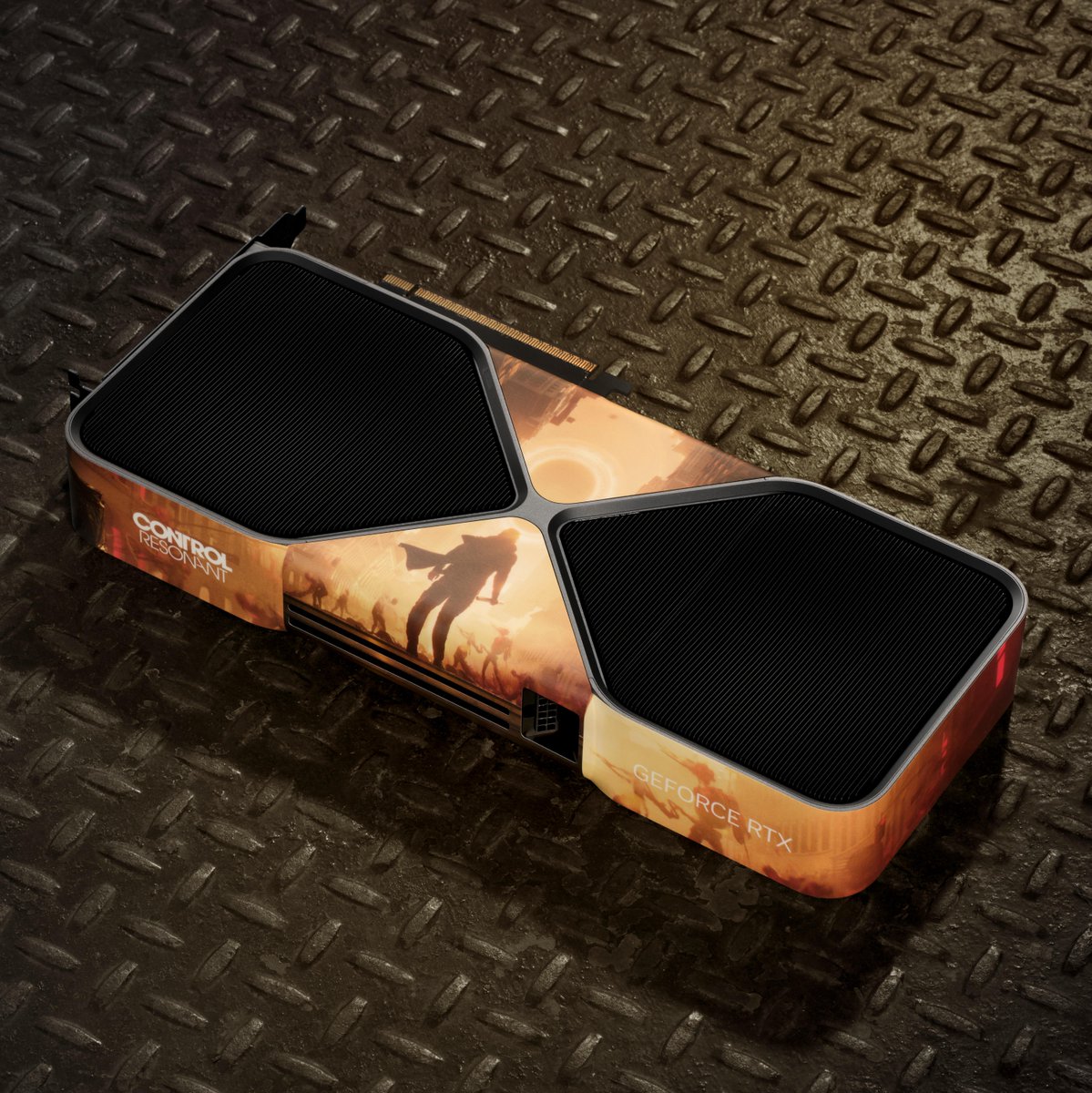
We're giving away a CONTROL Resonant custom wrapped NVIDIA GeForce RTX 5080 to celebrate its official release with #RTXON.
To enter:
🟢 Share this post
🟢 Comment #RTXON
T&Cs: https://t.co/Mbf7w3j1q3
@_sanjoydas Additionally, moving info in stages allows the model to process specific information with the same MLP weights. This advantage is shown in the small parallel model capability to generalize knowledge better than small sequential model.
@_sanjoydas Sequential model: Small model move info to the last token position immediately. Large model do not do this.
Parallel model: Both small and large move info to the last token position in stages.
In short, you need attention module in each layer to progressively move information.
@KieranLeeDoyle@MovieplugTV Ah I got the logic. Thank you.
- “There is 2/3 chance the car is behind one of the two unchosen doors”
- “Transfers the entire remaining 2/3 onto the single unopened door left on the table”