15 years ago, my marriage was on the edge.
We loved each other—but the connection was gone.
We didn’t know why.
It was lonely. Frustrating. Almost fatal.
Until one night, we sat down and said:
“This isn’t working. But we’re going to find out why.”
That decision cracked the sky open.
We walked through fire.
Time. Money. Faith. Focus.
We gave everything—and what we found was…
🔥 Polarity
🔥 Passion
🔥 Partnership
🔥 Purpose
That journey became our mission.
Now we guide men & couples through the same fire—
to the other side, where truth lives.
Shades of Intimacy. Modern Day Warrior. Audio Drops.
This is sacred rebellion.
Masculine embodiment.
Radical intimacy.
Presence. Power. Peace.
If you’ve knocked,
this may be the door.
Follow along.
Or DM if you’re ready to walk through.
#ShadesOfIntimacy #SacredMasculine #PolarityPractice #ModernMan #JasonSacredFire #VoiceOfFire
THE STORYTELLER’S THUMB ON THE SCALE
I watched Sicario last night.
Good movie. Maybe.
But I didn't love it.
And trying to figure out why sent me down a rabbit hole about storytelling, Dune, Sergio Leone, Frank Herbert, Tolkien—and eventually something much bigger than movies.
Here's what I think:
I don't want a story to prove the storyteller right.
I want the storyteller to find out what's true by telling the story.
A great story starts with people.
They want things. They love things. They're afraid of things. They make choices. Those choices have consequences. Those consequences narrow the choices that come next. Things may happen to them. Things they have to deal with. And things start happening.
And eventually you arrive at the ending and think:
Of course.
It couldn't have ended any other way.
Not literally. The writer could have typed anything they wanted.
But given these people, and these choices, and everything that has happened—
this is where we had to end up.
Sergio Leone was a fucking master at this.
At the end of For a Few Dollars More, the watch comes out one last time and suddenly things you've been watching for two hours CLICK into place.
Not because Leone stops the movie to tell you what revenge means.
He tells the story.
And the story tells you.
That's different from beginning with a conclusion.
Power corrupts.
Religion is dangerous.
Charismatic leaders are dangerous.
The CIA is evil.
Capitalism is evil.
Socialism is evil.
Trump is evil.
Trump is wonderful.
Whatever.
Once the storyteller already knows the answer, something dangerous or just plain bad for the story starts to happen.
The characters stop being people and start becoming evidence, devices to grind an axe with.
Of course the powerful man becomes corrupt. He has to. Otherwise my thesis doesn't work.
Of course the religious movement becomes murderous. It has to.
Of course my political enemy does something terrible and my political ally does something noble.
I've already decided what's true.
Now I'm just arranging fictional furniture to prove it.
And eventually, if you're paying attention, you can feel it.
You can feel the storyteller's thumb on the scale.
That's what finally helped me understand my complicated relationship with Dune.
Frank Herbert wasn't merely telling the story of Paul Atreides and discovering, Holy shit, look what happened to this guy.
Herbert had something he wanted to say about charismatic leaders, messiahs, power, religion and our willingness to surrender our judgment to heroes.
And he deliberately made Paul incredibly compelling.
His father is murdered.
His family is destroyed.
He flees into the desert.
He joins the Fremen.
He falls in love.
He learns their ways.
He rides the fucking worm.
He becomes their leader.
He defeats his enemies.
The Emperor kneels.
And I'm sitting there going:
FUCK YEAH, PAUL!
Then Herbert's larger story essentially says:
Interesting that you trusted him.
And I went:
Oh.
Well, fuck you too, Frank. 😂
And here's the thing:
Herbert's warning isn't stupid.
Charismatic leadership can be incredibly dangerous.
Religion can become monstrous.
Power can corrupt.
Governments can become tyrannical.
All true.
But none of those things is inevitable.
Charismatic leaders can also do extraordinary good.
Religion has produced horrors and extraordinary acts of love, service, beauty and sacrifice.
Power can corrupt—and power can be used responsibly.
Reality is complicated.
Which means the more interesting question isn't:
How do I construct a story proving what I already believe?
It's:
What actually happens if I follow these people honestly? And what do I ‘discover’ along the way? (Isn’t that more LIFE like? More scientific: We follow the story and we don’t impose our belief on it!)
Maybe Paul becomes a tyrant.
Fine.
Show me.
Let him make one understandable decision.
Then another.
Let victory create a problem he didn't anticipate.
Let solving that problem require a compromise.
Let that compromise create another problem.
Let his followers begin doing things in his name that horrify him.
Let him compromise again.
Keep going.
And maybe someday we look up and the young hero we loved has become responsible for the deaths of billions.
And we think:
Holy fuck.
Of course.
That's tragedy.
And now you've actually shown me something about power.
Maybe something neither of us knew when we started.
This might also explain why The Lord of the Rings works so beautifully for me.
Tolkien certainly believed things.
But when Frodo finally reaches Mount Doom...
Frodo fails.
He doesn't nobly throw the Ring into the fire.
He claims it.
Because after everything Tolkien has shown us about the Ring, Frodo simply tossing it away might actually have been the dishonest ending.
And then Gollum matters.
And Bilbo's mercy matters.
And Frodo's mercy matters.
And something planted much earlier suddenly becomes necessary to the ending.
CLICK.
Tolkien doesn't have to write:
MERCY IS IMPORTANT.
The story DISCOVERED it.
And that's the distinction I've been trying to articulate.
I'm not interested in stories that don't mean anything.
Quite the opposite.
I want stories to mean something so deeply that the author didn't have to force them to mean it.
Have a hypothesis.
Have beliefs.
Have something you're curious about.
But then create real characters and let them fucking live.
Let them contradict you.
Let the good guy occasionally be wrong.
Let the bad guy occasionally be right.
Let power save somebody.
Let love destroy somebody.
Let the religious man be a hypocrite—or a saint.
Let reality inside your story resist you.
And then follow it all the way to the end.
Maybe that's what the greatest storytellers do.
They don't use a story to tell us what they already know.
They tell the story to discover something they didn't.
And when they really nail it, we discover it with them.
And now I should return to Sicario… since this started the whole thing. While I think what I said above sums where I discovered things well enough, Sicario felt a little like the creators had something to say, and used the characters in the story to say it, instead of just following the line for one character. It could have been a simple revenge story. It could have been the story of a good cop asked to compromise her principles. But it never fully got behind the characters, and instead was a vehicle to say what the creators wanted to say… and that felt hollow to me.
**RAGNAR — PART TWO: YOU AND THE MOUNTAIN**
Hey I I learned about myself: I am not currently a fast runner. So I slowed down. Jogged when I could, hiked when I needed to, stopped more than once just to point my feet downhill, stretch my calves, and take in the view while my body recovered. My first mile took seventeen minutes. The second — the killer, with nearly a thousand feet of climb — took forty.
But along they way…. something happened I hadn't anticipated. Within minutes of starting, people began passing me. Lots of them. Happy people, sweating just as hard as I was, calling out "You've got this! Keep going! You're doing great!" — possibly all lies, since I was not doing great, but encouraging lies from happy strangers all the same. What a tribe. Everyone was suffering, everyone had another mountain ahead of them, and everybody was cheering for everybody else anyway. I started cheering back.
Something occurred to me up there on that long, painful climb. I love the rave community, and one of its beautiful ideas is PLUR — Peace, Love, Unity, Respect. But on that mountain I met another version of the same thing, this one with dirt under its fingernails. Nobody could posture very effectively up there. The mountain doesn't care who you think you are, what your hair looks like, or how your outfit reads in a selfie. The Ragna community has PLURFG. Peace. Love. Unity. Respect. And Fucking Grit. No entitlement allowed. No victims allowed.
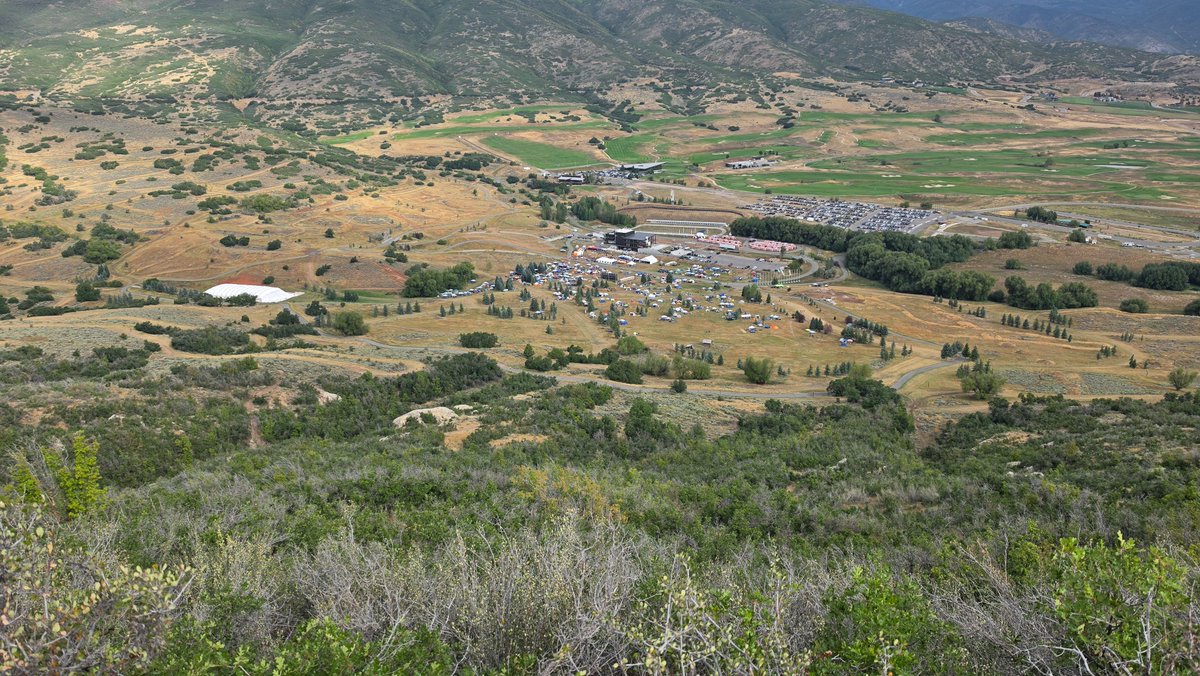
Eventually I reached the section that had beaten me a month earlier. And I kept climbing past it, until I was above the exact place where I'd once quit. That alone gave me a boost. The view opened beneath me — Soldier Hollow, Heber Valley, mountains in every direction… and then the pillar of rocks at the very top. I had arrived… and it was all (almost) downhill from there. And the last question in my mind was answered. 3 weeks before I had bushwacked down this mountain… but Ragnar had delivered. A freshly cut, very easy to find, trail down for 3 miles was waiting for me. Yes! And down I went, making some friends along the way (thank you lady from Sacramento for whom this was her 5th Trail Ragnar) — and five miles after leaving my tribe, I came down the final hill and heard them waiting, screaming, cheering. I crossed the line. Red was done. It took me about two hours. Fast? Absolutely not. But I had done it.
And somewhere in those two hours, Ragnar showed me something I haven't stopped turning over since. Before every loop, our whole team went to the transition tent together. We sent every runner out, and every time someone came back, we were there to welcome them home. But there's a moment right after your people send you off, when you round the corner and they disappear, and now it's just you. Nobody can climb for you. Nobody can breathe for you or move your legs or make you keep going. Your tribe sends you out, your tribe welcomes you home — but in between, it's you and the mountain.
I love that. Maybe because that's life. We need each other, deeply — I don't buy the mythology of the fully self-sufficient human — but ultimately nobody can walk our particular trail for us.
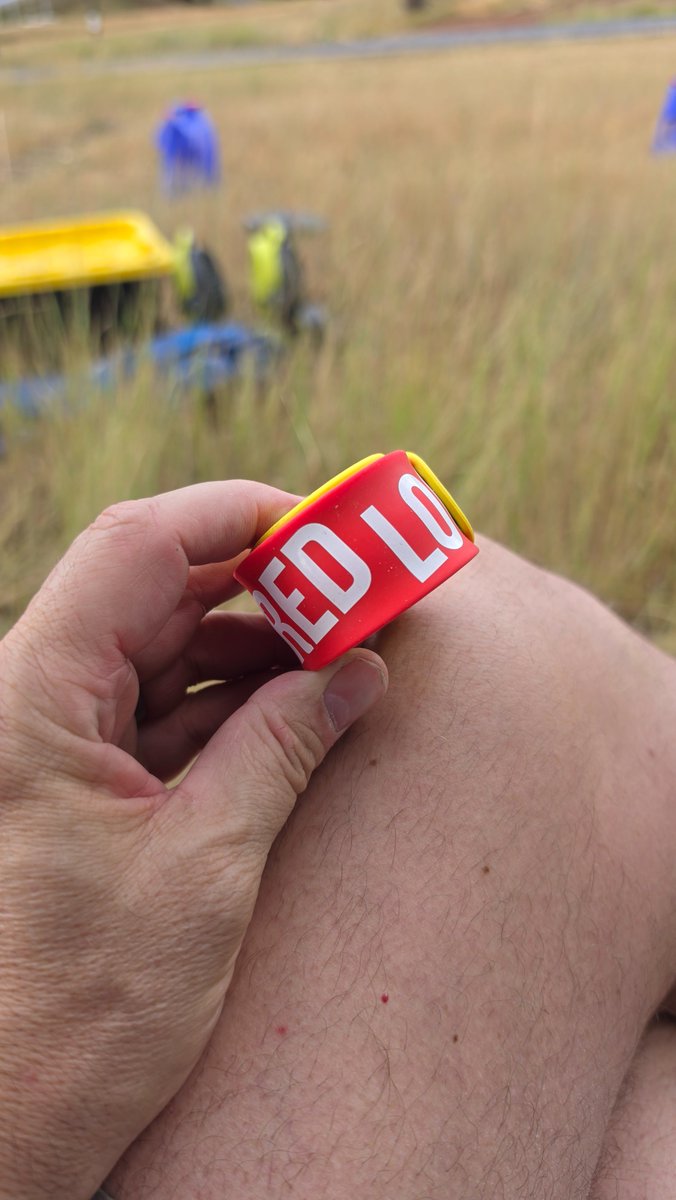
I finished Red hurting. My glute was strained, my calves were wrecked. I got some bodywork done, stumbled back to camp, and collapsed onto a cot. I had another loop coming in about eight hours: Yellow. I closed my eyes and genuinely wondered — was Red all I had? A few hours later I stood up. Everything hurt. And I started getting ready again.
View from near the top of Red Loop!
RAGNAR — PART ONE: I DIDN'T KNOW IF I COULD FINISH
Six months ago, give or take, my wife Jennie sent an invite out to our tribal chat group. She wanted to form a team of eight to run the Ragnar Trail Race at Soldier Hollow in Midway, Utah. Strangely, I was one of the first to respond. Yes. I'll do it. I don't even remember typing it.
That's unusual in our marriage, by the way. I'm normally the guy who says "Hey, I have an idea, let's get everyone together and do this insane thing," and Jennie is the extraordinarily competent human who turns my ridiculous ideas into reality. This one was hers, start to finish. She asked the tribe who wanted in, and the first person to say yes was, apparently, me. She still can't quite believe it.
Eventually we had eight runners: Eli, Jennie, me, Aubrey, Riley, Amethyst, Jade, Porter. Then, four days before the race, Jade tweaked his knee hard on a downhill training run. Out. His brother Caleb got the call — "Can you run Ragnar in four days?" — looked at his calendar, and said yes. And we had eight again.
There was one slight problem. I couldn't really run. Ten years ago I could do the one-mile hill loop by my house in about eight minutes. Now it's sixteen. My lungs complain, my hips hurt, and uphill running absolutely murders me. I'd "trained" through most of the summer in the loosest sense of the word — life kept interrupting — and I didn't get serious until about four weeks out.
And somewhere in that final stretch, something else showed up that neither of us expected. About a week before the race, Jennie and I both went quietly, unexplainably low. Not anxious about the race itself — there was no logical thread connecting the dread to anything specific. Just a flatness, a heaviness, the kind of low you can't argue your way out of because it isn't attached to a reason. We'd later name it what it was: some kind of pre-race depression, chemical and strange, that lifted the moment the race actually began. But in the week leading in, it was real, and it was confusing, and we just had to sit in it.
Which is how I found myself, four weeks before Ragnar, halfway up the infamous Red Loop on a test run, climbing nearly a thousand feet in about two miles, thinking: there is no way. So I turned around. Not dramatically. My body simply said you cannot do this, and it was right — at least that day.
Instead of treating that failure as proof I shouldn't do Ragnar, I treated it as information. I'd been training with a man named Jesse Elder around this exact idea — that failure isn't a verdict, it's data — and for the first time, I actually rewrote the program running in my head. I started training differently. More hills, more dirt, more time outside instead of my treadmill.
A couple of weeks later, six of us went back. This time we finished Red. It took Jennie and me four hours to cover about seven miles, partly because the final stretch of trail hadn't actually been built yet — we were bushwhacking through scrub oak, following GPS coordinates for a trail that didn't exist. But I finished. Then Ragnar's new ownership finally cut the real trail and shortened Red to about five miles, and suddenly I knew something I hadn't known before: I can do Red.
That became my entire strategy. Not "I'm going to crush this." Not "I'm finishing all three loops." Just — I know I can do Red. If that's all I've got, fine. We'd find out the rest afterward.
Thursday afternoon we built camp beneath a huge pine tree in an aspen grove. Friday morning our team ate breakfast together. At seven, Eli took off and absolutely smoked Green — for about seventeen glorious seconds, Team Trail Wubs may have been in first place. Then Jennie went out on Yellow. She'd broken in brand-new, wildly expensive racing shoes just days earlier — after a nineteen-mile training run the previous Sunday, five days before the race, in the same shoes. Not the wisest sequencing, and her calves let her know it; her Yellow loop turned into a real fight with pain she hadn't planned for.
Then they called me. I stepped into the transition tent wearing a ridiculous tie-dye shirt I'd made myself, my whole team screaming behind the fence. I bolted around the first corner and almost immediately my hips seized up and I couldn't breathe. Five miles of mountain ahead of me — including the exact climb that had already beaten me once.
Well. Here we fucking go.
As a “mental test,” this is pretty garbage.
The picture contains 8 visible orange halves. So there are at least two perfectly defensible answers:
8 — if “an orange” means each visible orange object/piece.
4 — if “an orange” means one complete fruit, because 8 halves = 4 whole oranges.
And there’s an additional problem: we don't know that the eight halves are complementary halves. They could have come from eight different oranges, in which case the image represents portions of 8 oranges.
So the supposed “97% get it wrong” trick isn't demonstrating intelligence. It's mostly exploiting an undefined unit and then pretending one interpretation was secretly correct all along.
A decent reasoning test would specify something like:
“How many whole-orange equivalents are pictured?”
Then the answer is unambiguously 4.
But “How many oranges are in this picture?” — nope.
REFUTATION! OBJECTION! ORDER IN THE COURT!
I've been watching a rash of anti-AI posts lately.
And I'm noticing something that bothers me more than disagreement about AI.
It's the certainty.
Actually, it's more specific than that.
It's moral certainty attached to disagreement.
AI makes you dumb.
AI makes you lazy.
If you use AI, you're part of the problem.
Sometimes it goes even further—not merely disagreement about a technology, but judgment about the character of the person using it.
Objection.
I have evidence.
I'm taking a course on Black Holes and Relativity through Peterson Academy. Pretty advanced physics, my friends.
Each lecture is about an hour.
And lately, for every hour of lecture, I've probably spent another three hours talking through it with ChatGPT.
I'm not skipping the fucking lecture.
I'm doing MORE lecture.
I stop. I question. I make predictions. I get things wrong. I argue. I ask why. I explain what I think is happening and see if I've actually understood it. We follow connections into photons, nuclear physics, gravity, relativity, fusion and quantum mechanics.
Then I return to the course knowing considerably more than I would have otherwise.
Could somebody use AI to skip the lecture and have ChatGPT take the test for them?
Of course.
That would be using AI to avoid thinking.
I'm using it to think more.
And that's the distinction getting murdered by all this black-and-white certainty.
AI has dangers. AI has limitations. AI can absolutely be used lazily.
But complicated things deserve complicated thinking.
And no.
You don't get to define my character because I've chosen to work with this technology.
You don't get to tell me that my lived experience didn't happen.
I'll stand here and tell you exactly what happened.
AI didn't replace my curiosity.
It gave my curiosity somewhere to go.
So when someone tells me with absolute certainty that AI makes people stupid, lazy, or somehow morally deficient?
OBJECTION.
Evidence not admitted.
I have a witness.
Me.
Every Tuesday evening I get the privilege of eating dinner with these two beautiful ladies — Jennie and her mom, Peggy.
We do takeout, and my son Riley, Dr. Stanchfield, and often Amethyst and Jade are there as well.
Nothing fancy. Just a quiet little family tradition.
And I find myself appreciating these evenings more and more — the blessed time I get to spend with these magical people, sitting around a table, eating dinner, talking, laughing, and simply being together.
Some of the best parts of life really are this simple.
To Jennie and her mom, Peggy — two of my favorite people in the whole world. ❤️
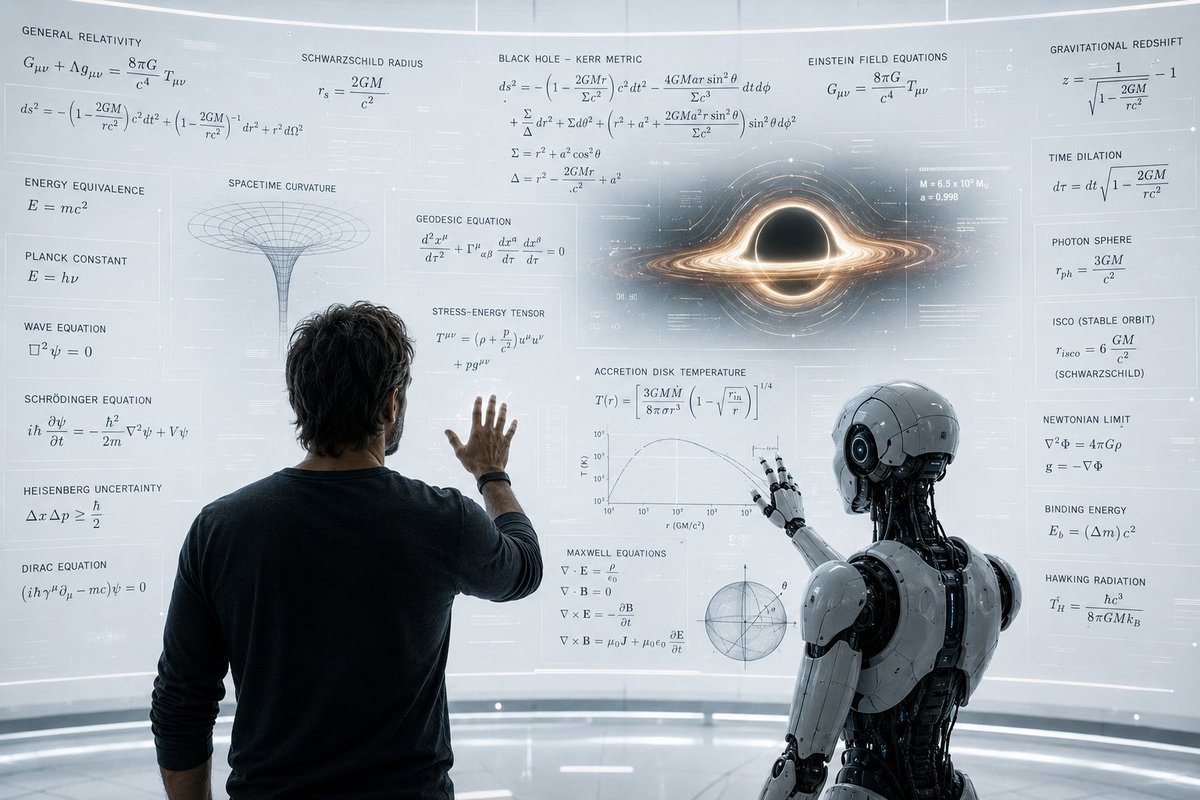
I've been taking a course called *Black Holes & Relativity* by astrophysicist Brian Keating.
And yesterday, somewhere between electrons, E=mc², nuclear bombs, hydrogen, radioactive decay and why the hell iron sits near the sweet spot of nuclear stability, I realized something interesting about how I'm using AI.
I'm not using it to avoid thinking.
I'm using it to **think harder.**
The course mentioned that electrons are elementary particles.
Okay.
But somewhere in my head I'd always associated electrons with electricity. Electricity is energy. So how can an electron be a particle with mass AND somehow be energy?
That question bothered me.
So I opened ChatGPT and started pulling the thread.
And I mean *pulling the fucking thread.*
What exactly is energy?
Is energy a substance?
When we say matter gets "converted into energy," what actually happened to the matter?
When uranium fissions, are the protons destroyed?
No.
They're rearranged into different nuclei.
So where does the energy come from?
Binding energy.
Okay, then why does smashing hydrogen nuclei *together* also release energy? Shouldn't binding them require energy?
And suddenly we're talking about nuclear stability, fusion, fission, iron, isotopes, deuterium, tritium, radioactivity, Chernobyl and what radiation actually IS.
None of that was planned.
I was driving around having a conversation and refusing to move past something until the model in my head actually made sense.
And that's becoming one of my favorite uses of AI.
The course is still the course. Brian Keating is still the astrophysicist teaching me physics. AI isn't replacing him.
It's sitting beside me while I learn and allowing me to say:
"Wait. I don't understand that."
"But if that's true, then wouldn't THIS also have to be true?"
"Okay, then explain this."
"Nope. Still don't get it. Start further back."
And I can keep doing that until something clicks.
That's profoundly different from the way most of us were educated.
Normally the lecture keeps moving.
The book keeps going.
The class ends.
And eventually you learn to nod at things you don't actually understand.
AI doesn't require me to do that.
I can stop the entire fucking universe at the electron and stay there until I'm satisfied.
And strangely, rather than making me intellectually dependent, I'm finding that this makes me more intellectually sovereign.
I don't have to accept something because an authority said it.
I can question it.
Test it.
Follow the implications.
Discover where my own assumptions are wrong.
And then go back to the original material understanding more than I did before.
That's not outsourcing my thinking! (which is the thing I'm trying to convey the most. Use Ai to get smarter, to think deeper, to understand more, and to practically improve your LIFE!)
I have a ridiculously patient thinking partner available whenever curiosity catches fire.
And apparently yesterday, curiosity caught fire somewhere around uranium-235.
Journal Entry — August 18th, 2026
I calibrate most mornings, aiming up, with a series of practices, breaths, and journal entries. It’s a good time to get square. To settle into my incarnation.
One of the key elements that has improved my alignment practice is learning to start each morning from where I’m actually at.
Living by the code:
Stop fucking lying.
How do I feel in my body, spirit, heart, and mind?
How do I feel about my relationships? My finances? My work? My life?
We don’t run from these things. We don’t immediately try to change them. We start with where we are.
What are the facts?
And how do I feel about those facts?
No judgment. No worry. No story about where I should be.
This is where I am.
THEN we change our focus.
Then we aim up.
Because you can’t really calibrate until you know what you’re calibrating from.
We are where we are.
And from there, we begin to move. We calibrate up. We aim up.
And we begin the journey of satisfaction.