One uniquely exhausting thing about writing on China is that every proper argument seems to require preparing a mini Wikipedia of caveats, footnotes, and pre-emptive clarifications. You can't simply make the argument you actually want to make. You have to first ask yourself what assumptions your readers will bring to the table or what common misconceptions or debates might be triggered by a particular phrasing. Trying to make a good faith effort of it requires trying to anticipate as many possible objections as possible before they occur and getting ahead of them.
As an example from my piece today, I wrote that industrialization is not a queue, and that productive capacity does not automatically relocate to whichever country has the lowest wages once another country moves up the value chain - it also needs a foundation of productive capacity to receive it. To me, that seemed like a fairly straightforward point about development economics.
One critical response I received: "China had nothing when we decided to industrialize them 50 years ago."
So then we aren't discussing my argument anymore. We are now debating whether China itself possessed any meaningful industrial capacity prior to the reform era...something I had neglected to pre-empt in my piece.
Suddenly I find myself wondering whether I should have included an extra paragraph in the price or at least. footnote explaining that China in 1979 was poor but not a barren wasteland. It already possessed infrastructure, industrial enterprises, power generation, engineers, railways, ports, literate human capital, state capacity etc. It was in fact unusually well positioned to receive FDI. I know this. China scholars know this. People that study development economics know this. But most people probably don't know this...so is it the critic's fault for being ignorant, or my fault for not foreseeing the issue?
Of course even if I got that one, I'd probably miss another. The piece is still going. Maybe someone will object to how I've defined infrastructure or challenge my definition of industrialization itself. Or more likely an objection I can't even imagine yet. No matter how many caveats and qualifications you add, someone will always find a background assumption you neglected to footnote.
The dispiriting thing here isn't that people will disagree with me. That's part of sharing an opinion in a public space. But it's a bummer that China discussions feels like they require reconstructing an entire agreed worldview from first principles before you can have any kind of conversation. I think that's probably something most people writing about China have experienced. Or at least will recognize.
The more I learn about Chinese history the more jealous I am for them— they have a much longer, almost overwhelmingly so, tradition of record keeping. In the West, ones antiquity comes out of cosmopolitanism— we must look far afield to find our ancient records.
Marco Rubio on Iran:
I do think the world is coming to a point now where it's clear that Iran—at least some people in Iran—want to control the straits and hold it as leverage against the world.
And the world has to decide whether or not it's going to allow an international waterway to be under the control of a country like this. It would be completely illegal, unlawful, and unacceptable.
The United States will continue to do what it needs to protect global shipping, but other countries need to begin to step up and provide, whether it's hardware or finances, to help carry that burden.
Kimi K3 has received far more love than we expected, and our GPUs are feeling it.
Over the past 48 hours, demand has pushed close to the limits of our current capacity. To protect the experience of existing subscribers, we're temporarily pausing new subscriptions and prioritizing compute for current members. Existing subscribed users are not affected.
We're adding capacity as fast as we can and will reopen new subscription spots in batches.
Going forward, we'll also split membership into two more focused plans: Kimi Membership for Kimi Web, App, and Work; and Kimi Code Membership for coding workflows. This will help us match compute more precisely and keep the experience stable.
Thank you for your patience and understanding!
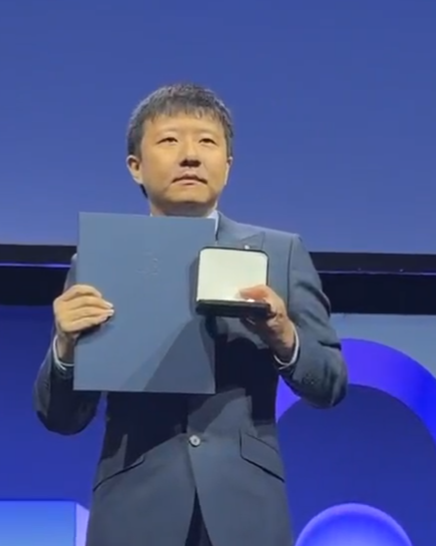
The Chinese president stood on a stage in Shanghai and laid out China's entire AI playbook in one speech.
It was his first-ever in-person appearance at the World AI Conference. I went through the whole thing and pulled out everything that matters.
- he opened with his signature maxim that great changes unseen in a century are unfolding across the world.
- he said AI development should not be a solo performance by a single country but a symphony of international cooperation.
- he reaffirmed China's commitment to open source AI in the name of openness and shared benefit.
- he warned against overstretching the concept of national security in AI, where one country puts its own security above everyone else's.
- he said China opposes the emergence of new historical injustices in AI, one of the strongest-worded lines in the speech.
- he pledged 5,000 AI training opportunities for developing countries over the next five years, naming ASEAN, the Arab League, the African Union, CELAC, the SCO, and BRICS.
- he committed to giving 30 countries access to a Chinese AI weather system that provides early disaster warnings.
- a day before the speech, 29 countries signed the agreement creating a new World AI Cooperation Organization headquartered in Shanghai.
strip away the politics and one thing stands out to me. he didn't pitch benchmarks or chatbots. he pitched AI as infrastructure, weather warnings for countries that lose thousands of lives to storms they never saw coming, and training programs for regions the AI boom has skipped.
meanwhile most of the Western AI conversation revolves around which lab ships the next frontier model.
I don't care who wins the race. I care whether the computing power reaches the people who need it.
The full speech is below, and it's worth your time.
I'm confused.
The USA has the most powerful military on Earth. We've bombed the HELL out of Iran for 4 months. Trump says their Air Force, Navy, and nearly all of their missile capabilities are destroyed.
...so how is Iran still capable of hitting US bases right now???
That was a really cool experience! After about 5 hours of walking we noticed a very remote yurt, lost in the mountains, so we went to check it out.
There we met two Kyrgyz boys (at first we assumed they were Khazak but we were wrong) - two brothers 14 and 12 years old - who lived there with their horses and cows.
As they explain, they were a whole family living there during the summer: these 2 boys, their sister, and parents. The parents were out working when we went there. During the rest of the year, they live down in the city where they have an apartment and where the kids go to school.
They kindly invited us in and we bought some of their homemade cheese and yogurt. We paid them through WeChat, which really goes to show how universal it is in China: even in the most remote places!
We also spoke about life and... guess what... Mbappé, who truly is the only thing people worldwide seem to know about France these days 😅
Having traveled in some 64 countries so far, China is really one of the only countries out there where you can still find people - like them - living truly in accordance with their ancestral ways and their traditions. I've met hundreds of people like them over the years in China.
Which is why the accusations against China on eradicating minority cultures are so shameful: they're literally best in class worldwide in letting people preserve their traditional ways of life.
Omg how lucky are the Taiwanese rly? American allies during the American century…actual Chinese during the Chinese century…
Just have to finesse the transition 😅