In a few years, websites nominated for the Awwwards will be truly mind-blowing thanks to this HTML-in-Canvas feature.🤯
I highly recommend trying it out -> https://t.co/Id8nk5v8rw
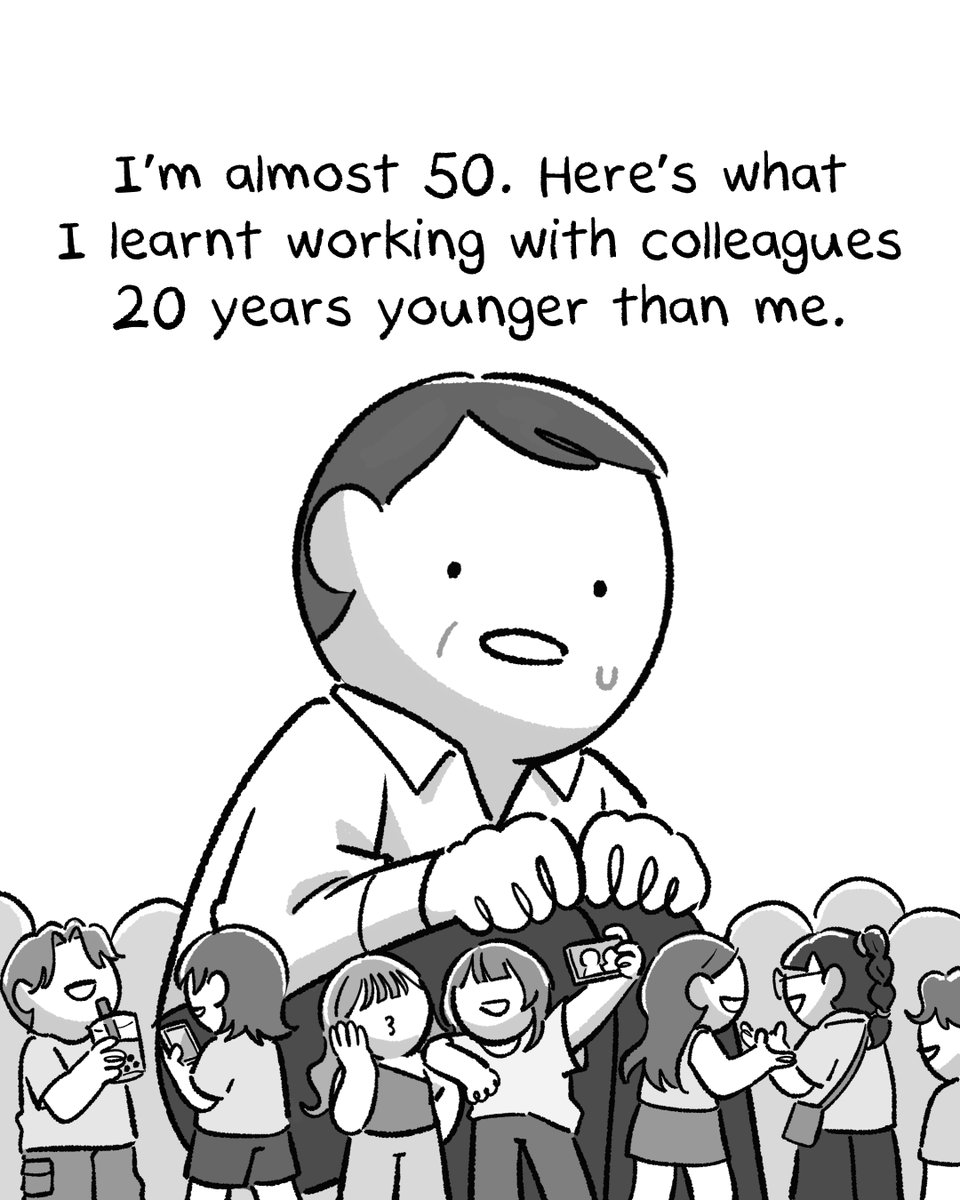
Reflections from your friendly neighbourhood stegosaurus.
DISCLAIMER: THIS POST IS BROUGHT TO YOU BY MOM. DO NOT PROCEED IF YOU DON’T LIKE SPONSORED CONTENT.
BOOM!
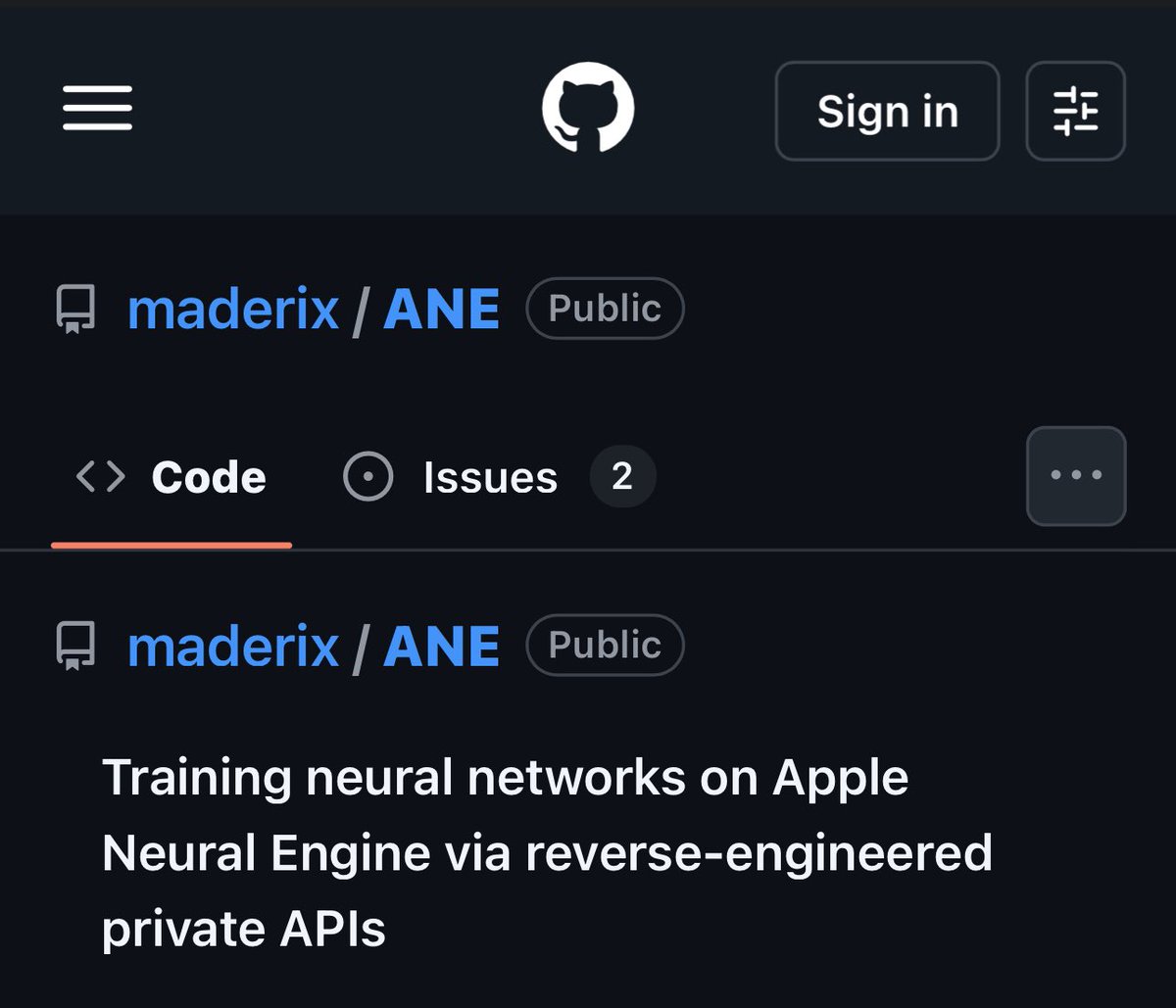
Apple’s Neural Engine Was Just Cracked Open, The Future of AI Training Just Change And Zero-Human Company Is Already Testing It!
In a jaw-dropping open-source breakthrough, a lone developer has done what Apple said was impossible: full neural network training– including backpropagation – directly on the Apple Neural Engine (ANE). No CoreML, no Metal, no GPU. Pure, blazing ANE silicon.
The project (https://t.co/jrk67hf9p1) delivers a single transformer layer (dim=768, seq=512) in just 9.3 ms per step at 1.78 TFLOPS sustained with only 11.2% ANE utilization on an M4 chip. That’s the same idle chip sitting in millions of Mac minis, MacBooks, and iMacs right now.
Translation? Your desktop just became a hyper-efficient AI supercomputer.
The numbers are insane: M4 ANE hits roughly 6.6 TFLOPS per watt – 80 times more efficient than an NVIDIA A100. Real-world throughput crushes Apple’s own “38 TOPS” marketing claims. And because it sips power like a phone, you can train 24/7 without melting your electricity bill or the planet.
At The Zero-Human Company, we’re not waiting. We are testing this right now on real ZHC workloads. This is the missing piece we’ve been chasing for our Zero Human Company vision: reviving archived data into fully autonomous AI systems with zero human overhead.
This is world-changing.
For the first time, anyone with a Mac can fine-tune, train, or iterate massive models locally, privately, and at a fraction of the cost of cloud GPUs.
No more renting $40,000 A100 clusters. No more waiting in queues. No more massive carbon footprints.
Training costs that used to run into the tens or hundreds of thousands of dollars? Plummeting toward pennies on the dollar – mostly just the electricity your Mac was already using while it sat idle.
The AI revolution just moved from billion-dollar data centers to your desk.
WE WILL HAVE A NEW ZERO-HUMAN COMPANY @ HOME wage for equipped Macs that will be up to 100x more income for the owner!
We’re only at the beginning (single-layer today, full models tomorrow), but the door is wide open. Ultra-cheap, on-device training is here.
The future isn’t coming. It’s already running on your Mac.
Welcome to the Zero-Human Company era.
I've worked in Tech for 15 years, and this has been my career path:
1. Learn English
2. Learn how to code
3. Get job at local consultancy
4. Get job at local startup
5. Get remote job at US startup
6. Get fractional jobs at US startups
My key takeaways are:
1. Learning English is non-negotiable
I'd be trapped in local jobs if I only spoke my local language.
- English allows me to consume 80% of the internet's content -> I learn faster!
- English allows me to work in English speaking companies -> Higher salary!
2. Learning how to code was fundamental for me
Software code is the ultimate form of leverage, because software products allow companies to scale and sell their products globally.
This allowed me to work at companies that make more money, thus paying higher salaries.
Contrary to popular belief, AI won't make coding a redundant skill. Software is more important than ever, there's simply a myriad of new and more powerful tools to master.
3. Learning how to code is great, but not sufficient
Only by gaining real world experience I learned how to leverage such skills to generate value to my employers and their clients.
It's ok to work "non-optimal" jobs, as long as those help with jumping to a better jobs ahead.
And yes, AI is making these "business skills" more important than ever, even for technical jobs.
4. Working in startups can accelerate one's learning
It comes with risks, though. Startups depend on finding clients or investor funding, which many times doesn't happen. Layoffs are real, and work is frequently unstructured.
Still, working at startups for most of my career has exposed me learnings I'd never have if I had worked on an enterprise ladder type of career.
5. Digital skills + valuable work experience allowed me to work remote.
This was life changing. Working remote for US startups I earned 5x more than my previous salary at local companies.
I was no longer trapped in my local market (=low salaries), and that's called salary arbitrage. However, the value of working with US startups goes way beyond the salary at the end of the month.
6. There's demand for non-full time work in tech
I found my niche in being a Fractional CTO. Which means working for tech Startups on a non-full-time capacity, ranging from 2h/week to 20h/week.
Others do the same for other positions they specialised in. It's unstructured and rather new (especially for clients). But it's a win-win proposition for both tech workers and tech startups.
That's it. Lots of learnings. Hope these can help you progress in your own career :)
Introducing https://t.co/nJkMOhuZ3c 🚨
The ultra-fast Linux-like OS in the browser, it's a mapping of Linux APIs to the browser APIs.
Now run that untrusted code. You might not need a cloud sandbox! Made for Agents and Humans!
Introducing visual-json
> JSON editing with human-first ergonomics
– Minimalist
– Embeddable
– Schema-aware
– Extensible
– Drag and drop
– Keyboard navigation
– Tree view to drill into deeply nested data
This time, instead of setting impossible goals for the new year, I looked back. And I discovered that the last five years have been incredible and full of wonderful people. I am so grateful for life!
https://t.co/5STWS1bbLg
You're in a Research Scientist interview at Google.
Interviewer: We have a base LLM that's terrible at maths. How would you turn it into a maths & reasoning powerhouse?
You: I'll get some problems labeled and fine-tune the model.
Interview over.
Here's what you missed:
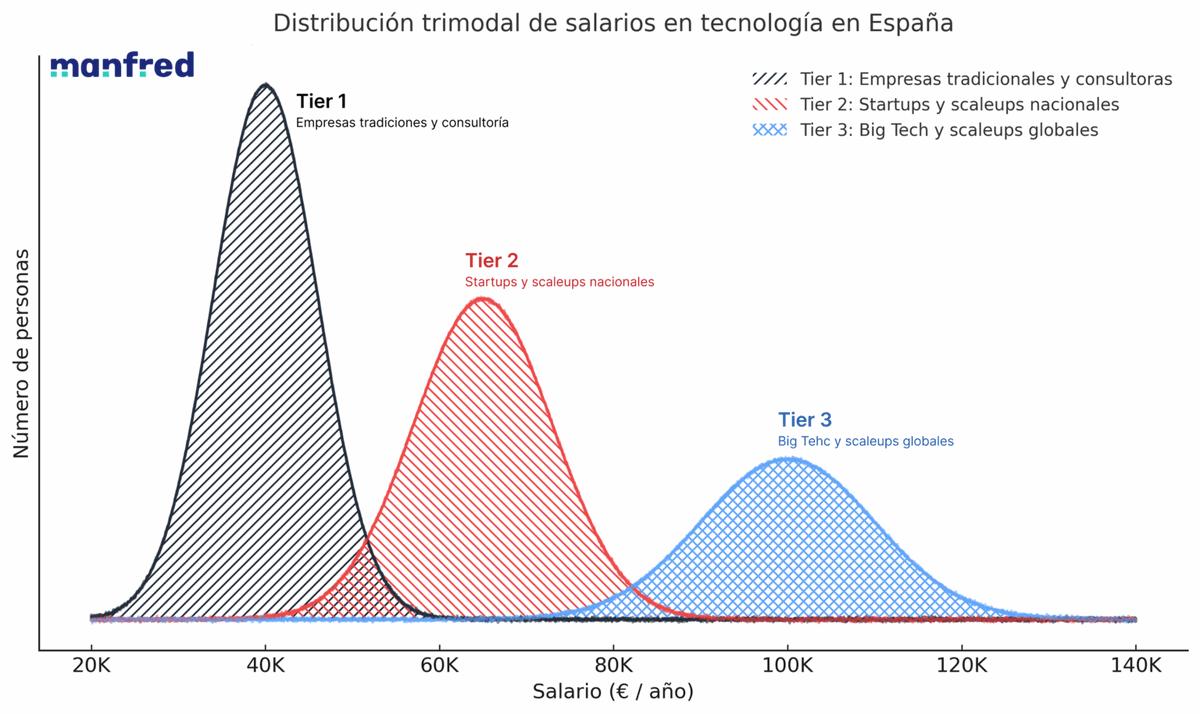
En España, un ingeniero o ingeniera de software puede cobrar 35.000€ o 130.000€.
🤷♂️Mismo rol, distinta empresa, distinto salario🌍💶
¿Por qué pasa esto?
Porque el mercado tech tiene tres ligas/ tiers salariales.
Abro hilo explicando con ejemplos 👇