I think the article strengthens the case for owning a capacity-storage company. It doesn't necessarily prove that $WDC is superior to $STX, but it does reinforce the idea that AI storage has become a meaningful investment theme in its own right rather than simply being a byproduct of the memory story.
Western Digital Corp: The Next Micron
https://t.co/iavEDvMyyn
Shares of South Korean chip giant SK Hynix surged as much as 11% on Thursday after the company said it plans to raise as much as $29.4 billion in a U.S. stock market listing.
The company plans to issue 17.79 million new shares in the form of American depositary receipts through a Nasdaq listing, according to a regulatory filing. The offer could raise 45.45 trillion won ($29.65 billion).
Click here to read more: https://t.co/OdmehtPZNZ
If $MU confirms tonight that DRAM, NAND, and HBM tightness extends into 2027-2028 — memory companies have every reason to keep spending aggressively on capacity and advanced manufacturing tools.
We're all watching the guidance, not just the quarter.
SK HYNIX IS COMING TO NASDAQ 🇺🇸
Trading begins July 10th.
$29.4 billion raise. One of the five largest share sales in history. 57% of the global #HBM market.
The chip inside every NVIDIA GPU powering the AI buildout. Supply is tight until 2030 by their own admission.
Q1 2026: $34B in sales. $24.3B operating profit. Record highs. Stock up 300% in Seoul this year.
Every dollar raised goes directly into new fabs and EUV machines.
$MU just got a direct competitor on the same exchange. Same trading hours. Same currency.
This changes everything!
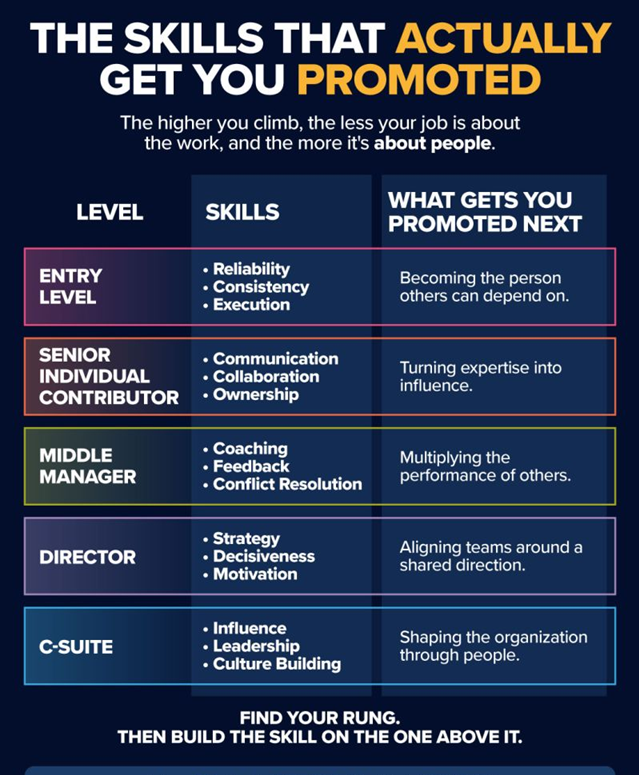
It’s interesting how companies push employees back into the office while running fully remote offshore teams.
That tells you two things:
“In-office collaboration” matters — until it doesn’t
The cost savings from offshore work are too significant to ignore
The usual arguments for being in the office are trust, productivity, and culture. But those only seem to apply when it’s convenient.
If thousands of global teams can collaborate effectively across time zones, then remote work clearly does work.
COVID already proved that most office jobs can be done from home.
So what’s the real argument for mandatory in-office work—when companies are simultaneously succeeding with distributed, remote teams?
“You can’t work remotely—but you’ll collaborate daily with someone halfway across the world.”
The contradiction is hard to ignore.
Micron is the critical layer powering the Gen #AI era. Gen AI doesn’t just need more compute — it needs smarter data movement. Micron memory + storage enables the critical intelligence that trains, scales and creates what’s next. https://t.co/4tI37u6VaS #GenAI #IntelligenceAccelerated
I spent the last week screening hundreds of small and mid-cap AI-related companies.
I started with a simple assumption:
Small-cap AI stocks should outperform their large-cap peers.
After screening hundreds of companies, I'm no longer convinced.
AI is one of the most capital-intensive revolutions in history.
What surprised me?
The exercise strengthened my conviction in the large caps.
Previous tech cycles allowed small companies to compete with established leaders.
AI feels different.
The winners increasingly require: • Massive R&D budgets • Manufacturing scale • Supply chain access • Hyperscaler relationships • Capital
Memory. Networking. Optics. Cooling. Power.
The most indispensable functions in the AI economy are increasingly dominated by companies with the resources to operate at hyperscale.
That doesn't mean small caps can't win.
It means they need to create a new category—not simply be a smaller version of an existing leader.
Microsoft Teams will soon know where you are and when you're working!
Meanwhile, Teams itself, goes down every other Tuesday, buries messages in channels no one checks, and schedules meetings that could've been emails.
🚨 SOUTH KOREA JUST PROPOSED TAXING UNREALIZED GAINS.
And this is one of the major reasons behind today's massive selloff in the Korean market, now being called BLACK TUESDAY in Korea.
At a forum hosted by South Korea's ruling Democratic Party, lawmakers called for comprehensive taxation that would treat unrealized gains on stocks and real estate as taxable income, even before the asset is ever sold.
The ruling party has pushed escalating wealth tax measures throughout 2026, including a February forum proposing to lower the real estate capital gains exemption threshold from 1.2 billion won to 800 million won, and an April push to abolish the long term holding tax deduction entirely.
Today is the first time this campaign has explicitly extended to taxing unrealized stock gains.
Under current law, investors are taxed only when they sell a stock and realize a profit.
Under this proposal, investors could owe tax on paper gains they have not sold or collected, simply for holding a stock that went up in value.
The Netherlands tried almost this exact policy four months ago.
On February 12, 2026, Dutch lawmakers passed a law taxing unrealized gains on stocks, bonds, and crypto at a flat 36% every year, whether or not anything was sold.
The backlash was immediate. A petition against it gathered more than 61,000 signatures, and Shopify CEO Tobi Lutke called it "the dumbest thing any government on planet earth is pursuing right now."
Just 13 days after the bill passed, the Dutch finance minister announced the government would scrap the unrealized gains portion entirely, admitting the law "cannot pass as is."
This lands directly on a South Korean market that just ran up nearly 95% over the past year, built largely on heavy retail buying with borrowed money.
A tax on gains that exist only on paper is a direct threat to the exact rally that created that exposure in the first place.