KAT said he prayed to his late mother Jacqueline in the closing moments of Game 3
For @njdotcom, I wrote about his relationship with his mom and how @KeanUniversity dedicated its practice court to her in 2021
https://t.co/zm48GbFfvp
SCOOP: @QuinnipiacU has been sued for downgrading women's rugby to a club. It's among first Title IX suits challenging a school's application of House settlement and comes 17 years after landmark Biediger v. case spared QU volleyball. For @Sportico 👇
https://t.co/4tNwHiyc7n
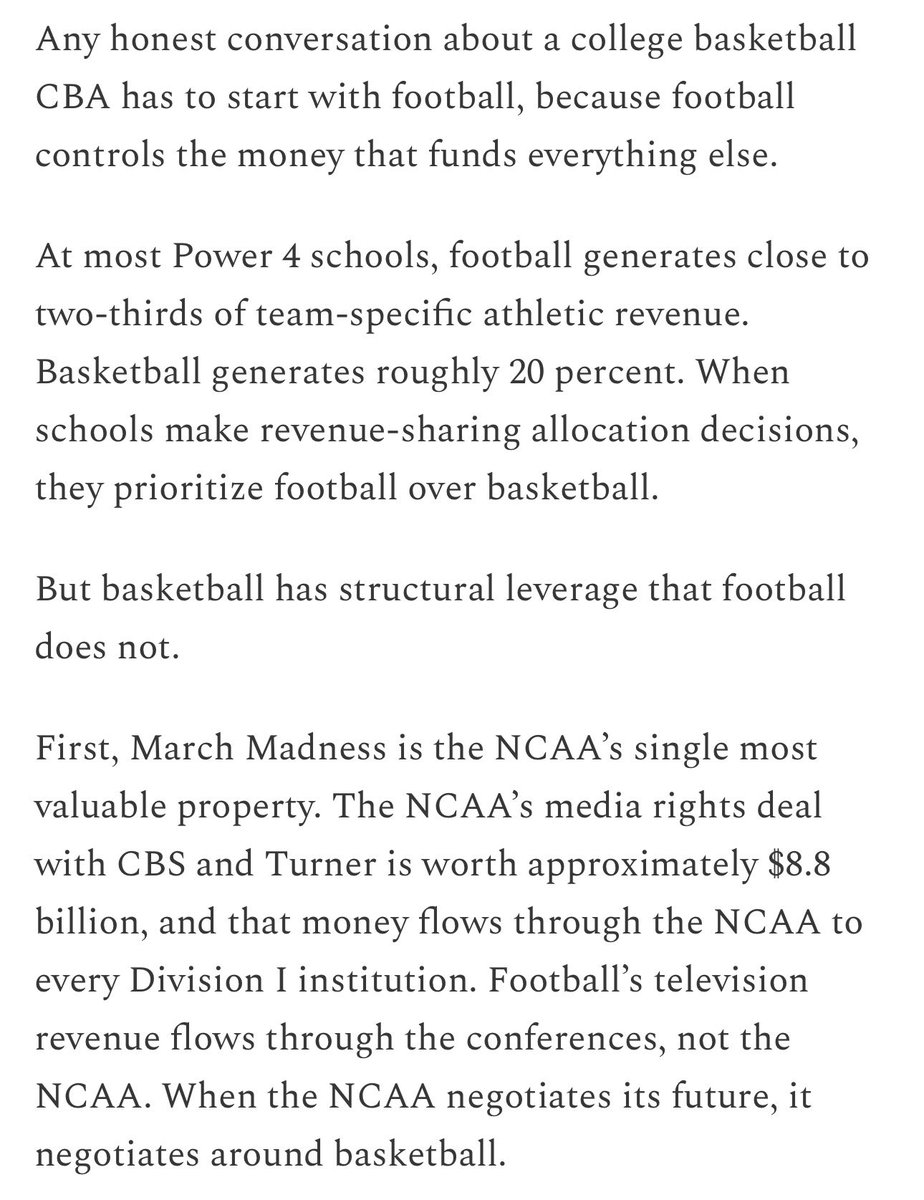
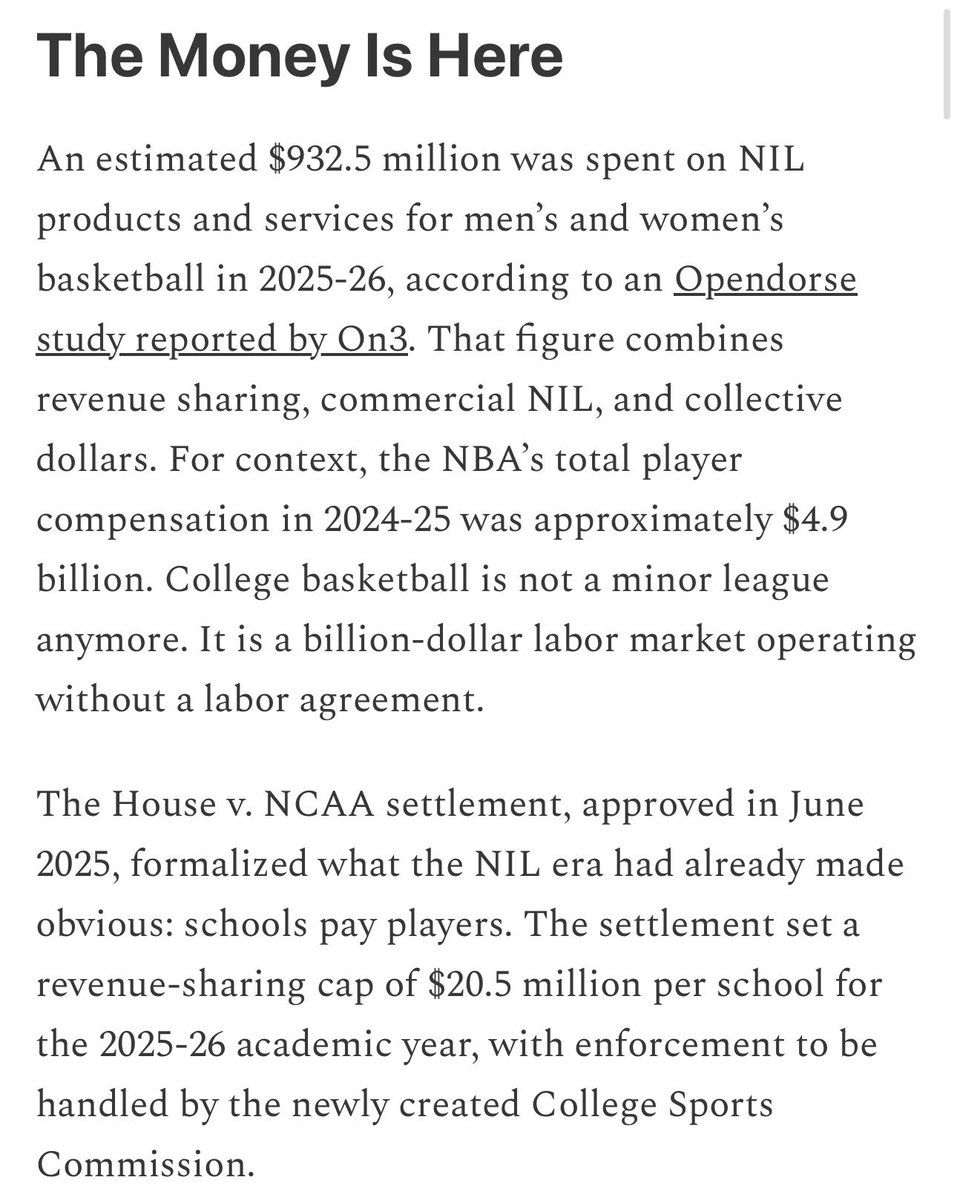
College basketball spends nearly $1 billion on player compensation and governs it with a suggestion box. Something has to give…
https://t.co/VPHiWcNv2P
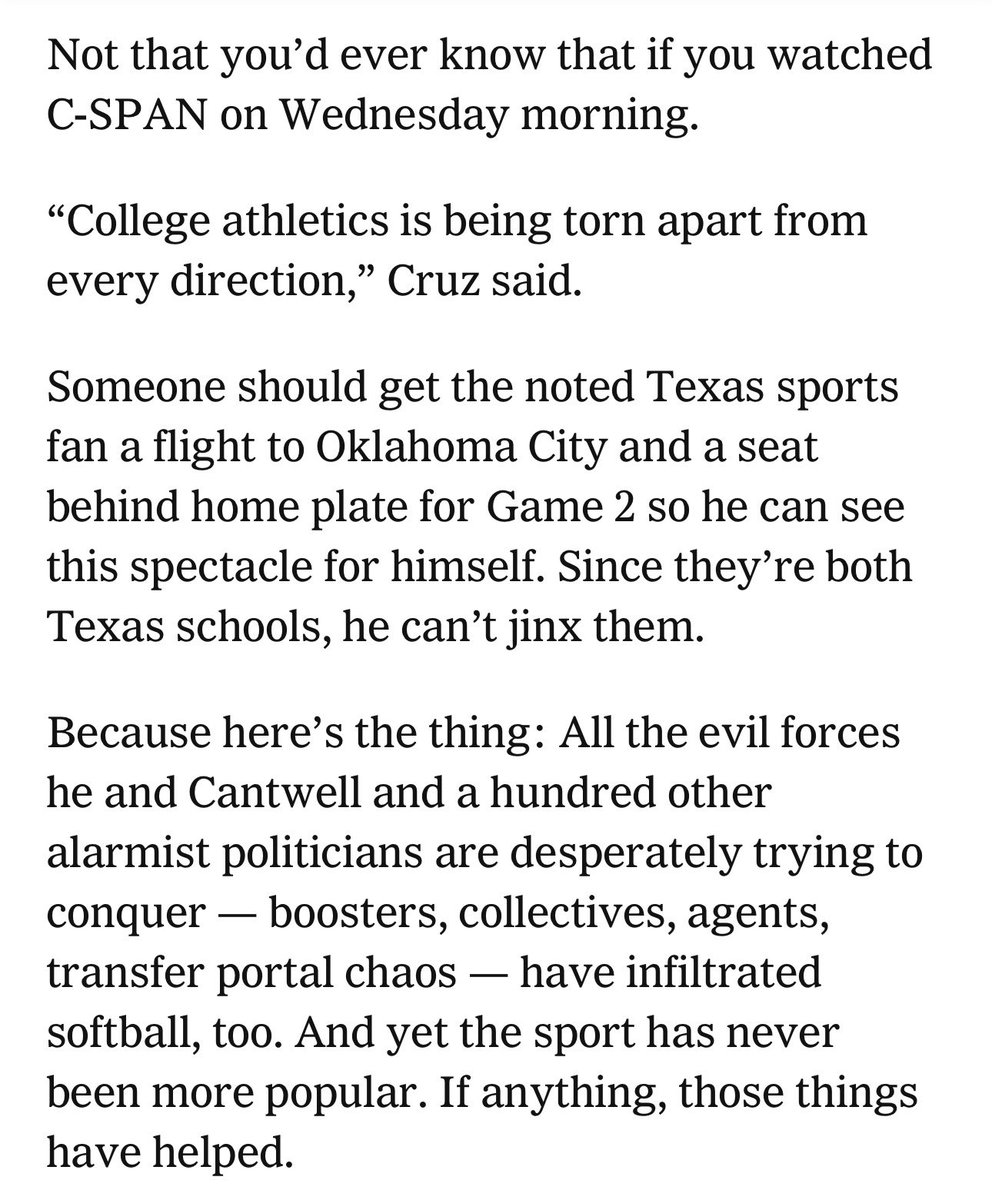
College sports are more popular than ever.
Especially women’s sports.
And in part, it’s because of the changes to college athletics over the past 5 years.
Don’t listen to the alarmist narratives being spun in order to place restrictions back on athletes.
Instead of Congress trying to swallow the ocean of problems with college sports by crafting a 111-page bill that needlessly addresses some topics that aren’t critical, perhaps Congress should address the least controversial problems one small bite at a time (transfers, 🧵
I think college sports needs reform. But the new Senate college sports bill is not the way to fix it. It creates two different systems - one for athletes that limits and micromanages their compensation; and another with no limits for coaches, ADS and sports industry execs.
Cantwell just acknowledged part of the reasoning behind this bill is to get rid of a “pay for play” system, so trying to move backwards.
Continuing to fight “pay for play” is one of college athletics’ biggest problems right now.
Better to just admit the truth & move forward.
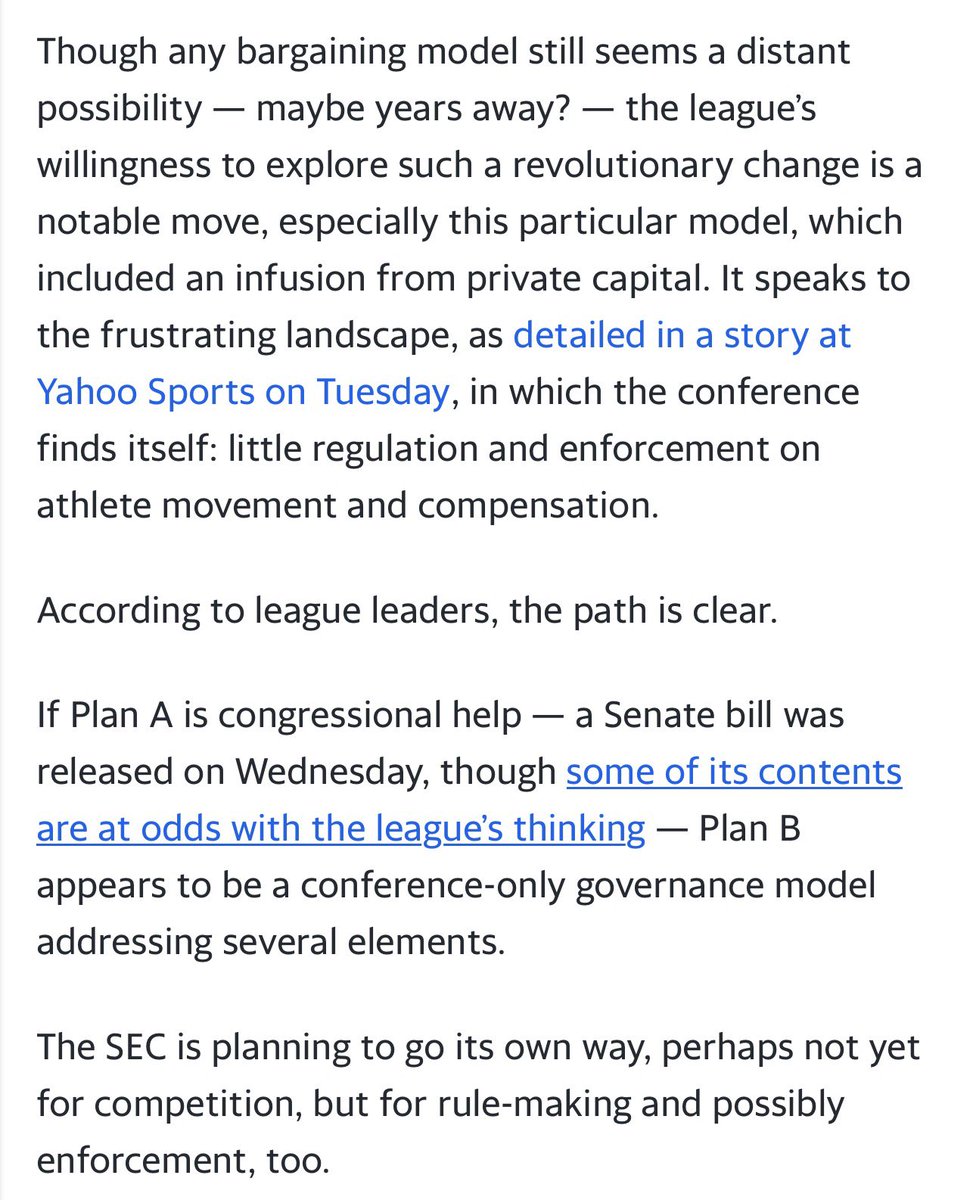
NEW: College sports leaders are now openly calling for a higher revenue-sharing cap, collective bargaining and employment💰
Ideas once considered unthinkable are now being discussed in Congress.
(via @RossDellenger)
https://t.co/ZThqQpxMpo
Since its advent, college athletics has tried to create “competitive balance” by preventing schools with more resources from using them.
It’s never worked.
Now there’s an attempt to use the fed government to limit well resourced schools.
This probably also won’t work.
I've had some time to consider yesterday's Senate hearing on the Protect College Sports Act.
It framed robust #NIL and collective activity as threats to competitive balance and Olympic sports.
But NIL is not the crisis. It's not the culprit of "chaos." It doesn't require anyone to "save college sports."
It is the market correction to decades in which institutions and the NCAA profited from athletes without providing them meaningful compensation.
Any federal legislation must strengthen, not constrain, athlete NIL rights and mobility.
Preempting strong state laws, imposing artificial distinctions between "legitimate" deals and market arrangements, or layering new transfer restrictions cannot and must not be done in the absence of bargaining with athletes.
Athletes built the value. People seem to be missing that point. They believe coaches deserve riches and athletes should be pleased with whatever pittance they're provided. No. Athletes deserve a framework that treats them as the principal stakeholders and not as afterthoughts.
In an interesting portion of her testimony, Pac-12 commissioner Teresa Gould believes that the industry should engage in honest conversations around “student-athlete employment and collective bargaining.” She’s the latest respected administrator to suggest a CBA. Momentum grows.
Today, let's discuss why the transfer rules in the Cruz-Cantwell Protect College Sports Act are bad policy.
The bill guarantees athletes one penalty-free transfer during their college careers. Any second transfer generally requires sitting out a full year of eligibility, with only narrow exceptions such as the discontinuation of a sport or documented cases of sexual assault or harassment.
This is being presented as a return to common sense that will protect the vast majority of college athletes from the "chaos" of constant movement.
But the rule does not account for the legitimate circumstances that drive many transfers. Athletes change environments because a coach forces them out, a scheme no longer fits their development, playing time has disappeared, academic or medical needs require a different setting, or family circumstances necessitate a change.
The exceptions in the bill are too narrow to cover these ordinary but real situations. Disputes over whether a coaching change qualifies, how quickly it must occur, or whether a program alteration rises to the level of “discontinuation” will likely result in litigation.
Let's also not forget that, in August 2024, Judge John Preston Bailey of the U.S. District Court for the Northern District of West Virginia permanently restrained and enjoined taking any action to retaliate against athletes who transferred schools. That is precisely what Congress intends to do with this bill.
The policy also does nothing about the coaching carousel that will continue with few meaningful restraints. NIL opportunities, both legitimate third-party brand deals and institutional arrangements, still create powerful incentives for athletes to seek the best fit for their market value and development. Curbing athlete mobility tilts leverage further toward institutions.
The federal government has historically left the details of eligibility and transfer administration to the NCAA and the courts. Why is Congress the right body to set these particular rules? The legislation clearly does not serve the athletes the legislation purports to help.
The greatest year in golf course architecture took place exactly a century ago.
LINKS Editor George Peper with more on the perfect-storm thesis for 1926—the “Goldenest Year”: https://t.co/5Tdkb0xGyA
There's a big problem with the Protect College Sports Act that few people are talking about. Congress defined an athlete spending cap by reference to the House settlement's amendment mechanism, meaning that Judge Wilken, not Congress, effectively controls what the statutory cap is. But Congress can't delegate its legislative powers to the judiciary. https://t.co/lOKAflhKNB