I’ve recently been using three different crypto cards: etherfi Cash @ether_fi Plasma One @Plasma , and Tria @useTria
After comparing them, I don’t think there is one clear winner. Each card has different strengths, cashback limits, payout currencies, and conditions.
The smartest approach is to use each one where it offers the most value.
■ etherfi Cash
The biggest advantage of etherfi is the amount you can spend while maintaining a competitive cashback rate.
• Core: 3% on the first $2,000 per month
• Luxe: 3% on the first $10,000 per month
• Pinnacle: 3% on the first $50,000 per month
• VIP: 4% on the first $50,000 per month
For me, Pinnacle is particularly useful for large purchases because very few crypto cards maintain a 3% rate across such a high monthly spending range.
The downside is that cashback is now paid in ETHFI. Once a transaction settles, the reward is locked for seven days, and at least $5 must be accumulated before it can be claimed manually.
It is less convenient than instant stablecoin cashback, but the high spending threshold still makes Pinnacle one of the strongest options for larger payments.
code japanetherfi
https://t.co/QwzZxkcEXS
■ Plasma One
Plasma One becomes especially attractive for AI-related spending and travel.
• Lite: up to 2% base cashback
• Core: up to 3% base cashback
• Platinum: up to 4% base cashback
• Core AI spending: up to 5%
• Platinum AI spending: 10%
• Eligible flights with Platinum: 10%
Platinum also includes benefits such as ChatGPT Plus, Claude Pro, airport lounge access, travel insurance, and up to $600 per year in eligible flight cashback.
However, cashback is paid in XPL, so its value can fluctuate. Core costs $199 per year or requires locking 20,000 XPL for 12 months, while Platinum requires locking 100,000 XPL for 12 months.
The benefits are strong, but the token exposure and opportunity cost of locking XPL should also be considered.
Use code: PLSMJP
https://t.co/ZisoAWVe4I
■ Tria
Tria offers the highest standard cashback rate among the three for smaller monthly spending amounts.
• Virtual: 1.5% on the first $100 per month, then 0.5%
• Signature: 4.5% on the first $1,000, then 1%
• Premium: 6% on the first $2,000, then 1%
Another major advantage is that cashback is paid in USDC or USDT, so there is no exposure to a volatile reward token.
The main drawback is the payout timing. Cashback is not instant, and under the current official terms, distribution can take up to 12 months. Because of this, I would not value pending Tria cashback in exactly the same way as cashback that is immediately available.
On top of the standard rates, Tria is currently running a special rewards event.
Depending on the boosts unlocked by each user, cashback can reach around 8%, while the monthly cashback-eligible spending limit can increase to approximately $5,000–$8,000.
For users who receive stronger boosts, Tria is currently even more attractive than its standard cashback structure suggests.
Join me on Tria.
https://t.co/PmcTcEkyYC
■ How I would use all three
• AI subscriptions and eligible flights → Plasma One
• First $2,000 of regular monthly spending → Tria Premium
• If holding Plasma Platinum, the next $3,000 → Plasma One
• Larger purchases beyond that → etherfi Pinnacle
My conclusion:
Highest cashback rate on smaller spending → Tria
Best for AI subscriptions and flights → Plasma One
Best for large purchases → etherfi Pinnacle
Cashback rates alone do not tell the full story.
The reward currency, payout timing, FX fees, spending thresholds, card costs, and capital required for higher tiers can significantly change the real return.
These programs also change frequently, so always check the latest conditions in the app before making a large payment.
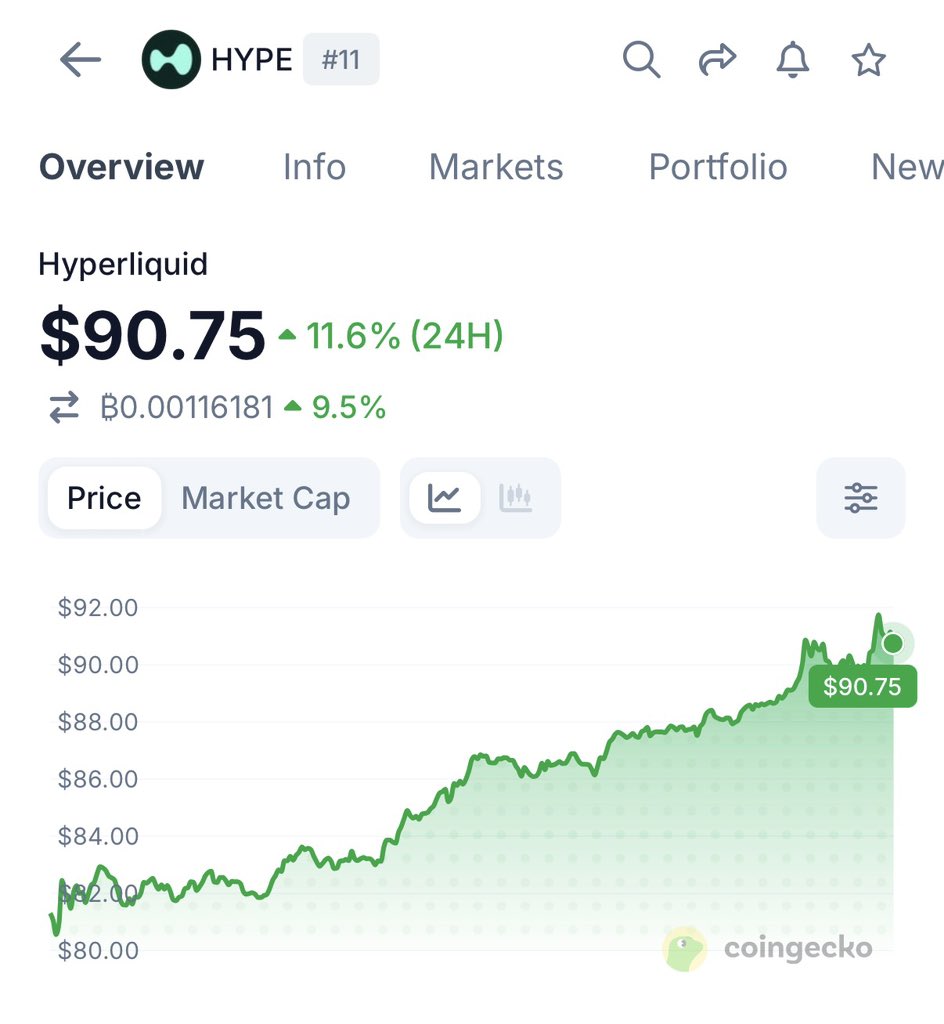
My long-term view on $HYPE:
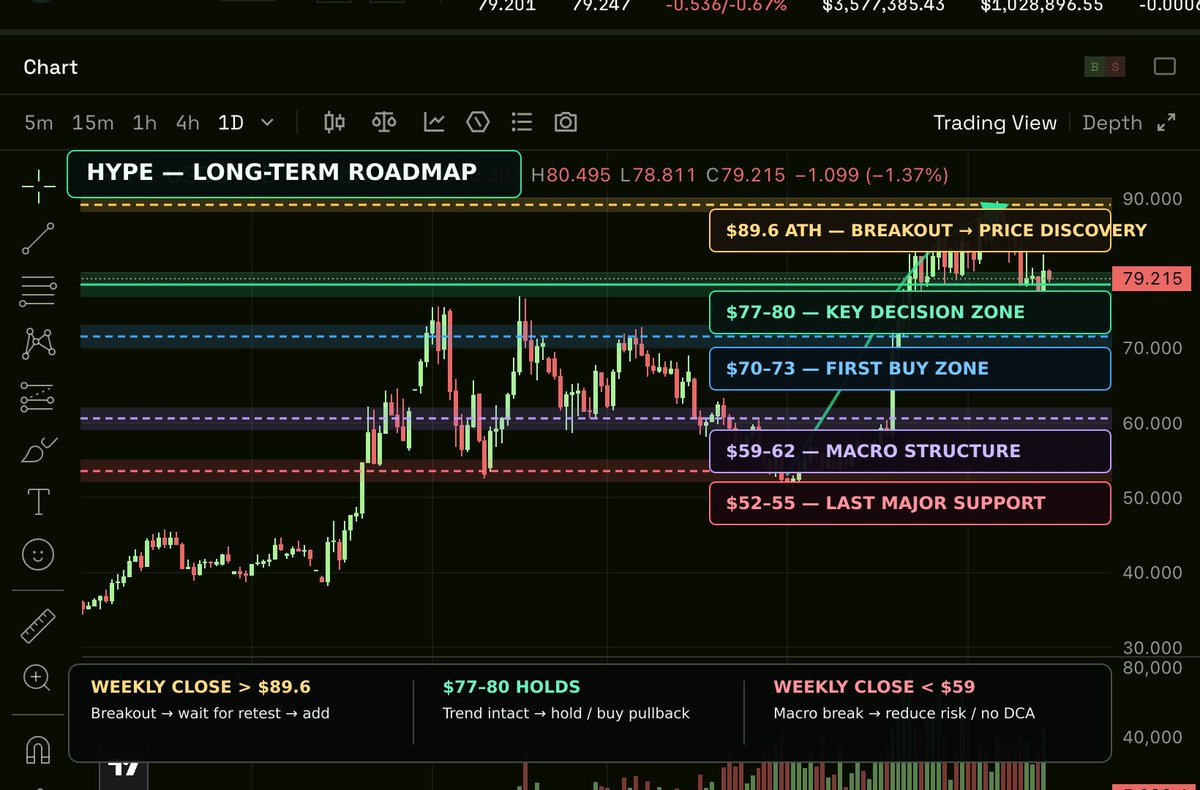
The $77–80 region is the key decision zone. As long as HYPE continues closing above it on the weekly timeframe, the broader bullish market structure remains intact.
A confirmed weekly breakout above the $89.6 ATH, followed by a successful retest, would open price discovery. The first measured-move target would be around $100–105.
If $77 is lost, I would avoid chasing and wait for $70–73. Losing that zone would expose $59–62.
A weekly close below $59 would invalidate the current macro structure. At that point, I would reduce exposure and stop averaging down until the level is reclaimed.
Fundamentally, Hyperliquid’s fee-driven HYPE buyback and burn mechanism remains a major strength. However, the long-term question is whether protocol revenue and burns can consistently absorb future token supply.
If I were traveling only within the EEA for a month, I’d keep etherfi Pinnacle as my main card. Even if I barely used ATMs, its low FX costs, strong cashback, and overall reliability make it the best all-around option for me. I’d probably keep Tria as a backup, but I wouldn’t rely on the headline cashback rate alone.
They’re also running a 10% cashback promotion through this link right now, so it’s an especially good deal.
https://t.co/QwzZxkcEXS
I’ve recently been using three different crypto cards: etherfi Cash @ether_fi Plasma One @Plasma , and Tria @useTria
After comparing them, I don’t think there is one clear winner. Each card has different strengths, cashback limits, payout currencies, and conditions.
The smartest approach is to use each one where it offers the most value.
■ etherfi Cash
The biggest advantage of etherfi is the amount you can spend while maintaining a competitive cashback rate.
• Core: 3% on the first $2,000 per month
• Luxe: 3% on the first $10,000 per month
• Pinnacle: 3% on the first $50,000 per month
• VIP: 4% on the first $50,000 per month
For me, Pinnacle is particularly useful for large purchases because very few crypto cards maintain a 3% rate across such a high monthly spending range.
The downside is that cashback is now paid in ETHFI. Once a transaction settles, the reward is locked for seven days, and at least $5 must be accumulated before it can be claimed manually.
It is less convenient than instant stablecoin cashback, but the high spending threshold still makes Pinnacle one of the strongest options for larger payments.
code japanetherfi
https://t.co/QwzZxkcEXS
■ Plasma One
Plasma One becomes especially attractive for AI-related spending and travel.
• Lite: up to 2% base cashback
• Core: up to 3% base cashback
• Platinum: up to 4% base cashback
• Core AI spending: up to 5%
• Platinum AI spending: 10%
• Eligible flights with Platinum: 10%
Platinum also includes benefits such as ChatGPT Plus, Claude Pro, airport lounge access, travel insurance, and up to $600 per year in eligible flight cashback.
However, cashback is paid in XPL, so its value can fluctuate. Core costs $199 per year or requires locking 20,000 XPL for 12 months, while Platinum requires locking 100,000 XPL for 12 months.
The benefits are strong, but the token exposure and opportunity cost of locking XPL should also be considered.
Use code: PLSMJP
https://t.co/ZisoAWVe4I
■ Tria
Tria offers the highest standard cashback rate among the three for smaller monthly spending amounts.
• Virtual: 1.5% on the first $100 per month, then 0.5%
• Signature: 4.5% on the first $1,000, then 1%
• Premium: 6% on the first $2,000, then 1%
Another major advantage is that cashback is paid in USDC or USDT, so there is no exposure to a volatile reward token.
The main drawback is the payout timing. Cashback is not instant, and under the current official terms, distribution can take up to 12 months. Because of this, I would not value pending Tria cashback in exactly the same way as cashback that is immediately available.
On top of the standard rates, Tria is currently running a special rewards event.
Depending on the boosts unlocked by each user, cashback can reach around 8%, while the monthly cashback-eligible spending limit can increase to approximately $5,000–$8,000.
For users who receive stronger boosts, Tria is currently even more attractive than its standard cashback structure suggests.
Join me on Tria.
https://t.co/PmcTcEkyYC
■ How I would use all three
• AI subscriptions and eligible flights → Plasma One
• First $2,000 of regular monthly spending → Tria Premium
• If holding Plasma Platinum, the next $3,000 → Plasma One
• Larger purchases beyond that → etherfi Pinnacle
My conclusion:
Highest cashback rate on smaller spending → Tria
Best for AI subscriptions and flights → Plasma One
Best for large purchases → etherfi Pinnacle
Cashback rates alone do not tell the full story.
The reward currency, payout timing, FX fees, spending thresholds, card costs, and capital required for higher tiers can significantly change the real return.
These programs also change frequently, so always check the latest conditions in the app before making a large payment.
My long-term view on $HYPE:
The $77–80 region is the key decision zone. As long as HYPE continues closing above it on the weekly timeframe, the broader bullish market structure remains intact.
A confirmed weekly breakout above the $89.6 ATH, followed by a successful retest, would open price discovery. The first measured-move target would be around $100–105.
If $77 is lost, I would avoid chasing and wait for $70–73. Losing that zone would expose $59–62.
A weekly close below $59 would invalidate the current macro structure. At that point, I would reduce exposure and stop averaging down until the level is reclaimed.
Fundamentally, Hyperliquid’s fee-driven HYPE buyback and burn mechanism remains a major strength. However, the long-term question is whether protocol revenue and burns can consistently absorb future token supply.
Funding is definitely a major advantage. For me, however, team credibility and the sustainability of the rewards are just as important as the headline cashback rate.
etherfi remains my first choice because I have the highest level of confidence in the team and the product. I also consider the Plasma team credible, although I personally do not place it at quite the same level as etherfi yet.
Tria offers the highest cashback rate, but the economics and long-term sustainability of its rewards are still unclear to me. For that reason, I am comfortable testing it with smaller payments, but I would not route large transactions through it for now.
I’ll take a look at WaldenPay as well, but I generally avoid using a card until I clearly understand the team, issuer, custody structure, fees, and how its rewards are funded.
Why should FX traders consider using a crypto debit card instead of a traditional bank card?
First, an important clarification: many crypto debit cards still use the Visa payment network.
The real difference is not “Visa vs crypto.”
It is whether your spending is funded through a traditional bank account or directly through stablecoins such as USDT and USDC.
For traders using offshore FX brokers, the traditional process often looks like this:
FX broker
→ Payment processor or exchange
→ Convert USD into local currency
→ Withdraw to a bank account
→ Spend using a bank-issued card
If the broker supports crypto withdrawals, the process can be much simpler:
FX broker
→ Withdraw in USDT or USDC
→ Fund a crypto card
→ Spend directly in everyday life
This creates several advantages.
Fewer steps between trading profits and real-world spending
Instead of withdrawing to an exchange, selling the crypto, waiting for a bank transfer, and then using a traditional card, traders can potentially move stablecoins directly into a crypto card account.
Fewer steps can mean less waiting, fewer intermediaries, and potentially lower total costs.
Maintain your balance in USD
Most international FX traders calculate their performance in USD.
By receiving profits in USDT or USDC, they can maintain their USD exposure instead of immediately converting everything into their local currency.
They can then spend only what they need while keeping the rest of their capital dollar-denominated.
This is especially useful for people who live internationally, travel frequently, or manage expenses across several countries.
Move funds 24/7
Traditional banking transfers can be affected by business hours, weekends, public holidays, correspondent banks, and processing delays.
Crypto transfers generally operate around the clock.
This gives traders more flexibility when separating trading capital from money intended for daily spending.
Earn cashback on money you were already going to spend
Many traditional debit cards offer little or no cashback.
Some crypto cards offer approximately 2%–6% cashback depending on the card, membership tier, and monthly spending limit. Promotional campaigns can occasionally increase this further.
This means traders can withdraw profits, use them for everyday expenses, and potentially receive additional value through cashback.
However, the headline rate is only part of the calculation.
A 6% reward may not be as attractive if the card charges high FX fees, uses an unfavorable conversion spread, has a low cashback limit, or pays rewards in a volatile token.
Better suited to international spending
Many FX traders already operate globally.
Some crypto cards offer low FX costs, free ATM withdrawals for higher membership tiers, and support for spending in many countries.
For international users, the actual value of a card should be calculated after considering:
• FX markup
• Conversion spread
• ATM fees
• Funding and withdrawal fees
• Cashback limits
• Reward payout currency
• Reward distribution timing
The best card is not necessarily the one advertising the highest cashback rate. It is the one delivering the highest net value after all costs.
An additional financial rail outside a single bank
A crypto card gives traders another way to manage and access their funds instead of relying entirely on one local bank account.
This does not replace the need for a bank, but it can provide additional flexibility.
Trading capital, long-term savings, and everyday spending can also be separated more clearly across different accounts and wallets.
Of course, crypto cards also have risks and limitations.
Before using one, traders should check:
• Whether the card is available in their jurisdiction
• KYC and compliance requirements
• Stablecoin and smart-contract risks
• Custodial or non-custodial structure
• FX and withdrawal fees
• Cashback exclusions and monthly limits
• Whether rewards are paid in stablecoins or volatile tokens
• How long rewards take to become claimable
• Local tax and reporting obligations
Crypto debit cards are not automatically better than traditional cards.
But for an FX trader who already receives profits in stablecoins, moves between countries, and manages capital in USD, they can create a much more efficient connection between trading profits and everyday spending.
The biggest benefit is not simply earning 3%, 5%, or 6% cashback.
It is reducing the friction between making money in the markets and actually being able to use that money in real life.
I’ve recently been using three different crypto cards: etherfi Cash @ether_fi Plasma One @Plasma , and Tria @useTria
After comparing them, I don’t think there is one clear winner. Each card has different strengths, cashback limits, payout currencies, and conditions.
The smartest approach is to use each one where it offers the most value.
■ etherfi Cash
The biggest advantage of etherfi is the amount you can spend while maintaining a competitive cashback rate.
• Core: 3% on the first $2,000 per month
• Luxe: 3% on the first $10,000 per month
• Pinnacle: 3% on the first $50,000 per month
• VIP: 4% on the first $50,000 per month
For me, Pinnacle is particularly useful for large purchases because very few crypto cards maintain a 3% rate across such a high monthly spending range.
The downside is that cashback is now paid in ETHFI. Once a transaction settles, the reward is locked for seven days, and at least $5 must be accumulated before it can be claimed manually.
It is less convenient than instant stablecoin cashback, but the high spending threshold still makes Pinnacle one of the strongest options for larger payments.
code japanetherfi
https://t.co/QwzZxkcEXS
■ Plasma One
Plasma One becomes especially attractive for AI-related spending and travel.
• Lite: up to 2% base cashback
• Core: up to 3% base cashback
• Platinum: up to 4% base cashback
• Core AI spending: up to 5%
• Platinum AI spending: 10%
• Eligible flights with Platinum: 10%
Platinum also includes benefits such as ChatGPT Plus, Claude Pro, airport lounge access, travel insurance, and up to $600 per year in eligible flight cashback.
However, cashback is paid in XPL, so its value can fluctuate. Core costs $199 per year or requires locking 20,000 XPL for 12 months, while Platinum requires locking 100,000 XPL for 12 months.
The benefits are strong, but the token exposure and opportunity cost of locking XPL should also be considered.
Use code: PLSMJP
https://t.co/ZisoAWVe4I
■ Tria
Tria offers the highest standard cashback rate among the three for smaller monthly spending amounts.
• Virtual: 1.5% on the first $100 per month, then 0.5%
• Signature: 4.5% on the first $1,000, then 1%
• Premium: 6% on the first $2,000, then 1%
Another major advantage is that cashback is paid in USDC or USDT, so there is no exposure to a volatile reward token.
The main drawback is the payout timing. Cashback is not instant, and under the current official terms, distribution can take up to 12 months. Because of this, I would not value pending Tria cashback in exactly the same way as cashback that is immediately available.
On top of the standard rates, Tria is currently running a special rewards event.
Depending on the boosts unlocked by each user, cashback can reach around 8%, while the monthly cashback-eligible spending limit can increase to approximately $5,000–$8,000.
For users who receive stronger boosts, Tria is currently even more attractive than its standard cashback structure suggests.
Join me on Tria.
https://t.co/PmcTcEkyYC
■ How I would use all three
• AI subscriptions and eligible flights → Plasma One
• First $2,000 of regular monthly spending → Tria Premium
• If holding Plasma Platinum, the next $3,000 → Plasma One
• Larger purchases beyond that → etherfi Pinnacle
My conclusion:
Highest cashback rate on smaller spending → Tria
Best for AI subscriptions and flights → Plasma One
Best for large purchases → etherfi Pinnacle
Cashback rates alone do not tell the full story.
The reward currency, payout timing, FX fees, spending thresholds, card costs, and capital required for higher tiers can significantly change the real return.
These programs also change frequently, so always check the latest conditions in the app before making a large payment.
Exactly, and that’s one of the reasons I think etherfi Pinnacle , VIP is especially strong. ATM withdrawal fees are waived, and the FX costs are minimal. So when you consider the actual cost of using the card abroad—not just the headline cashback rate—it remains a very competitive option.
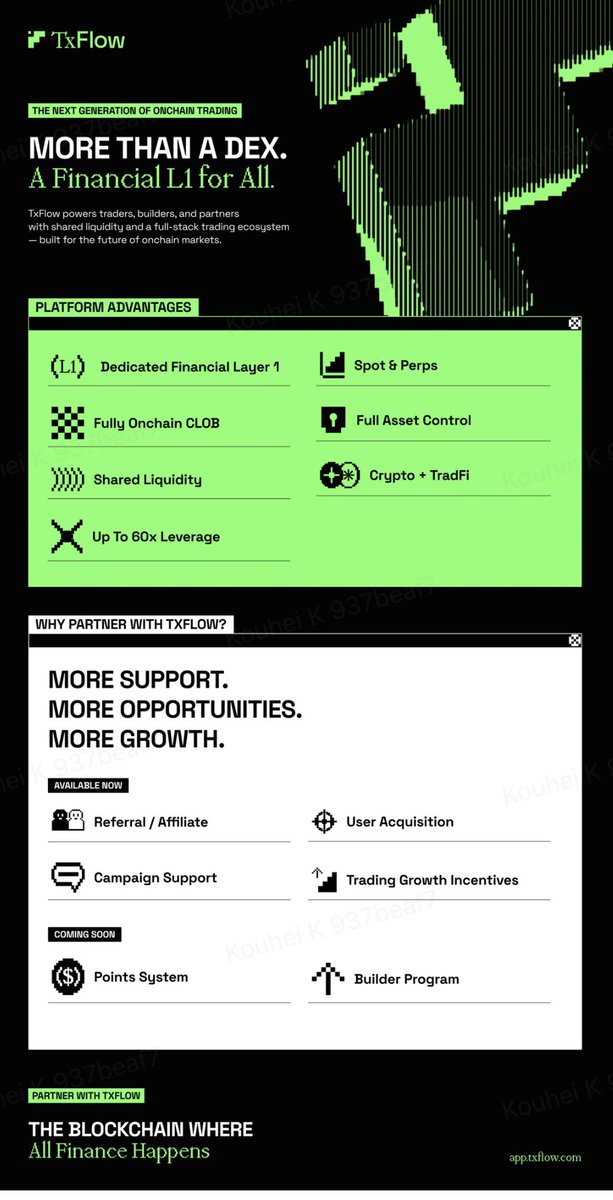
Why @TxFlow_L1 is worth watching:
• Fully on-chain CLOB
• Fast execution on its own L1
• Strong liquidity and many markets
• No VC funding
• Still invite-only, with points yet to launch
It’s early—and that’s exactly why it’s worth exploring now.