Wanna know how they are doing it? @bcbstx is taking any 99204/99214 or 99205/99215 from in-network independent physicians and auto downcoding to a 99203/99213.
But they are being hella sneaky and not actually changing the code on the remittance advice.
They are using the following- “CO - Contractual Obligations
186 - Level of care change adjustment
N610 - Alert: Payment based on an appropriate level of care.”
Payment changes, adjustments change but not the actual code in remittance. CO-186 seems to be their little AI bot tool to downcode no matter what. They aren’t even paying attention to diagnosis codes or obvious complexity based on diagnostics etc.
So sneaky in fact- physicians may not even realize what has happened to them until it is too late.
Got a new diagnosis of metastatic cancer? According to @BCBSTX - worth a 10 minute visit
Pass out at home and go to your doc or urgent care instead of the ER? According to BCBS- worth a 10 minute visit.
Good news for providers- you can appeal/dispute this absolute trash with the staff you can’t afford to pay! Or better yet- you can get tied up in litigation for years. 🤬
First they came for the physician owned hospitals, then they came for the freestanding ERs, next they went after all facility based physicians, and finally they went after independent primary care and specialists. This IS the attempt at the final blow to Texas physicians. Comply or be assimilated into employment!
#insurancefail
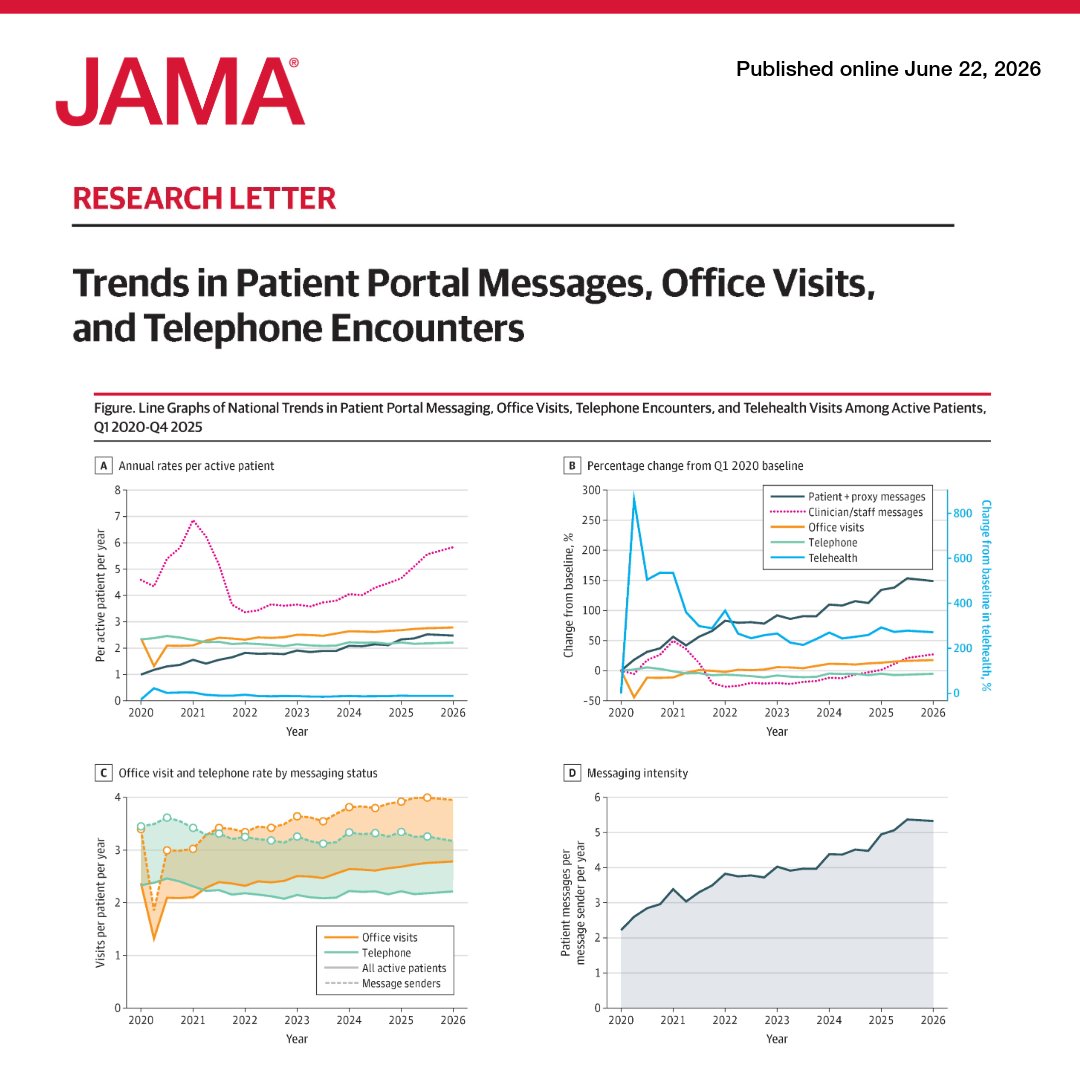
Patient portal messaging volume in the US increased by more than 150% between 2020 and 2025, with messages per patient rising from 0.99 to 2.50 per year.
Over 8 billion encounters were analyzed, showing that office visit rates also increased, while telephone encounters decreased modestly. Messaging prevalence was highest among females, middle-aged adults, and those living in low social vulnerability index quartiles or urban areas.
Increases in patient messaging were not associated with fewer in-person visits, indicating that portal communications are expanding, not substituting, traditional care.
https://t.co/Jet35EryP6
It's really nice to hear a major academic piece from @JAMANetworkOpen admit this about physician attrition: "Compensation was among the most frequently reported factors associated with reconsidering both reduction in effort and organizational departure."
Consistently, about 22-25% of physicians say they want to reduce their clinical hours or leave medicine completely.
As the piece puts it, "these findings suggest that physicians are evaluating a broader work satisfaction equation, one that includes better operational support, control over daily practice, and material economic benefits."
Doctors want autonomy, a rewarding work experience, operational efficiency, and, yes, they want to be well compensated.
Pretending otherwise will lead physicians to quit and make it more difficult for patients to find a doctor.
💬 Viewpoint: Mandatory annual training modules consume millions of physician‑hours each year, yet their largely passive formats may offer limited educational value while contributing to administrative burden and clinician burnout.
https://t.co/mJ4oi68waA
@drjohnm Is there evidence of widespread approval by insurance companies for coronary angiograms in asymptomatic patients with CAC and no high risk stress findings? And if so can this evidence please be presented?
@drjohnm@Sensible__Med Is there evidence of widespread approval by insurance companies for coronary angiograms in asymptomatic patients with CAC and no high risk stress findings?