"Jumping from failure to failure with undiminished enthusiasm is the big secret to success." - Savas Dimopoulos, Particle Fever (2013) Documentary 1:14:41
A Quick Guide to DACs: Digital to Analogue Converters
We live in a digital processing era, but the physical world - and human perception - is inherently analogue.
Whether it’s driving a loudspeaker, controlling an industrial motor, or sending RF signals, Digital-to-Analogue Converters (DACs) are the essential bridge making it happen.
Understanding DAC architectures and selection criteria is crucial for hardware design engineers.
Here is a quick breakdown of the core architectures and performance metrics:
Four Primary DAC Architectures
* Binary-Weighted Resistor: Simple conceptual design, but highly sensitive to resistor tolerances at higher bit resolutions.
* R-2R Ladder: The industry workhorse for ladder topologies. Uses only two resistor values (R and 2R), greatly improving accuracy, matching, and linearity.
* Delta-Sigma (\Delta\Sigma): Leverages oversampling and noise shaping to deliver ultra-high resolution and low noise—ideal for precision audio and instrumentation.
* Current-Steering: Steers precision current sources directly to the output. Designed for high-speed applications where fast switching is paramount.
Key Parameters to Watch
When selecting a DAC for your signal chain, keep an eye on:
1. Resolution (Bit depth driving output precision)
2. Linearity (INL/DNL for faithful signal reproduction)
3. SNR & SFDR (Dynamic range and spurious distortion limits)
4. Conversion Speed / Settling Time (Critical for high-frequency or real-time control applications)
Looking for a deeper dive? Check the link in the comments.
#ElectronicsEngineering #CircuitDesign #HardwareDesign #EmbeddedSystems #DAC #SignalProcessing #ElectronicsNotes
Every legendary quant is an architect first.
They know the difference between "it passes backtests" and "it survives production."
10 rules for signal-to-portfolio design:
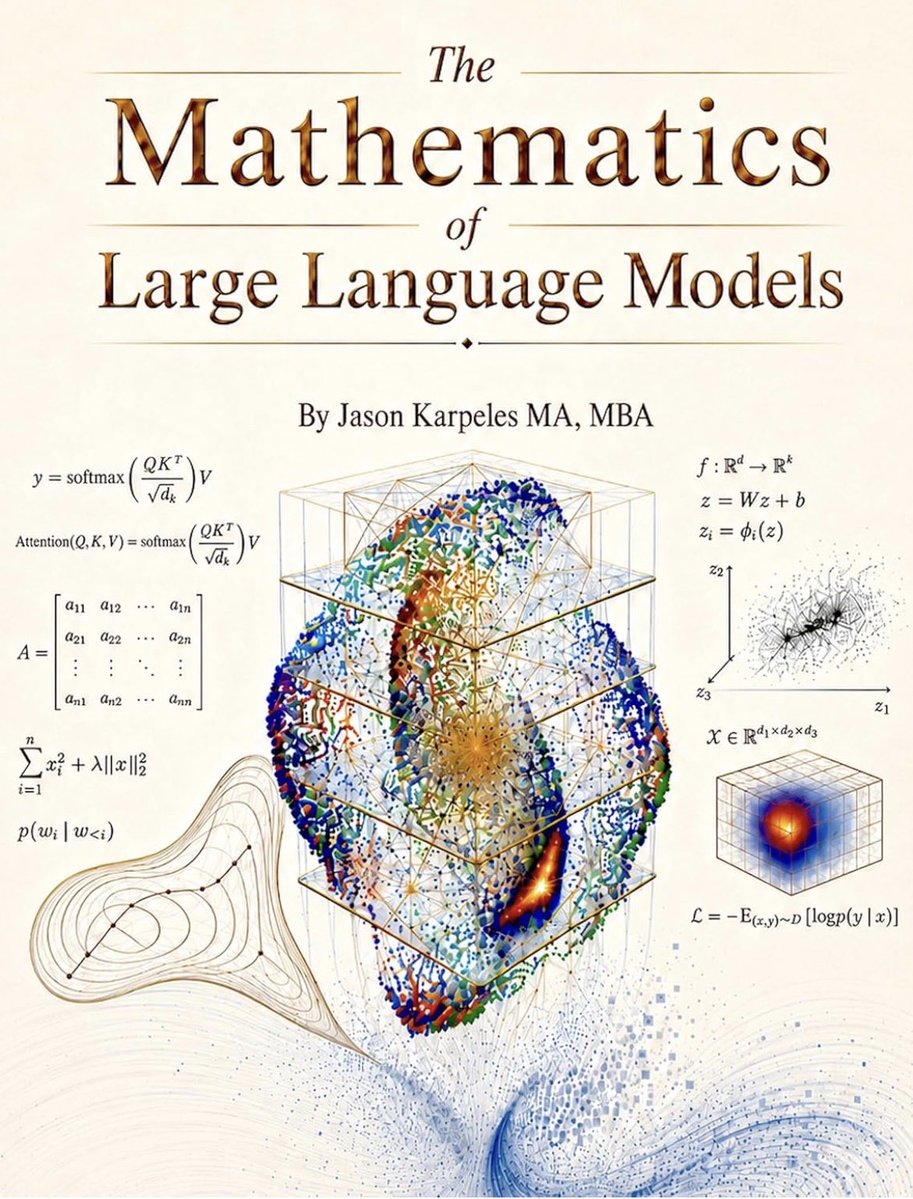
The Mathematics of Large Language Models — A Readable Guide to LLMs, Transformers, Diffusion, Neural Networks, and Generative AI: https://t.co/3sDIaIroX8
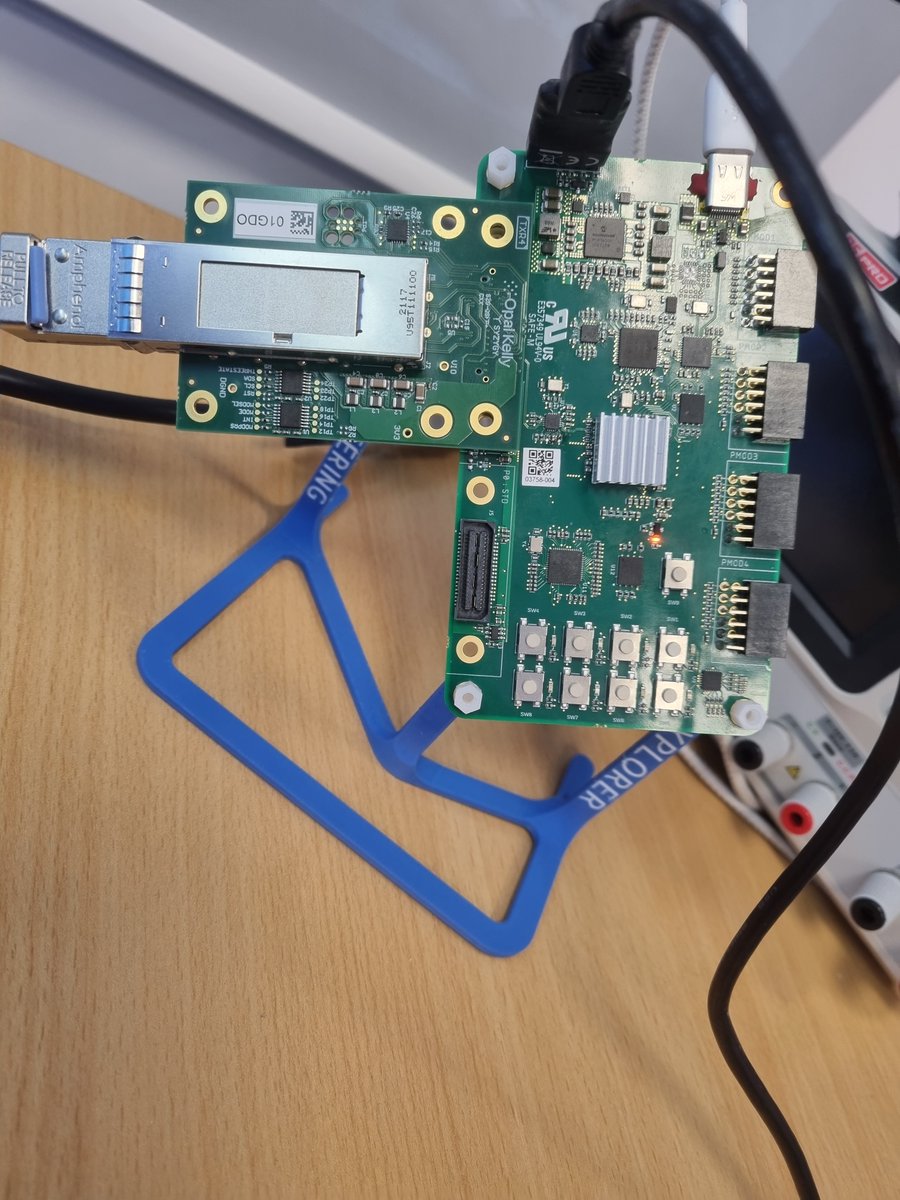
Want to know how we used through hole vias to achieve GTH running at 12.5 Gbps and a high performance 0.5mm pitch FPGA board ?
I am running a webinar with AMD in September, which is going to explain how we did this and how you can as well.
https://t.co/vOFgvsSQMn
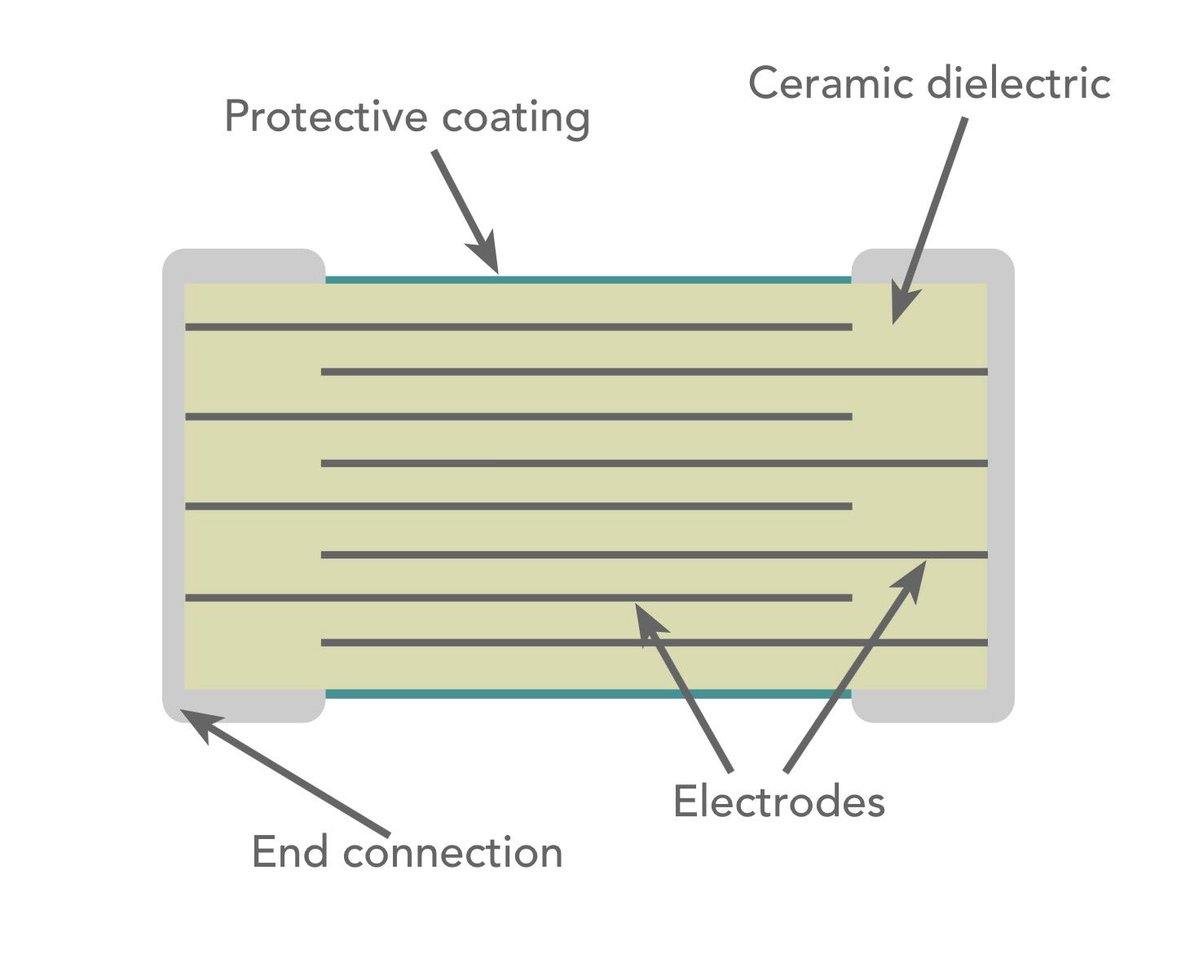
Ceramic Capacitors: the Backbone of Modern Electronics
Ceramic capacitors are found in virtually every piece of electronics equipment - from smartphones to high-end RF gear.
While leaded discs are classic, Multi-Layer Ceramic Capacitors (MLCCs) dominate today’s surface-mount world. But not all ceramics are equal! The dielectric makes the difference.
References will be seen to class 1 and class 2 ceramic dielectrics, but what are they and where are they used?
🧵
#capacitors #ceramiccapacitors #electroniccomponents #ebook #electronicsnotes #electronics #circuitdesign
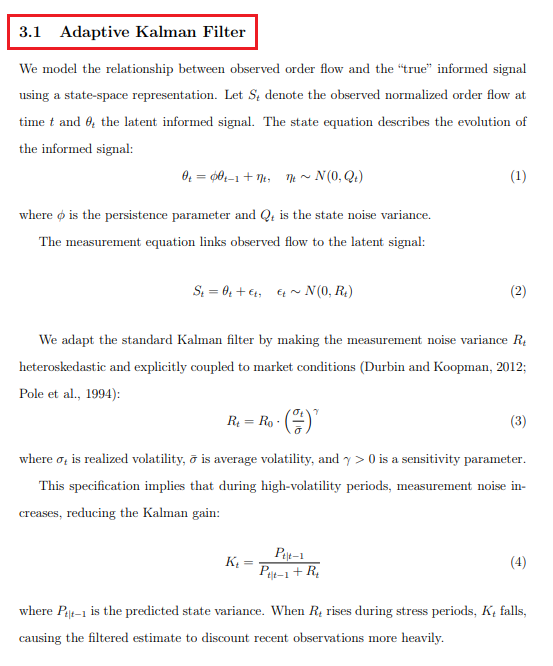
The most profitable equation in a history of hedge funds:
Rt = R0 × (σt / σ̄)^γ
It makes money by ignoring noise.
Bookmark this and then read the article.
Register in #PELS/SOBRAEP’s 4th webinar in Portuguese Language:
"Advanced Architectures for Next-Generation Battery Energy Storage Systems by Allan Fagner Cupertino".
From Federal University of Juiz de Fora (UFJF), Brazil.
Register here: https://t.co/dXyCMSDVds
How to Straighten Kinked Hook-Up Wire: an easy step by step guide.
Tired of messy, kinked wire ruining the look of your electronics projects?
We’ve all been there, myself included - digging through the spares box only to find a tangled mess of hook-up wire.
While it’s tempting to just buy new, there’s a much faster, free and more ‘eco’ way to get a professional, straight-line finish for your next build. I’ve used this technique many times, myself, to enable me to reuse wire.
In my guide, I break down a simple "hacker's trick" I’ve used for years to restore bent wire using nothing more than a standard screwdriver, and it really works.
Why bother straightening your wire?
✅ Cost-Effective: Save money by reusing high-quality insulated copper wire.
✅ Professional Aesthetics: Clean, straight runs make your circuit boards and looms look top-tier.
✅ No Specialized Tools: You don't need a dedicated wire straightener—just a round screwdriver shaft.
How to do it.
Wrap the wire once around the shaft of a large screwdriver and pull it through. The tension and the curve of the shaft work together to "erase" those stubborn kinks instantly.
Check out my full guide using the link in the comments.
#Electronics #Engineering #DIYElectronics #MakerMovement #CircuitDesign #ProTips #Sustainability #ElectronicsNotes
Don't waste 2 years learning to build LLMs like Claude & ChatGPT.
Stanford just dropped a 2 hour course on how to build LLMs from scratch.
• 00:00 - LLM tokenization
• 25:44 - how LLMs decode user prompts
• 35:40 - training pipeline of LLMs
• 1:16:47 - LLM architecture from scratch
Anthropic pays $750,000/year to engineers who understand this exact knowledge of LLMs.
Bookmark this & give 2 hours today, no matter what. Then read the article below.
10 Algorithms used in industry
1. Linear Regression
Predicts continuous values by finding the best-fit linear relationship between features and the target variable.
2. Logistic Regression
Used for binary and multi-class classification by estimating the probability of each class.
3. Decision Tree
Makes predictions using a tree-like structure of decision rules, making it easy to understand and interpret.
4. Support Vector Machine (SVM)
Finds the optimal boundary that separates different classes, especially effective for high-dimensional data.
5. K-Means Clustering
Groups similar data points into clusters without labeled data, commonly used for customer segmentation.
6. Random Forest
Combines multiple decision trees to improve prediction accuracy and reduce overfitting.
7. XGBoost
A powerful gradient boosting algorithm known for high accuracy, speed, and winning many ML competitions.
8. Neural Networks
Mimic the human brain to learn complex patterns, powering applications like computer vision, NLP, and speech recognition.
9. LSTM (Long Short-Term Memory)
A specialized recurrent neural network designed to learn long-term dependencies in sequential data.
10. Isolation Forest
Detects anomalies by isolating unusual data points, making it ideal for fraud detection and outlier analysis.
Discovering the Vector Network Analyzer (VNA), an essential test instrument for RF design.
Spectrum Analyzers look at the spectrum of signal itself, but a VNA looks at the network (the components, cables, or systems) to see how it affects that signal. It’s a really important test instrument for any RF design.
Here is a breakdown of what a VNA actually does and how it works.
What is a VNA?
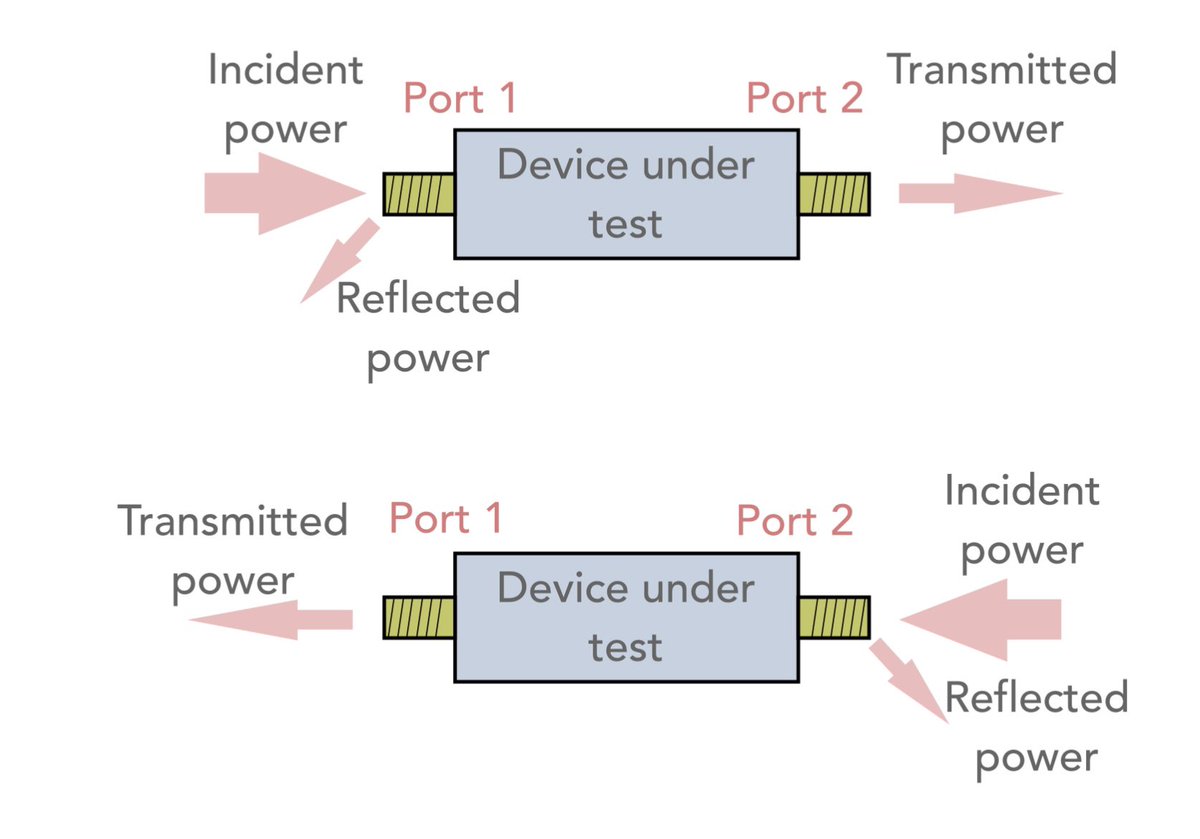
At its core, a VNA is an instrument that measures the "network" characteristics of a Device Under Test (DUT). Unlike its simpler cousin, the Scalar Network Analyzer (SNA), which only measures magnitude, a VNA measures both:
1 Magnitude (How much does the signal change in size?)
2 Phase (How much does the signal's phase / timing shift?)
This "Vector" information (magnitude + phase) allows the VNA to provide a complete picture of the circuit’s behaviour, including complex impedance and S-parameters.
How It Works: The "Stimulus-Response" Model
A VNA doesn't just sit back and listen; it takes an active role.
* The Stimulus: The VNA has an internal signal generator that "sweeps" across a range of frequencies, sending a known signal into the DUT.
* The Separation: Using directional couplers or bridges, the VNA separates the signal into two parts: the incident signal (what goes in) and the reflected/transmitted signals (what comes back or passes through).
* The Receivers: Internal receivers (often using a heterodyne architecture) down-convert these high-frequency signals to an Intermediate Frequency (IF) where they can be accurately digitized and compared.
Key Measurements
By comparing the incident signal with the resulting signals, the VNA calculates:
✅ S-Parameters: S11 (Input Reflection/Return Loss) and S21 (Forward Transmission/Gain/Loss).
✅ VSWR: How well the impedance is matched.
✅ Smith Charts: Crucial for visualizing impedance and designing matching networks.
✅ Group Delay: Measuring the time it takes for different frequencies to pass through a device.
Why Phase Matters
Phase is the "secret sauce" of the VNA. Without phase data, you cannot perform Vector Error Correction. This process mathematically removes the effects of your test cables and connectors, leaving you with the "true" performance of the device alone.
Whether you're testing an antenna, a filter, or a complex amplifier, the VNA is your window into the invisible world of RF.
Check out more information in link in the comments below.
#RFEngineering #Electronics #VNA #TestAndMeasurement #RFDesign #EngineeringEducation #electronicsnotes
The FFT is a very useful algorithm, but what happens when we want to look at more than just a snapshot in time.
This is where the Waterfall view comes in. This week we are looking at what this is and how we can implement it in a FPGA.
https://t.co/nTmLzhW3qp
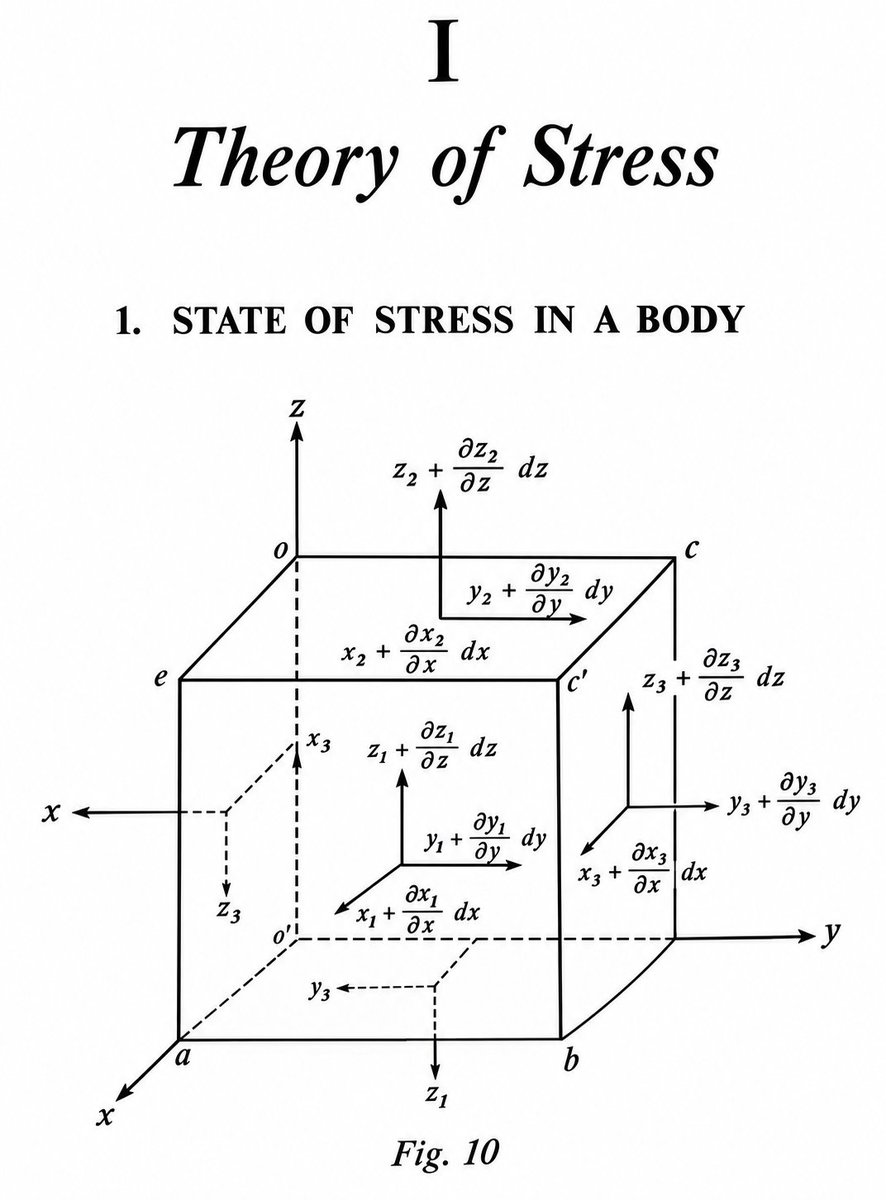
Stress spreads through solids as forces on the six faces of every microscopic cube.
This sketch captures all nine components; X_x, Y_y, Z_z normals plus the six shears X_y, X_z, Y_x, Y_z, Z_x, Z_y; and the way each changes across the element by terms such as X_x + ∂X_x/∂x dx.
Force and moment balance on the cube yield the equilibrium equations
∂X_x/∂x + ∂X_y/∂y + ∂X_z/∂z + X = 0
(and two cyclic forms), together with the symmetry relations X_y = Y_x, X_z = Z_x, Y_z = Z_y.
Bridge engineers solve these at every cross-section of a suspension-cable anchorage so the concrete does not crush under traffic and wind.
Why do electrolytic capacitors get a bad name for reliability—and how do you make them last for longer?
Aluminium electrolytic capacitors often have a reputation for early failure, drying out, or even bursting under stress.
However, when they are used within their limits, electrolytic capacitors offer great performance, and it is possible to utilise their great capacitance density to the maximum.
Here are my 5 golden rules to get the absolute longest operational life out of aluminium electrolytics in your hardware designs:
🧵
#HardwareDesign #ElectronicsEngineering #PCBDesign #ReliabilityEngineering #EmbeddedHardware #PowerElectronics
Software engineers write code that runs on hardware.
FPGA engineers write code that becomes hardware.
How a Field Programmable Gate Array actually works under the hood:
1️⃣ LUTs (Look-Up Tables): Reconfigurable truth tables that instantly evaluate logic functions (AND, OR, XOR) without traditional CPUs.
2️⃣ Flip-Flops: Store state and hold data across clock cycles for sequential processing.
3️⃣ Programmable Interconnects: A flexible matrix of switchable wires that routes signals between logic blocks.
4️⃣ True Parallelism: Unlike CPUs executing instructions sequentially, every pipeline inside an FPGA runs at the exact same time.
You are wiring a custom chip on the fly instead of executing instructions.