#GTMO 441. Please, pay attention.
"Material support for terrorism." They perfected that charge at Guantánamo. No evidence required. Association becomes guilt. Suspicion becomes sentence. The accusation is the punishment.
They tested it on Muslim men first. Nobody defended us.
Now I read about activists in Texas. 50 years. 70 years. 100 years. One man got 30 years for moving books.
I have seen this before.
First they create an enemy nobody wants to defend. Then they expand the definition. Then friendship becomes conspiracy. Books become evidence. Beliefs become proof of intent.
Guantánamo was never only about Muslims. It was a testing ground.
They built military commissions because ordinary courts were not enough for what they wanted to do. Fewer rights. Weaker protections. Easier outcomes.
Do not assume those tools stayed behind Guantánamo's fences.
Once a government builds systems that weaken due process for one group, it never stops there.
I lived through that system.
You should be paying attention.
We must resist authoritarian regimes and stand for those unjustly detained, prosecuted, silenced, and buried. @guardian
https://t.co/pgqv3ECUXt
<Hands off Asia>
Remembering the Battle of Okinawa!
Our Asia Coordinators, @AtulCha83952246 and @t_ings say, "Remembering Okinawa is not about the past; it is about refusing to be prepared for war in the present."
The Alaska summit was a photo-op. Trump is happy to keep the Ukraine war going so long as Europe foots the bill. US neocons are now especially determined to compensate for their defeat in Iran.
The Biden team’s goal to create a quagmire for Russia has been achieved. More ugly months ahead.
As always, you don’t have to support Putin’s invasion to recognize that peaceful, reasonable solutions accepted by Moscow were sabotaged.
A Note on Trump's Praise as a Signal of Concession
A reader asked me to expand on something I wrote recently: that there is a distinct pattern in which Trump's public approval of a foreign leader indicates a structural concession has already been made somewhere or will soon be made. I want to unpack that, because it's a pattern that holds consistently once you start looking for it, and it reveals something important about how the current imperial apparatus operates.
First, a clarification. I am not pointing to Trump because I think he personally drives US foreign policy. He is a signaler, a public face of a much larger apparatus that includes finance, the security establishment, and the transnational corporate networks that actually set the terms. But in the current media structure, his statements function as cues.
Venezuela is the clearest and most brutal case. Maduro was kidnapped. A concessionary framework was imposed: Treasury waivers, de facto control over oil revenues, the reintegration of Venezuela into US-policed financial circuits under the guise of "reconstruction." Trump publicly signaled approval of the new arrangement almost immediately. In Iran, we had a similar situation at the height of the war, when Trump tweeted praise about new leadership, while an article in Foreign Affairs by Javad Zarif titled “How Iran should End the War” came out, in which basically the terms of the current MoU had been written down. I’m not saying that this is a coup, but again, maybe just the possibility of the MoU was seen as a concession.
But the pattern extends beyond Venezuela and Iran. In Mexico, to a certain degree. In Colombia. In Brazil. Across Latin America, whenever a left-wing or progressive government grants a structural concession—something the public doesn't yet see, something not yet announced—Trump's tone shifts. He praises the leader. He says they're "reasonable," "doing a great job," "a very smart man." Shortly after, the action becomes visible: an increase in tariffs on Chinese products, a Chinese infrastructure project quietly cancelled, a critical minerals deal reopened, some form of military cooperation forcefully agreed to.
Now, let me be clear about something important. The US-led imperial core still prefers right-wing governments outright. Full stop. They are more reliable, more compliant, require less management, and align ideologically with the project of deregulation, extraction, and militarization that the core requires. The concessions extracted from left-wing or progressive governments are a second-best outcome: a way to secure leverage when outright regime change is temporarily unfeasible, too costly, or diplomatically inconvenient.
That is why, across Latin America and the Caribbean right now, we are seeing a parallel process. On one track, soft coups and hybrid warfare against governments that resist: lawfare, economic strangulation, media campaigns, the mobilization of comprador factions. On the other track, integrationist deals with factions that are willing to negotiate their country's insertion into the imperial financial and logistical architecture, most likely under threat of kinetic action. Cuba is the extreme case—a full siege.
The pattern, then, is not about Trump's whims or his personal deal-making prowess. It is about what his public statements reveal about the concessions that have already been extracted behind closed doors. When he praises a leader who was previously an adversary, the deal is already done or they are at least quite sure, that some steps will be taken toward it.
This is part of what I mean when I talk about the fragmentationist grand strategy and the multi-layered cage. The empire needs compliant elites, open financial circuits, and the quiet, incremental surrender of sovereign leverage.
Arguing that Russia is winning or that Iran is winning, is consistently dismissed as being "pro-Russian" or "pro-Iranian." Why has acknowledging battlefield realities become synonymous with supporting one side? Has objective analysis been abandoned in favor of cheering for "our team"? The extent of the war propaganda has been remarkable to watch.
Vor 85 Jahren, im Morgengrauen des 22. Juni 1941, begann Hitler-Deutschland im Rahmen von Operation Barbarossa den Vernichtungskrieg gegen die Sowjetunion. Mit dem „Blitzkrieg“ wollte Hitler seinen strategischen Hauptfeind, die Sowjetunion unterwerfen und das weite Land bis zum Ural zur deutschen Kolonie machen um „Lebensraum im Osten“ zu schaffen. Der Zweite Weltkrieg war eine furchtbare Katastrophe und endete mit der bedingungslosen Kapitulation Deutschlands. Die Sowjetunion hatte 27 Millionen Tote, Deutschland 7 Millionen Tote zu beklagen. Die Lektion aus der Geschichte ist klar: Nie wieder Krieg!
Doch auch heute wird wieder aufgerüstet, die Rüstungsausgaben von Deutschland werden in diesem Jahr erstmals die 100 Milliarden Euro Grenze überschreiten. Politiker fordern, Deutschland müsse «kriegstüchtig» werden. Bundeskanzler Merz sagte explizit, die Ukraine dürfe mit aus Deutschland gelieferten Drohnen Städte in Russland angreifen. Deutsche Waffen schlagen also wieder in Russland ein. Das halte ich für den falschen Weg und gefährlich. Deutschland muss «friedenstüchtig» werden. Deutschland sollte keine Waffen an die Ukraine liefern, sondern sich für Friedensgespräche stark machen. Es braucht Deeskalation und Gespräche, nicht immer mehr Waffen und Aufrüstung.
“Heat kills more Australians than floods, bushfires, and cyclones combined, yet it remains one of the least discussed public health problems in the country.”
Noa Wynn on Australia’s unequal summer.
https://t.co/WQ3csuym67
There is nothing unlikely about this alliance - it is based purely on Islamophobia, and it has led to the worst foreign policy mistake in the history of modern India.
I think there is a real cognitive closure toward any analysis that acknowledges nuance or friction within the ruling strata of Resistance or BRICS countries. There is an underlying presupposition that applying structural or class analysis to these states is inherently "defeatist," so it gets systematically excluded.
Consequently, only the most hopeful readings of current events are permitted, a dynamic I have often argued leads directly to strategic blindness. When the idealized outcome inevitably fails to materialize, it arrives as a shock, leaving many without a coherent explanation.
Regarding Iran, I reached similar conclusions after Trump's tweets praising the leadership for becoming "more reasonable." I compared this to Venezuela, not because the situations are identical, but because we must recognize a distinct pattern: whenever Trump signals public approval of a foreign leader, it indicates that a structural concession has been made, even if it remains unannounced.
Furthermore, as I explored in my recent essays on planning, "multipolarity in a multi-layered cage," and the Fragmentationist Grand Strategy: current imperial strategy weaponizes the vulnerabilities of global interdependency, specifically through markets and finance. (Specifically and precisely because they cannot militarily defeat countries, and are interdependent themselves, mind you.)
This is "regime change," but not in the older, kinetic sense. Today, the sovereign shell is kept intact while the leadership is hollowed out, captured, or eliminated from the inside (often exploiting the natural fractures between competing domestic elite factions).
This is precisely why figures like Witkoff and Kushner are central to so-called "peace talks." Their role is, of course, not peacemaking; they are there to dictate the terms of integration—setting the exact mechanisms for how a targeted country's infrastructure will be pulled into Western financial systems, clearinghouses, and global markets. And let's not forget construction which becomes even more important if a countries infrastructure has been heavily deteriorated through draconian sanctions or kinetic operations (or both).
While complex internal debates and elite factionalism exist within every state, the algorithm and partly alt-media favor the politics of the spectacle and idealist triumphalism. Idealizing these countries as static monoliths does absolutely nothing to help anybody grasp the actual processes shaping the world today.
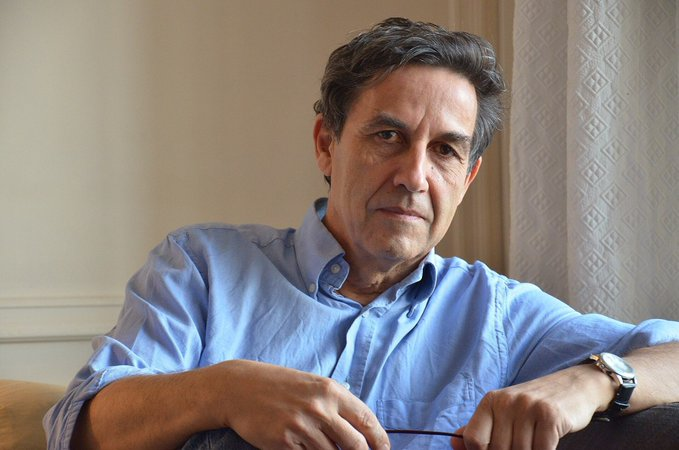
🇫🇷Franse historicus en antropoloog Emmanuel Todd:
"Onze Russofobie heeft niets te maken met Rusland zelf. Het is een fantasie, een pathologie van westerse samenlevingen, een interne behoefte om een Russisch monster te verzinnen.
Wanneer ze over Rusland spreken, hebben de leiders van Frankrijk, Groot-Brittannië, Duitsland of Zweden het in de eerste plaats over henzelf.
Russofobie is zonder twijfel een pathologie. Maar bovenal is Rusland een indrukwekkende projectieve test geworden.
Het beeld ervan lijkt op de psychologische Rorschachtest. De proefpersoon vertelt de psychiater wat hij ziet in willekeurige of symmetrische vormen. Op dat moment projecteert hij diepe, verborgen kenmerken van zijn persoonlijkheid.
Rusland is onze Rorschachtest."
Dan is dit duidelijk:
Dit kabinet @MinPres Jetten lijdt ook aan russofobie en moet nodig naar de psychiater.
De meerderheid van de Tweede Kamer moet gewoon vervangen worden wegens incompetentie en dociele volgzaamheid.
This is the ultimate good cop and bad cop geopolitical script. America desperately wants you to believe they are the benevolent good cop tirelessly working towards global diplomacy, while Israel conveniently plays the role of the uncontrollable bad cop that has suddenly gone completely rogue, ignored all warnings, and is merely starting endless regional wars.
This is the exact same cynical scenario that the British government ruthlessly perfected in Nigeria. They would carefully groom a corrupt local politician, forcefully install him into absolute power, and aggressively supply heavy weapons, tactical training, and armored vehicles to a brutal Gestapo police unit. This was done strictly for the comprador politician to violently crush any local uprising, silence all dissent, and mathematically guarantee that the vast mineral resources in Nigeria continued to flow directly to British metropoles absolutely uninterrupted. If the oppressed people eventually rebelled and decided to fight for their stolen sovereignty, the British government would quietly and effectively provide the heavy weapons, the operational logistics, the aerial reconnaissance and the diplomatic cover at the United Nations to enable the local chief to entirely crush the rebellion. Then, purely to save face, act completely neutral, and maintain the grand illusion of civility, the British government would hypocritically issue beautifully worded press releases denouncing the very violence they created, funded, and sustained. They would loudly declare that violence has absolutely no place in a functional democracy, and they would claim they are ostensibly "advising" the Nigerian government to engage in peaceful dialogue, deescalate tensions, and diplomatically work towards lasting peace.
Right now, this exact same predictable, highly rehearsed script is unfolding in real time between Washington and the Israeli government. The mainstream media aggressively wants you to believe that Israel is recklessly attacking Lebanon, flattening residential blocks, and striking Iran purely to sabotage the supposed peace deal that President Trump is working so incredibly hard to secure. Yet, every single day, the exact same American empire that is supposedly begging for peace is quietly, efficiently shipping thousands of metric tons of heavy ammunition, artillery shells, and guided missiles to Israel to violently continue that exact same aggression. All of a sudden, they want us to blindly believe that Trump is deeply frustrated, highly annoyed, and terribly unhappy with how Israel is bombing Lebanon and ruthlessly demolishing civilian houses. Yet, for the Israeli military to actually carry out any sustained ground invasion, execute precision airstrikes on foreign soil, or maintain a prolonged bombing campaign, they would absolutely, fundamentally need American intelligence coordinates, massive US taxpayer funding, Pentagon satellite telemetry, a continuous supply of heavy bunker-buster bombs, advanced mid-air refueling logistics, absolute diplomatic vetoes at the UN Security Council, and a completely unconditional green light from Washington.
So you must urgently understand that this widely circulated narrative of Israel secretly controlling America is absolute garbage, entirely false, and deeply misleading. They deliberately create, sponsor, and amplify this ridiculous narrative so that you completely channel all of that righteous anger, political frustration, and explosive aggression far away from the real, untouchable imperialists sitting comfortably in Washington D.C. They want you totally distracted, chasing shadows, and going strictly after their convenient human meat shields like Donald Trump or Benjamin Netanyahu.
Make no mistake: all roads, all funding, all weapons, and all geopolitical directives lead straight back to Washington. Israel is absolutely not the master in this imperial relationship. They are merely the heavily armed colony, the strategic military outpost, and the unsinkable American aircraft carrier permanently docked in the Middle East.
Denunciamos ante el pueblo boliviano y la comunidad internacional la expulsión de una delegación de activistas y defensores de derechos humanos provenientes de Argentina. Es una señal alarmante que quienes vienen a observar, documentar y defender derechos sean tratados como enemigos, mientras se multiplican los vínculos y visitas de organismos de seguridad estadounidenses en nuestro país. Así comenzaron los capítulos más oscuros de nuestra historia latinoamericana.
La coordinación entre aparatos de seguridad, la persecución política y el hostigamiento a quienes denuncian abusos fueron características del Plan Cóndor y de las dictaduras que sometieron a nuestros pueblos. Bolivia no puede recorrer ese camino. Cuando se expulsa a defensores de derechos humanos y se intenta silenciar la observación internacional, la democracia se debilita y las alertas sobre autoritarismo se encienden en toda nuestra América.
No country in modern history has endured nearly 30,000 strikes over forty days by two nuclear powers – one the strongest military power in the world, the other the most heavily equipped army in the Middle East – and then imposed a condition for ending the war on a third front, Lebanon.
Iran has effectively made clear that without an end to the war there, the broader deal collapses, while signalling its readiness to continue fighting in support of its allies.
This is extraordinary. It overturns decades of simplistic claims that Hezbollah is merely a proxy built to fight on Iran’s behalf. A state does not risk the collapse of a strategic agreement, the continuation of war, and further direct confrontation simply for a disposable 'proxy'.
What the war has revealed is not a one-way chain of command, but a regional alliance in which Iran treats Lebanon and Hezbollah as central strategic allies, not expendable instruments.
A Note on the Iran-US Memorandum of Understanding (MoU)
(This Note is not an equation of the Islamic Republic with the United States. The asymmetry of imperial pressure is the entire premise of Worldlines, and the asymmetry has not changed because a piece of paper. Iran has been the object of a siege; the United States has been its architect. Nothing in what follows softens that.
This Note is not a claim of imperial omnipotence. The operation that began with the Israeli-American strikes failed in its declared maximalist objectives — regime change, full nuclear destruction, collapse of the axis. The argument here is precisely that imperial planning is rarely organised around the maximalist objectives. The MoU is what the empire settles for in the meantime.
This Note is not asking for suspended solidarity. I support Iran's resistance to imperial pressure. I support that resistance more, not less, the more clearly I can see. Analysis is the form solidarity takes when it is serious. The alternative — the demand that one suspend judgement in the name of the resisting state — is what produces strategic blindness in the anti-imperial space and erodes the possibility of meaningful solidarity over time.
This Note is not a demand for the utopian-pure anti-imperialist state that nowhere exists. Iran is a real state with real class composition, real bureaucratic factions, real material interests inside its leadership. To analyse those means to insist that they are visible in what gets signed and what gets surrendered.
I base my preliminary reading of the MoU on what I have read so far coming from Iranian sources only. You could argue those sources have a particular reading. Granted. Still, it is worth considering.)
The official summary of the MoU lets us sharpen the debate. The text, read closely, tells a different story from the headline of victory. Even setting aside the obvious — that the US-imperial bloc rarely adheres to terms — the more interesting question is what the text itself signs Iran into, before any reneging.
If you look only at the headlines — lifting of the naval blockade, suspension of oil sanctions, $24 billion in frozen funds released with half upfront — you might think Iran has “scored” a victory. But we should also take a look at the fine print, and above all the temporal sequencing within the MoU.
The key to the text is the immediate versus the deferred. Iran commits to opening the Strait of Hormuz within 30 days under its own "arrangements" — a word that, as Iranian analysts have pointed out, does not explicitly preserve the sovereign control or the exclusive right of management that the Leader's red lines established. The opening is unconditional, while the withdrawal of US forces from "the areas surrounding Iran" — a deliberately vague term — is made contingent on a "final agreement" whose negotiation can stretch out with no fixed deadline. The concrete is handed over now; what is promised is deferred.
The same pattern holds on the nuclear file: Iran reiterates its NPT commitment not to manufacture nuclear weapons (a concession that in the earlier draft already included "neither to produce nor to acquire"), and the fate of enrichment and of the enriched materials is referred to future negotiation. Meanwhile, the actual sanctions relief — the full lifting of primary and secondary sanctions and of the Security Council resolutions — is deferred to that same final agreement, as is the $300 billion in reconstruction, which moreover will come from Washington's allies, not from the US Treasury.
This temporal asymmetry is the heart of what I call the fragmentationist strategy. The empire does not need to destroy the Iranian state immediately (besides, it doesn’t have the ability to do so which is precisely why it uses other methods, too); it suffices to induce a fraction of its elite to reintegrate into global financial circuits in exchange for surrendering the asymmetric levers — Hormuz, enrichment, support for the Resistance — that made Iran a structural threat. The state survives, yes, but its sovereign deterrent capacity is hollowed out. The multi-layered cage — sanctions, maritime insurance, ratings agencies, the future Security Council resolution that will lock the agreement in — closes its lock while "victory" is celebrated.
The elite faction that pushed the MoU — and here I am not speaking in the abstract: this is the reading made by Iranian analysts like Nabavian, Hosseini and other critical voices within the Islamic Republic itself — preferred the rapid reopening of Hormuz and the flow of foreign currency to holding out a few more months. Instead of that, they chose the pact that protects their immediate interests, even as it erodes long-term bargaining power. That is fragmentation in action: finding an internal elite that acts as the vehicle of imperial reintegration. (Something we surely see in Mexico as well. Speaking as a Mexican myself.)
So no, the United States has not "won" the war in the military sense, nor in the classical diplomatic sense. But the imperial fabric — which is not a country but a transnational complex of finance, energy, technology and security — has (apparently) obtained what it was after: an Iran that voluntarily opens Hormuz, freezes its nuclear escalation and accepts a framework where its immediate gains are revocable and its concessions are irreversible. At least for the short and maybe long-term, Iran’s asymmetric leverage has been seriously diminished while the US-led imperial bloc can replenish itself.
Lastly, this does not mean total defeat. The MoU can be understood as the conversion of an inconclusive war into a political restructuring of the Iranian elite balance which is a quieter, more durable form of imperial outcome. Of course, we must understand that we are talking about a fragile process in every way. So, whatever the case, the Iranian state, the Resistance and the IRGC still stand.
In my lifetime, China lifted 850 million people out of poverty, while the US created one trillionaire. It is clear as day that socialism is the key to our future.
Even if Donald Trump asks benjamin netanyahu to stop bombing Lebanon, he will refuse.
Iran will halt all negotiations following the Israeli bombing of the suburb of Beirut, and it is up to Donald Trump to control the Israeli monster he has created.