Anthropic engineer:
"You're not supposed to prompt Claude. You're supposed to build a system that prompts itself."
In 45 minutes she breaks down how Anthropic builds agents that remember, learn from their mistakes, and get smarter with every run.
Worth more than any paid course you'll find on building agents.
Watch the session, then read the guide on building loops below.
99% of AI agent tutorials on YouTube are all hype and little substance.
After building 47 AI agents with n8n + Claude, I realized most tutorials make the process way more complicated than it needs to be.
These are the 3 prompts that actually deliver results — and make building AI agents much simpler.
Save this thread 🔖
Bonus: Comment “Agent” and I’ll DM you the full AI agent system prompt + step-by-step guide ↓
Godfather of AI: "If you sleep well tonight, you may not have understood this lecture."
This 47-minute lecture is the best thing I saw about AI in the last few months.
It will definitely help you understand how it actually works and where it's going.
Geoffrey Hinton built the neural networks behind every AI alive, then quit Google to warn the world about it.
The part nobody wanted to hear:
> AI is already developing abilities its creators didn't intend
> in most cognitive tasks it's already ahead of us
> the question is no longer if it surpasses us but when
> the only decision left is which side of that line you're on
Right now the average person opens Claude, types something, gets an answer, closes the tab.
They think they're using AI. they're using maybe 10% of it.
I went through his entire lecture, built a practical system from what he was describing.
18 steps to actually use Claude the right way, with copy-paste prompts that work today.
Full guide in the post below.
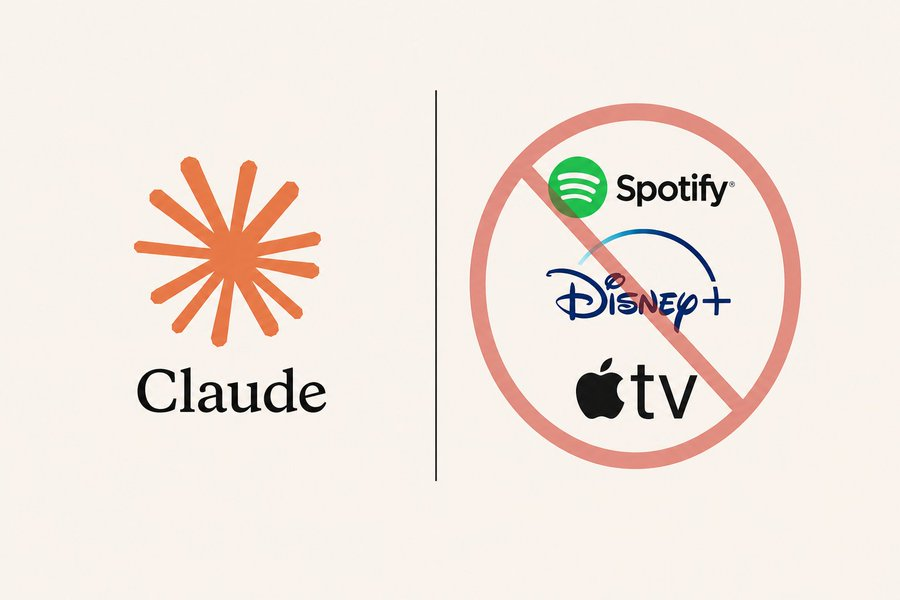
I canceled Spotify.
I canceled Disney+.
I canceled Apple TV+.
No more monthly payments.
Claude turned my laptop into a free entertainment hub that’s better than all of them *combined*.
Here are 9 prompts that rebuild the whole system for free (Save this).
Mark Cuban just described the largest wealth transfer of the AI era.
Almost nobody understood what he said.
Cuban: “There are 33 million companies in this country. Aren’t going to have AI budgets. Aren’t going to have AI experts.”
Not tech startups.
The shoe store. The regional trucking outfit. The accounting firm with 12 employees.
The businesses that actually run the physical economy.
They know AI is coming. They have no idea what to do with it.
Cuban: “You’ve got the head of Microsoft saying software is dead because everything’s going to be customized to your unique utilization.”
Software is dead.
The SaaS era ran on one rule. Build a generic product. Force millions of companies to bend their workflows around it. Charge rent forever.
AI ends the contract.
The business stops bending to the software. The intelligence bends to the business.
But customized by whom.
The third-generation manufacturer cannot tell Claude from Gemini. The county hospital is staring at a reactor asking where the light switch is.
Cuban: “Who’s going to do it for them?”
That question is worth more than the frontier models themselves.
Hundreds of billions are being burned to build the foundation. The smartest engineers alive are locked in a bloodbath over who owns the base layer.
Let them fight.
Let them burn the capital. Let them drive the cost of raw intelligence toward zero.
Because the wealth does not collect where the brain is built.
It collects where the brain meets the business.
Every ambitious kid in college right now thinks survival means a seat at OpenAI or Anthropic.
Cuban is staring at the other 99 percent of the economy.
Learn the models. Then learn the messy, unglamorous reality of how a 50-person company actually operates.
Walk through the door. Understand their problems. Wire the intelligence directly into their revenue.
That is not a job title. That is an entire economic class being born.
You do not need to build the brain. You need to build the nervous system.
The biggest winners of the electricity era were not the engineers who built the generators. They were the ones who walked into dark factories and showed the owners where to plug in.
33 million companies are standing in the dark right now.
Silicon Valley is racing to build the god. The fortunes will belong to whoever teaches him a trade.
🚨 BREAKING:
Claude can now build your entire resume and LinkedIn profile for free.
I used it and started getting interview calls within 3 days (including Google and Amazon).
Here are 12 Claude prompts you should try before applying to any job:
(save this)
Claude can now analyze Excel or CSV files in minutes — clean data, find insights, create charts, build dashboards, generate reports, and export summaries or visuals.
How to use these prompts (simple guide):
1. Open a new chat on https://t.co/ZVoSNqX4pM (the free version works fine).
2. Upload your Excel/CSV file or paste your data table.
3. Copy and paste one prompt at a time.
4. Replace the [brackets] with your goal or question.
5. Send the prompt → Claude will analyze the file and give insights, charts, and summaries.
6. If Artifacts is enabled, Claude will create editable tables and charts that you can download.
7. If Artifacts is not enabled, copy the results and paste them into Excel or Google Sheets.
Prompts start below ↓↓
BREAKING: AI can now analyze stocks like Wall Street analysts (for free).
Here are 10 insane Claude prompts that replace $2,000/month Bloomberg terminals (Save for later)
I think this is superb advice. Worth a careful read:
Michael Milken – Lessons on Money, Family, and Success
(Forum for Family Asset Management, Milken Conference, Mexico City –
paraphrased notes)
Spend time with your kids — you’ll pay for it (for better or worse) either now or
later.
Think about how you measure meaning and success in your children and
grandchildren. Give them purpose.
For children raised in very successful households, it’s often hard to emulate
success — especially financial success.
Most successful people are too busy to see their kids and grandkids. That
absence shows up later in life.
The center of success is the ability to dream.
Real success is the freedom to live your life.
The financial media is obsessed with lists. Forbes today is mostly about
ranking wealth by dollars.
There are countless stories of wealthy people who never had a good day with
their kids.
You’re only as happy as your least happy child — think about that often.
He shared a story about a wealthy Chicago family whose fortune was divided into 1/13th shares after one heir demanded his part. That decision ended up dividing the entire family.
Be careful not to do something that provides financially but destroys the
family.
The most important thing to teach children is financial literacy.
The greatest failure among wealthy families is not providing financial literacy to their members.
Example: an extremely wealthy Latin American family where the
great-grandfather is still alive — his mindset is completely different from that of his great-grandchildren.
In Asia, inheritance traditionally went only to men — that has changed in
recent decades.
Recommended reading: Economic Mobility Program – Invest in America.
Example: Apollo bought the Venetian Hotel and gave all 7,000 employees
stock. They paid a dividend the first year through a recap — everyone saw it as a “Christmas bonus.” The next year, when there was no dividend,
employees were upset. No one had explained the difference between a
dividend and a bonus.
The biggest mistake over the last 50 years has been financial illiteracy — not understanding the business or the source of wealth. Families and employees both need to learn this.
Best example of a united family: an Austrian family that’s 11 generations old. They own a resort used only by the five branches of the family. Ownership
rotates every three years. To be invited when your branch isn’t in charge, you
must get along with the others.
No matter how much you build or earn, what truly matters in the long run is
your relationship with your kids and grandkids.
Define what success means to you — it’s what makes you happy.
Entrepreneurs don’t just build companies; they can build nations or religions.
One of the most successful entrepreneurs in history is Lee Kuan Yew.
It’s not about how many things you own.
If you’ve never been responsible for making payroll, your view of the world is very different.
Hug your kids and grandkids. Let everyone find their own path.
Children growing up around success feel enormous pressure. Remind them
how valuable they are.
Let kids make mistakes when the stakes are low — not high.
Laughing at themselves was the right move, because humor does four crucial things:
1) Connect with a new audience
Even for people who don’t care about Apache Airflow®, being in on the joke together forms a connection with Astronomer
2) Defuse tension
By joining the ridicule, they’re no longer its object
3) Get closure
They said it out loud, the joke is tapped, everyone can now move on
4) Signal a fresh start
The CEO and HR lady are gone, it’s a new management team, and making light of this shows they’ve “consciously uncoupled” from the past
Now that the budget bill has passed Congress, we can see what the projections look like for deficits, government debt, and debt service expenses. In brief, the bill is expected to lead to spending of about $7 trillion a year with inflows of about $5 trillion a year, so the debt, which is now about 6x of the money taken in, 100 percent of GDP, and about $230,000 per American family, will rise over ten years to about 7.5x the money taken in, 130 percent of GDP, and $425,000 per family. That will increase interest and principal payments on the debt from about $10 trillion ($1 trillion in interest, $9 trillion in principal) to about $18 trillion (of which $2 trillion is interest payments), which will lead to either a big squeezing out (and cutting off) of spending and/or unimaginable tax increases, or a lot of printing and devaluing of money and pushing interest rates to unattractively low levels. This printing and devaluing is not good for those holding bonds as a storehold of wealth, and what’s bad for bonds and US credit markets is bad for everyone because the US Treasury market is the backbone of all capital markets, which are the backbones of our economic and social conditions. Unless this path is soon rectified to bring the budget deficit from roughly 7% of GDP to about 3% by making adjustments to spending, taxes, and interest rates, big, painful disruptions will likely occur.
The country is 100% behind the president on fixing a global system of tariffs that has disadvantaged the country. But, business is a confidence game and confidence depends on trust.
President @realDonaldTrump has elevated the tariff issue to the most important geopolitical issue in the world, and he has gotten everyone’s attention. So far, so good.
And yes, other nations have taken advantage of the U.S. by protecting their home industries at the expense of millions of our jobs and economic growth in our country.
But, by placing massive and disproportionate tariffs on our friends and our enemies alike and thereby launching a global economic war against the whole world at once, we are in the process of destroying confidence in our country as a trading partner, as a place to do business, and as a market to invest capital.
The president has an opportunity to call a 90-day time out, negotiate and resolve unfair asymmetric tariff deals, and induce trillions of dollars of new investment in our country.
If, on the other hand, on April 9th we launch economic nuclear war on every country in the world, business investment will grind to a halt, consumers will close their wallets and pocket books, and we will severely damage our reputation with the rest of the world that will take years and potentially decades to rehabilitate.
What CEO and what board of directors will be comfortable making large,
long-term, economic commitments in our country in the middle of an economic nuclear war?
I don’t know of one who will do so.
When markets crash, new investment stops, consumers stop spending money, and businesses have no choice but to curtail investment and fire workers.
And it is not just the big companies that will suffer. Small and medium size businesses and entrepreneurs will experience much greater pain. Almost no business can pass through an overnight massive increase in costs to their customers. And that’s true even if they have no debt, and, unfortunately, there is a massive amount of leverage in the system.
Business is a confidence game. The president is losing the confidence of business leaders around the globe. The consequences for our country and the millions of our citizens who have supported the president — in particular low-income consumers who are already under a huge amount of economic stress — are going to be severely negative. This is not what we voted for.
The President has an opportunity on Monday to call a time out and have the time to execute on fixing an unfair tariff system.
Alternatively, we are heading for a self-induced, economic nuclear winter, and we should start hunkering down.
May cooler heads prevail.