🎬99% of Indians will not know about these Ancient Math Secrets. With Ishwar's Grace, I present The Final Act of my Movie 'Fibonacci Speaks'. The End will give you Pride & Goosebumps❗️
Should i combine all Parts into a Movie ?
In 1821, Thomas Jefferson wrote that religious liberty in America must protect "the Hindoo" as much as anyone else. This America 250 story might surprise you.
The United States was born from the bold idea that we're all created equal, and our founding fathers were thinkers who looked to their furthest horizons in search of the meaning of freedom.
Jefferson envisioned a nation where ancient Eastern wisdom and Western ideals could live side by side. Alongside leaders like James Madison and John Adams, they shared a vision of many faiths and traditions living together in a land truly safe and free, drawing on the spiritual depth of humanity.
Two and a half centuries later, their vision is all around us. Today, the United States is a tapestry woven from threads from every corner of the world, and Hindus have been part of this nation's story from its earliest days.
Happy 250th, America! 🎆
Learn more about Hinduism's roots in American history 👉 https://t.co/U0WYyofGlL
Hey @airindia your website says there’s a 20% discount on excess baggage, but the payment wouldn’t go through online. Ended up paying full extra charges at the Mumbai counter. That’s not right. Please fix this. #bomlhr
$252M seed round for brain–computer interfaces — still in early research.
Capital is moving from AI apps → models → chips → the human brain.
Platform layer… or ethical fault line?
Thoughts? 👇
#Neurotech#AI#DeepTech#BCI#VentureCapital#UnnichedHQ
Most people optimise skills. Power comes from understanding systems.
Finance × AI × Deeptech × Geopolitics × Human behaviour.
That’s what I’m building with UnnichedHQ. Starting from zero. Going all in.
#Finance#AI#Geopolitics#DeepTech#BuildInPublic#Unniched
At a time when Hindu and Indian-American communities are confronting a climate of rising prejudice, talk of mass deportations, and growing anti-Hindu sentiment—even against members of his own party—it’s deeply disappointing that the Vice President would add to that climate through his recent comments while remaining silent in the face of hate.
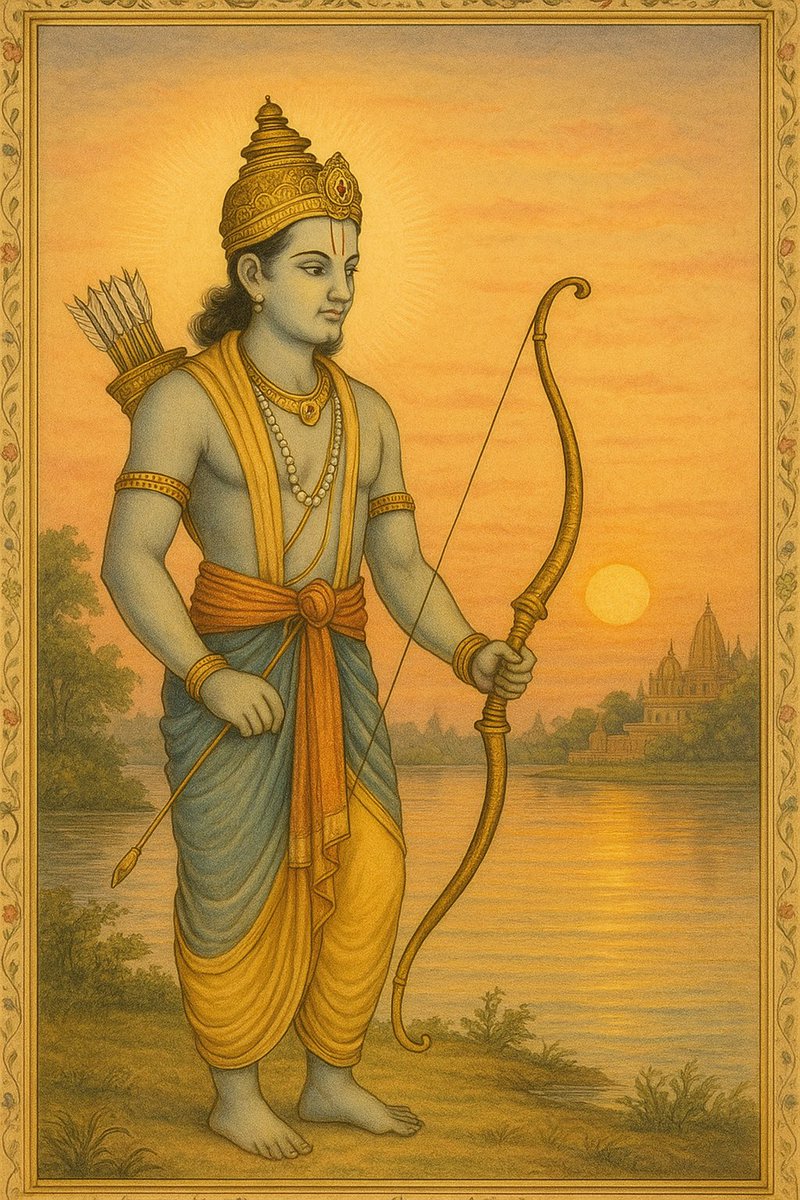
In this festive week of Diwali, what better source of #MondayMotivation than universal lessons from the life of Lord Sri Ram?
He was not just a warrior or king; he was the embodiment of Maryada, the moral boundaries that guide all actions.
Because the battle between good and evil isn’t fought only on a battlefield, it’s fought every day within us.
And like Lord Shri Ram, each time we choose truth over deceit, humility over ego, and compassion over anger, we help good triumph once more…
A Very Happy Diwali to you all
An exciting milestone for AI in science: Our C2S-Scale 27B foundation model, built with @Yale and based on Gemma, generated a novel hypothesis about cancer cellular behavior, which scientists experimentally validated in living cells.
With more preclinical and clinical tests, this discovery may reveal a promising new pathway for developing therapies to fight cancer.
The beheading of Indian-origin man Chandra Nagamallaiah at a Dallas, Texas motel in front of his screaming wife & son has been nearly blanked out in American media. This is what the selective normalisation of a violent society looks like.
Happy Independence Day, India! 🇮🇳
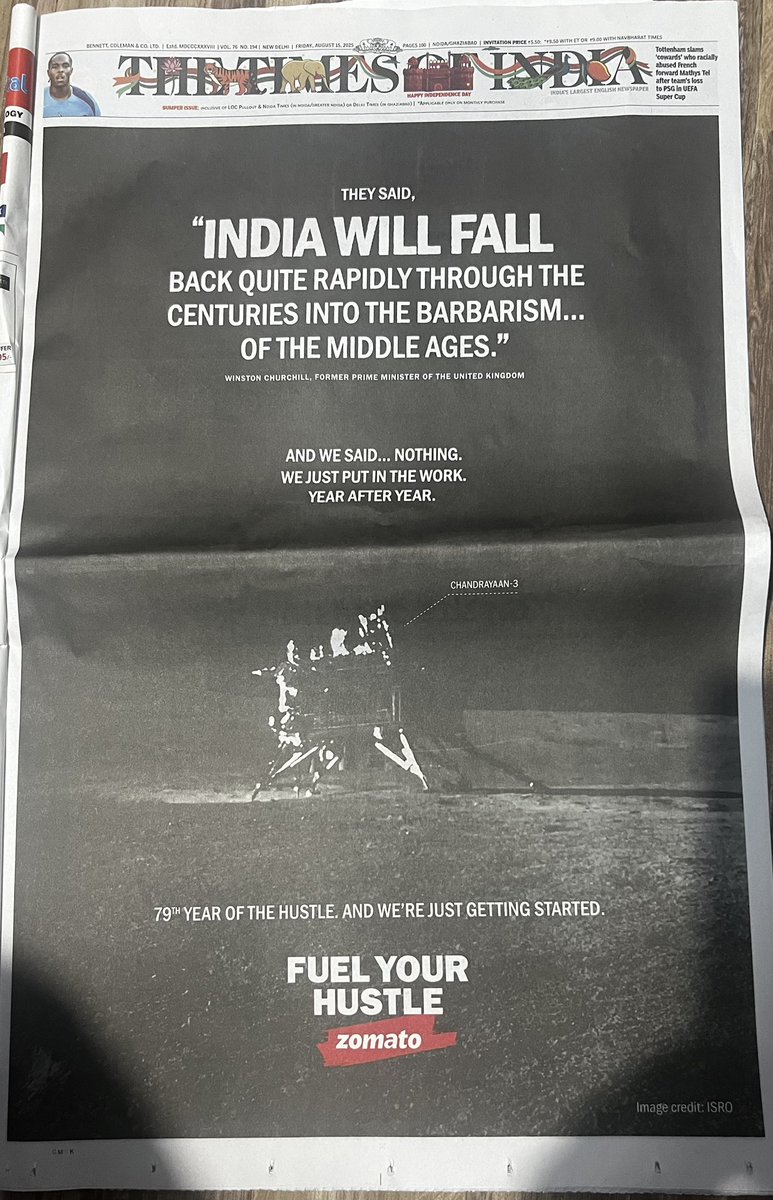
79 years on: fastest-growing major economy, spacefaring nation, world’s pharmacy, digital payments leader, startup powerhouse.
From zero satellites to Mars 🚀
From importing grain to exporting vaccines 💉
From being ruled to shaping rules 🌏
Jai Hind!
#IndependenceDayIndia #IndiaAt79 #JaiHind #VandeMataram #ProudToBeIndian #IndiaRising #IncredibleIndia #MakeInIndia #StartupIndia #DigitalIndia #NewIndia #IndiaShining #UnityInDiversity
Tariffs are taxes paid by American importers, not foreign govts, meaning the money “flowing in” is actually coming from US businesses and consumers, not China, India or anyone else.
It’s like robbing your own citizens and calling it foreign income. For someone who claims to be a business genius, not understanding this basic economic principle either points to a dangerously low IQ or deliberate deception, and neither is reassuring.
Thank you for your attention to this matter.
Well said by @Cloudwatch199, India has called the decision “unfair, unjustified and unreasonable”, pointing out that many countries - like China, which import Russian oil without similar repercussions. Notably, former U.S. Ambassador Eric Garcetti recently admitted that Washington once encouraged India to buy discounted Russian oil to stabilize global prices.
#TradePolicy #USIndiaRelations #IndiaUSTrade
This is catastrophic policy.
If the President continues to behave impulsively , he may well accelerate the decline of the American Empire.
I’ve said it before, and I’ll say it again:
Lose India, and you lose the entire Indo-Pacific.
You don’t counter adversaries by alienating allies. And you certainly don’t preserve leadership by waging economic war on the world.
This isn’t strategy.
This is self sabotage.
Proud of New Delhi for standing its ground. Decades of hard work to align the world's largest democracy and oldest democracy is being undone by inept policy in Washington D.C. It did not work in 1971, it did not work in 1998, and it will not work in 2025.
#India#UnitedStates #TradePolicy
India matters - economically, strategically, and culturally. As it rises, so will the complexity of its relationships. Friction isn’t failure - it’s the growing pains of partnership. The U.S.-India bond must be built not just on policy but on deep mutual understanding. India isn’t just a rising power - it’s a vital partner in shaping the global future. We need more understanding, not less. @wrmead 🇮🇳🇺🇸 #USIndia #TrumpTariffs
For someone like me who admires India’s culture and civilization, marvels at its growing economic power, appreciates its critical importance for the peaceful future of the Indo-Pacific and cares deeply about the US-India relationship, the past week was a shocker.
Pakistan, trade, Russia: all the old pain points in US-India relations are flaring. And while past presidents couched their disagreements with India and other countries in diplomatic language, President Trump lets it all hang out.
But this isn’t a return to the bad old days. From the 1940s to the 1990s, every time the US and India started to work together, something would pull them apart. That’s not where we are now.
Even in this tough week, India’s ambassador announced the opening of 8 new consular application centers across the United States. People to people ties continue to grow. Diplomats in both countries are looking for solutions, not shouting slogans.
So how can India and the United States be drawing closer together in some ways, but quarrelling so bitterly? This is more common in international relations than most people think.
The closer the relationship between two countries becomes, the more quarrels they often have. You argue more with your brother than you do with your cousin, more with your next door neighbor than with random strangers you pass on the street.
As India becomes a more important global force, and its economy becomes a larger factor, India and the United States naturally and inevitably matter more to each other—and any disagreements we have become more visible and more consequential.
We quarrel more over trade because our trade has grown and will grow more so there is more to argue about. Americans care more about India’s foreign policy than ever before because India is more powerful than ever before.
My personal view is that the Trump administration needs to think through its India policy more. Different actions that may have seemed unrelated at the time have combined to create a strong and negative impression in India.
I think this administration can do better and hope that in time it will.
The root problem is that as the relationship becomes more important, the number of people in both countries who deeply understand the other needs to grow.
President Trump needs more people in his inner circle who understand India deeply. But so do most policymakers in Washington. India literacy, being reasonably well informed about India, used to be something that only “South Asia” experts needed to have.
Today, generalists and non-specialists need to know India as deeply as so many know Europe, Japan and the Middle East. India isn’t just for specialists anymore.
We need more Americans who grasp India's importance to the world and to America, and who understand the political realities that Indian governments of any party inevitably face. And more Indians need experience dealing with US policy makers, thought leaders and cultural leaders in different fields.
America's closest international relationships all have a strong infrastructure of think tanks, academic exchanges and business groups. There are countless programs promoting cultural exchanges and visits for emerging young leaders between countries like Germany, Japan and the US.
When controversies emerge and, inevitably, they do, these large groups of informed observers and thought leaders can explain the issues to public opinion in both countries and find mutually acceptable compromises while avoiding unnecessary problems.
The Indian diaspora plays an important role in American life, and that role is growing. But it is not only German-Americans, Japanese-Americans or Jewish-Americans (I wrote a whole book on this subject) who help stabilize these important relationships.
India's growing importance in the world, and America's interest in promoting the emergence of India as a global power, both require a strong and broadly based, trans-partisan community of leaders.
To make a relationship this important work, we need sharp policy analysts and diaspora leaders. We need journalists, intellectuals, businesspeople and religious bridge builders too. And lots of them. India and the US are big, complex, and at times raucous democracies.
I’m blessed. At Hudson Institute I have colleagues like @Aparna_Pande, @bill_drexel and @MikeWatsonVa who are as committed to this relationship as I am, and in many ways understand India more deeply than I do.
But we need more young scholars, analysts and writers like them. That’s how we reduce the number of dustups and car crashes so we can all focus on tackling seriously the greatest challenges facing our countries, and the world.