When you approve a smart contract to spend your tokens, you're essentially handing it a blank check. Most wallets ask "do you want to approve this contract," and the default is unlimited—meaning it can drain your entire balance whenever it wants, not just for the one transaction you intended.
This happens because Ethereum's ERC-20 standard requires a separate approval step before a contract can move your tokens. For convenience, most dapps ask for unlimited allowance so you don't have to re-approve every single transaction. But if that contract gets hacked or turns malicious, you lose everything.
The fix is simple: check what you're approving before you sign. Use tools like Etherscan or Solscan to verify the contract address is real. Consider approving only what you need for that one trade, or use https://t.co/lUhWmqFzFt to cancel old unlimited approvals you no longer trust.
Don't let your tokens get plucked by a shady contract—always verify before you approve.
Low-liquidity tokens are easy to manipulate because small trades create outsized price swings—think of a tiny pond versus an ocean. A coordinated buyer or seller can move the price dramatically, especially on thin order books, and predatory traders use this to pump-and-dump. The fewer people trading and hodling, the more vulnerable the token becomes to whales and bots that can engineer artificial rallies to sucker in retail.
Don't chase tokens just because they're cheap or promising; deep liquidity pools and real trading volume are your bodyguards against getting plucked.
Risk budgeting is the discipline of deciding upfront how much you can afford to lose without wrecking your life. This means looking at your full financial picture—income, expenses, emergency fund, debt, and long-term goals—then allocating only a small portion to crypto and volatile assets.
A practical approach: calculate your monthly surplus after all essentials are covered, then ask yourself what percentage of that you could see go to zero tomorrow without skipping rent or meals. For most people, that's somewhere between 1-5% of their total net worth. If losing that amount wouldn't materially change your life, you've found your risk budget.
Once you set that number, stick to it religiously. This means saying no to FOMO trades, stop adding whenever someone hypes the next big thing, and resist rebalancing after a win. Your risk budget isn't a minimum to reach—it's a ceiling not to exceed.
The hardest part isn't the math, it's the discipline to actually respect the limit when prices are mooning or crashing.
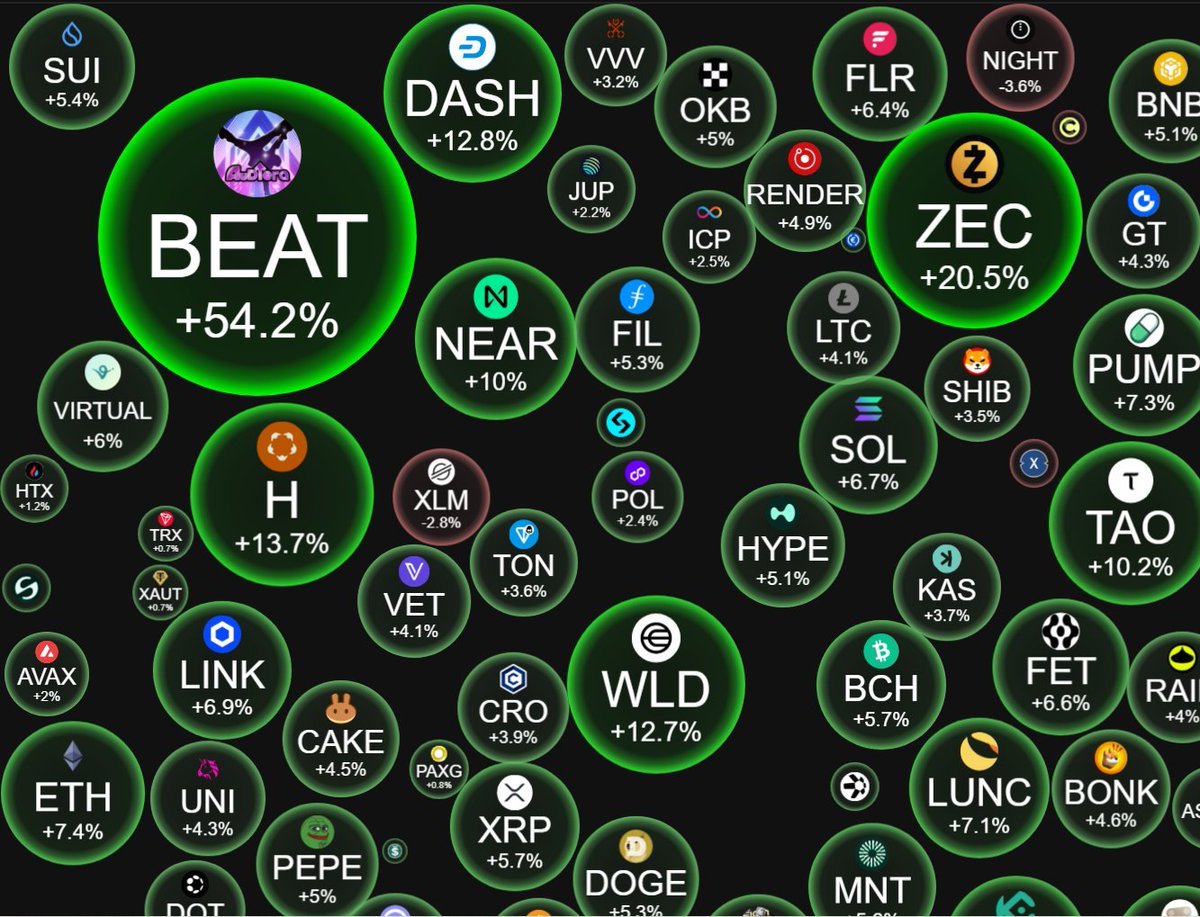
Even in the red, OnlyRose can thrive.. why because it's all about the Rose! Sure charts are important, but our community is built around the person.. OnlyRose! Join us for a change.
https://t.co/s7yUBdirW2
🐔 CLKN BUY SPECIAL — 54 HOURS, EVERYBODY EATS 🐔
The School of Crypto Hard Knocks is running a Buy Special — and we built it so you win whether you buy big or small.
🗓 THE WINDOW
Friday, June 5 · 2:00 PM CT
→ Sunday, June 7 · 8:00 PM CT
Here's the deal 👇
✅ 10% BONUS — GUARANTEED, FOR EVERYONE
Everyone who buys $CLKN during the window earns a 10% bonus on what they bought. Not a raffle. Not a "top 10." Everyone. It adds up CUMULATIVELY across all your buys — buy a total of 100K over the weekend, that's 10K in bonus, no matter how you split it up.
🎲 5 RANDOM WINNERS — 100,000 CLKN EACH
On top of the bonus, we're pulling 5 random buys to win 100,000 CLKN apiece. And it's RANDOM, not size-ranked — a small buy sits right next to a whale in the hat.
🪜 THE SMART PLAY: STACK SMALL BUYS
Every individual buy is its own raffle entry. So 5 small buys = 5 entries = 5x the chances at the 100K draws — while still rolling up to the exact same 10% bonus on your cumulative total. You lose nothing by spreading it out, and you gain more tickets. More buys, more chances. 🎟️
📈 AND IT'S GREAT FOR THE CHART
A steady stream of small buys does more for CLKN than one big one: more transactions, more individual buyers, more green candles on the chart. DEX screeners and trackers rank "trending" partly on transaction count and unique buyers — so a wave of small buys pushes us up the trending boards, gets more eyes on the token, and that visibility is good for everyone holding. We climb together. 🐓📊
⏳ ONE RULE: HOLD 24 HOURS
To keep your bonus AND qualify for the draws, hold your buy for 24 hours after the special closes — no selling, no transferring out. We take an on-chain snapshot after the hold; anyone who dumped is out. Diamond wings only. 💎🪽
🔍 PROVABLY FAIR — RECEIPTS, NOT PROMISES
When the draw runs, we publish the random seed, the full list of eligible entries (every wallet + its number of chances), and the exact SHA-256 method — so ANYONE can re-run the draw and confirm the 5 winners. You can check our math.
🥚 HOW IT WORKS
• Entry is AUTOMATIC — buy CLKN in the window and hold 24h, and you're in for both the 10% bonus and the random draws. No form, no signup, no wallet-connect.
• Nothing is paid instantly. After the 24-hour hold closes, we snapshot the chain, verify who held, distribute the 10% bonus, and draw the 5 winners — then send it all out. Patience pays. 🐣
Why do this? We're building in public on @BagsApp, the school is free, the token-research tools are free, and we'd rather reward the people actually showing up than shout into the void. Small bags welcome at Cluck Norris. 🐓
⚠️ Not financial advice. Crypto is risky — only spend what you can afford to lose. Full rules + the live fair-draw results post at https://t.co/eiIIXQnz6E.
CLKN — School of Crypto Hard Knocks
CA: DW6DF2mjtyx67vcNmMhFm9XdxAwREurorghZcS3CBAGS
👉 https://t.co/eiIIXQnz6E
A stablecoin is a cryptocurrency designed to maintain a steady value—usually pegged to the US dollar or another reference asset—so it doesn't swing wildly like Bitcoin or Ethereum. This makes it useful for everyday transactions, trading pairs, and holding value without the volatility rollercoaster.
But here's where things get tricky: "stable" doesn't mean "risk-free." A stablecoin's value depends entirely on what backs it. If it claims to be backed by actual dollars in a bank account, those reserves need to be real, auditable, and actually there—not just someone's promise.
Different stablecoins use different methods. Some are collateralized (backed by crypto or cash), some are algorithmic (relying on code and incentives to maintain the peg), and others are centralized (depending on a company's credibility). Each has different failure modes, and history shows that trust and transparency matter more than the word "stable."
The real risk is assuming stability means the stablecoin can't blow up. It can, and some have. Always know what's actually backing your stablecoin before treating it as a safe harbor.
An RPC, or Remote Procedure Call, is a server that lets your wallet talk to a blockchain without running the full network yourself. When you check your balance, your wallet pings an RPC to fetch the latest data from the ledger. If that RPC is slow, congested, or behind the network's actual state, your balance can lag—so sometimes you're looking at yesterday's numbers while your tokens are already in motion.
RPC reliability matters more than most realize; one bad node can leave you second-guessing whether a transaction actually went through.
@elonmusk@Tesla OnlyRose showcasthat sexy 2025 Tesla truck. OnlyRose is a hot sensation on Solana. From Telegram Rose bot to human. She's amazing!
https://t.co/FleXzC71pA
RoSeiVjW5H48ucPAJh1LJGBBzPpqvsokfDGpgHXDtdF
When a bunch of whales hold most of a token's supply, the market becomes fragile. If a few big wallets suddenly decide to cash out, price can plummet faster than a chicken losing its feathers.
Holder concentration reveals whether a project is decentralized or controlled by insiders. High concentration means a small group has outsized power over the asset's future, which is a red flag for most crypto projects that claim to be community-driven.
You can check concentration on tools like Solscan or Etherscan by looking at the top holder list—see what percentage the top 10 or top 100 addresses own. Compare that to similar projects to understand if it's unusually centralized. A healthy distribution usually means no single entity controls more than 5-10% of circulating supply.
The healthiest projects spread holdings across thousands of addresses, not hundreds.
Locked liquidity means the LP tokens themselves are held in an escrow contract, preventing anyone from withdrawing the trading pair (usually 50/50 tokens) that backs them. Locked supply means the token itself can't be minted or transferred, freezing its total amount. Liquidity locks protect traders from rug pulls; supply locks prevent dilution or token movement, but liquidity can still drain if LP holders have keys.
Locked liquidity gives you trading safety; locked supply gives you distribution certainty—don't confuse the two.
A sandwich attack happens when a bad actor sees your pending transaction in the mempool, then rushes to execute their own transaction before yours, forcing your trade into a worse price. Think of it like someone cutting in line at the deli and moving the meat case right before your order goes through. Your high slippage tolerance is basically an open invitation to these attackers, because it signals you'll accept a wide price range no matter what. When you set slippage to 5 or 10 percent, you're telling the network "I don't care if my $1000 swap becomes $900 or $950" and frontrunners absolutely exploit that weakness. Tighter slippage settings won't eliminate sandwich attacks entirely, but they make your trade a smaller profit target and force attackers to work harder to stay profitable. The real protection comes from using private mempools like Jito or MEV-resistant DEXs, which hide your transaction until it executes. Keep slippage as tight as your trade can tolerate, and remember that a failed transaction beats a heavily sandwiched one any day.
Tight slippage plus privacy solutions beat loose tolerance every time.
🐔 https://t.co/eiIIXQnz6E
💬 https://t.co/TvoamkBsq4
📊 https://t.co/icCMPQB6kI
@BagsApp@BagsHackathon