Honestly, it’s pretty crazy how many people think they’re intelligent just because they can sit on some dumb podcast and mock a man who’s actually building the future… only to expose their own room-temperature IQ the moment they try to make an argument
“He’s just a lucky billionaire”
Lucky?
Lucky once: PayPal
Lucky twice: Tesla making EVs mainstream when the entire auto industry doubted it could be done
Lucky three times: Building orbital rockets with boosters that literally fly back and land
Lucky four times: Starlink bringing internet to places that never had it
Lucky five times: Neuralink letting people with paralysis control computers using nothing but their thoughts
At some point, it stops being luck and starts being the work you’re too lazy to see or understand
Most of the people attacking Elon have never shipped a product, never made a payroll, never bet everything they own on an idea the whole world laughed at
You have to be a special kind of stupid to have never built a damn thing yourself and still think you’re smarter than the man who’s actually building the future
Elon did exactly that in 2008 and almost lost everything trying to keep Tesla and SpaceX alive
And in 50 years, nobody will remember the takes
Everyone will remember the rockets
In collaboration with @googlecloud we’re announcing Verifiable Agent Arbiter (VAA), an evidence layer enabling enterprises to prove their AI agents acted as authorised, using @SuiNetwork and @WalrusProtocol to anchor that proof 👇
Psychology says some people avoid socializing not because they hate people, but because they can read them too well. They walk into a room and immediately sense the fake laughs, the hidden agendas, the performances. Their nervous system doesn't misread the signal, it just refuses to ignore it. Small talk feels like a tax they didn't agree to pay. Forced smiles cost them energy that takes hours to recover. They're not broken. They're calibrated differently. They don't avoid people. They avoid emotional labor that leads nowhere. When they do connect, it's deep, intentional, real. No masks. No games. Fewer friends doesn't mean loneliness. It means higher standards. That's not antisocial behavior. That's emotional intelligence.
Naval Ravikant: "You're going to die. It's all going to zero. What's there to stress about?"
"Stress is when your mind has two conflicting desires at once. You want to be liked, but you want to do something selfish. You don't want to go to work, but you want to make money. You have two conflicting desires, and that's stress."
Naval explains the difference between stress and anxiety:
"Anxiety is this pervasive, unidentifiable stress where you're stressed out all the time and you're not even sure why. The reason is you have so many unresolved problems that have piled up in your life, you can no longer identify what the problems are. There's this mountain of garbage in your mind. A little bit is poking out the top like an iceberg; that's anxiety. But underneath, there's a lot of unresolved things."
He shares his personal anxiety resolver:
"One big anxiety resolver for me is just ruminating on death. You're going to die. It's all going to zero. You cannot take anything with you. If you can keep that idea in front of you at all times, what's there to stress about?"
Naval reframes what "wasted time" really means:
"What is wasted time? Everything is wasted time in a sense because nothing matters in the ultimate. But in each moment, it's the only thing that matters. So if you're doing something you want to do and you're fully there for it it's not wasted time. If your mind is running away, wishing you were somewhere else, anticipating the future, regretting the past, that's wasted time. That's time you're not present for."
He concludes:
"People get worried about dying and no longer being here. But they don't realize that so much of their life is spent not being here in any case."
Elon Musk just said saving for retirement becomes pointless in 10 to 20 years. Not speculation. Math.
Musk: “Don’t worry about squirreling money away for retirement in like ten or 20 years. It won’t matter.”
We passed the event horizon. Retirement savings assumes scarcity persists. It won’t.
AI and robotics collapse labor costs to zero. Living costs follow. You’re not saving for security. You’re saving for a world that stops existing.
Musk: “If any of the things that we’ve said are true, saving for retirement will be irrelevant.”
Age of Abundance isn’t vision. It’s physics. Economic laws executing whether you believe them or not.
5,000 days. Fourteen years. Global GDP uncaps. Production approaches infinite. Net worth as concept dies.
Only scarcity left is meaning. Money stops being the constraint.
Timeline is shorter than your brain accepts. Fourteen years. We transition from survival work to Universal High Income in that window.
Event horizon isn’t coming. You’re in it. Operating under old rules while ground disappears beneath you means you already lost.
Production costs hit zero through automation. Everything priced on human labor reprices instantly. Housing. Food. Goods. Services. All reset when scarcity evaporates.
Traditional planning assumes structure persists. Save for decades. Retire on capital returns in scarcity markets. That model shatters when abundance becomes baseline.
You’re optimizing for a world vanishing while the replacement materializes. Your strategy becomes obsolete before you finish executing it.
The retirement you’re building toward assumes costs stay high. They collapse. And your savings designed for expensive scarcity become irrelevant in cheap abundance.
Every dollar you put away for future scarcity is a bet against the transformation already happening. And that bet loses the moment production costs hit zero and the economy you planned for stops functioning.
You’re not preparing for the future. You’re clinging to a past that’s ending whether you accept it or not. And fourteen years from now, the question won’t be whether you saved enough. It’ll be why you wasted time saving for conditions that don’t exist anymore.
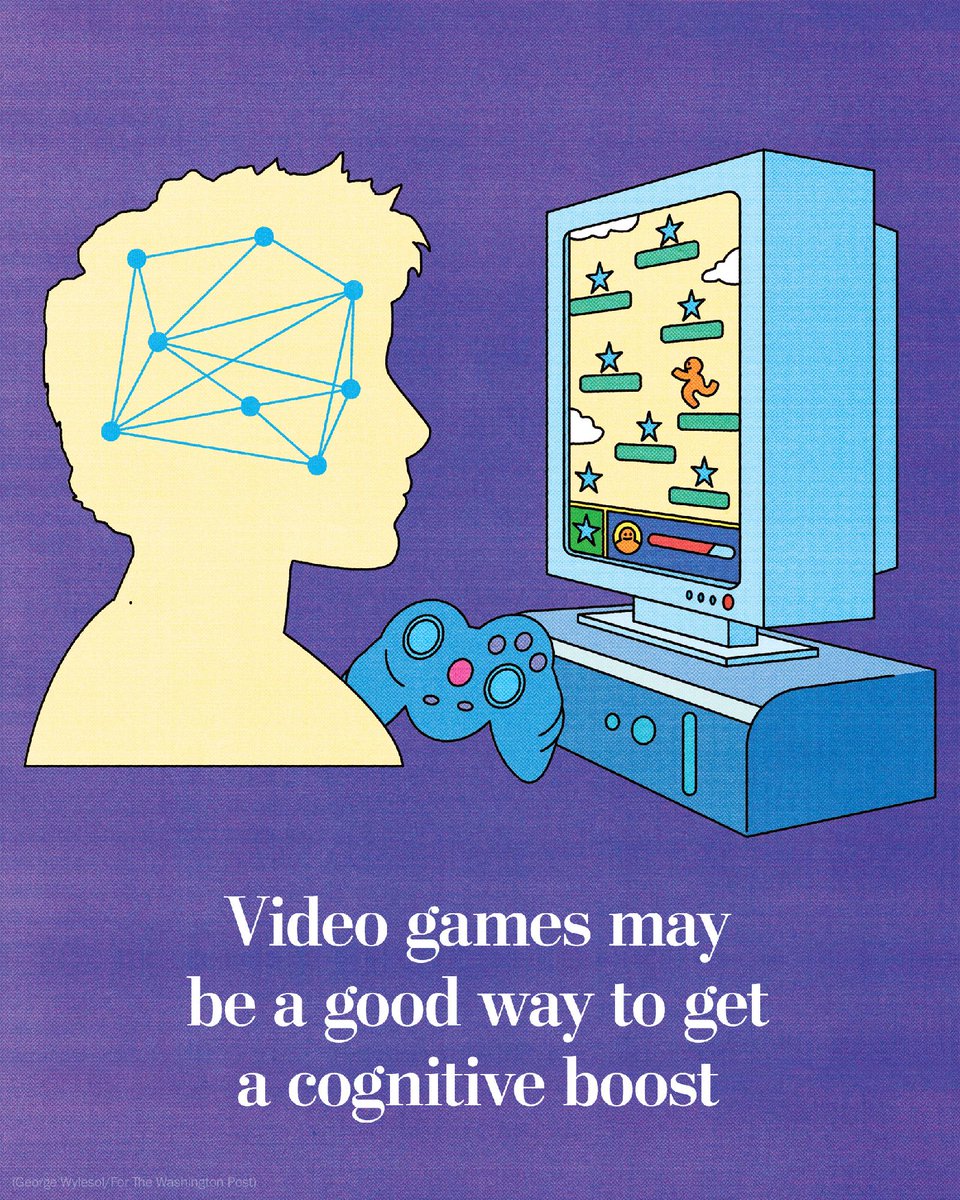
Far from rotting our brains, video games may improve our cognition.
By playing video games, “people are practicing complex skills in simulated environments,” said Aaron Seitz, a professor of psychology, unlike traditional “brain games,” which tend to be as “simple as possible.” https://t.co/N3wSIPk9xH
All said and done, regardless of what sparked it, Friday was a "Flash Crash". Flash crashes usually recover in V-shapes back to their prior price/range and usually go on to make new highs shortly after.
In this case, we entirely wiped out all accumulated leverage too.
Higher.