Starting my experiment using ultrasound for neural stimulation (vagus and brain). Based on @SterlingCooley's information and inspired by @MelRoBuilds's logging of her journey.
I have several theoretical goals, but at this point I am outcome independent and will just see what happens.
Day 1:
7pm - Left Vagus - 5min - Medium setting on US-1000
-slight palpitations initially. Odd chest feeling. Almost concerning at first. Then relaxation and general positive feeling started.
Thoughts: Massively different sensation than vagus e-stim sessions prior, relaxation similar to good sessions I’ve had with pulsetto (but it was hit or miss with it). I've used many estim devices for vagus nerve stimulation and it was always variable with results.
7:30pm - Right Insular Cortex - 5min - High US-1000
-traveled back and forth along line from outer acanthus, about an inch back to above the apex of the ear. Giving more attentions to areas that “felt good”. (because it felt good?)
-temporal area as described in the Ultra Skool course was a prime "feel good" area as well as above the apex of the ear. I figure I am getting the benefits of the Insular Cortex and Memory/Focus enhancement at this location.
After: Felt calm and slow, face felt numb-ish, but wasn’t actually numb, perhaps just from the stimulation, returned to normal within a few minutes. I generally feel “slower” but in a good way.
-30 minutes later right side feels much lighter and “open”. I really want to use US on the right side as well, but I do not want to over do it on day 1.
Plan: continue vagus stim and Insular Cortex daily, experimenting with locations.
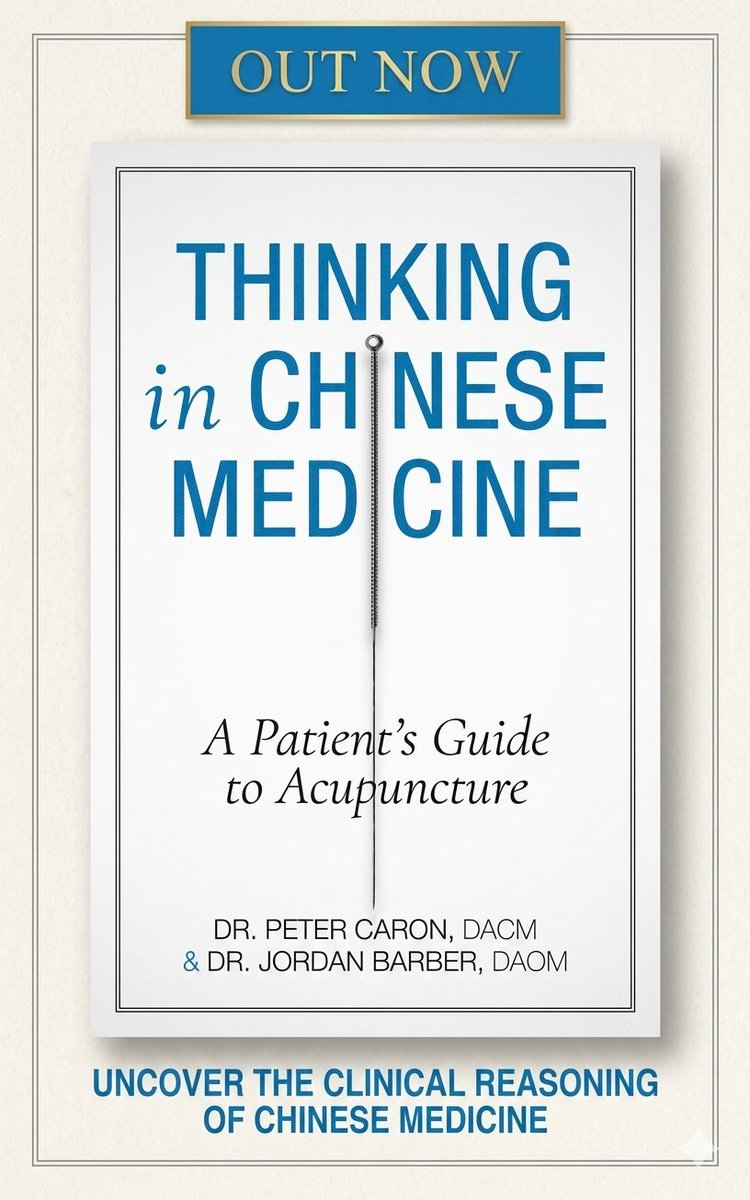
We are thrilled to share that our new book is now available at your favorite bookstores and online retailers! This project has been a labor of love, and we can’t wait for you to dive into its pages. Thank you for your support on this journey; we hope you enjoy every moment of reading! #NewRelease #BookLovers #ReadingAdventure
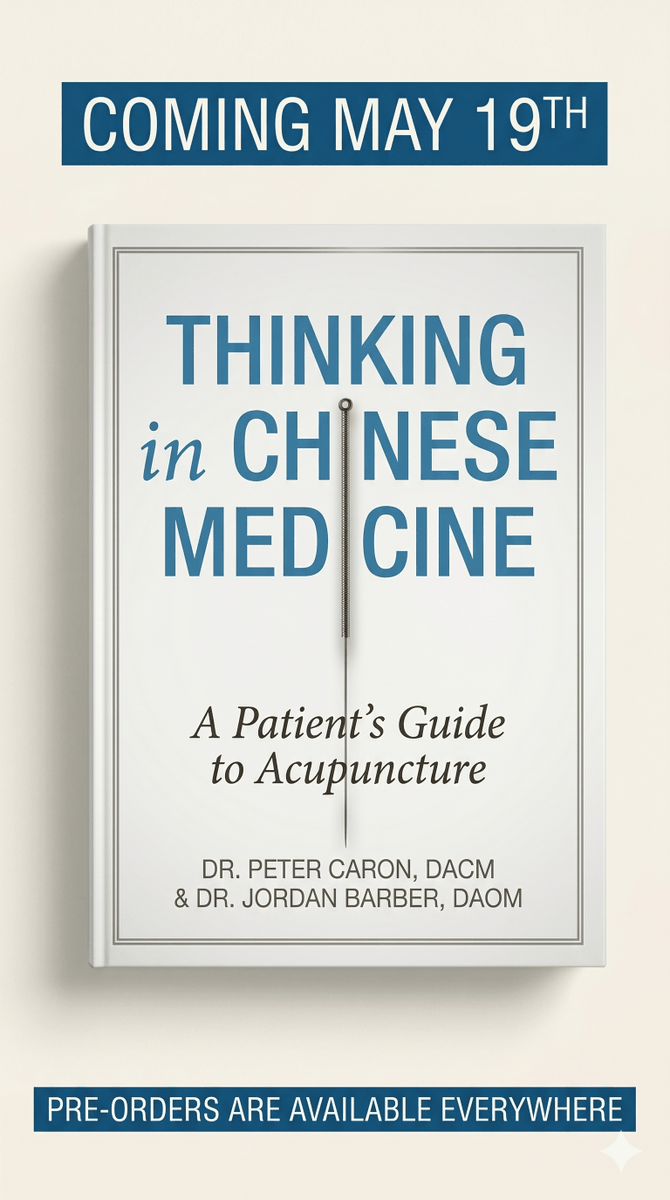
Exciting news! We are thrilled to announce that our new book, "Thinking in Chinese Medicine: A Patient's Guide to Acupuncture," is now available for pre-order. Available everywhere!
Had a great time chatting on the Nutrition Coaching and Life Podcast about Men's Pelvic Floor Health
I’m always grateful for opportunities like these that help bring more awareness to this topic. Thank you to the host for having me on @nutritioncoachingandlife.
You can listen to the full episode here: https://t.co/gWV3C0TDuj
I had a great time joining the UroNurse and really appreciated the great conversation around Pelvic Dysfunction. Always grateful for the chance to share and connect on topics that matter.
Thank you again for having me on @uronurse1!
Listen to the full episode here: https://t.co/y6VbqOe3WL
Had a great time chatting on the Nutrition Coaching and Life about Men's Pelvic Floor Health
I’m always grateful for opportunities like these that help bring more awareness to these topics.Thank you to the host for having me on @nutritioncoachingandlife.
You can listen to the full episode here: https://t.co/gWV3C0TDuj
I had a great time joining the UroNurse and really appreciated the great conversation around Pelvic Dysfunction. Always grateful for the chance to share and connect on topics that matter.
Thank you again for having me on @uronurse1!
Listen to the full episode here: https://t.co/y6VbqOe3WL
Ever post a study on your clinic website and realize no one read it? You cared about the science, but patients scrolled right past.
The problem isn’t that patients dislike research. It’s that research is written for journals, not for people in pain. Data talks to academics. Patients want to know: Will this help me move, sleep, or play with my kids without hurting?
That’s where translation becomes part of realigning medicine.
A good research post starts where the paper doesn’t—with the patient’s question. What are they asking in the treatment room? “Will dry needling help my shoulder?” “Can acupuncture actually reduce migraines?” The answer matters more when it’s tied to a living person, not a statistic.
When we write for patients, we don’t dilute the evidence—we deliver it. “Dry needling can shrink painful knots, which helps many people regain motion and sleep better.” Same data, different language. Clarity builds trust faster than charts ever could.
The next step is connection. We translate results into real life. Fewer migraine days means fewer missed mornings with your kids. A stronger pelvic floor means confidence to keep running. Smaller trigger points mean carrying groceries without pain. That’s where research starts to feel like hope.
And let’s be honest—most clinician blogs fail because they copy the abstract, bury readers in numbers, or forget to answer one simple question: why does this matter to me? Simplicity isn’t dumbing it down. It’s respect. Patients respect clinicians who can make science sound human.
There’s a pattern I use to keep this grounded:
1. Start with the patient’s problem.
2. Share the finding in plain English.
3. Explain what it means day to day.
4. End with one real-world step.
That rhythm keeps the writing honest, and it keeps patients engaged. It’s what bridges modern science with classical wisdom—precision with empathy.
In today’s world, patients often meet you online before they ever meet you in person. If what they find is a clear, trustworthy voice that turns evidence into understanding, you’ve already begun the work of care.
Research shows expertise. Translation shows heart.
When both are present, that’s authentic practice—and that’s how we build trust beyond the treatment room.
Early in my career, marketing taught me to define my “ideal patient” like a product manager: age, income, zip code. It sounded strategic—until I tried to apply it in real life.
Knowing someone is a 45-year-old professional who lives in a nice neighborhood doesn’t tell me anything about whether they’re ready for a whole-person approach to healing. Those metrics predict spending habits, not clinical fit.
So I stopped building demographic profiles and started building behavioral ones.
What have they tried? What do they believe about health and healing? How do they show up when they’re suffering—defeated or determined? Those patterns tell me infinitely more about who I can actually help.
Most of my patients have already been through the system. They’ve seen everyone, tried everything, lived through years of trial and error. But they show up open—ready to partner, ready to participate. They’re curious, engaged, and willing to do the real work between visits.
That’s my ideal patient: frustrated but still hopeful. Ready to bridge modern science with classical wisdom. Wanting results, but also resonance.
Once I built from those qualities, everything shifted. My copy felt more natural. My consultations flowed. I stopped trying to convince and started connecting.
A values-based avatar does more than fill the schedule—it builds alignment. It attracts the people meant for your kind of medicine.
And when your patients match your philosophy, practice becomes lighter. Results improve. Burnout fades.
You’re not just running a business anymore—you’re realigning medicine, one person at a time.
That’s the quiet reward of doing this work right.
Early in my career, I treated the business side of medicine like a foreign body—something that needed to be tolerated, not embraced. I was the healer. The business was just what kept the lights on.
But that thinking burned me out faster than I expected. Because no matter how skilled you are clinically, if you can’t sustain the work, you can’t offer real care for long.
It took years (and a few hard lessons) to realize the healer and the CEO aren’t opposites—they’re the same person doing different kinds of healing.
The healer works one-on-one, seeking wholeness.
The CEO works on the system, building the structure that makes wholeness possible.
Once I started seeing my clinic not as a business, but as a purpose-driven ecosystem, everything clicked. Financial stability stopped feeling like greed—it became a measure of reach. Of impact. Of freedom to practice in alignment with my values.
A healthy business allows for better tools, a solid team, and the time to listen—to practice medicine instead of just deliver services.
Here’s what keeps me grounded in both roles:
Define your mission so clearly that every business decision feels like an extension of your clinical philosophy.
Build systems that protect both your patients’ experience and your own capacity.
And remember that sovereignty isn’t a luxury—it’s the foundation. You get to design how care happens here.
When these two identities merge, you stop hustling for survival and start leading from integrity. You stop just practicing medicine—and start realigning it, one decision at a time.
Results matter. But so does the structure that makes those results possible.
Early in my career, I thought building a referral network meant hustling every networking event in town—shaking hands, swapping cards, pretending that meant something. I walked away with a stack of contacts that looked impressive on paper. You know how many patients came from that? Zero.
Back then, I mistook activity for connection. A real referral network isn’t a stack of cards or a LinkedIn list—it’s a community. And it only works if the people in it see patients the way you do.
I learned that the hard way.
At first, I’d collaborate with anyone—PTs, chiros, massage therapists, orthopedists. But it didn’t take long to notice: some treated bodies, not people. They wanted quick fixes. Patch and move on. Referring to them felt like sending my patients into a void. That’s when I stopped chasing contacts and started clarifying my own philosophy.
For me, it was integrative pain management—bridging modern science with classical wisdom, seeing the whole person, not the broken part. Once I claimed that, it became obvious who belonged in my circle. I wasn’t just looking for a good PT; I wanted the one who’d pick up the phone after a session and say, “Here’s what I noticed—let’s compare notes.”
Depth replaced breadth. Instead of a hundred surface-level exchanges, I built a handful of real partnerships. We grabbed coffee, talked about cases, co-treated patients. Over time, I realized those few relationships were worth more than any referral spreadsheet I could ever build. These were the people I’d trust with my own family—that’s the bar.
And the other shift? I stopped waiting for referrals to come my way. I started giving them. I looked for opportunities to send patients out—to the colleagues I trusted, to the specialists who could take them further. The strange thing is, the more I gave, the more came back. Not in a transactional way, but in trust.
Because when a patient sees you do what’s best for them—even if that means handing them off—they don’t think less of you. They trust you more. That kind of trust doesn’t just grow your reputation; it roots your practice in integrity.
If you’re building a network, stop thinking in transactions. Think in alignment. Surround yourself with practitioners who share your values and who treat awareness as part of the treatment plan.
When you do that, your network stops being a list—and becomes an ecosystem. One that makes everyone better: your patients, your colleagues, and maybe most importantly, you.
I’ve been in this field for over two decades. Long enough to have stepped in every pothole a clinician can find. I’ve been broke, burned out, and dangerously close to walking away more than once.
Funny thing is, most of those breakdowns weren’t about being a bad practitioner. They were about how I ran the business—and how I ran myself.
Like the first time I opened a clinic and thought skill alone would fill the schedule. I’d sit in an empty office, staring at the phone, waiting for it to ring. Results matter, but so do systems. A brilliant clinician with no model will starve; a mediocre one with a clear patient journey will grow. That lesson cost me a few lonely months and a mountain of rent.
Then there was the season I sold my time instead of my outcomes. “An hour costs this much, ninety minutes costs that much.” I called it being fair. It was really me undervaluing what the work was worth. Patients don’t pay for minutes—they pay for transformation. When I started building treatment plans instead of trading hours, everything shifted. It was terrifying. And freeing.
Maybe the hardest part was realizing how out of congruence I’d become. I preached balance while living on caffeine and exhaustion. Integrity can’t be faked. Patients can feel it when your message and your life stop matching. I learned the hard way that congruence is the quiet foundation of trust.
And yes, there was a ceiling—the invisible one that tells you what “success” you’re allowed to have. The first time my practice became truly profitable, I felt guilty. Like I’d broken some unwritten rule. Turns out the real work wasn’t financial—it was emotional. Resetting those inner limits was as hard as any clinical skill I’ve ever learned.
When I finally stopped trying to treat everyone, things clicked. I started focusing on complex pain and orthopedics—where I do my best work. The day I stopped chasing every patient was the day the right ones started finding me.
Every one of those mistakes nearly wrecked my career. And I’m grateful they did. Each collapse forced a realignment—between who I was and how I practiced.
If you recognize yourself in any of this, that’s not failure. That’s feedback. The signal that it’s time to adjust before you burn out or lose what made you love medicine in the first place.
Because in the end, building an authentic practice isn’t about perfection—it’s about congruence. Results matter. But so does how we get them.
That’s the part they don’t teach you in school.
A negative review hits harder than we like to admit. You can tell yourself not to take it personally—but when you’ve poured years of study, sacrifice, and heart into this work, even one harsh paragraph online can feel like someone reducing all of it to a single bad day.
I’ve been there. Some reviews were fair. Others, not so much. But every one of them forced a choice: react or respond.
I’ve learned the difference the hard way.
In the moment, instinct says fight back—set the record straight, defend your name. But that flash of defensiveness always costs more than it gives. Better to pause. Wait 24 hours. Let the emotions drain so the professionalism can return. Real care requires restraint, even when we’re the ones who feel wounded.
A patient’s public post isn’t a clinical case to diagnose—it’s a human moment to acknowledge. We can validate without conceding, show empathy without oversharing. A calm, steady reply says far more about who we are than the complaint ever could.
Then take it offline. Invite a direct conversation. Almost always, that’s where healing—of trust, of systems, sometimes of pride—actually happens.
Because the truth is, feedback is data. And data is gold… if we’re willing to mine it. Every negative review points to something beneath the surface: a missed expectation, a process gap, or simply a reminder to communicate with more heart.
I started reviewing each one with my team—not to assign blame, but to refine. A cleaner intake form. A gentler script. A better follow‑up call. Little by little, the practice strengthens around the lesson.
Responding with integrity isn’t about image management. It’s about alignment—between who we say we are and how we show up when it’s uncomfortable.
A review won’t define your practice. But your response will remind you what kind of clinician you’ve decided to be.
Results matter—but so does the humanity behind them.
When I first started, fulfillment looked simple: a patient came in hurting, they walked out feeling better, and I got that small hit of purpose. Mission accomplished.
It was clean, measurable, satisfying. But I learned the hard way that if that’s your only definition of success, you’ll burn out fast.
Because no matter how good you are in the treatment room, you can’t outwork misalignment. Fulfillment isn’t just about healing others—it’s about building a life you can actually stand to live.
For a while, I confused grind with purpose. I thought I was being noble by overbooking my days, skipping meals, and saying yes to everyone. It looked like dedication, but it felt like depletion. I wasn’t building a practice—I was volunteering for servitude dressed up as hustle.
Eventually, I realized the truest form of fulfillment comes from autonomy. The freedom to decide who you serve, how you work, when you rest. That’s not greed—it’s sustainability. It’s what turns endurance into longevity.
Then came another truth: you can only treat so many people in a week before your capacity hits a ceiling. Real impact requires more than one pair of hands. That’s when I began teaching, writing, mentoring. I wasn’t leaving the clinic—I was expanding its reach. Passing down what practice had taught me so others could go further, faster, with less pain.
These days, fulfillment feels less like a dopamine rush and more like integrity in motion. It’s when your schedule, your team, your pricing—all line up with your values. When your work expresses something honest about who you are and what matters to you.
The hardest part, though, wasn’t building systems or programs—it was facing myself. The guilt around money. The fear of wanting more. The quiet temptation to chase what looks good instead of what feels aligned.
But when you confront that, something shifts. Fulfillment stops being a concept. It becomes physical—you can feel it in your body when your work and your life are finally speaking the same language.
The joy isn’t just in healing patients anymore.
It’s in healing the way you practice, so the life you’re building actually fits the person you’ve become.
When I opened my first clinic, I did everything—the treatments, the calls, the laundry, the bookkeeping. I’d slide a needle into a patient, then sprint to the front desk to check someone out, then collapse at night with invoices and a cheap beer. My definition of “leadership” back then was survival.
But as the clinic grew, survival stopped being enough. I hired my first assistant, and like many first-time owners, I started managing instead of leading. Scripts for every phone call, checklists for every action. I thought I was being responsible—but I was just controlling. She quit six months later. I don’t blame her.
That’s when I learned the difference: management is transactional; leadership is mentorship.
When you manage, people comply. When you mentor, people grow. One keeps the lights on. The other builds a place worth staying.
Mentorship means you lead with values, not rules. I began telling my team what really mattered to me: integrative pain management that gives patients their agency back. Some people leaned in. A few didn’t—and that clarity helped everyone.
It also meant investing in their growth, not just their output. Paying for continuing ed, encouraging curiosity, asking where they wanted to go next. That’s when initiative shows up. That’s when the mission starts to belong to everyone.
And most importantly, I started giving real ownership. Instead of assigning tasks, I handed out ownership: “You design the new intake flow.” The energy shifted instantly. People light up when they feel trusted—they rise to meet it.
In clinical work, we talk about *de qi*—that subtle feedback when you’ve hit the right point. Teams have their own *de qi*, too. You can feel when the energy in the room tightens or softens. Leadership means adjusting until the signal feels right again.
When I stopped trying to manage and started mentoring, the clinic transformed. Staff came alive. Patients felt it. I wasn’t carrying the mission alone anymore.
Real leadership isn’t about control—it’s about congruence. It’s the moment your values, your people, and your purpose start to move together. That’s when a practice stops being a job and becomes a living ecosystem.
Results still matter. But the way we get them—that’s what determines whether the work sustains us, or slowly burns us out.
That’s the realignment medicine needs, and the one I’m still practicing every day.
I didn’t leave a stable IT career for medicine because I wanted a change of scenery. I left because I was broken—physically, emotionally, spiritually—and I needed something real.
Like a lot of us, I didn’t get into this work because it was the smart financial move. I did it trying to find healing. The irony? Those first few years were the opposite of healed. I was broke, renting a treatment room in New York, watching my savings shrink and my doubt grow.
But those cracks—the pain, the burnout, the mess—became the foundation of what I now call realigning medicine.
One night pulled that truth into focus. My roommate had passed out cooking ramen, filling our apartment with smoke. I woke up to alarms blaring, standing on a coffee table in the dark, waving a towel in a cloud of smoke—barely clothed, utterly broke, and suddenly very clear that if I didn’t rebuild my life, everything else was going to burn too.
That moment wasn’t just about fire safety. It was about direction. I realized I’d been waiting for success to just happen instead of defining what *my* authentic practice looked like.
Years earlier, in a musty basement we called the Dungeon Dojo, a teacher had led us through an exercise: close your eyes and imagine the practice you want—the space, the patients, even the smell of the room. Back then I thought it was corny. Later, I realized it was my North Star.
I went back to that vision. I stopped chasing what everyone else was doing, stopped paying “coaches coaching coaches,” stopped copying the noise. I asked what kind of medicine felt like integrity to me. The answer was simple: orthopedics, pain medicine, helping patients who’d tried everything else. Evidence and heart. Results that mattered.
What surprised me most was how much my own healing mattered to the people I treated. They didn’t just see credentials—they saw someone who’d been through pain, who’d doubted himself, and found a way forward. That honesty built trust faster than any marketing campaign ever could.
So if you’re struggling right now—burned out, broke, or wondering if you’ve made a mistake—don’t hide it. Use it. Your story is part of your medicine.
Patients don’t want perfect practitioners. They want real ones.
The more your work aligns with your true North Star, the less it feels like work—and the more it feels like purpose.
When I wrote Realigning Medicine, I wasn’t trying to churn out another “how to grow your practice” manual. I’ve lived enough of that grind to know formulas don’t fix burnout.
I started as a broke massage therapist, clawed my way through acupuncture school, built a clinic from scratch, taught, consulted—the whole arc. Somewhere along the line, I watched too many good clinicians lose the plot. Brilliant, dedicated people who started hating the work they were once called to do. I know that feeling. The panic when the schedule’s full but the heart’s empty. The awkward moment you wonder if you picked the wrong career. The thought, “maybe I should just go back to IT.”
That’s why the book isn’t full of hacks. It’s about building a practice that feels like you. One that works on paper *and* still feels like home when the doors close at the end of the day.
The first part is inner work—the stuff you can’t delegate. Getting honest about your vision. Not the version you think you’re supposed to build, but the one that actually fits your life. It’s humbling when you realize you’ve been chasing someone else’s dream.
It’s also about emotional and financial setpoints—the unconscious ceilings that make success feel dangerous. When I first crossed six figures, it felt like a mistake, like someone was about to audit my worth. Until we drag that wiring into the light, no business strategy will save us.
And then there’s self-sabotage—the thousand quiet ways we trip ourselves up. Saying yes when we should decline. Taking every patient because we’re afraid the phone will stop ringing. Pretending the work doesn’t cost us something. I’ve done it all.
The outer work comes later: the patient experience, authentic communication, congruence between who you are and what your practice projects. Because patients can feel the gap between performance and presence. Real care lives in that alignment.
But here’s the truth: none of this is easy alone. Reading a book is safe; talking about it in a room with other practitioners is not. That’s why I believe in working through it together—a space where we can drop the façade, admit what’s actually hard, and remind each other why we started.
Realigning Medicine was never homework. It’s meant to be a conversation between people who still care enough to reimagine what healing work could be.
Because building an authentic practice isn’t about doing more. It’s about remembering who you are when you let the noise fall away.
[Read more → https://t.co/rFA6GHVfKq]
Not trying to hate but that’s not really how acupuncture works. Classical TCM doesn’t map parasites onto meridians, “parasite” theory was more about Gu syndrome in Classical Chinese medicine, not organ channels. Tennant’s ideas on meridians aren’t well tested (I even own his device, so not anti). Just think it muddies things to mix speculative modern theories with traditional ones without support.
Day 9:
5min L vagus High
5min R Insular Cortex High
2.5min each side Occipital (DCN)
Started US cranial stim out of curiosity, not to treat anything specific. Today I targeted the DCN region (hoping to experiment with tinnitus). Felt no weird effects, but noticed some suboccipital muscle relief. What’s wild: over days, a shift—less tolerance for BS, clearer boundaries. Stim targeted areas tie deep to trauma memory. If our social patterns stem from past fear, maybe US is helping release that. 👀
Starting my experiment using ultrasound for neural stimulation (vagus and brain). Based on @SterlingCooley's information and inspired by @MelRoBuilds's logging of her journey.
I have several theoretical goals, but at this point I am outcome independent and will just see what happens.
Day 1:
7pm - Left Vagus - 5min - Medium setting on US-1000
-slight palpitations initially. Odd chest feeling. Almost concerning at first. Then relaxation and general positive feeling started.
Thoughts: Massively different sensation than vagus e-stim sessions prior, relaxation similar to good sessions I’ve had with pulsetto (but it was hit or miss with it). I've used many estim devices for vagus nerve stimulation and it was always variable with results.
7:30pm - Right Insular Cortex - 5min - High US-1000
-traveled back and forth along line from outer acanthus, about an inch back to above the apex of the ear. Giving more attentions to areas that “felt good”. (because it felt good?)
-temporal area as described in the Ultra Skool course was a prime "feel good" area as well as above the apex of the ear. I figure I am getting the benefits of the Insular Cortex and Memory/Focus enhancement at this location.
After: Felt calm and slow, face felt numb-ish, but wasn’t actually numb, perhaps just from the stimulation, returned to normal within a few minutes. I generally feel “slower” but in a good way.
-30 minutes later right side feels much lighter and “open”. I really want to use US on the right side as well, but I do not want to over do it on day 1.
Plan: continue vagus stim and Insular Cortex daily, experimenting with locations.