‼️⚠️Please read this until the end.
A widely shared article has presented a deeply misleading view of Long COVID, suggesting once again that cognitive behavioral therapy, exercise, and “mind-body” approaches may be the uncomfortable truth patients refuse to accept.
This needs to be challenged.
Not because the nervous system does not matter.
Not because psychological support cannot help.
But because confusing support with cure, physiology with psychology, and heterogeneity with “it might be in your head” is exactly how medicine has harmed post-infectious patients for decades.
There are articles about Long COVID that look like science journalism, but in reality they repackage, in modern language, a very old idea: if we do not fully understand a disease, maybe the problem is in the patient’s mind.
And that is not science. That is repeating history.
The article begins with a striking sentence:
“There isn’t a single approved pharmaceutical treatment, not even a test to verify the presence of the illness.”
This may sound forceful, but it is a very misleading way of presenting the problem.
The fact that there is still no drug specifically approved for Long COVID, or a single diagnostic test, does not mean that “nothing has been found.” It means that we are dealing with a heterogeneous disease, probably with several biological subgroups, and that medicine has not yet converted those findings into validated clinical tools.
“No single diagnostic biomarker” is not the same as “no biology.”
In just a few years, immunological, vascular, neurological, endocrine, and metabolic abnormalities have been described in subgroups of Long COVID patients: autonomic dysfunction, herpesvirus reactivations such as EBV/HHV-6, alterations in the cortisol axis, autoantibodies against GPCR receptors — including adrenergic and muscarinic receptors — persistent viral antigens, endothelial damage, muscle abnormalities after exertion, mitochondrial dysfunction, persistent inflammation, and differential immune changes.
Is everything settled? No.
Does that mean it is psychological? Also no.
Science does not work like that. Multiple sclerosis did not stop existing before we had MRI. Many autoimmune diseases do not show up in routine blood tests. If a complete blood count, a basic biochemistry panel, or an X-ray comes back “normal, normal, normal,” that does not prove the absence of disease. It only proves that you are looking with inadequate tools.
One of the article’s most serious mistakes is this: it confuses the absence of a simple clinical test with the absence of organic disease.
And that mistake has caused harm for decades.
The article also says:
“Almost $2 billion and half a decade of international effort have yielded little more than hypotheses about micro blood clots and spike proteins and mitochondrial dysfunction.”
No. That is not correct.
A hypothesis is a provisional explanation. But when you compare patients and controls and find significant differences in muscle tissue, metabolism, response to exertion, immune biomarkers, viral antigens, autoantibodies, or vascular dysfunction, you are no longer talking about “little more than hypotheses.” You are talking about lines of biomedical evidence that still need to be organized, replicated, stratified, and translated into treatments.
That is not scientific failure. That is research into a complex and new disease.
🔵Continued in the next post.👇🏻
(1/6)
😃Last week,👨💻 Carlos Fernández Llatas, @SabienUPV group, delivered a workshop at the SEMERGEN- Murcia, where he explained the potential of #ProcessMining for the efficiency of healthcare systems through data and #ArtificialIntelligence.
🙌Working,caring and improving our system!
A more comprehensive system for #DrugSafety evaluation: Researchers from 🇪🇸 @SabienUPV have developed a new tool to estimate the risk of using medicines while 🚗 driving. https://t.co/Hy5KTBSxov
Investigadores del grupo @SabienUPV de la @UPV han desarrollado una nueva herramienta que identifica con precisión el riesgo asociado al uso de #medicamentos durante la #conducción.
@vtraver Salvador Borja @valenciaplaza
https://t.co/GuLgIh2enb
🚘💊 Una nueva herramienta identifica mejor qué medicamentos pueden afectar más a la conducción https://t.co/D3LNxUpfST
Desarrollo liderado por Vicente Traver y Salvador Borja, investigadores @SabienUPV, que mejora la evaluación tradicional basada en el sistema DRUID.
👩🎓👨🎓Our @SabienUPV group has developed a new tool to estimate the risk of using medicines while driving🚗.
🙌For this reason, they propose a qualitative📈 tool that systematically integrates different variables.
🗞️News with the details here⤵️
🔗 https://t.co/KBJVfim00a
@CorreosExpress@Cex_responde@cex_responde no deja enviar mensajes, el telefono no te pasa con un humano, el sistema no reconoce el codigo. . .
¿Se puede hacer peor? ¿No hay nadie al volante?
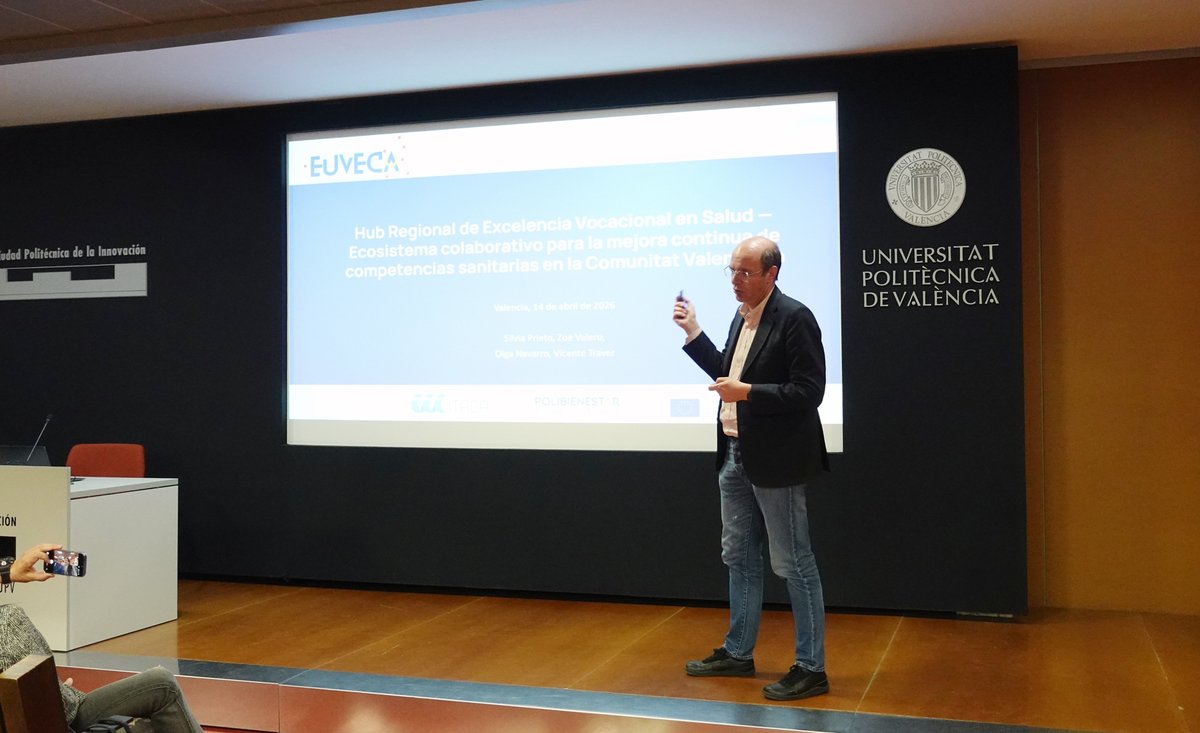
🙌This morning we hosted the presentation of @euveca_project results, a European initiative boosting #innovation and training in the #healthcare sector, with a focus on #nursing 👨⚕️👩⚕️
💬 “We must promote the #innovation and education in the healthcare system"
#EUVECA
#TransferringKnowledge💡
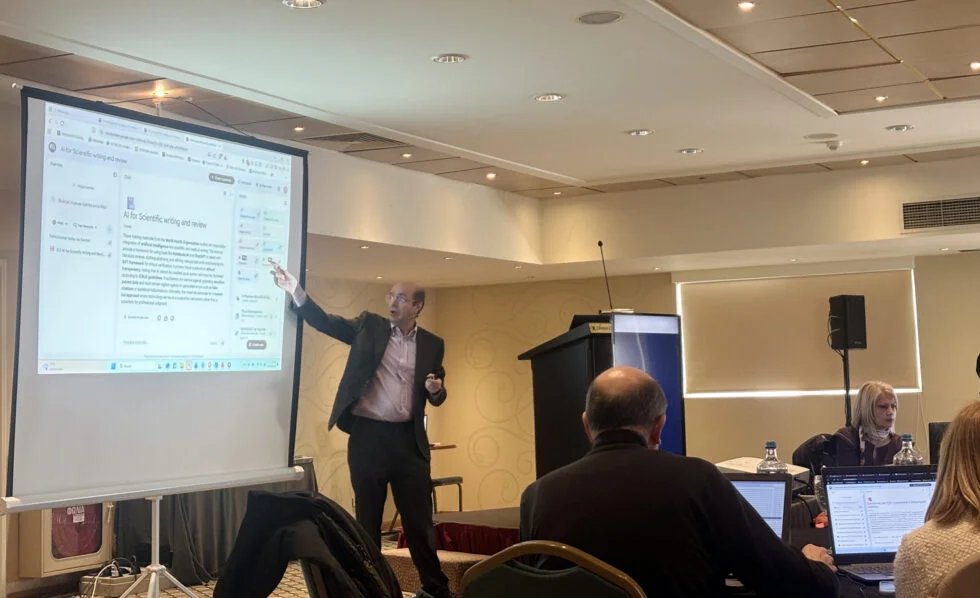
👨🏫Antonio Martínez and 👨🏫Vicente Traver, from #SABIEN, participated as trainers in the #WHO programme on the use of #AI💻 in Primary #HealthCare and Public Health.
👉Held in Athens from 2 to 6 March.
✍️Details in this 🗞️news⤵️
🔗 https://t.co/9iRvZwV3kB
👉Recently, the international study📝 led by our @SabienUPV group, appeared on regional TV @la8mediterraneo .
📺 In the interview, 👨🏫 @vtraver, head of the SABIEN, highlighted the impact of #AI in Neonatal Intensive Care Units and how it improves support decision-making.
El Hospital General de Valencia impulsa el proyecto #Anestech, pionero de evaluación preanestésica remota con #inteligenciaartificial y herramientas
de ciberseguridad avanzada. Vía Valencia Plaza @SabienUPV
https://t.co/eL3WIXJTrO
👨🏫👩🏫 Researchers from @SabienUPV participate in #ANESTECH, a project that aims to transform pre-anesthetic assessment through artificial intelligence and advanced cybersecurity, enabling a safe and efficient remote patient evaluation.
✍️Details here⤵️
🗞️ https://t.co/GHIpQqbrZK
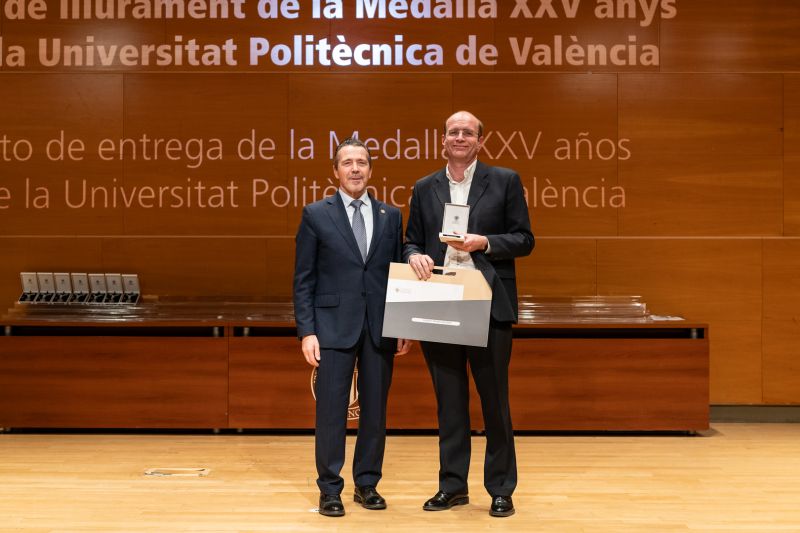
@UPV held an institutional recognition ceremony distinguishing to various @itacaUPV members for their professional careers and dedication for more than two decades
We would like to congratulate Vicente Traver @vtraver head of ITACA-SABIEN on receiving this medal
Una revisión sistemática sobre el uso de #InteligenciaArtificial en la unidad de cuidados intensivos neonatales #UCIN : mucho más allá del impacto potencial.
https://t.co/cv8z7uiPKz
https://t.co/st9PLVnh7B
¿Cuántas veces nos han dicho nuestras madres y abuelas: "abrígate o cogerás un catarro"? Pues llevan toda la vida mintiéndote. El frío no te enferma. Podrías salir desnudo a la nieve y seguir sanísimo. La verdad es un poco más compleja (y fascinante). Tira del hilo 🧵👇🏽👇🏽👇🏽
👶🏻 Un estudi liderat per l'Institut @itacaUPV mostra que la IA ajuda actualment a millorar el diagnòstic precoç, el monitoratge avançat i la predicció de complicacions en nounats prematurs o amb patologies greus ➡️ https://t.co/6Zf9nnleqN
😃@SabienUPV group has led an international study 📘 on the use and impact of #AI in Neonatal Intensive Care Units.
🤔How?
🔎Reviewing a decade of research and 41 clinical studies applying AI in real-world neonatal care settings.
Here the conclusions⤵️
📰 https://t.co/QGaTslXhj7