MIT Alumnus, Omnivorous reader, Extrovert but shy, Experiments new technology, Strong believer in God. Opinions are totally personal. Likes ≠ Endorsements
Marc Andreessen just revealed the Elon Musk philosophy that completely broke his brain: "The best product in the world shouldn't even need a logo."
We all know Elon is relentless about quality. As Marc puts it: "Do you want the best car in the world or not, right? Like that's Elon's mentality... And it's working very well."
But at a recent event, Elon took this mindset to a completely different level. He dropped a perspective so jarring that Marc initially thought it was a joke.
Elon’s thesis? "You shouldn't even have to have your name on the product. It's just obvious. Everybody knows."
The logic is brutal but simple. If you build the undeniable, undisputed best thing in the world, everybody uses it. And because everybody uses it, you don't need to slap your branding all over it to prove it's yours.
Think about that. We spend endless hours agonizing over marketing, tweaking brand colors, and putting our logos on every square inch of what we build. But the ultimate flex isn't a flashy logo. The ultimate flex is building something so undeniably brilliant that its mere existence is the brand.
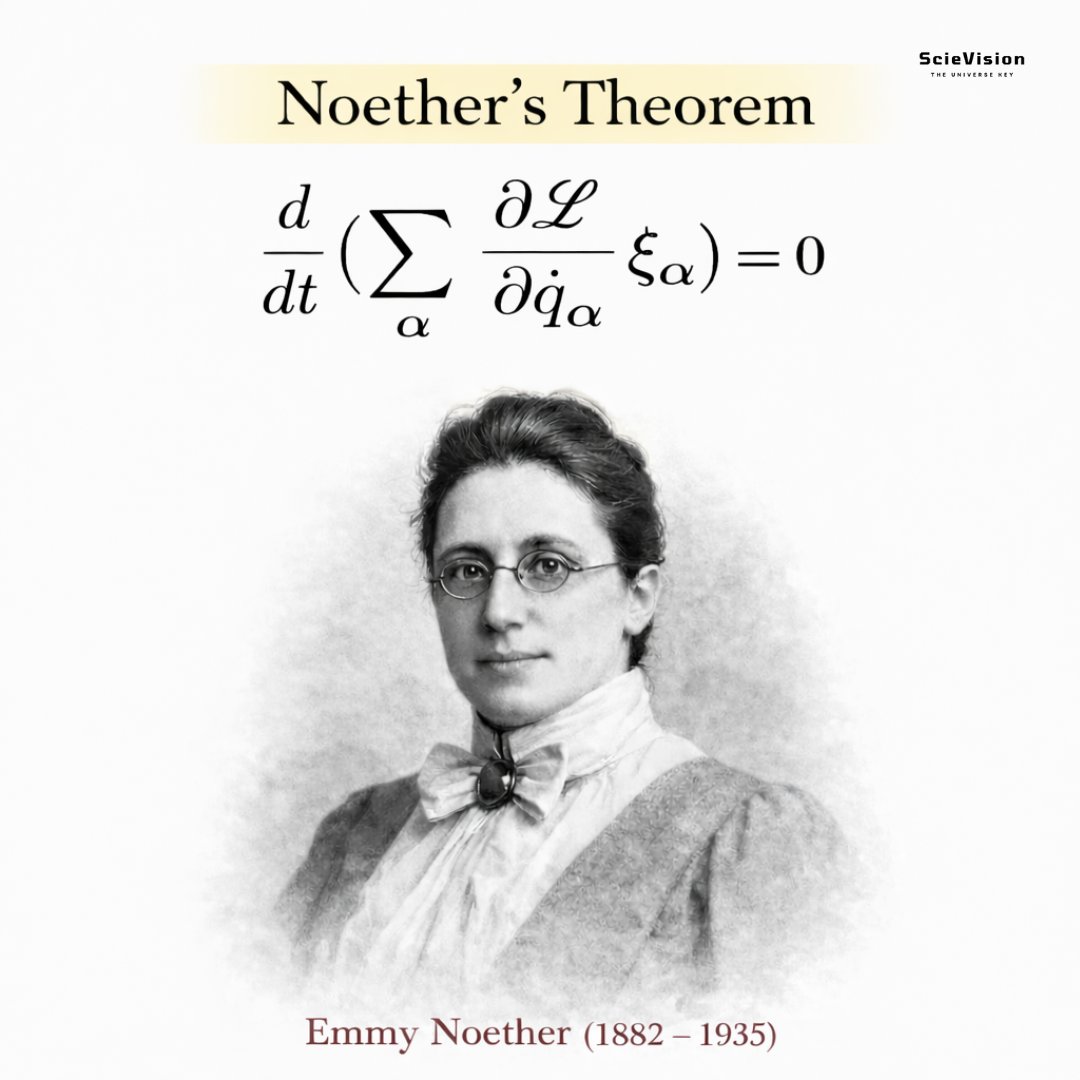
Noether’s Theorem ✍️
This equation reveals that every continuous symmetry in nature, a change you can make to a system without affecting its physical laws, brings about a conservation law. In simple terms, if the universe does not react to a certain change in perspective, it must keep a related physical quantity constant. For example, since the laws of physics remain unchanged no matter when you are (Time Symmetry), energy is conserved. Since the laws are the same regardless of where you are (Space Symmetry), momentum is conserved. Because they stay the same regardless of which way you face (Rotation Symmetry), angular momentum is conserved. This insight shifted our view of the universe. We no longer see conservation as just a series of lucky observations, but as a necessary outcome of the symmetry of space and time.
Exactly. Strategy breaks when we model exponential change with linear instincts. The winners are the ones who build for compounding—products, platforms, and talent.
Our brains are hardwired for linear expectations. 30 linear steps get you across the room. 30 exponential steps take you 26 times around the planet. The gap between those two numbers is where disruption happens.
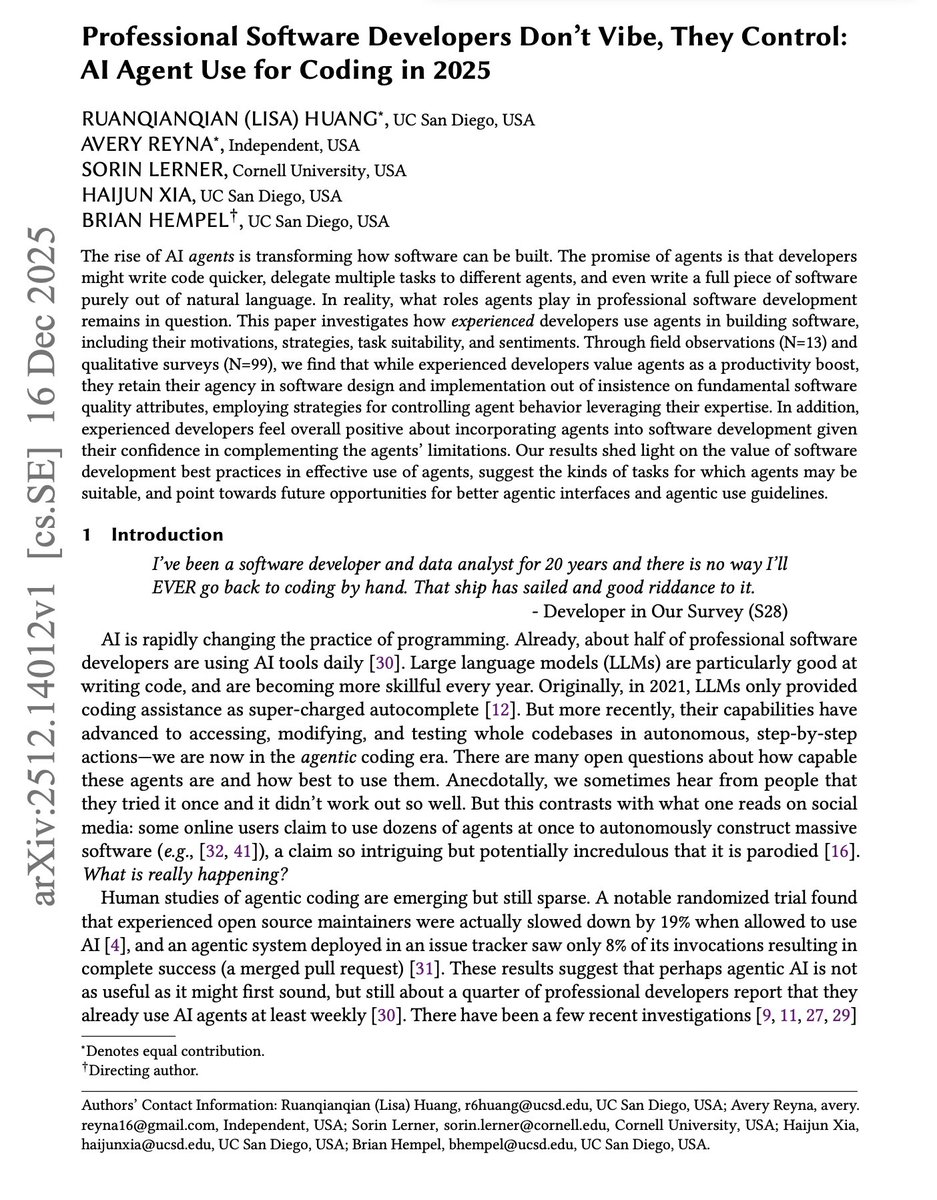
Professional Software Developers Don’t Vibe, They Control
Vibe coding isn't how experienced developers actually use AI agents.
The term has exploded online. Practitioners describe an experience of flow and joy, trusting the AI fully, forgetting code exists, and never reading diffs.
But what do professionals with years of experience actually do?
This new research investigates through field observations (N=13) and qualitative surveys (N=99) of experienced developers with 3 to 41 years of professional experience.
The key finding: professionals don't vibe. They control.
100% of observed developers controlled software design and implementation, regardless of task familiarity. 50 of the 99 survey respondents mentioned driving architectural requirements themselves. On average, developers modify agent-generated code about half the time.
How do they control? Through detailed prompting with clear context and explicit instructions (12x observations, 43x survey). Through plans written to external files with 70+ steps that are executed only 5-6 steps at a time. Through user rules that enforce project specifications and correct agent behavior from prior interactions.
What works with agents? Small, straightforward tasks (33:1 suitable-to-unsuitable ratio). Tedious, repetitive work (26:0). Scaffolding and boilerplate (25:0). Following well-defined plans (28:2). Writing tests (19:2) and documentation (20:0).
What fails? Complex tasks requiring domain knowledge (3:16). Business logic (2:15). One-shotting code without modification (5:23). Integrating with existing or legacy code (3:17). Replacing human decision making (0:12).
Developers rated enjoyment at 5.11/6 compared to working without agents. But the enjoyment comes from collaboration, not delegation. As one developer put it: "I do everything with assistance, but never let the agent be completely autonomous. I am always reading the output and steering."
The gap between social media claims of autonomous agent swarms and actual professional practice is stark. Experienced developers succeed by treating agents as controllable collaborators, not autonomous workers.
Paper: https://t.co/QDr77aEwSF
Learn to build effective AI agents in our academy: https://t.co/JBU5beIoD0
Agree & real seismic shift isn’t AI makes me faster,It’s agents reviewing agents:code,tests,security&architecture getting continuous peer review at machine speed.That changes accountability & quality not just productivity.Agentic pipelines+human judgment become the new framework
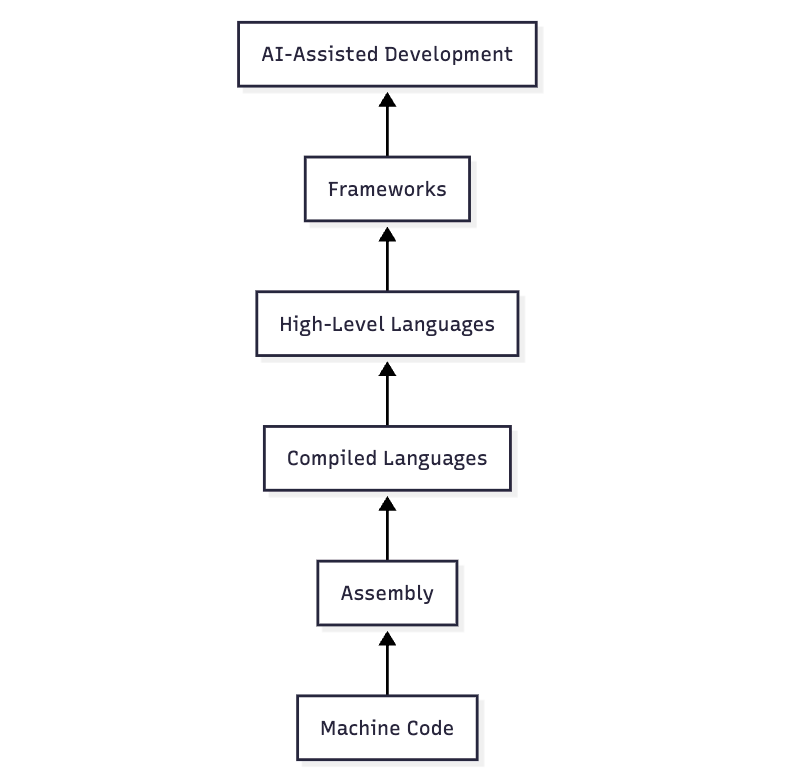
Today's conversations about AI-assisted programming are strikingly similar to those from decades ago about the choice between low-level languages like C versus high-level languages like Python. I was in college back then and some of our professors reassured us that the same issues had come up in the assembly-vs-compiled-languages debate from their own student days!
(If I were to guess, the switch from machine code to assembly even earlier must have led to similar discussions as well.)
The trade-off is always the same: productivity versus control. And the challenge is how to switch to the new paradigm in a way that enhances your skills (at least the ones you care about) instead of offloading too much and letting your skills atrophy.
Some approaches prove too hasty. Vibe coding is turning out to be a dead end because it offloads too much, just as WYSIWYG editors were a dead end for building web apps. But that doesn't mean we were forced to stick to raw HTML/JS: frameworks turned out to be the way forward.
When a new paradigm comes along, it takes months if not years of practice to figure out how to make it work for you. There are always many people dismissing the new thing too quickly. I was one! There are some embarrassing mailing list posts from the early 2000s in which I complained about Python and kids who can't code like real programmers do 🤦
While it's good to be open-minded, I'm not saying everyone needs to jump on the bandwagon. After all, low-level programming languages haven't gone away.
Of course, some people claim that AI is unlike previous waves of automation and can replace programmers. Maybe. The reason I disagree — and see AI as parallel to previous waves of productivity improvements in software engineering — is fourfold. (1) It's a matter of accountability, not just capability. (2) Writing the code was never the bottleneck. (3) I think we're underestimating the ability of experts to stay on top of even rapid AI capability increases by using these tools to dramatically expand what they can build, how well, and how quickly. (4) As these productivity improvements take shape, the potential growth in _demand_ for software is practically infinite, unlike trades where there is a fixed amount of work that needs to get done. For example, the idea that a car would contain ~100 million lines of code would have seemed head-explodingly implausible in the early days of programming.
Many people have observed that software seems to be one of the only fields that is undergoing a rapid transformation due to AI. The usual reason they give is that capability improvements in AI coding have been particularly rapid. I think this is only part of the story. The bigger factor is structural. Software has a history of repeatedly undergoing seismic shifts in the technologies of production, so it has never had time or the cultural inclination to ossify institutional processes around particular ways of doing things.
Major AI breakthrough: Diffusion Large Language Models are here!
They're 10x faster and 10x cheaper than traditional LLMs.
Here's everything you need to know:
The popular AI agent "Manus" launched in China is automating about 50 tasks, and the scenario is too dystopian.
It's said to be more accurate than DeepSeek.
It can simultaneously perform SNS analysis, financial transactions, research, purchasing, and more.






![Rainmaker1973's tweet photo. How a book written in 1910 could teach you calculus better than several books of today
[Full text: https://t.co/55dkZAeGmv] https://t.co/4ikiUQjcHO](https://pbs.twimg.com/media/G9aF49gXAAAUPWZ.jpg)