An Author Driven by Three Passions: The Stars Above Us, Eternity Beyond Us, and, Most of All, the Human Heart Within Us—with its Fierce, Raw Passion & Emotion.
Wow—you guys were teaching this back in the 1900s, right in the height of the Left Behind phenomenon! 😂
What really caught my attention in Cooper’s article is the “four-legged chair”—especially the distinction between Antichrist’s persecution and God’s wrath, followed by the connection between Joel’s cosmic signs, Matthew 24, and the sixth seal of Revelation 6. That sequence is a big part of what made pre-wrath click for me as well.
Thanks for sharing this. Fascinating to read the argument being laid out so clearly back then.
Oh, so you don't believe Jesus is going to sneak back early and invisibly and make all the Christians vanish—poof! 😂 You're one of those people who believes the Bible when it says every eye will see Him.
But seriously, I believe that when Jesus returns for His bride, every eye will see Him coming in the clouds. The dead in Christ will be raised imperishable, and the living in Christ will be transformed to be like Him. Then together we will meet Him in the clouds.
And here's something I've wondered about: if every eye sees Him, and we're being caught up to meet Him in the clouds, why would nobody see us?
We'll be live on CNN before we make it to the clouds. 😂
I think the world is going to see it happen.
And the world is going to FREAK OUT.
What strikes me is how closely Revelation 6:12–17 lines up with Jesus’ words in Matthew 24:29–31: after the tribulation, the sun and moon are darkened, the stars fall, the Son of Man appears, and His elect are gathered. Then in Revelation 7, John sees an innumerable multitude from every nation standing before the throne. After that, the seventh seal is opened and the trumpet judgments begin. That sequence is hard for me to overlook.
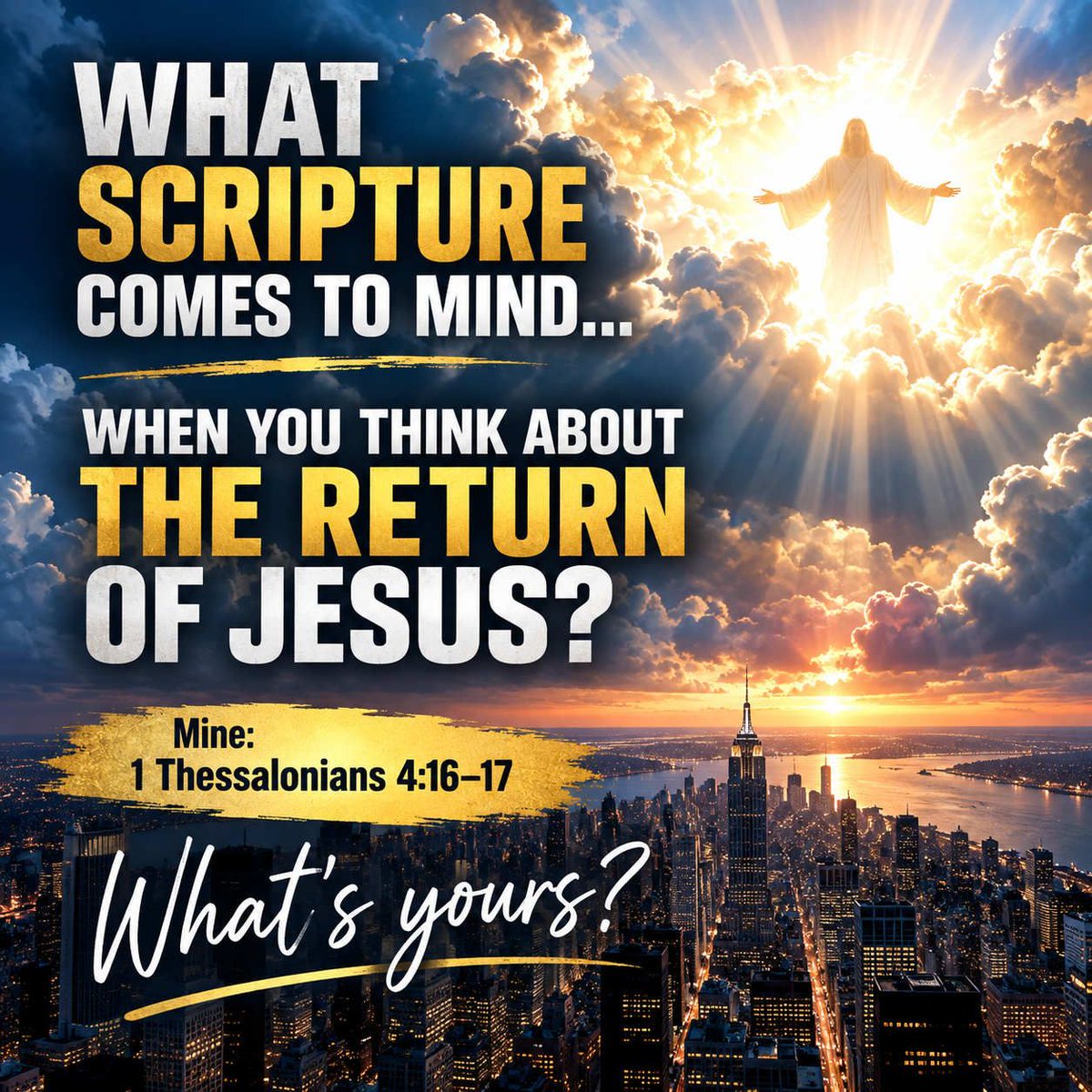
A question for Christians who study the End Times:
When you picture the return of Jesus, what is the very first Scripture that comes to mind?
Not a book you've read. Not a preacher you've heard. Not a prophecy chart.
A verse or passage from the Bible.
Mine is 1 Thessalonians 4:16–17.
I'm curious what yours is.
#EndTimes #Rapture #Jesus #JesusReturns #BibleProphecy
Isaiah 63:1 really is fascinating. Edom immediately caught my attention because of its association with Esau and the long history of conflict between Edom and Israel. And Bozrah was one of Edom’s major cities.
So I’m wondering how Rydelnik understands the language here. Does “coming from Edom, from Bozrah” suggest an actual geographical movement of the Messiah from that territory, or is Edom functioning figuratively as a representative of Israel’s enemies—so that the picture is of the Messiah returning victorious from judgment over His enemies?
The winepress and judgment language in the verses that follow certainly makes that second possibility interesting. What was Rydelnik’s take?
She fell in love with a man history would never forget.
History nearly forgot her.
Now, almost 300 years later, Sophia finally gets to tell her story.
https://t.co/FjeQgj4Xvu
Before she became a footnote in John Wesley’s story, Sophia Hopkey was a young woman aboard a ship bound for a world she had never seen.
The year was 1735.
Behind her was England. Ahead of her was the new colony of Georgia—and somewhere between the two, surrounded by nothing but the Atlantic, was a young Anglican minister named John Wesley.
Sophia had no idea who history would someday make him.
To her, he wasn't the founder of Methodism. He wasn't the man whose sermons and journals generations would study.
He was John.
A young minister aboard her ship.
And somewhere during that long voyage, their lives began to intertwine.
By the time they reached Savannah, Sophia's story and Wesley's were no longer separate. There would be friendship, faith, attraction, expectation, misunderstanding—and eventually a heartbreak with consequences neither of them could have imagined.
I wrote Sophia of Savannah because I wanted to step behind Wesley's famous name and see this story through her eyes.
What was it like to be Sophia?
To cross an ocean. To enter a strange new colony. To fall for a complicated young minister. To hope. To wait. To wonder what he really felt. And eventually, to make choices that would change both their lives.
History remembers John Wesley.
But this is Sophia's story.
#JohnWesley #SophiaHopkey #Methodist #ChristianRomance #HistoricalRomance
@MyJob275@god_came_down I'm curious—after all these years studying pre-wrath, what was the one passage or argument that you found most persuasive? Was there a particular text that finally settled it for you?
This is one of the things that changed for me when I began looking at pre-wrath. If the Church is still here when the mark becomes an issue, then believers actually face that choice. And I agree—the label someone wore beforehand isn't what ultimately matters.
Your thought about the two groups remaining after the rapture is interesting. I'm going to have to chew on that one.
I'm pre-wrath as well, but I'm curious about one part of your view. What in the text leads you to identify the foolish virgins with “the rest of her offspring” in Revelation 12:17 and conclude that they are believers who miss the rapture but remain to be saved through martyrdom? I've never understood the passage that way.
I think this is where the confusion begins. Tribulation and God's wrath are not the same thing. Tribulation is the persecution and suffering brought against God's people by evil; God's wrath is His judgment upon evil.
That's why I don't see the first seal as the beginning of God's wrath. The persecution becomes so severe that, if those days continued, none of God's people would survive. Jesus returns at the sixth seal and gathers His people. Then God's wrath follows with the seventh seal.
Tribulation → Rapture → Wrath.
This is exactly the distinction I think often gets lost. Tribulation and God's wrath are not the same thing. The cosmic signs at the sixth seal announce what is coming, and then Revelation 7 shows that innumerable multitude in heaven before the seventh seal is opened. That's one of the passages that moved me away from pretrib and toward prewrath.
This is one of the connections that changed the way I read the sequence. Matthew 24 places the cosmic signs after the tribulation, then the Son of Man appears and the elect are gathered. Revelation 6 gives us those same cosmic signs at the sixth seal. Then comes the announcement that the great day of His wrath has come.
Tribulation. Rapture. Wrath.
That's the sequence I see.
I don't think we just vanish—poof!
I believe we're caught up at the 6th seal, before God's wrath is poured out beginning with the 7th seal.
But here's something I've wondered: if every eye sees Jesus, and we're changed to be like Him, wouldn't they see us too?
Sounds logical to me.
@GregsonDarren I think one of the most important questions is whether Scripture treats the Tribulation and the wrath of God as the same thing. If they are not the same, it changes the way we read a lot of these passages. That question changed the way I understood the timing of the rapture.
Every book begins with a question.
For me, it usually starts with two dangerous little words:
“What if?”
What if a woman history remembered only because of John Wesley finally got to tell her story?
What if humanity really could build a future on Mars?
What if Jesus returned—and a young woman happened to be livestreaming when it began?
Three completely different stories. Same two words.
What if?
That's probably my favorite part of being a writer: discovering where the question takes me.
Readers and writers—what's a “what if?” you've always wondered about?
#AuthorLife #AmWriting #Books #WritersOfInstagram #IndieAuthor
What strikes me is the change you describe—the face, the voice, the hostility toward Jesus, and then the apparent return to himself afterward. Whatever conclusion we draw about this particular event, Scripture gives us good reason to take the unseen spiritual battle seriously. I appreciate that you ended by praying for the man rather than condemning him. When I watched you on YouTube, I prayed for him too.
@Jonathan_Cahn This is fascinating. Teenage boys—especially the younger ones—are showing up. The numbers tell us what is happening, but I’d love to know why. Is it parents? Social media? Are churches reaching boys differently? Or could the Spirit be stirring something in this generation?
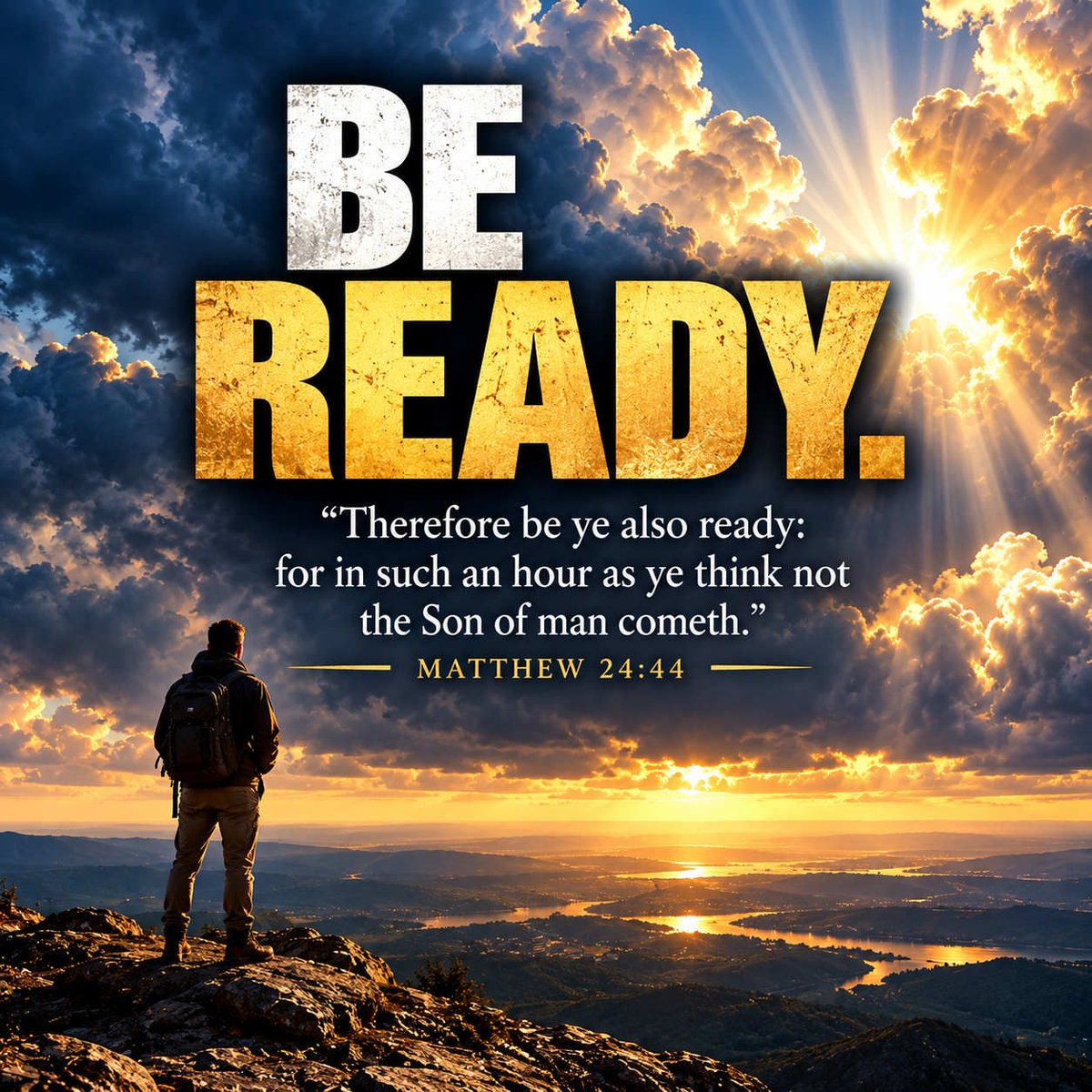
Jesus never told us to figure out the date.
He told us to be ready.
“Therefore be ye also ready: for in such an hour as ye think not the Son of man cometh.”
— Matthew 24:44
We can disagree about timelines, charts, seals, trumpets, and exactly when the Rapture occurs.
But Christians can agree on this:
Jesus is coming again.
Live today like you believe it.
https://t.co/usQUqr71VI
#Jesus #JesusReturns #SecondComing #EndTimes #Rapture #BibleProphecy #ChristianFaith