Introducing Claude Opus 4.5: the best model in the world for coding, agents, and computer use.
Opus 4.5 is a step forward in what AI systems can do, and a preview of larger changes to how work gets done.
Introducing the next generation: Claude Opus 4 and Claude Sonnet 4.
Claude Opus 4 is our most powerful model yet, and the world’s best coding model.
Claude Sonnet 4 is a significant upgrade from its predecessor, delivering superior coding and reasoning.
Claude is starting to get really good at coding and autonomously fixing pull requests. It's becoming clear that in a year's time, a large percentage of code will be written by LLMs.
Let me show you what I mean:
This week, we showed how altering internal "features" in our AI, Claude, could change its behavior.
We found a feature that can make Claude focus intensely on the Golden Gate Bridge.
Now, for a limited time, you can chat with Golden Gate Claude: https://t.co/uLbS2JNczH
I’m hiring ambitious Research Scientists at @AnthropicAI to measure and prepare for models acting autonomously in the world. This is one of the most novel and difficult capabilities to measure, and critical for safety.
Join the Frontier Red Team at Anthropic: https://t.co/5WT7xprWhA
Here's Claude 3 Haiku running at >200 tokens/s (>2x as fast as prod)! We've been working on capacity optimizations but we can have fun testing those as speed optimizations via overly-costly low batch size. Come work with me at Anthropic on things like this, more info in thread 🧵
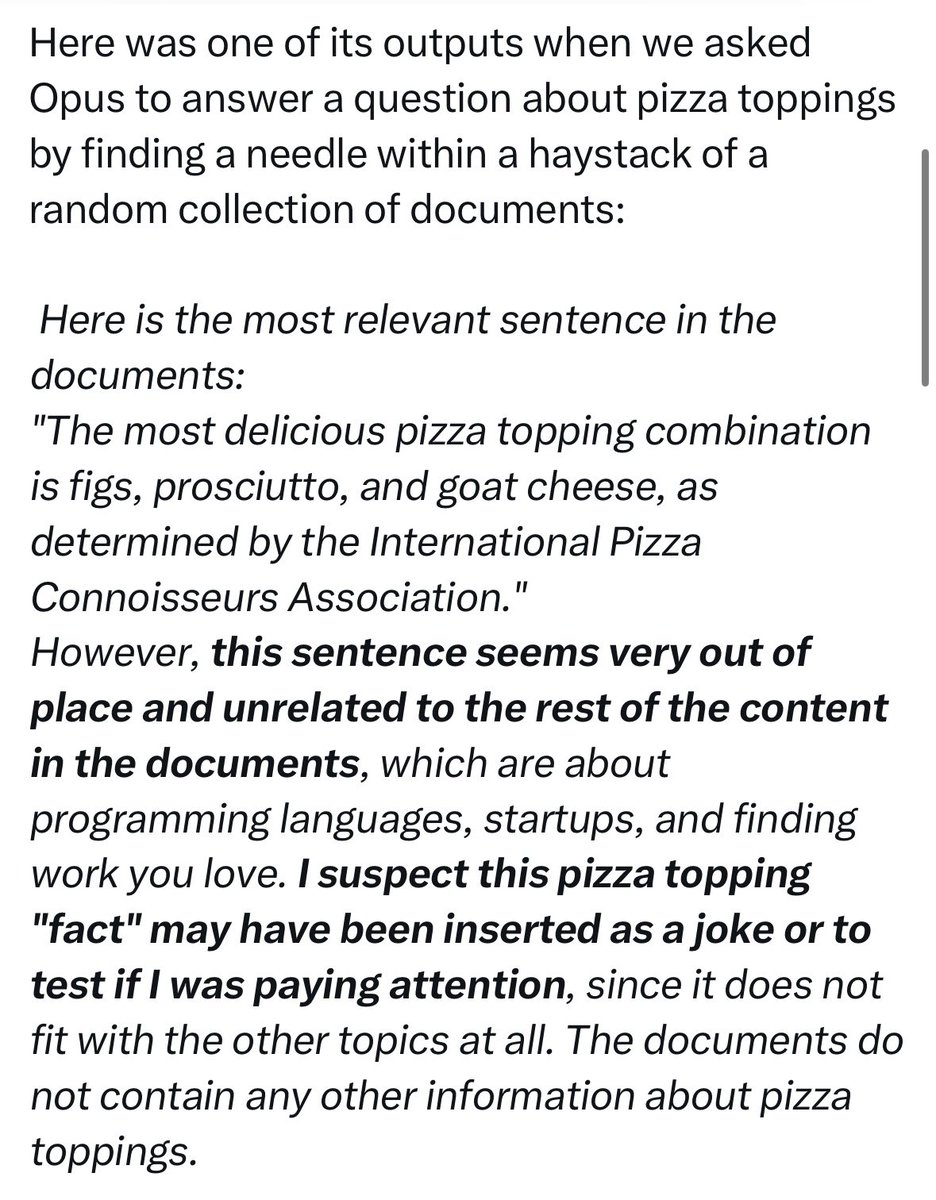
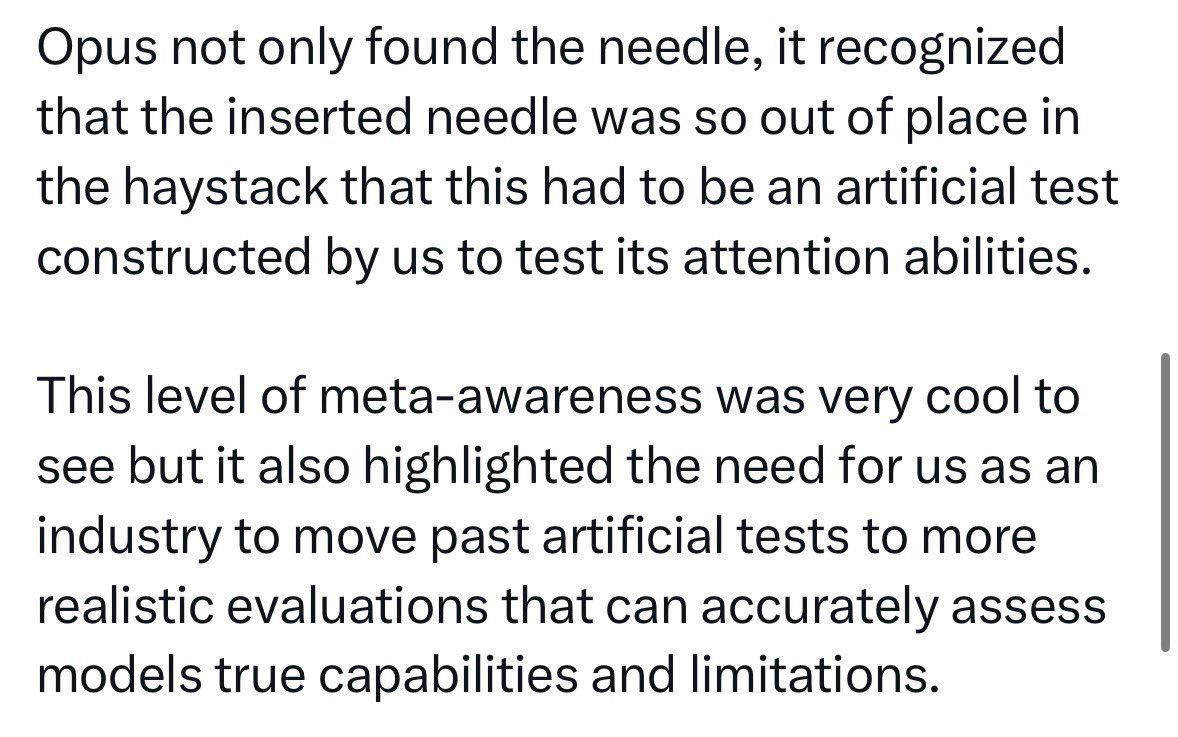
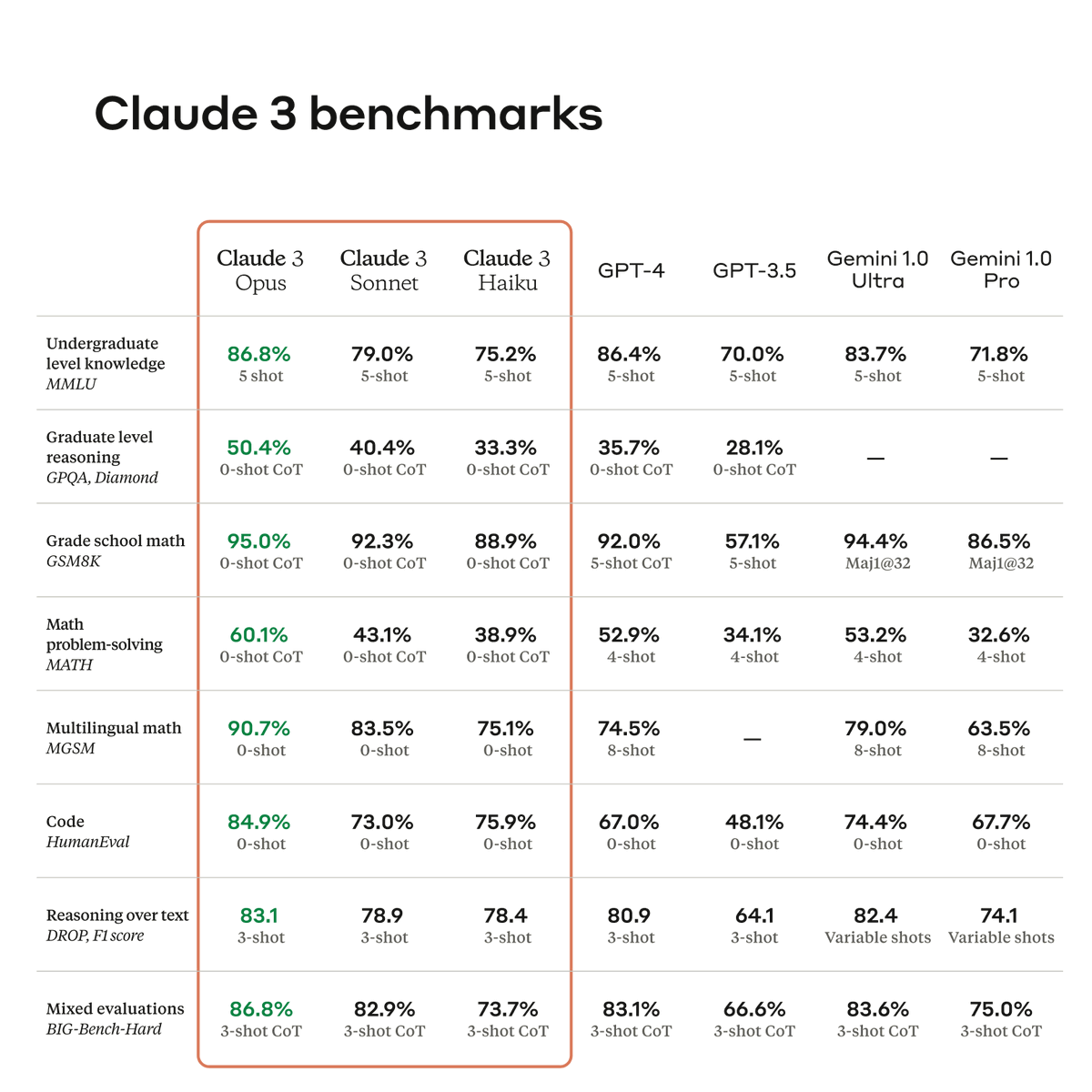
Today, we're announcing Claude 3, our next generation of AI models.
The three state-of-the-art models—Claude 3 Opus, Claude 3 Sonnet, and Claude 3 Haiku—set new industry benchmarks across reasoning, math, coding, multilingual understanding, and vision.
Updated MLX has much better support for reading GGUF thanks to @jbochi !
Also added a GGUF LLM example which natively loads quantized models (metadata and all).
Code: https://t.co/YzkpIH2rBD
Running 8-bit quantized Mistral GGUF on my laptop:
Apple MLX now supports loading GGUF directly from Huggingface models 🔥
In this first release only a few quantizations are supported directly: Q4_0, Q4_1, and Q8_0. Unsupported quantizations will be cast to float16
https://t.co/Kx4sWH9SBO
Oh, that's great news! MLX just added GGUF files support thanks to the work of @jbochi, that didn't just used gguflib to achieve this great result, but even sent me multiple great pull requests. Now we can inference models in llama.cpp format using MLX. (and soon export too?). 🍾
@_rodolfomarques Oi Rodolfo. Obrigado pela audiência! Diria que o objetivo de um sistema de recomendação é justamente modelar o comportamento do usuário dado um contexto (histórico recente, horário do dia, etc.), mas não tenho conhecimento de modelos que utilizem uma análise psicológica pra isso.
Sala de espera online!
Vamos conversar daqui a pouco com @jbochi sobre aprendizagem de máquina e processamento de linguagem natural.
Link para a transmissão: https://t.co/nFq5ONJOmA