It is time to select another "Astro Plot of the Week", pick one:
- Plot from Hasan et al. (https://t.co/Vv0tFxgbkU)
- Plot from Marchant & Bodensteiner (https://t.co/360xGQlmuC)
Poll (below) is open for two days - vote!
This week we're hosting the ESO workshop "Two in a million - The interplay between binaries and star clusters". Follow #binaries2023 to stay up to date!
More details: https://t.co/kzvlhDIzxs
📢 New type of cosmic object found: a massive magnetic helium star 🤯
The discovery sheds light on the mysterious origin of #magnetars 🧲 — super-dense dead stars with the most powerful magnetic fields in the Universe. 1/
➡️ https://t.co/tQHCIJAKd7
(illustration)
#ESOCastLight Using ESO facilities & other telescopes, scientists have discovered a new type of star: a massive magnetic helium star 🧲
🎥 Watch our video for a summary of the discovery! #BiteSizedAstronomy
Read more ➡️ https://t.co/tQHCIJAKd7
✨#pint23 is starting today✨
3 nights of fun science talks for everyone in pubs/cafés!
🎉JOIN THE SCIENCE PARTY🎉
Information here https://t.co/DbjZZtjGYE
🗓️22nd-24th May 2023
🗺️26 countries
📍+ 400 cities/towns
🗣️>2100 events
One week until @pintofscienceDE is on! If you haven’t checked the program and got your tickets yet, go to https://t.co/3gNRzO5wLd and don’t miss the chance to share a beer with us! 🍻🧬
#pint23
If you ever wondered how we organize the @pintofscienceDE events, here is the proof: we do it over a pint 🍻
We’re ready for May 22-24!
Get you #Munich tickets here:
https://t.co/pWUxpVcadp
#pint23DE
🎉🔬Attention #science lovers! The wait is finally over! TICKETS and PROGRAM for Pint of Science Germany are available!!🧪🍻
👉https://t.co/yQNM6AN6VY
Book your 🎟️for 22-24 May and join us as we explore science, all while sipping on a pint at your favorite local bar👩🔬🧠
#pint23DE
@SKAO 5. Do you work on star formation, stellar/binary evolution, star clusters dynamics or gravitational waves? Then the hybrid workshop 'Two in a million - The interplay between binaries and star clusters' (11-15 Sep) is for you. Abstract deadline: 31 May.
🔗 https://t.co/3mAUHbLX0o
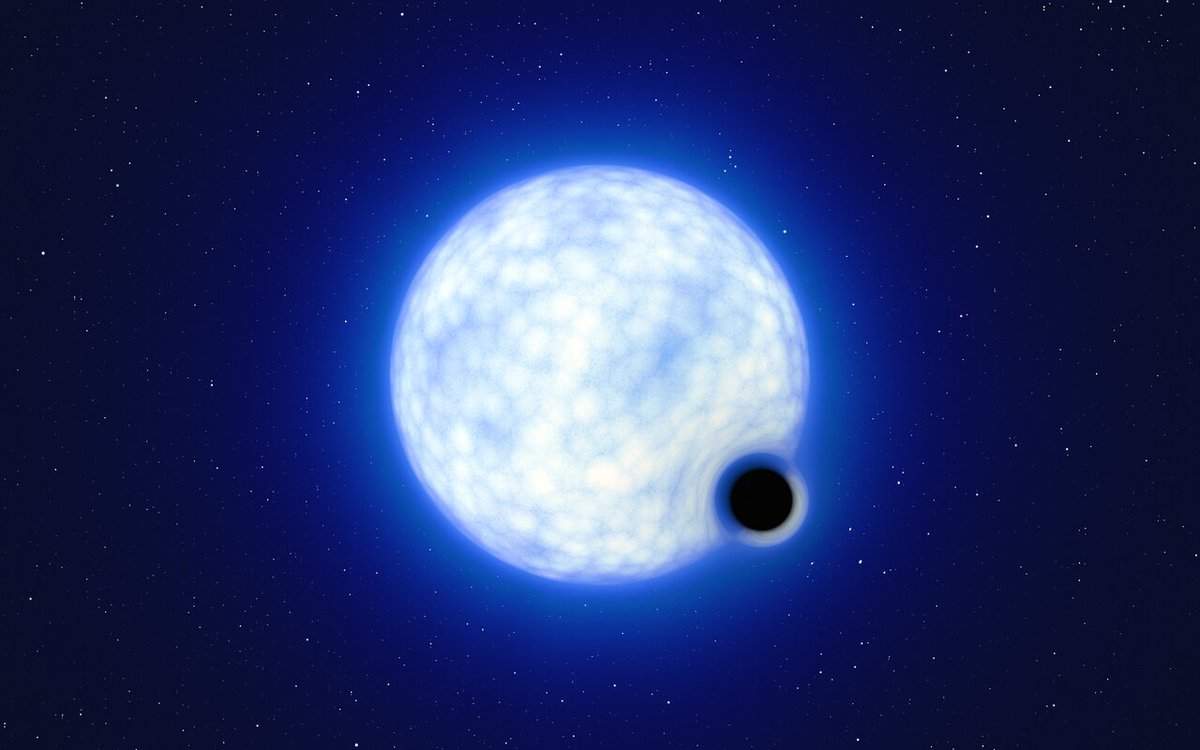
1/ A team of international experts, renowned for debunking several black hole discoveries, have found a stellar-mass black hole in the Large Magellanic Cloud, a neighbour galaxy.
🔗 https://t.co/pZoWcTLPtM
Artist’s impression: @ESO /L. Calçada
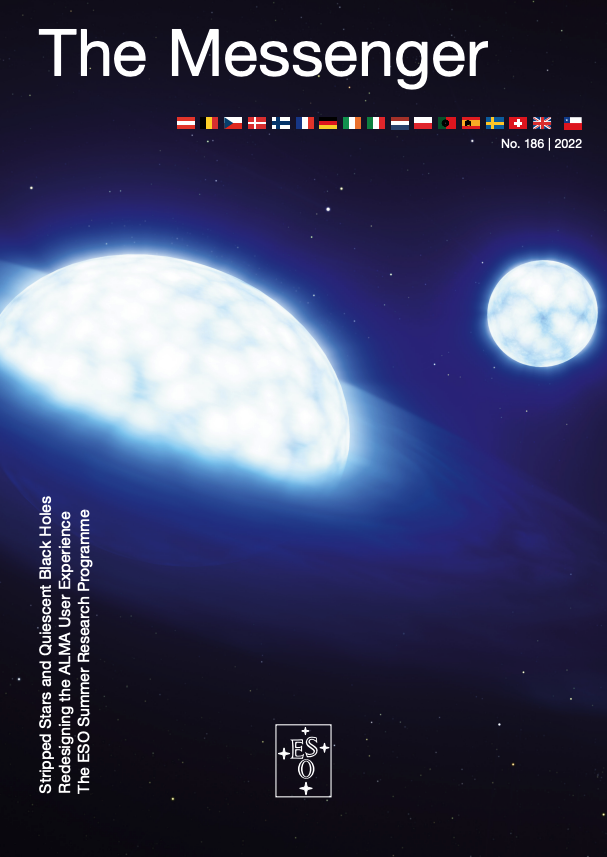
1/It’s #ESOUsersDay, and issue 186 of The Messenger is out! Highlights include stripped stars & black holes, redesigning the ALMA user experience, and the ESO Summer Research Programme.
Download it here: https://t.co/NJl9auUgST
The paper is now also out on arxiv 🥳 Huge thank you to all the collaborators who worked on this paper with me, especially @jbodenst3 🤗https://t.co/CqYgFcE62Z
Vor zwei Jahren meldeten Astronomen @ESO die Entdeckung des bislang erdnächsten Schwarzen Lochs. Nun stellte sich heraus, dass es sich bei dem System #HR6819 stattdessen um einen ungewöhnlichen Doppelstern handelt. @jbodenst3#Stern#Astronomie https://t.co/LNMgP0Iq79
📢 Press release! 📢 Super excited to have led the letter that's the subject of this result, published today in @AandA_journal. A source that was once thought have black hole now shown to be a cool, post-interaction binary system!
"The case of the missing black hole" In 2020 @ESO astronomers reported the closest black hole to Earth. The plot thickened when astronomer-detectives @jbodenst3 & @AstroDrFrost showed that there is no black hole at all. Discover how they solved the mystery https://t.co/KJRJ3o1IZy
In 2020 a team led by @ESO astronomers reported the closest black hole to Earth, located just 1000 light-years away in the HR 6819 system. Now, the system was found to contain no black hole.
🔗 https://t.co/EXiVBC9JX0
Illustration: @ESO / L. Calçada
Don't miss #ESOcast 252 — “Closest Black Hole or no Black Hole at all…?”
A fascinating story about a science battle settled by more science and collaboration. Watch this to find out how the “closest black hole” system was found to contain no black hole https://t.co/HjBvata2tU