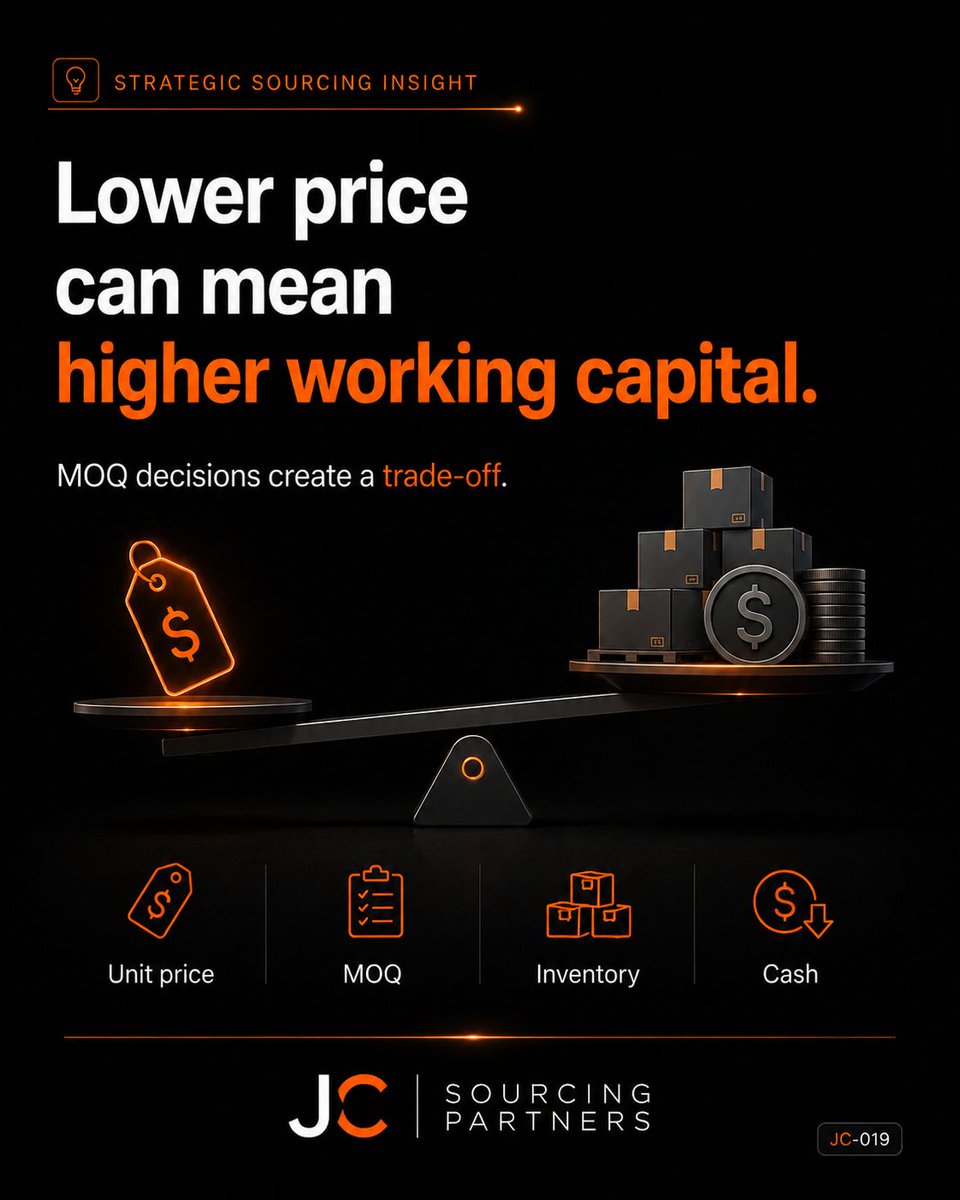
A lower unit price is not always a better financial deal if it requires buying much more inventory. MOQs create a trade-off between price, cash, storage and obsolescence risk.
Inventory protects service, but it also consumes cash. Long lead times, large MOQs and unreliable delivery can all push stock higher. Strategic sourcing and Supply Chain should look at those inventory drivers together.
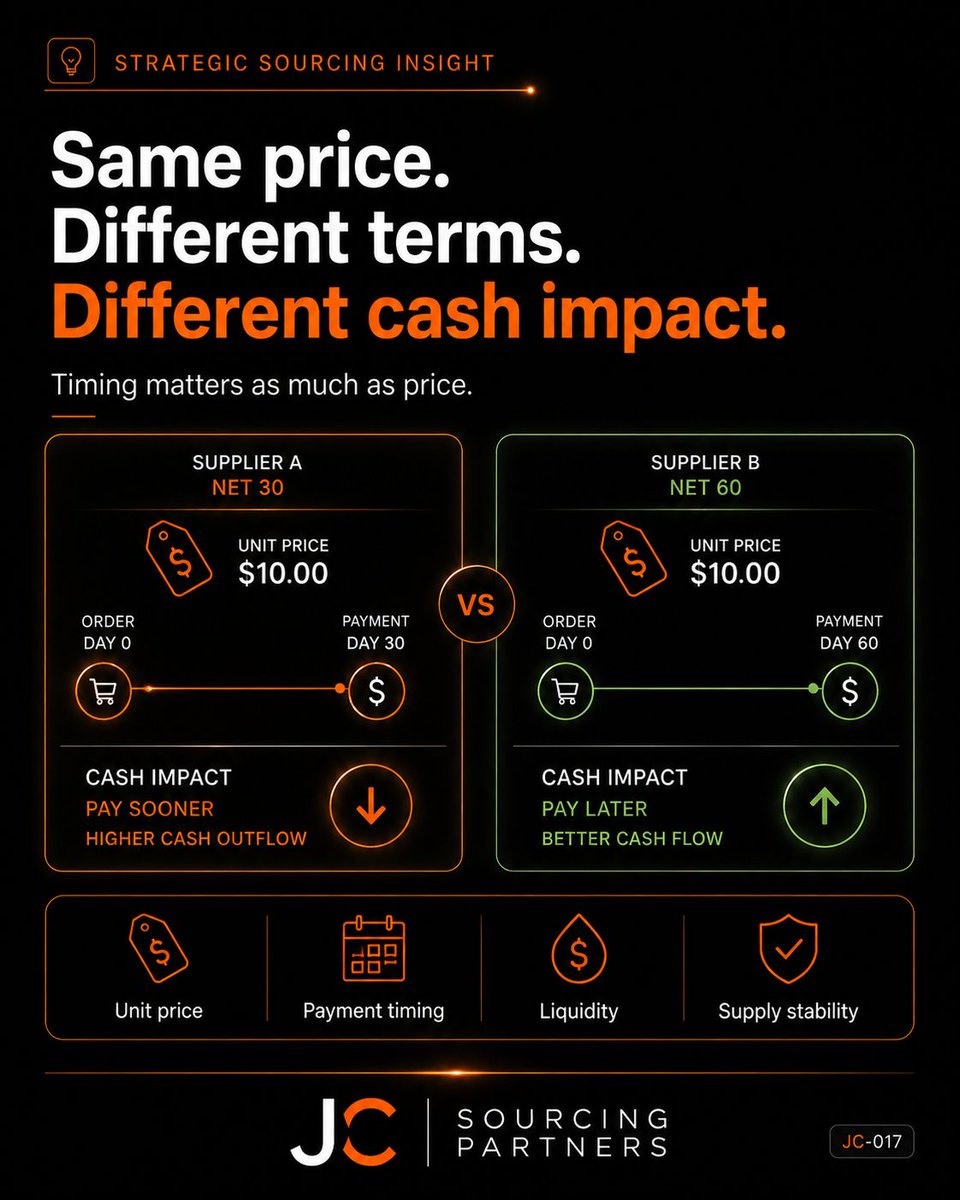
Two suppliers can offer the same unit price and create different cash-flow outcomes. Payment terms are part of supplier economics, not an administrative detail after the negotiation.
Strategic sourcing affects not only how much a company spends, but when cash leaves the business. Payment terms, inventory requirements, order quantities and lead times all influence working capital.
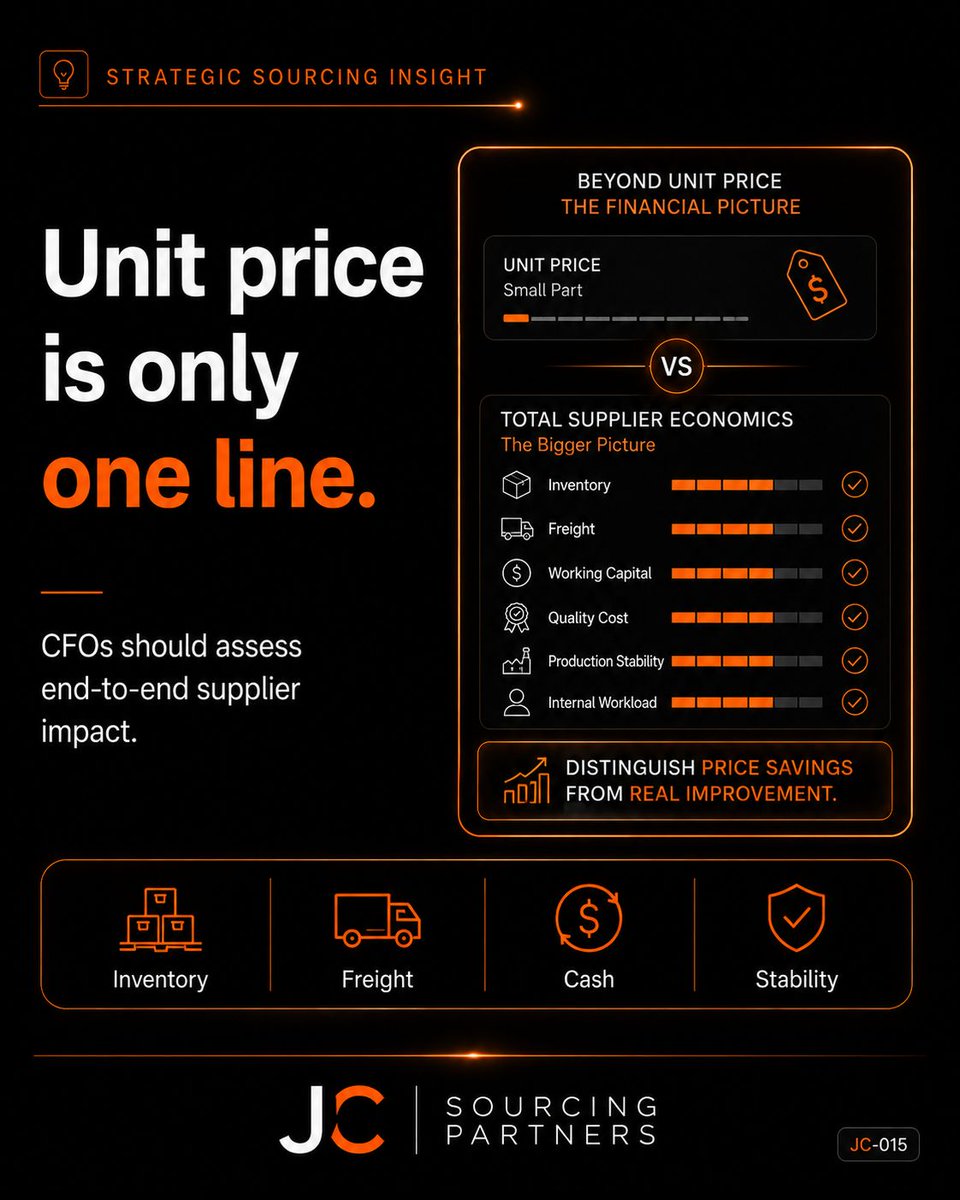
The CFO should care about supplier selection because purchase price is only one part of the economics. Inventory, freight, quality, reliability and working capital can materially change which supplier creates the best outcome.
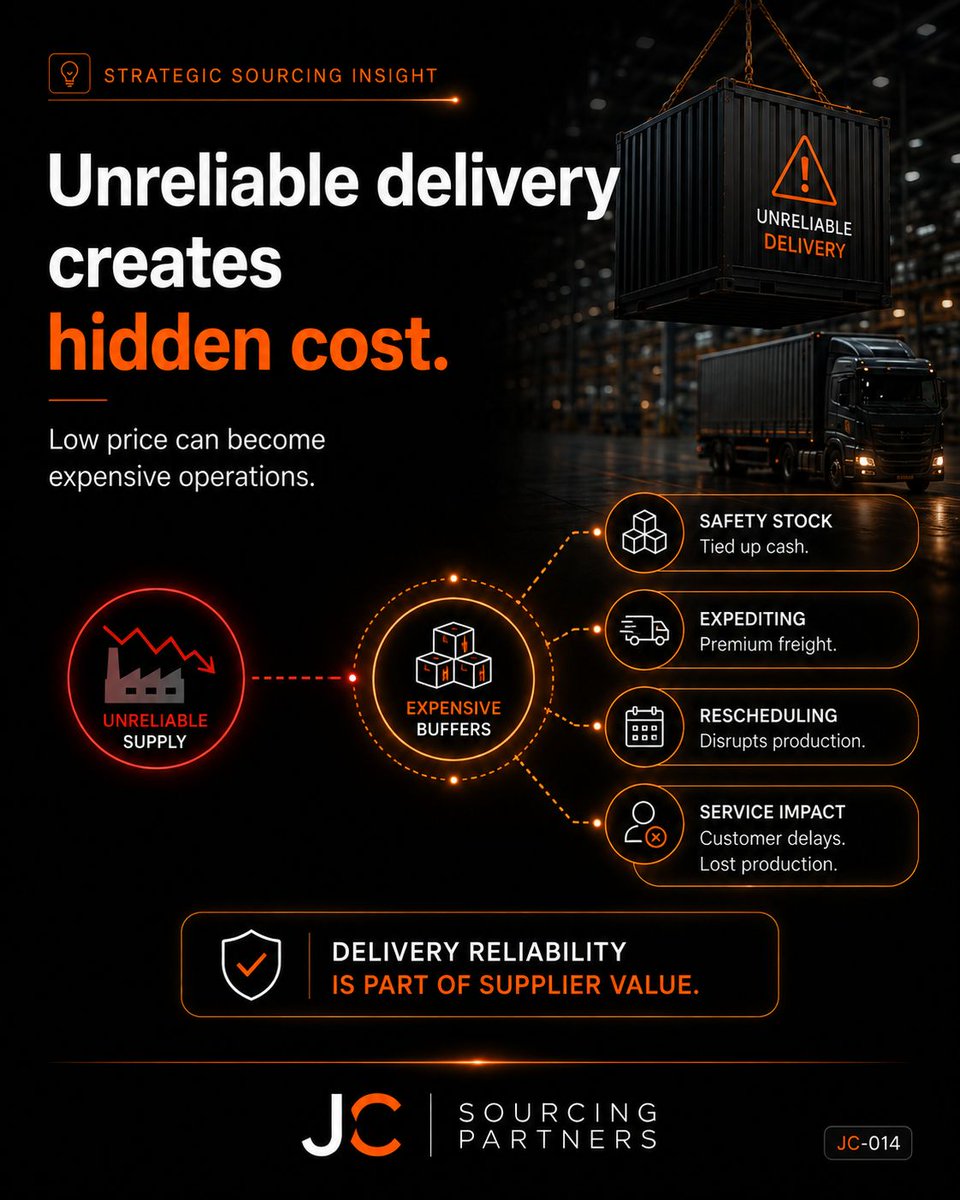
A supplier can be competitive on price and expensive on delivery. Unreliable supply can create safety stock, expediting, production disruption and customer delays. Delivery performance belongs in the sourcing decision.
Poor supplier quality has a commercial cost even when the corrective action sits elsewhere: scrap, rework, inspection, downtime and customer issues. A cheaper supplier can become expensive very quickly.
Many supplier costs never appear on the supplier invoice. They show up in freight, inventory, quality, delays and internal workload. Strategic sourcing helps Finance see the net business effect, not just the purchase-price variance.
The cheapest quote is not always the lowest-cost decision. Freight, inventory, quality, downtime and service can erase an apparent saving. Strategic sourcing compares supplier economics beyond the unit price.
Strategic sourcing should not be judged by how quickly orders are placed. Its value is in better supplier decisions: stronger economics, lower risk, better continuity and more options for the business.
A small sourcing improvement can matter when it applies to recurring spend. The real question is not whether the percentage looks impressive. It is whether the improvement is sustainable, material and actually reaches the business.
Margin pressure does not come only from customers and competitors. Supplier inflation, logistics, quality problems and inefficient specifications can erode it too. Strategic sourcing gives management another lever to protect gross margin.