Not sure if this is a duplicate of the 1st angle on 1️⃣1️⃣1️⃣ in Indianapolis IN, or if it's a diff 3rd angle on it (original tweet from June 1st has been deleted; the 2nd angle is on June 3rd)
The officers have been charged
31 May 2020
[@davenewworld_2]
WATCH: Here’s Donald Trump struggling to make it up the stairs on Air Force One!
He had to stop midway to catch his breath before walking up the stairs.
Was his legs getting tired?
Back in March I wrote 👇 that Iran was winning, and not only strategically but tactically too, but I genuinely didn't expect it would eventually lead - 3 months later - to a complete US surrender.
Because, make no mistake, this is what the "deal" that was just signed is: a complete US surrender, the likes of which it has never signed in its entire history.
Let's compare it with the 2 other most famous US capitulation agreements: the Paris Peace Accords with Vietnam in 1973 and the Doha Agreement with Afghanistan in 2020.
The most significant difference is that both the Vietnam and Afghanistan deals, despite being documents in which the US effectively conceded defeat, contained at least some face-saving provisions for the US.
For instance, in the Vietnam deal, North Vietnam accepted the continued existence of the South Vietnamese government, promised peaceful reunification, agreed to maintain the 17th parallel as a dividing line, and accepted international supervision. These were real (if ultimately unenforceable and unenforced) concessions.
Same thing with the Taliban: they guaranteed Afghan soil would never again be used to attack America, and agreed to negotiate a political settlement with the then Kabul government. The latter commitment was never seriously pursued - but both existed and gave the US a narrative: at least it could claim its post-9/11 objective had been secured on paper.
The deal with Iran is completely different: it doesn't contain a single meaningful concession from Iran. The reopening of the Strait of Hormuz is merely the reversal of a wartime measure they took in response to the US-Israeli attack. And the "reaffirmation" that Iran won't build nuclear weapons is just this: a reaffirmation of a position Tehran has had for decades.
As a reminder, there is a 2003 fatwa by Khamenei that forbids the production and use of any form of weapon of mass destruction, so "reaffirming" it costs Iran exactly nothing.
Meanwhile, the list of concessions and costs on the US side is staggering:
- Permanent end to the war on all fronts, including Lebanon
- A US pledge to respect Iran's sovereignty and not interfere in its internal affairs
- Full lifting of the naval blockade
- Withdrawal of all US forces from the region within 30 days after the final agreement
- A $300 billion reconstruction and development fund for Iran
- Termination of all sanctions: UN, IAEA, and every unilateral US sanction, primary and secondary
- Immediate Treasury waivers for Iranian oil exports and all related banking, insurance, and shipping services
- Full release of all frozen Iranian funds and assets, to be spent however Iran's central bank sees fit
So very concretely this is the US agreeing to 1) end the war and withdraw its forces, 2) end all hostile measures towards Iran that were in place before the war (the sanctions, the frozen funds, the interference in internal affairs, etc.), and 3) send hundreds of billions of dollars in what are, effectively, war reparations.
If that's not a complete surrender, I genuinely don't know what is.
And, cherry on the cake, in an absolutely perfect touch of historical irony, Trump literally signed this surrender agreement in Versailles (I'm not kidding: https://t.co/VLSduQtRJW).
History rhymes, but rarely this loudly, all the more because the historical 1919 Versailles Treaty was also signed in June!
Of course, it's fair - very fair, even - to suspect that Trump will not honor this deal. If he's proven anything in his political career, it's that he is agreement-incapable. Plus there's the Israel dimension: the document does say that the war should "end on all fronts, including Lebanon," but Israel has already made clear it considers itself unbound by the agreement.
As such, what I suspect will happen - as I wrote the day the MOU was announced (https://t.co/Hbh669Gvta) - is that the deal will split in two. The immediate concessions - blockade lifted, oil flowing, funds unfrozen - will happen (some already have) and probably stick, because reversing them would mean restarting the very war the US humiliatingly lost.
The deferred provisions - the negotiations on nuclear, the sanctions schedule, the reconstruction fund - will probably enter permanent limbo because, as I wrote then, the US won't get better terms on nuclear after showing they couldn't get them on the battlefield. And given sanctions relief and the $300 billion are tied to a final deal that requires resolving the nuclear question, and the nuclear question requires leverage the US no longer has, the whole structure is circular and never-ending.
On the Israel-Lebanon question, things are trickier. Israel, in some way, finds itself in a South Vietnam situation with its patron having negotiated a surrender over its head. The difference is that Thieu was too weak to sabotage the Paris Accords, whereas Netanyahu isn't: his ability to escalate in Lebanon gives him a de facto veto over the deal's most fragile provision.
Realistically speaking though, it's hard to imagine the US willing to restart the war, which is its own form of deterrence: if Israel keeps striking Lebanon in violation of the ceasefire, Iran can now retaliate with far greater confidence that the US won't come to the rescue - which ought to give Israel pause.
In effect, the end result is that the US security umbrella over Israel just got a lot thinner. Which means that, for the first time in a long time, Israel has to calculate the cost of provoking Iran without assuming the US will absorb the consequences. This points towards restraint, at least for any rational actor. But then again, the same government that dragged the US into this war in the first place has not exactly been a model of strategic rationality...
In any case, it's undeniable that Iran has just achieved something no other country has managed, ever: it withstood the full force of the US and Israeli military machines, and extracted a surrender agreement that makes the Paris Peace Accords look like a US victory by comparison.
To refer back to the title of my article below 👇: this was the first multipolar war, and Iran has definitely earned its place as one of the poles.
Dr. Joseph Warren died on this day in 1775, and he might be the most important Founding Father you were never taught about.
He was born in Roxbury, went to Harvard, and by his early thirties he was the most sought after doctor in Boston. He inoculated the Adams family against smallpox. He took on apprentices. He treated patients on both sides of the growing fight, redcoats included, because he was a doctor first. He was 34 and a widower raising four small children alone after his wife died in 1773.
He was also the quiet engine of the entire revolution in Massachusetts. He wrote the Suffolk Resolves. He ran the Committee of Safety. He stood up twice to give the Boston Massacre orations, and the second time, with British officers packing the room to intimidate him, the story goes that he climbed in through a window rather than be turned away, then delivered the speech to their faces.
On the night of April 18, 1775, it was Warren who learned the British army was about to march. He sent Paul Revere out one way and William Dawes the other to raise the alarm toward Lexington and Concord. There is no midnight ride without Joseph Warren. People have argued for two centuries about where he got his intelligence, and one long running rumor is that his secret source was close to General Gage himself.
The next morning he didn't sit safe behind a desk. He rode out to the fighting at Lexington and Concord and got into the thick of it. A British musket ball came so close it knocked a pin out of the hair beside his ear.
Three days before Bunker Hill, the Provincial Congress made him a major general. When he walked onto the hill on June 17, the officers there offered to hand him command of the whole field. He refused. He said he had come to fight as a volunteer, not to give orders, and he took a musket and went into the redoubt with the ordinary men, in the most dangerous spot on the line.
The Americans held off two British charges. On the third, low on powder, they were overrun. Warren stayed to cover the retreat and was shot in the head. The British knew exactly who they had killed. They stripped him, ran him through with bayonets, and threw him into a shallow pit with another body. A British officer later bragged that he had stuffed the scoundrel into the ground. General Gage is said to have remarked that Warren's death was worth that of 500 ordinary men.
Ten months later, after the British finally gave up Boston and sailed away, his friends went looking for him. The body was beyond recognition. The only reason they ever found him is that Paul Revere, a silversmith by trade, had once wired a false tooth into Warren's jaw with silver wire. Revere dug through the grave, saw his own work in the teeth, and knew. It is remembered as one of the first forensic dental identifications in American history.
His orphaned children were nearly forgotten too, until people like Benedict Arnold, years before he became a traitor, chipped in money to make sure they were raised and educated.
The most famous painting of the battle, by John Trumbull, isn't really about the battle at all. It's about the death of one man in the smoke.
The doctor who could have commanded an army chose to die in the dirt as a private soldier. He was 34 years old. 251 years ago today. Remember him 🇺🇸
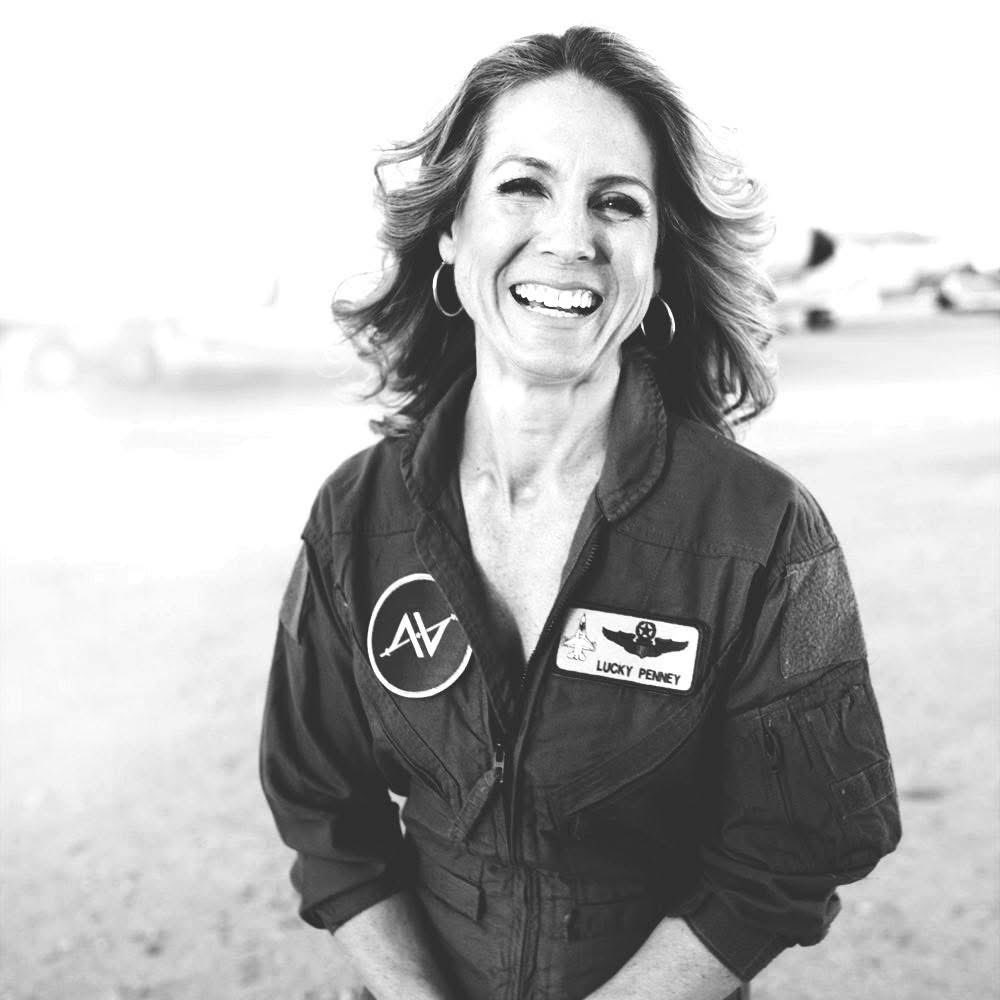
"She climbed into an unarmed fighter jet with orders to ram a hijacked Boeing 757—knowing she wouldn’t survive. She was 26 years old, and she had approximately eight minutes to accept her own death.
Andrews Air Force Base, Maryland. September 11, 2001. 10:00 AM.
First Lieutenant Heather “Lucky” Penney was in the air on a routine training flight when the order came through: return immediately. America is under attack.
When she landed, everything had changed. Both Twin Towers were burning. The Pentagon had been hit. And more hijacked planes were still in the sky.
Then came the worst part—there were no missiles loaded on her F-16. It was a training aircraft. No live weapons. Nothing capable of stopping a passenger jet.
Only one option remained.
“Penney, Sasseville—suit up. NOW.”
Within minutes, she and her commander were sprinting to their jets. Ground crews were still removing safety pins as intelligence came in: another hijacked plane, Flight 93, possibly headed for Washington.
The White House. The Capitol. No one knew which.
But someone had to stop it.
As she climbed into her cockpit, a crew chief looked at her and quietly said, “Good luck, ma’am.” Neither of them said what they both understood.
If they found the aircraft, they might have to ram it.
There would be no second chance. No ejection that could save her. Only impact.
On the radio came the order that defined everything:
“Stop that aircraft by any means necessary.”
She didn’t ask for clarification.
There wasn’t time.
Moments later, her F-16 roared down the runway and lifted into the sky. Within seconds, she was flying over Washington at supersonic speed—sonic booms shaking the city below like distant thunder.
Smoke still rose from the Pentagon.
She searched the sky for a Boeing 757 she might have to destroy with her own jet.
But 200 miles away, something else was happening.
Passengers on Flight 93 had already made their own impossible choice.
They stormed the cockpit.
At 10:03 AM, the plane crashed into a field in Pennsylvania.
All 44 people aboard died—but Washington was saved.
Heather never had to complete her mission.
She circled the capital for hours afterward, protecting a city that had already been spared by strangers who refused to be victims.
When she finally landed, the crew chief was waiting. He looked at her and said quietly, “I didn’t think I’d see you again.”
Neither had she. "
Some of the things Trump said in the last 48 hours:
- Hamas is behaving very well these days.
- Iran should have missiles. Why not?
- We're going to unfreeze Iran's money. It's their money. Why should we steal their money?
- If the war kept going there would have been an economic catastrophe. So we had to end it.
- Some of the guys in the Islamic regime are really nice.
- If Iran didn't open the Strait of Hormuz our oil reserves would have run out in 4 weeks. We had to make a deal.
- Netanyahu is crazy. They keep killing innocent civilians. He needs to be more responsible.
- Without me and America, Israel wouldn't exist.
We're at the point where there needs to be investigations into what's going on with our mainstream news media and press and their capitulation, I might even say collusion with the trump admin. Biden or any other president would be getting absolutely destroyed right now because of this deal (surrender) with Iran. Republicans would have articles of impeachment waiting for him when he got back home.
He's weak, he's sickly, he's tired, he's frail, he's falling asleep, he can barely walk. What will it take for our media to do it's damn job??
Per the Federal Vacancies Reform Act, an acting official can remain in their role indefinitely while a permanent nomination is pending in the Senate as the 210-day limit clock for acting service is paused.
You see what Trump is doing, don't you?
Il riscaldamento della nazionale senegalese. La World Cup, nonostante le divisioni imposte da Trump, continua a celebrare l'identità dei Paesi partecipanti e la voglia di condividerla con gli altri.
Former Trump WH Communications Director Anthony Scaramucci says "the reaction is so bad" to the agreement with Iran that President Trump will "now start lying about it and saying, 'okay, that wasn't really the deal, go look at this shiny object over here.'"
Kind of odd that all the Trump "I’m the boss" clips leave out the part where he enters the room like he's part of the South Korean delegation, blindly following Lee Jae Myung to his seat.
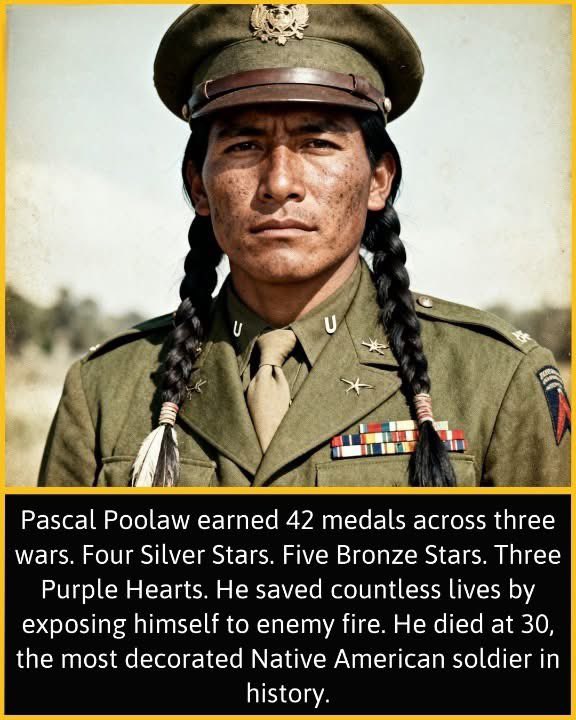
Pascal Cleatus Poolaw Sr. grew up Comanche in Oklahoma, raised with warrior traditions that stretched back centuries. When WWII broke out, he enlisted and quickly became known for something rare among combat soldiers. He was calm. While others panicked under fire, Pascal moved with purpose. He led men through hellfire and brought them home. By the time the war ended, his chest was covered in ribbons.
Most decorated veterans retired to quiet lives. Pascal re-enlisted. When the Korean War erupted, he was among the first to deploy. His reputation preceded him. Men requested to serve under him because they knew he would die before abandoning them. Between 1942 and 1951, he earned four Silver Stars for gallantry, five Bronze Stars for heroism, and three Purple Hearts for wounds received in combat. 42 total decorations. Each one represented a moment when he chose his brothers over his own survival.
On November 7, 1951, during combat operations in Korea, enemy fire finally found him. Pascal Poolaw was 30 years old. He left behind a wife, four children, and a legacy that forced America to recognize what Native warriors had been doing all along. Serving. Sacrificing. Leading. His son, Pascal Poolaw Jr., would later serve in Vietnam, continuing a family tradition of service that demanded everything and asked for nothing in return.
The military would eventually name buildings and memorials in his honor. But Pascal never fought for recognition. He fought because when his brothers needed him, he answered. Every single time. That kind of courage doesn't come from medals. It comes from something deeper, something the Comanche people had always known. A warrior's duty is to protect, no matter the cost.
Embarrassing.
Peter Doocy: “A wise man once said, in January 2020: ‘Iran has never won a war, but has never lost a negotiation.’”
President Trump: “Who said that?”
Reporter: “Donald Trump.”