This article by G. Kviklys & S. Kushkumbayev explores how shelter theory and omnidirectional hedging complement each other in the foreign policies of small and medium-sized states, with a focus on Kazakhstan and Uzbekistan.
Full article: https://t.co/c17b2pIp18
#foreignpolicy#CA
Bitleuov et al. explore the Shanghai Cooperation Organization as a unique platform for regional integration in Central Asia, showing a shift from security-focused priorities to a more economically diverse agenda over the years.
Full article: https://t.co/6pmXRyfPwL
#SCO#security
The policy commentary by B. Jarihani, B. Pulatov, V. Sulaymonova & M. Kurambaeva explores the need for robust hydrological monitoring and data-sharing systems in Central Asia.
Full article: https://t.co/6rTqZS3HFH
#transboundarywatergovernance#hydrometnetworks#earthobservation
The study by A. Tokenov and A. Alonso Marcos examines the social capital paradox in Kazakhstan, revealing that low levels of trust and civic engagement coexist with heightened informal cooperation during crises.
Full article: https://t.co/0lKzLQsrag
#Kazakhstan#SocialCapital
The study by G. Kapucu explores how tax transparency mechanisms in Uzbekistan can serve as anti-corruption tools, emphasizing the need for coherent legal frameworks and institutional capacity.
Full article: https://t.co/Cpfq0OyR4j
#Uzbekistan#corruption#transparency#tax
The paper by R. Bi analyzes the "Familiarity-Action Gap" in Tajikistan, revealing that direct interpersonal contact with the U.S. fosters trust and greater commitment to action among youth.
Full article: https://t.co/I4y1TpT44F
#Geopolitics#Diplomacy#Tajikistan#YouthPolitics
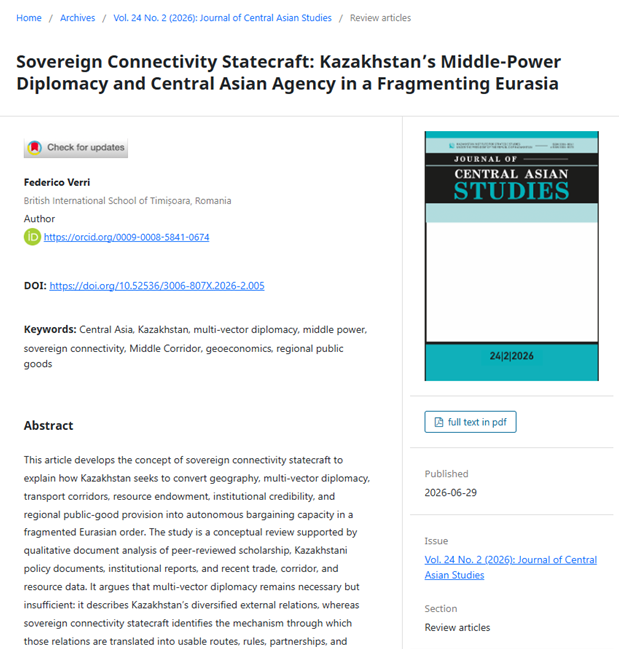
This paper by F. Verri introduces the concept of sovereign connectivity statecraft, which helps explain how Kazakhstan leverages its geography and multi-vector diplomacy.
Full article: https://t.co/SZrWsQ7qqN
#CentralAsia#MultivectorDiplomacy#MiddlePower#sovereignconnectivity
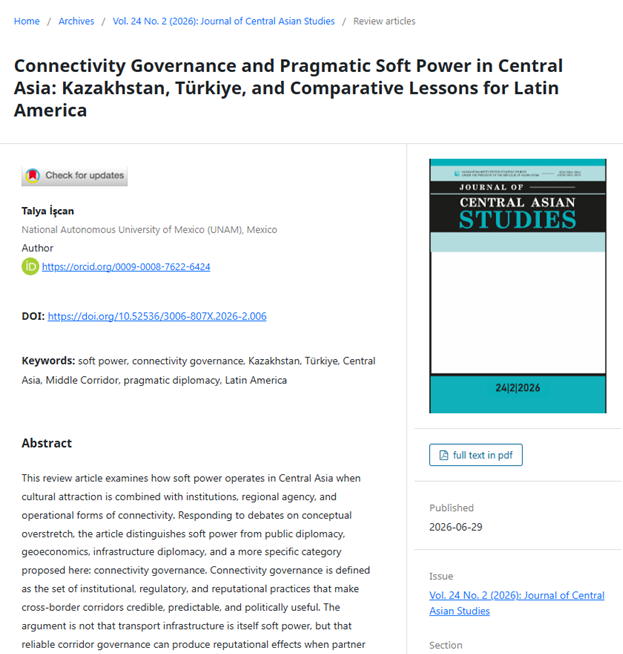
The article by T. İşcan explores the interplay of soft power and connectivity governance in Central Asia through the cases of Kazakhstan and Türkiye and offers selective lessons for Latin America.
Full article: https://t.co/cmiMnNPIZF
#SoftPower#Kazakhstan#Türkiye#LatinAmerica
The Silk Road Workshop in Almaty, organized by the Academy of Management, provided valuable insights into scholarly publishing, peer review, and editorial best practices. We look forward to applying these lessons to further enhance our journal.
#AOM#Journals#SilkRoad
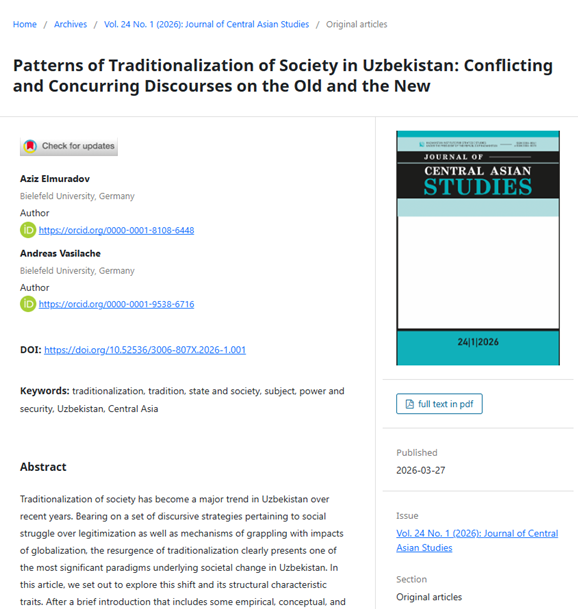
The manuscript by Elmuradov and Vasilache analyzes societal change in Uzbekistan, highlighting how patrimonial and patriarchal structures reinforce the discourse of tradition.
🔗Full article: https://t.co/8QLgK1srdd
#traditionalization#tradition#stateandsociety#Uzbekistan#CA
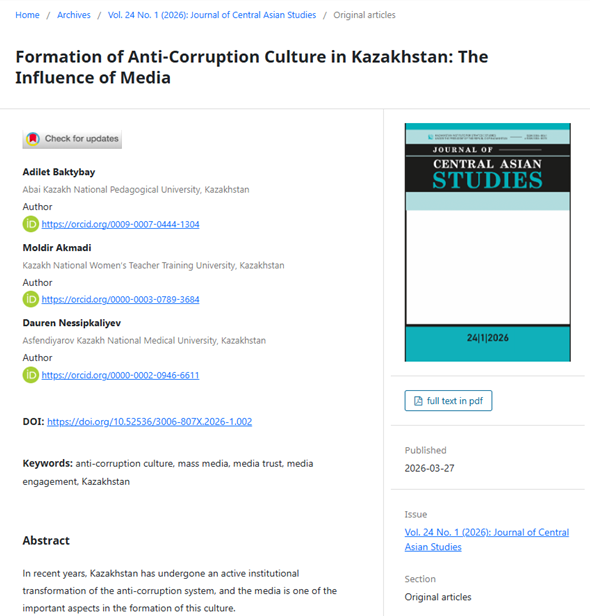
The paper by Baktybay et al. explores how media shape anti-corruption culture in Kazakhstan, using survey data on media use, trust, coverage of corruption, audience engagement, and related policies.
🔗Full article: https://t.co/jSLT6oPduB
#Anticorruption#Media#Trust#Kazakhstan
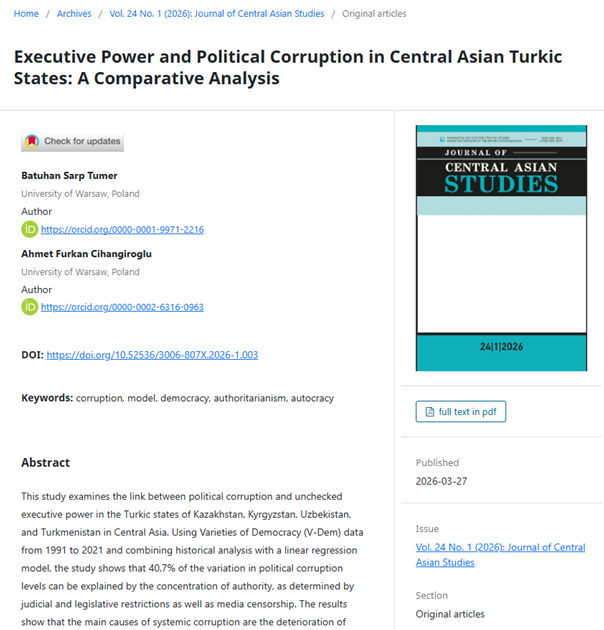
This study by Tumer & Cihangiroglu analyzes the link between political corruption and unchecked executive power in Kazakhstan, Kyrgyzstan, Uzbekistan, and Turkmenistan, using V-Dem data (1991-2021) and highlighting key causes and solutions.
🔗Full article: https://t.co/aJg57nogMR
The article by Makulbayeva et al. analyzes public councils in Kyrgyzstan (2014–2024) using focus groups, interviews, and secondary data. We invite you to read their findings and share your thoughts.
🔗Full article: https://t.co/cYrj6Or4cd
#PublicCouncils#CivilSociety#Kyrgyzstan
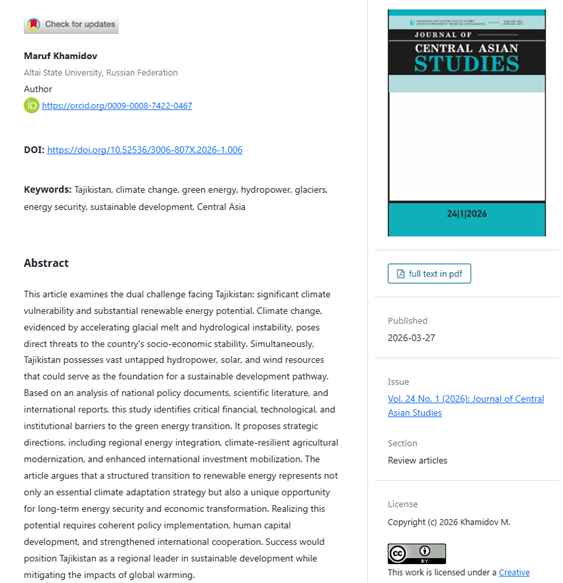
This article by M. Khamidov, published in issue 24(1), 2026, analyzes Tajikistan’s climate risks and renewable energy potential, reviewing policies and reports to suggest long-term transition strategies.
🔗 Read full article: https://t.co/XIkw2PmxNh
#Tajikistan#SDG#GreenEnergy
Our editorial office will be closed from Monday, March 23, to Wednesday, March 25, due to the Nauryz holidays. We will resume operations on Thursday, March 26. Thank you. We wish everyone a joyful Nauryz!🌷
Our journal seeks a reviewer for the book Atomic Collective: Radioactive Life in Kazakhstan by Magdalena E. Stawkowski. Please let us know if you are interested in reviewing this title.
🔗https://t.co/lC5Nl9pyxP
#CentralAsia#BookReview#NuclearStudies
The Journal of Central Asian Studies is included in List 1 of publications recommended by the Quality Assurance Committee of the Ministry of Science and Higher Education of the Republic of Kazakhstan. Congratulations🥳
#CentralAsia#Research#ScholarlyCommunication
Productive meeting of the editorial leadership of our journal to discuss strategic development and international collaboration.
We look forward to further strengthening the journal’s academic impact and global presence.
#Hungary#CentralAsia#Journal#Research#Editors