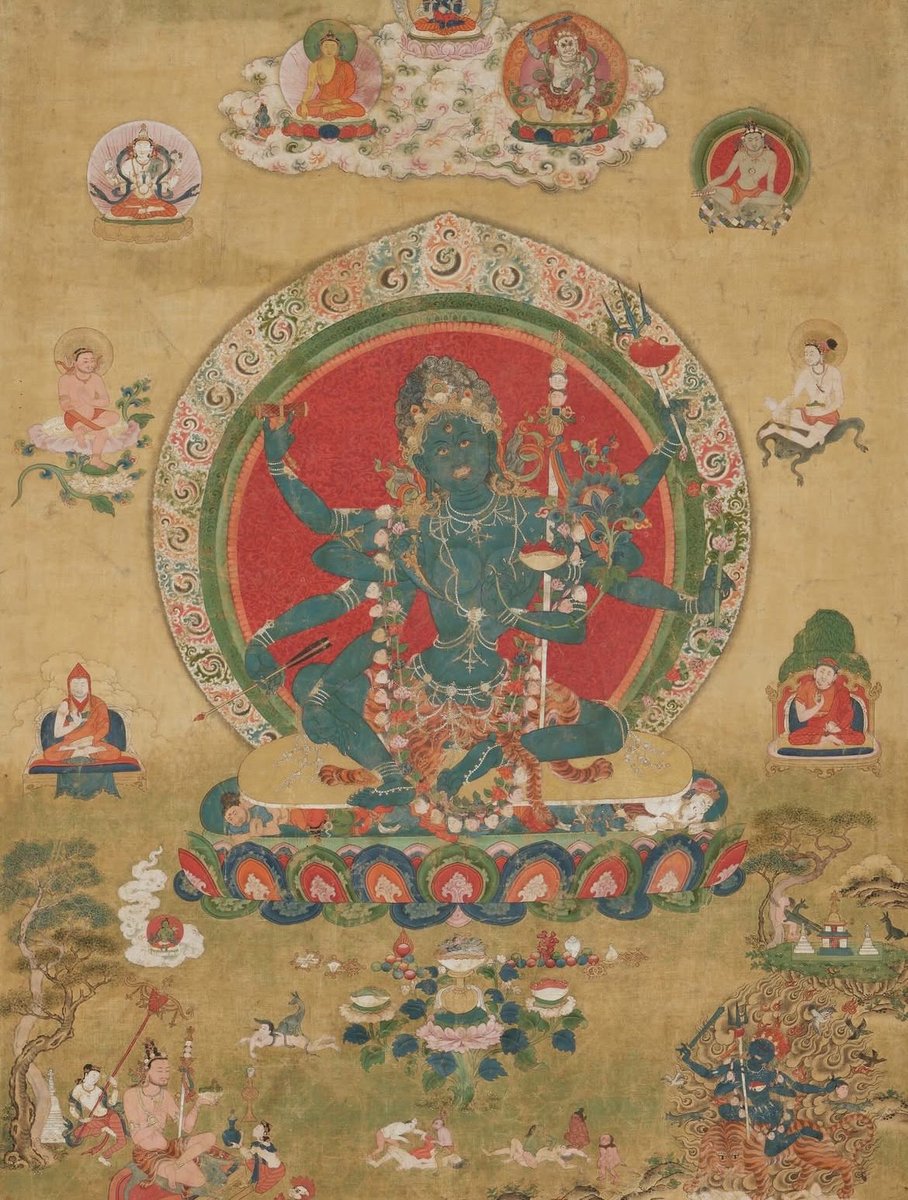
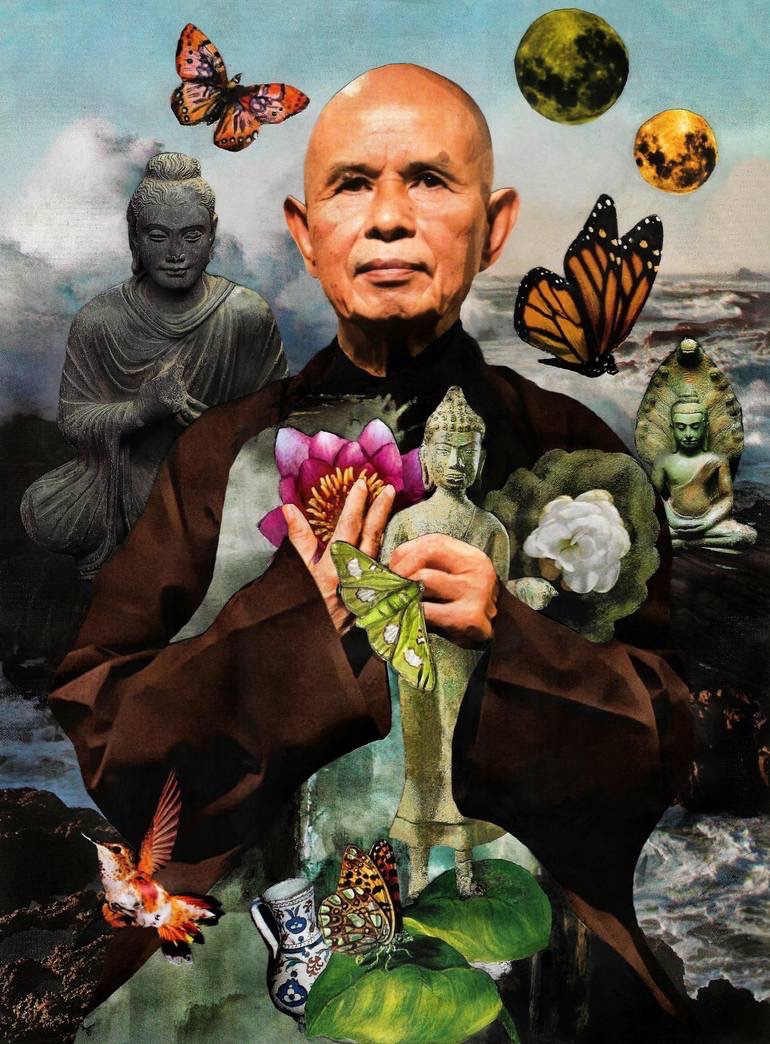
According to the tradition of the 30 Hidden Buddhas of the Month (三十日秘仏), the 17th day of the lunar month is associated with Ryuju Bodhisattva (Skt. Nagarjuna, Ch. Lóngshù) who is the Buddhist philosopher Nagarjuna. Nagarjuna’s historical importance in Mahayana is second only to Shakyamuni Buddha. In fact, in Tibetan Buddhism he is sometimes referred to as the second Buddha. Nagarjuna’s writings are considered essential for understanding the concept of Sunyata. They also form the foundation of the Madhyamaka school of philosophy, which says that all phenomena are empty of independent nature. It denies the extremes of nihilism and eternalism, seeing phenomena as inter-connected and inter-dependent rather than fixed.
Nagarjuna was so named because he was born under a tree (arjuna) and is said to achieved enlightenment when he later entered the Dragon Palace (naga) under the sea. He was purported to be a genius who by the age of 20 was proficient in knowledge of the Vedas, astronomy, geography, astrology, divination, and various spiritual arts.
Some hagiographical accounts attribute sorcerous powers to Nagarjuna before he became a Buddhist. The Chinese compiled “Transmission of the Dharma Treasury” tells of how Nagarjuna and three of his fellow Brahmin friends obtained the means to make pills of invisibility. The four of them used this power to roam the palace, sexually assaulting the women with impunity, eventually getting one of them pregnant. On the advice of one of his ministers, the king had sand spread around the doorways. When footprints appeared in the sand, he ordered his guards to swing their swords blindly through the air.
“Nagarjuna, knowing that weapons should not come within seven feet of the king, stood close to him, thus escaping the calamity. He also realized that lust is the root of all suffering, corrupting virtue, harming oneself, and defiling one's celibacy. Therefore, he vowed, ‘If I can escape this calamity, I will go to a monk's monastery and seek ordination.’ Later, Nagarjuna was indeed spared this calamity, and thus renounced lust and became a monk.”
Nagarjuna is considered a patriarch of 8 different schools of Buddhism. He is an extremely important figure within Japanese esoteric Buddhism (which arguably was woven into all forms of Japanese religion from the Heian period on). According to tradition, after Dainichi Nyorai initiated Vajrasattva into the profound mysteries, the bodhisattva hid himself away in an iron tower in southern India. There he remained until Nagarjuna opened the tower centuries later and received the Mahavairocana and Vajrasekhara Sutras from him.
Particularly appropriate prayer requests to Nagarjuna would include to realize the profundity of emptiness, to uphold discipline, to enhance study and mental capabilities, and to overcome lust.
MANTRA:
Namu ryuju bosatsu.
Homage to the buddhas, the transcendent conquerors, who have dispelled the darkness of wrong views. Homage to the perfect Dharma teachings, the wellspring of awakening for many wandering beings. Homage to the noble Saṅgha communities, who have conquered the enemy of afflictions and crossed the ocean of conditioned existence. Homage to the assembly of bodhisattvas, who, endowed with skillful means and compassion, strive to benefit all beings. I offer my body at all times to the precious Buddha, Dharma, and Saṅgha. I take refuge in them. Please accept me completely and protect me, I pray, from the path of mistaken views. Whatever minor merits I might accumulate with body, speech, and mind throughout the whole of time, I dedicate them all toward the swift and unsurpassable awakening of all.
(The prayer is an abbreviated version of Nagarjuna’s “Aspiration That Is a Source of Awakening” [Bodhyākarapraṇidhāna].)
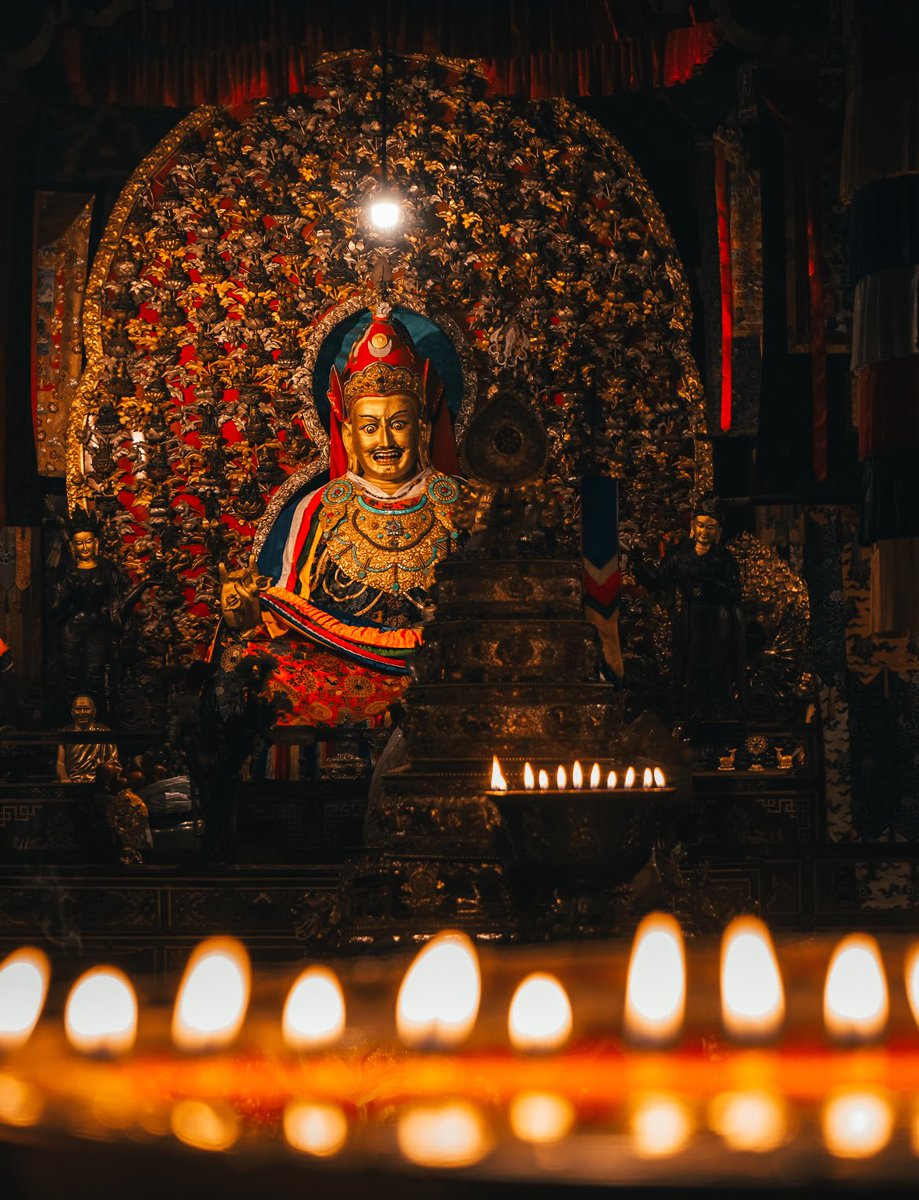
The Eight Manifestations Vajra Dance of the Padmasambhava Pure Land stopped in 2006, but it has now started again.According to legend, this dance came from a monk who is said to have seen it in the Pure Land of Guru Padmasambhava and then brought it back to teach monks.
Good Morning, friends ✨🙏🌅
May all beings be free from suffering and the causes of suffering.
May all beings be free from delusion and the darkness of ignorance.
May the real thirst awaken in every heart — not ordinary thirst, but the kind that makes your whole being ache with longing for the Dharma.
May that thirst become so deep that the Buddhas and Dakinis see it and pour their deathless Amrita — the pure, juicy nectar — straight into our hearts.
May we all become empty vessels, overflowing with devotion, gratitude, and radiant love.
May every being taste the sweetness of the Pure Land even while still walking in samsara.
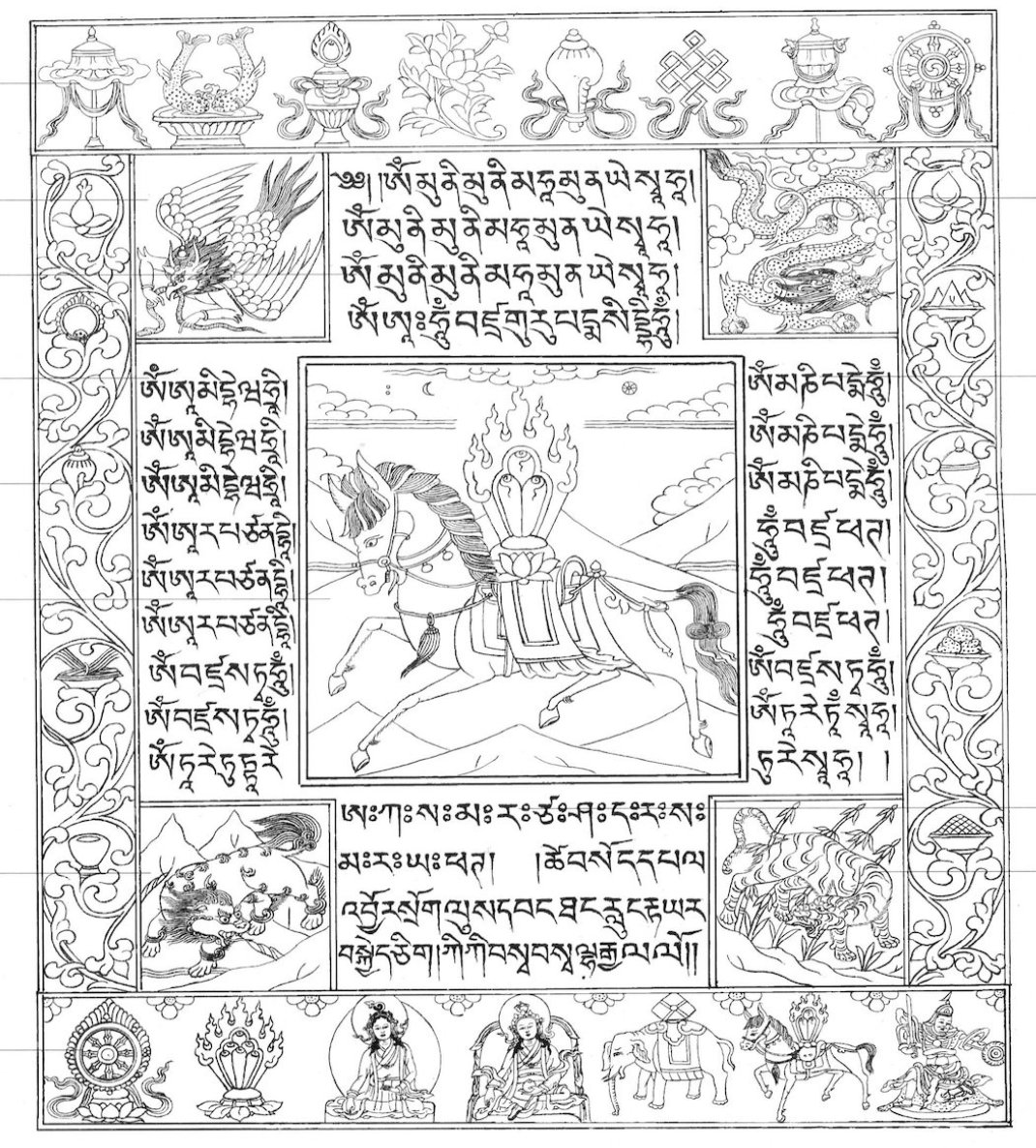
may all sentient beings be at peace om mani padme hum om mani padme hum om mani padme hum om mani padme hum 唵嘛呢叭咪吽唵嘛呢叭咪吽唵嘛呢叭咪吽 唵嘛呢叭咪吽唵嘛呢叭咪吽唵嘛呢叭咪吽唵嘛呢叭咪吽唵嘛呢叭咪吽唵嘛呢叭咪吽 ཨོཾ་མ་ཎི་པདྨེ་ཧཱུྃ་| ཨོཾ་མ་ཎི་པདྨེ་ཧཱུྃ་| ཨོཾ་མ་ཎི་པདྨེ་ཧཱུྃ་
•May all beings have happiness and the causes of happiness.
•May all beings be free from suffering and the causes of suffering.
•May all beings rejoice in the well-being of others.
•May all beings live in peace, free from greed and hatred.
•Namo Bhagavate Amitābhāya•


![TrsureTwrSeeker's tweet photo. According to the tradition of the 30 Hidden Buddhas of the Month (三十日秘仏), the 17th day of the lunar month is associated with Ryuju Bodhisattva (Skt. Nagarjuna, Ch. Lóngshù) who is the Buddhist philosopher Nagarjuna. Nagarjuna’s historical importance in Mahayana is second only to Shakyamuni Buddha. In fact, in Tibetan Buddhism he is sometimes referred to as the second Buddha. Nagarjuna’s writings are considered essential for understanding the concept of Sunyata. They also form the foundation of the Madhyamaka school of philosophy, which says that all phenomena are empty of independent nature. It denies the extremes of nihilism and eternalism, seeing phenomena as inter-connected and inter-dependent rather than fixed.
Nagarjuna was so named because he was born under a tree (arjuna) and is said to achieved enlightenment when he later entered the Dragon Palace (naga) under the sea. He was purported to be a genius who by the age of 20 was proficient in knowledge of the Vedas, astronomy, geography, astrology, divination, and various spiritual arts.
Some hagiographical accounts attribute sorcerous powers to Nagarjuna before he became a Buddhist. The Chinese compiled “Transmission of the Dharma Treasury” tells of how Nagarjuna and three of his fellow Brahmin friends obtained the means to make pills of invisibility. The four of them used this power to roam the palace, sexually assaulting the women with impunity, eventually getting one of them pregnant. On the advice of one of his ministers, the king had sand spread around the doorways. When footprints appeared in the sand, he ordered his guards to swing their swords blindly through the air.
“Nagarjuna, knowing that weapons should not come within seven feet of the king, stood close to him, thus escaping the calamity. He also realized that lust is the root of all suffering, corrupting virtue, harming oneself, and defiling one's celibacy. Therefore, he vowed, ‘If I can escape this calamity, I will go to a monk's monastery and seek ordination.’ Later, Nagarjuna was indeed spared this calamity, and thus renounced lust and became a monk.”
Nagarjuna is considered a patriarch of 8 different schools of Buddhism. He is an extremely important figure within Japanese esoteric Buddhism (which arguably was woven into all forms of Japanese religion from the Heian period on). According to tradition, after Dainichi Nyorai initiated Vajrasattva into the profound mysteries, the bodhisattva hid himself away in an iron tower in southern India. There he remained until Nagarjuna opened the tower centuries later and received the Mahavairocana and Vajrasekhara Sutras from him.
Particularly appropriate prayer requests to Nagarjuna would include to realize the profundity of emptiness, to uphold discipline, to enhance study and mental capabilities, and to overcome lust.
MANTRA:
Namu ryuju bosatsu.
Homage to the buddhas, the transcendent conquerors, who have dispelled the darkness of wrong views. Homage to the perfect Dharma teachings, the wellspring of awakening for many wandering beings. Homage to the noble Saṅgha communities, who have conquered the enemy of afflictions and crossed the ocean of conditioned existence. Homage to the assembly of bodhisattvas, who, endowed with skillful means and compassion, strive to benefit all beings. I offer my body at all times to the precious Buddha, Dharma, and Saṅgha. I take refuge in them. Please accept me completely and protect me, I pray, from the path of mistaken views. Whatever minor merits I might accumulate with body, speech, and mind throughout the whole of time, I dedicate them all toward the swift and unsurpassable awakening of all.
(The prayer is an abbreviated version of Nagarjuna’s “Aspiration That Is a Source of Awakening” [Bodhyākarapraṇidhāna].)](https://pbs.twimg.com/media/HHZO5vXWQAAN-sP.jpg)
![TrsureTwrSeeker's tweet photo. According to the tradition of the 30 Hidden Buddhas of the Month (三十日秘仏), the 17th day of the lunar month is associated with Ryuju Bodhisattva (Skt. Nagarjuna, Ch. Lóngshù) who is the Buddhist philosopher Nagarjuna. Nagarjuna’s historical importance in Mahayana is second only to Shakyamuni Buddha. In fact, in Tibetan Buddhism he is sometimes referred to as the second Buddha. Nagarjuna’s writings are considered essential for understanding the concept of Sunyata. They also form the foundation of the Madhyamaka school of philosophy, which says that all phenomena are empty of independent nature. It denies the extremes of nihilism and eternalism, seeing phenomena as inter-connected and inter-dependent rather than fixed.
Nagarjuna was so named because he was born under a tree (arjuna) and is said to achieved enlightenment when he later entered the Dragon Palace (naga) under the sea. He was purported to be a genius who by the age of 20 was proficient in knowledge of the Vedas, astronomy, geography, astrology, divination, and various spiritual arts.
Some hagiographical accounts attribute sorcerous powers to Nagarjuna before he became a Buddhist. The Chinese compiled “Transmission of the Dharma Treasury” tells of how Nagarjuna and three of his fellow Brahmin friends obtained the means to make pills of invisibility. The four of them used this power to roam the palace, sexually assaulting the women with impunity, eventually getting one of them pregnant. On the advice of one of his ministers, the king had sand spread around the doorways. When footprints appeared in the sand, he ordered his guards to swing their swords blindly through the air.
“Nagarjuna, knowing that weapons should not come within seven feet of the king, stood close to him, thus escaping the calamity. He also realized that lust is the root of all suffering, corrupting virtue, harming oneself, and defiling one's celibacy. Therefore, he vowed, ‘If I can escape this calamity, I will go to a monk's monastery and seek ordination.’ Later, Nagarjuna was indeed spared this calamity, and thus renounced lust and became a monk.”
Nagarjuna is considered a patriarch of 8 different schools of Buddhism. He is an extremely important figure within Japanese esoteric Buddhism (which arguably was woven into all forms of Japanese religion from the Heian period on). According to tradition, after Dainichi Nyorai initiated Vajrasattva into the profound mysteries, the bodhisattva hid himself away in an iron tower in southern India. There he remained until Nagarjuna opened the tower centuries later and received the Mahavairocana and Vajrasekhara Sutras from him.
Particularly appropriate prayer requests to Nagarjuna would include to realize the profundity of emptiness, to uphold discipline, to enhance study and mental capabilities, and to overcome lust.
MANTRA:
Namu ryuju bosatsu.
Homage to the buddhas, the transcendent conquerors, who have dispelled the darkness of wrong views. Homage to the perfect Dharma teachings, the wellspring of awakening for many wandering beings. Homage to the noble Saṅgha communities, who have conquered the enemy of afflictions and crossed the ocean of conditioned existence. Homage to the assembly of bodhisattvas, who, endowed with skillful means and compassion, strive to benefit all beings. I offer my body at all times to the precious Buddha, Dharma, and Saṅgha. I take refuge in them. Please accept me completely and protect me, I pray, from the path of mistaken views. Whatever minor merits I might accumulate with body, speech, and mind throughout the whole of time, I dedicate them all toward the swift and unsurpassable awakening of all.
(The prayer is an abbreviated version of Nagarjuna’s “Aspiration That Is a Source of Awakening” [Bodhyākarapraṇidhāna].)](https://pbs.twimg.com/media/HHZO5vXWMAAPgf2.jpg)






![TrsureTwrSeeker's tweet photo. According to the tradition of the 30 Hidden Buddhas of the Month (三十日秘仏), the 17th day of the lunar month is associated with Ryuju Bodhisattva (Skt. Nagarjuna, Ch. Lóngshù) who is the Buddhist philosopher Nagarjuna. Nagarjuna’s historical importance in Mahayana is second only to Shakyamuni Buddha. In fact, in Tibetan Buddhism he is sometimes referred to as the second Buddha. Nagarjuna’s writings are considered essential for understanding the concept of Sunyata. They also form the foundation of the Madhyamaka school of philosophy, which says that all phenomena are empty of independent nature. It denies the extremes of nihilism and eternalism, seeing phenomena as inter-connected and inter-dependent rather than fixed.
Nagarjuna was so named because he was born under a tree (arjuna) and is said to achieved enlightenment when he later entered the Dragon Palace (naga) under the sea. He was purported to be a genius who by the age of 20 was proficient in knowledge of the Vedas, astronomy, geography, astrology, divination, and various spiritual arts.
Some hagiographical accounts attribute sorcerous powers to Nagarjuna before he became a Buddhist. The Chinese compiled “Transmission of the Dharma Treasury” tells of how Nagarjuna and three of his fellow Brahmin friends obtained the means to make pills of invisibility. The four of them used this power to roam the palace, sexually assaulting the women with impunity, eventually getting one of them pregnant. On the advice of one of his ministers, the king had sand spread around the doorways. When footprints appeared in the sand, he ordered his guards to swing their swords blindly through the air.
“Nagarjuna, knowing that weapons should not come within seven feet of the king, stood close to him, thus escaping the calamity. He also realized that lust is the root of all suffering, corrupting virtue, harming oneself, and defiling one's celibacy. Therefore, he vowed, ‘If I can escape this calamity, I will go to a monk's monastery and seek ordination.’ Later, Nagarjuna was indeed spared this calamity, and thus renounced lust and became a monk.”
Nagarjuna is considered a patriarch of 8 different schools of Buddhism. He is an extremely important figure within Japanese esoteric Buddhism (which arguably was woven into all forms of Japanese religion from the Heian period on). According to tradition, after Dainichi Nyorai initiated Vajrasattva into the profound mysteries, the bodhisattva hid himself away in an iron tower in southern India. There he remained until Nagarjuna opened the tower centuries later and received the Mahavairocana and Vajrasekhara Sutras from him.
Particularly appropriate prayer requests to Nagarjuna would include to realize the profundity of emptiness, to uphold discipline, to enhance study and mental capabilities, and to overcome lust.
MANTRA:
Namu ryuju bosatsu.
Homage to the buddhas, the transcendent conquerors, who have dispelled the darkness of wrong views. Homage to the perfect Dharma teachings, the wellspring of awakening for many wandering beings. Homage to the noble Saṅgha communities, who have conquered the enemy of afflictions and crossed the ocean of conditioned existence. Homage to the assembly of bodhisattvas, who, endowed with skillful means and compassion, strive to benefit all beings. I offer my body at all times to the precious Buddha, Dharma, and Saṅgha. I take refuge in them. Please accept me completely and protect me, I pray, from the path of mistaken views. Whatever minor merits I might accumulate with body, speech, and mind throughout the whole of time, I dedicate them all toward the swift and unsurpassable awakening of all.
(The prayer is an abbreviated version of Nagarjuna’s “Aspiration That Is a Source of Awakening” [Bodhyākarapraṇidhāna].)](https://pbs.twimg.com/media/HHZO5vXWgAA6flk.jpg)