Just to remind everyone that there's loads of scholarship showing the anti-trans moral panic was devised in response to growing acceptance of LGBTQ people in society.
the actual fear of israelis is that movement toward a 2ss would lead to a civil war launched by armed jewish religious fundamentalists. their fear of that scenario is so profound and so psychologically paralyzing that they tend to mentally sublimate it into the opposite scenario, where it's the other side's armed fundamentalists who launch the imagined war.
obviously in the real world hamas didn't attack israel because there was movement toward a 2ss but because there was no movement, despite hamas's many overtures to israel on the subject going back years. the other day, israel got so panicked by hamas's acceptance of a us-backed disarmament plan, which contained vague mention of a possible future palestinian state, that it spasmodically carpet bombed yet more families living in tents in gaza.
israelis dread the prospect of hamas disarming because they prefer the feeling of being threatened by hamas to the feeling of being threatened by civil war. and they're right to fear their fundamentalists: the oslo agreement contained only an implicit hint of possible statehood in some indefinite future, yet its signing was followed within months by baruch goldstein's massacre of palestinians in hebron (which provoked hamas for the first time to target civilians in israel) and then yigal amir's murder of rabin a year later.
the problem is that the israelis are trapped. when they're not under international pressure to compromise with palestinians, the fundamentalists only get politically stronger (viz the 2022 elections), but when they do respond to pressure to compromise it provokes the fundamentalists into becoming even more threatening (viz goldstein and amir).
israelis need more pressure. it serves as a form of exposure therapy. the outbursts of pinker's colleagues are a sign that the therapy is working
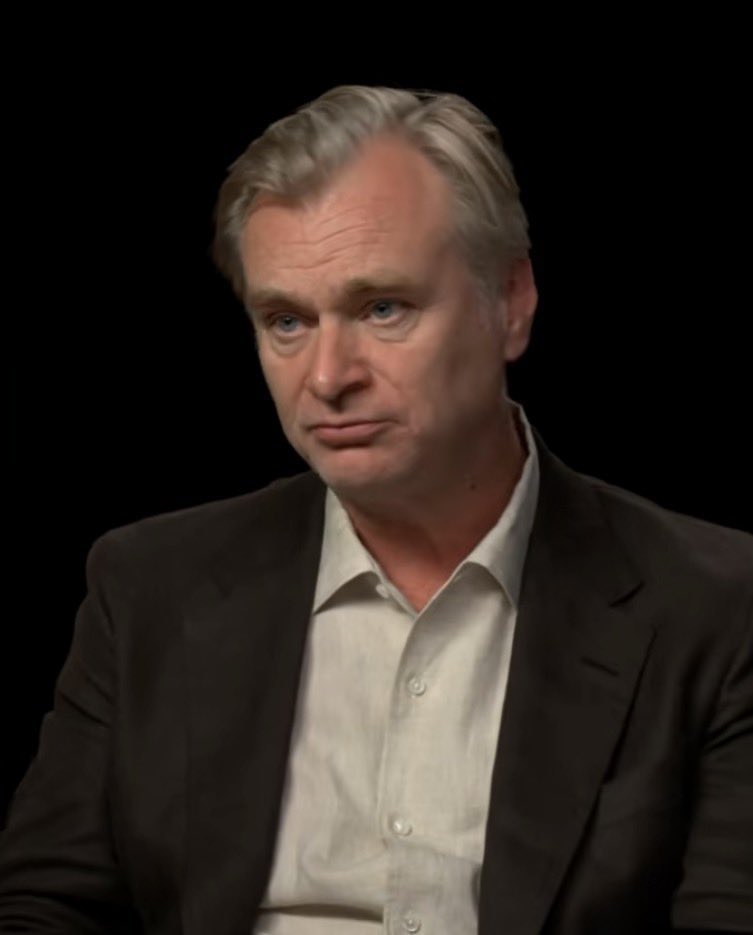
Christopher Nolan says one problem with modern amateur criticism for films is people recognizing a narrative trope & seeing that as a negative.
“To be able to identify the mechanism doesn’t invalidate the mechanism.”
(Source: @ZhugeYY)
Iran's latest ballistic missile attacks and the continued rejection of compromise solutions on the Strait of Hormuz might seem like indications that "hardline" thinking is dominating Iran's national security strategy.
But my conversations with counterparts in Tehran suggest that something else is at play. Iranian decisionmaking is increasingly shaped by an intense pessimism about what diplomacy with the U.S. can achieve. Most senior figures, whether pragmatists or hardliners, simply do not believe a deal is possible. This pessimism has gotten worse since the MOU was signed.
Part of this is about the repeated experience of U.S. escalation during the course of negotiations, but the pessimism is no longer confined to the question of "does Trump want a deal?" Increasingly the belief is that "Trump can't do a deal, even if he thinks he wants one."
Policymakers in Tehran are looking at several things. At a technical level, the Trump administration was unable to execute even the most basic confidence building measures of the MOU. No assets were released and the oil waiver was never really operationalized. Iranian leaders are also looking to other contexts. Even in Venezuela, where the administration has complete political control and a full court press approach to economic reengagement, sanctions relief has floundered (eg. it took a whole month after the massive earthquake for FinCen to take proactive steps to try and provide banks comfort to support humanitarian transactions).
At a political level, the Iranians have seen the overblown reaction to the MOU from the full range of politicians in Washington. Democrats eager to score political points attacked provisions in the MOU that would be fundamental to *any* viable agreement with Iran. The Iranians are also watching the growing rift between the Rubio and Vance camps and are concluding that the administration is inherently dysfunctional. During the Biden years, the issue was whether the president could defend his deal from political rivals in Congress. Now, the rivals are within the cabinet itself.
At an individual level, there is also a growing sense that Trump is too erratic to stick by his own deals. Even Saudi Arabia, the country with perhaps the greatest influence in the White House after Israel, could not shield its own nuclear deal from Trump's excessive demands.
This may be an unprecedented situation. The U.S. has started a war it does not know how to end. Meanwhile, the arguments for diplomacy in Tehran have been reduced to "this has a low chance of succeeding, but we have to still try." That's not a strong, positive case for diplomatic engagement and understandably the strategic thinking is tending towards the idea that U.S. dysfunction will continue to manifest in the form of economic pressure and kinetic action against Iran for a long time to come.
It took a little longer than expected, but we have created a website for people to view the footage collected from Gaza in one place. You no longer have to download the entire archives to see them.
It includes:
64,537 videos
17,905 photos
Ability to download individual videos
Searchable index
Exhaustive sources list (300+ journalists)
Geolocation data
Livemap with minute to minute updates
Victim list
It can be accessed here: https://t.co/s0Se94PXWF
Please share & quote tweet to help this post break out of the twitter algorithm prison.
We will keep adding the rest of the archives to the site, be patient- it is difficult work. Continue to seed the torrents provided, as that is the best way to ensure the footage remains stored in decentalized way.
God bless all those who sacrificed their lives to get this footage out, and everyone invovled in collecting/archiving it.
Join our telegram:
https://t.co/bvcis3b9GT
Follow our backup accounts:
@ZionismExposedx & @IsraelExposedAr
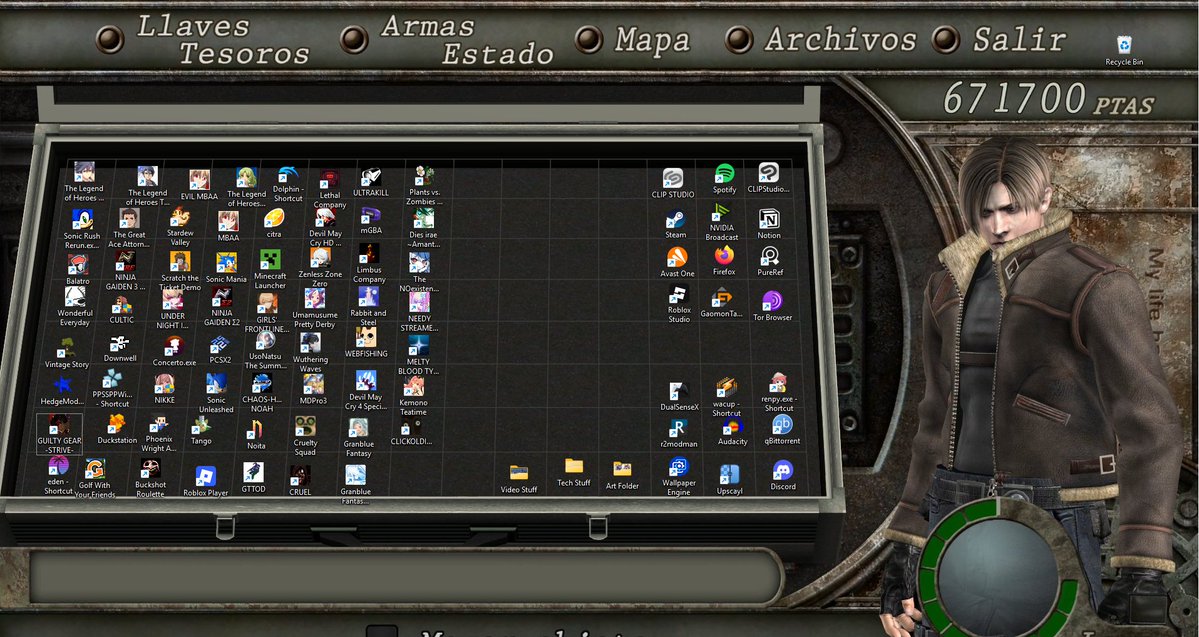
Want to play your favorite PlayStation games? Use these emulators:
PS1: https://t.co/GaTEDc6GCO
PS2: https://t.co/7YAsgfcMp8
PS3: https://t.co/t6Nh3sn3D1
PS4: https://t.co/gqS10xHZwc
PSP: https://t.co/Vd3jt8roW8
PSV: https://t.co/4XfNt9qPdf
⚠️ A PS5 emulator does not yet exist!
Iran’s ultimate objective has not been permanent confrontation with the United States. Nor has it been integration into an American-led order.
It seeks something far more difficult:
“Recognition without subordination and normal relations without dependence.”
That is why 1972 still matters.
Just as Nixon recognized Communist China without demanding ideological convergence, Tehran has long imagined a similar outcome: a relationship with Washington without integration into an American-led order.
But history no longer cuts in Iran’s favor.
1. No strategic necessity: In 1972, Washington needed Beijing to balance the Soviet Union. Today, the United States has no comparable geopolitical need for Iran.
2. A powerful regional veto: Unlike China in 1972, Iran-Israel rivalry creates a durable structural obstacle to any U.S.-Iran strategic accommodation.
3. The shadow of 1972 itself: The United States once viewed the opening to China as a triumph of realism. Today, many in Washington regard it as one of America’s greatest strategic mistakes.
Tehran is therefore pursuing its own “1972” precisely when Washington has become determined not to repeat China’s 1972.
That is Iran’s #strategic_vertigo and perhaps the central paradox shaping the future of U.S.-Iran relations.