The Blackwing hatchetfish has a unique ability to glide above the water surface for several meters using its powerful pectoral muscles—perfect for catching flying insects or avoiding predators.
Photo: Tsunamicarlos / Public domai
The Banggai cardinalfish (Pterapogon kauderni) is one of the few fish species where males take on the role of incubating eggs. They hold the fertilized eggs in their mouths for up to 30 days until they hatch.
Photo: Pharaoh Hound / CC BY 2.5
Green kissing gouramis engage in a unique "kissing" behavior where they lock lips in a form of non-lethal combat to establish territory. Despite their name, it's more about competition than affection.
Photo: Matthew1968 at English Wikipedia / CC BY-SA 3.0
Clouded leopards have the longest canine teeth relative to skull size of any modern cat. Their dagger-like fangs can reach lengths similar to those of extinct saber-toothed cats.
Photo: CC BY-SA 3.0
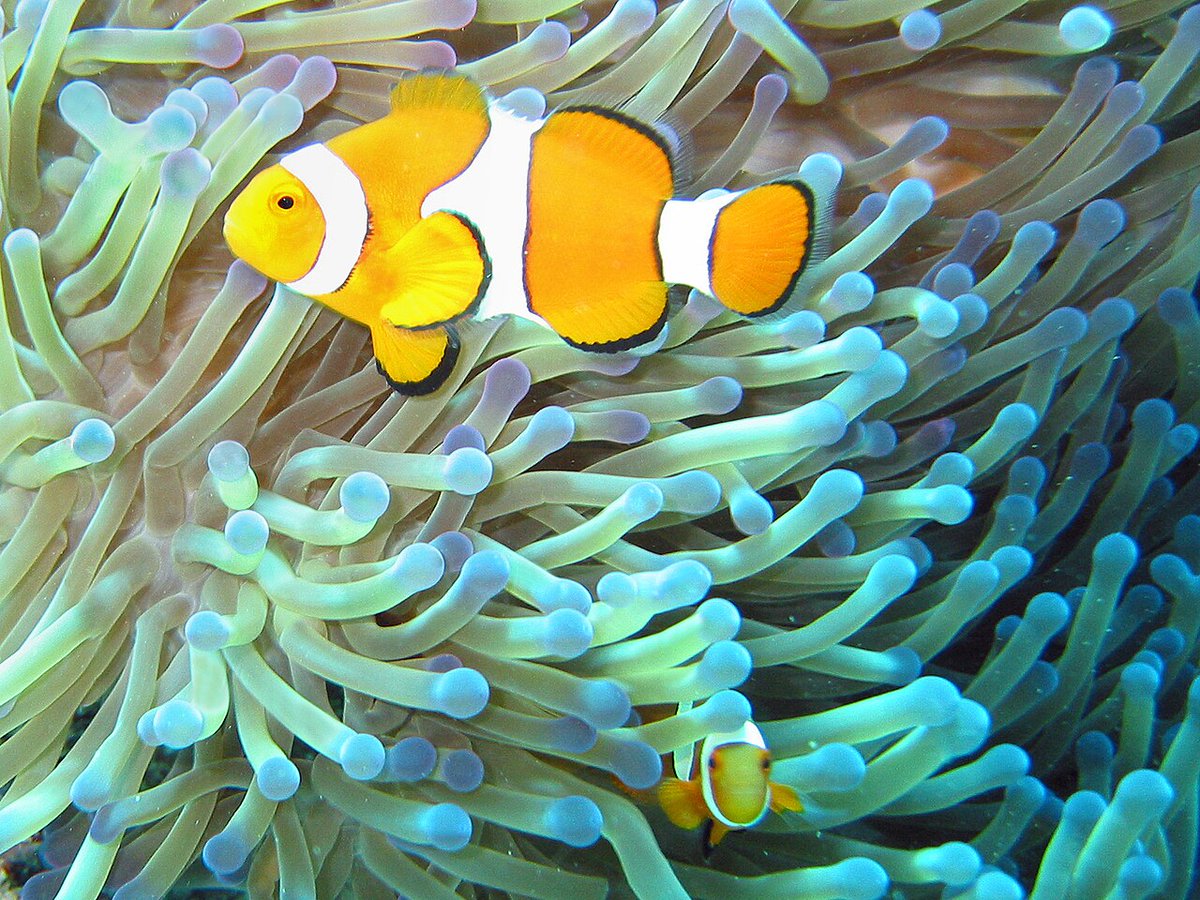
Clown anemonefish, known for their vibrant colors, have a unique social structure where the largest fish becomes the dominant female. This species, Amphiprion ocellaris, can change sex from male to female as needed.
Photo: Janderk / Public domai
Pictus catfish have long, sensory barbels that help them navigate and hunt in murky waters. These whisker-like organs are so sensitive, they can detect changes in water pressure and chemistry.
Photo: Claire H. / CC BY-SA 2.0
Gold Mahseer, a freshwater giant prized by anglers, can grow over 2 meters long and weigh up to 54 kg. This ray-finned monster navigates the fast-flowing rivers of South Asia, showcasing incredible strength and endurance.
Photo: Khalid Mahmood / CC BY-SA 4.0
The Amazon matamata turtle (Chelus fimbriata) has a uniquely camouflaged shell that resembles fallen leaves and debris, making it nearly invisible in its natural habitat.
Photo: CC BY-SA 3.0
The Burmese Upside Down Catfish, Mystus leucophasis, swims in an inverted position most of the time, a rare behavior among fish that helps it feed more efficiently on surface bugs.
Photo: Robert Mintern / Public domai
The Pearl Gourami is not only beautiful but also has a unique way of communicating—through croaks and grunts. These sounds are produced by the rapid contraction of specialized muscles.
Photo: BEDO (Thailand) / CC BY-SA 4.0
The Roundtail chub, a fish native to the Colorado River Basin, can thrive in both warm and cold water streams, showing an impressive adaptability to different aquatic environments.
Photo: Marine discovery / CC BY-SA 4.0
The longnose porthole catfish, Dianema longibarbis, sports a distinct row of spots along its lateral line, resembling portholes—hence its name. This peaceful species is known for its resilience and can live over a decade in captivity.
Photo: Ckf6412 / CC BY-SA 4.0
The Curlyhair tarantula (Tliltocatl albopilosus) can regenerate lost limbs through molting. As they shed their exoskeleton, new limbs can grow back, sometimes even stronger.
Photo: Sarefo / CC BY-SA 3.0
The green pincushion urchin, Lytechinus variegatus, has a remarkable ability to camouflage itself by covering its body with shells and debris. This behavior protects it from predators and harsh sunlight.
Photo: Hans Hillewaert / CC BY-SA 4.0
Mantis shrimp can punch with the force of a bullet, thanks to a spring-like mechanism in their claws. This makes them one of the fastest strikers in the animal kingdom.
Photo: Public domai
Loggerhead turtles (Caretta caretta) are known for their incredible migratory journeys, often traveling thousands of miles across the ocean between feeding and nesting sites.
Photo: Strobilomyces / CC BY-SA 3.0
The red-footed tortoise can recognize individual humans by sight. Their memory allows them to differentiate between their keepers and strangers in captivity.
Photo: Flints / CC BY-SA 3.0
The whitefreckled surgeon (Acanthurus maculiceps) is not just a pretty fish. Its sharp spine at the base of the tail can deliver a painful sting as effective as a surgeon's scalpel.
Photo: Izuzuki Diver / CC BY-SA 2.5
Longnose dace (Rhinichthys cataractae) can adapt to different flow conditions in their freshwater habitats, making them one of the most resilient fish species across North America.
Photo: Painting by Ellen Edmonson / Public domai
The Celebes rainbowfish (Marosatherina ladigesi) isn't just strikingly beautiful; it's also a conservation success story. Once vulnerable due to overfishing, it's now sustained largely by fish farms.
Photo: Shigella dysenteriae at English Wikipedi / CC BY-SA 3.0