@intaririsha@PatrickMuyaya Just got off chatting with a friend from Goma, DRC. Their condition is pathetic but what can they do? Is d government really concerned about the plights of these people? Beyond physically combating the rebels, what more can d government do through the instrumentality of d state?
@Ofer_binshtok Your concern seems genuinely howbeit, ignorant. I'm not sure you have a thorough understanding of Nigeria. For instance, the states that hold the Feord for the Igbos are the predominant Christians of the Middle Belt. So what becomes of them? Or do you have a special interest?
@intaririsha@PatrickMuyaya Do you think that attacking Rwanda will be easy? You should know that it is not Rwanda they will face. Rwanda is a proxy. Those who prop her up will be the ones to fight her war. But infiltration using Rwandan based rebels will serve.
The Nigerian Police, especially the Kaduna Command, must understand that picking people up in unmarked vehicles without proper identification is tantamount to kidnapping.
It was reported that MC Dangata was picked up in an unmarked vehicle, making his so-called "arrest" eerily similar to the abductions being carried out by terrorists across the state.
Governor Uba Sani must realize that some of us had huge expectations of his administration, but unfortunately, he is beginning to look like yet another dictator in Kaduna State.
Uba Sani cannot be setting up committees to 'rehabilitate' terrorists while simultaneously arresting dissenting voices. This is unacceptable and deserves condemnation.
No Local Government Chairman can independently arrest anyone without the blessing of the Government House. I say this because I understand how these illegalities are carried out.
When the Magistrate Court freed me in May 2019, the Government House was unhappy with the decision. Consequently, they got Cafra Caino, the then Chairman of Kajuru, to submit another dictionary-sized petition, upon which the rogue police 'arrested' me for the second time.
MC Dangata is just like any one of us, and trust me, his arrest may only be the beginning of many more arrests to come.
I heard they are trying to link him to the purchase of stolen phones. I am not surprised. They also tried to link me to terrorism in 2019, but their kangaroo "forensic" investigation of my smartphones yielded nothing they could use against me. By the way, the criminal Kaduna Police still have my smartphone, a brand-new Tecno Pouvoir which they have failed to return six years after my abduction by their men.
Finally, we will never be cowed into succumbing to dictatorship in Kaduna State, and I hope we will not find ourselves missing Nasir ElRufai anytime soon.
#FreeMCDangata #NoToDictatorship
INEC is deleting names of non APC voters from their voter register, thereby disenfranchising Nigerians in order to rig the 2027 elections for Tinubu. The opposition must challenge this crime ASAP.
The way all Fulani are increasingly being labeled as bandits reminds me of the dangerous ethnic stereotyping that preceded the tragedy in Rwanda between the Hutu and Tutsi.
@Jay_Creech4L@_Kamor I agree with you, but I still do not see how and why a vote for Mutfwang is equally a vote for Tinubu. Also, it means that even if we do not vote for Mutfwang, he and Tinubu will still win by editing the result on the INEC portal (to borrow a leave from you).
@Jay_Creech4L@_Kamor We voted Mutfwang in 2023 while we tossed Dakum away and voted Peter Obi. Our voting pattern was unique. I feel that voting Mutfwang does not and cannot translate into a win for Tinubu.
@Freewale90@mayo_naisee I couldn't agree with you less but the truth is; this kidnapping is beyond criminality. It is a vehicle of an agenda. Bleed the people dry then continue with the Dan fodio jihad occupation to bury the Quran in the Atlantic. We the people of the Middle Belt are living witnesses
Well, the truth is that:
Peter Obi is not the cause of mass poverty in Northern Nigeria.
Peter Obi is not the cause of millions of out of school children in the North.
Peter Obi is not the cause of mass illiteracy in the North.
Peter Obi is not the cause of terrorism and religious extremism in the North.
The smear campaign against Peter Obi by some political jobbers and sycophants in the North would not stop us from voting for him in 2027. We shall vote and defend our votes.
Northern Nigeria is for Obi/Kwankwaso and Nigeria will be OK.
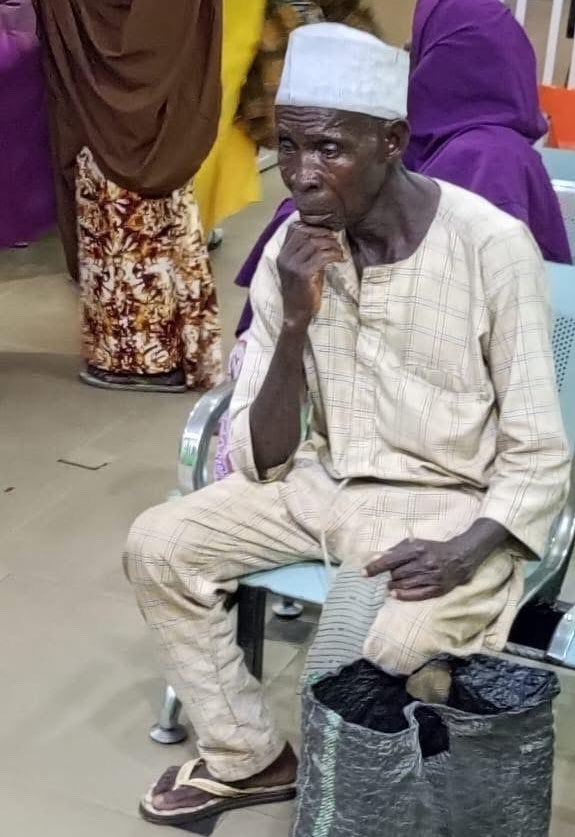
After doctors informed him of the cost of his surgery, he broke down in tears, saying that in his 58 years of life, he had never held as much as N50,000 at once.
This man, Malam Lauwali Umar Makarfi, is in a heartbreaking situation.
He is currently unable to urinate on his own, whether day or night, and must be taken to the hospital because of a bladder condition known medically as bladder outlet obstruction/prostatic hyperplasia (enlarged prostate).
He is presently admitted at Manaal Specialist Hospital, located at No. C5 Zangon Aya Road, Kawo, Kaduna.
We are appealing to kind-hearted individuals to assist this servant of Allah with the cost of his surgery, which amounts to N534,000.
Account Number: 8105891413
Account Name: Alhassan Musa
Bank: OPay
Please help by sharing this appeal.
Every freedom Black people have ever won was first treated as unrealistic, dangerous, impossible, or too radical. Then someone stood up, did something, and made it unavoidable.
That is the part African youths must understand about the future. Nobody is coming to peacefully renegotiate Africa’s place in the world because they suddenly feel guilty. If slavery, segregation, colonialism, and apartheid did not end through moral awakening alone, then neocolonialism will not end through hashtags, speeches, or begging either.
In 1831, in Southampton County, Virginia, an enslaved preacher named Nat Turner led one of the most serious slave revolts in American history.
On the night of August 21, 1831, Turner and a small group of enslaved men began a revolt at his master's plantation, then moved from house to house across Southampton County, attacking slaveholding families and recruiting more enslaved people as they went. The uprising lasted about two days before local militias crushed it.
Now, Nat Turner’s rebellion did not immediately end slavery. In fact, the slaveholding South responded with fear and repression. Laws became harsher. Black education, Black movement, Black religious gatherings, and even the rights of free Black people came under heavier attack. But that is exactly why the story matters. The rebellion exposed the truth the slave system was trying to hide: enslaved people had not accepted slavery. They were being held down by force.
That revolt entered the national argument. It terrified the slaveholding class. It strengthened the resolve of abolitionists. It made the moral lie of slavery harder to maintain. It showed that a system built on permanent domination will always be unstable when the dominated refuse to become spiritually dead.
That is how pressure works. It does not always win immediately. Sometimes it first exposes the fear of the system.
Then, in 1955, in Montgomery, Alabama, another scene unfolded inside another system of racial domination. Under Jim Crow segregation, Black people could pay the same fare as white people and still be forced to sit at the back of the bus. If the white section filled up, Black passengers could be ordered to stand so white passengers could sit.
But on December 1, 1955, a lady named Rosa Parks boarded a bus after work. When the white section became full, the driver ordered her and other Black passengers to give up their seats. Others moved. But she refused. She was arrested.
Her act of defiance pushed the Black community to rise up.
They boycotted the buses.
Not for one day.
Not for one week.
For 381 days.
You have to understand that this boycott was not easy. In fact, it was very painful. Some Black workers had to walk for miles to get to work, but they endured because they understood the price of freedom. Churches organized rides. Taxi drivers helped. Women’s groups mobilized. Local organizers printed leaflets. Pastors opened their churches. Ordinary people sacrificed comfort, time, and money until the bus system began to feel the cost of Black withdrawal.
That boycott did what moral appeals alone could not do. It turned Black suffering into organized pressure. It forced the American legal system to confront bus segregation. It helped push the civil rights movement into national consciousness. Again, the lesson is clear: the system did not change because it became kind. It changed because people organized until injustice became too costly to continue. Most importantly, it all started with one woman’s defiance.
The same pattern appears in colonialism.
After World War II, European empires were weakened, but weakness alone did not free Africa. Britain, France, Belgium, and Portugal did not suddenly look at Africa and say, “These people deserve dignity.” They still wanted resources, labour, markets, bases, and prestige. What changed was that colonized people began to organize with new confidence.
African soldiers had fought in European wars. They had seen white men bleed. They had seen Europe beg for help. They had heard speeches about freedom and democracy while their own countries remained under foreign rule. The contradiction became too big to hide.
In the Gold Coast, now Ghana, ex-servicemen who had fought for the British Empire returned home expecting their promised benefits and respect. On February 28, 1948, unarmed ex-servicemen marched toward Christiansborg Castle in Accra to present their petition. Colonial police stopped them. Three of them were shot and killed: Sergeant Nii Adjetey, Corporal Patrick Attipoe, and Private Odartey Lamptey.
That shooting did not create Ghanaian nationalism from nothing. The anger was already there. The economic hardship was already there. The humiliation was already there. The organizing was already there. But the shooting became a spark. Accra erupted. The colonial government panicked. Nationalist leaders were arrested. Kwame Nkrumah, who had previously been a teacher, a student activist in the United States, a Pan-African organizer in London, and General Secretary of the United Gold Coast Convention, would later break from the elite politics of petitions and form a mass party that reached workers, farmers, market women, youth, and ordinary people.
By 1957, Ghana became independent.
Again, the point is not that one protest ended colonialism. The point is that colonialism started collapsing when colonized people stopped making polite requests and started building mass pressure. Students, workers, farmers, unions, writers, ex-servicemen, market women, religious leaders, and political organizers all became part of the machinery that made empire harder to govern.
The colonial master did not leave because he discovered African humanity.
He left because occupation became expensive, unstable, and politically dangerous.
Then apartheid.
In South Africa, apartheid was not just racism as an attitude. It was racism as a full state system. It decided where Black people could live, work, move, study, gather, and even whether they could be present in certain areas without a pass. Black people were turned into labourers in their own land while political power, land, industry, and dignity were reserved for whites.
On March 21, 1960, in Sharpeville, Black South Africans gathered to protest the pass laws. They were not carrying an army. They were protesting a system that criminalized their movement in their own country. Police opened fire. Sixty-nine people were killed.
The apartheid state thought violence would produce silence. Instead, Sharpeville internationalized the struggle. The world could no longer pretend apartheid was merely South Africa’s internal issue. The liberation movements were banned, leaders were imprisoned or driven underground, but the struggle did not disappear. It changed form.
Then came Soweto in 1976. Black students rose up against being forced to learn in Afrikaans, the language of the oppressor’s state. Young people understood something many adults had normalized: even education had been designed as a tool of control. The protest was met with state violence, but Soweto shook South Africa and the world. Police confronted the student protesters, fired tear gas, and then opened fire. Hector Pieterson, a 12-year-old boy, became the most famous symbol of that day after he was shot and carried away by another student, Mbuyisa Makhubo, with Hector’s sister Antoinette running beside them. The photo went around the world and exposed apartheid’s brutality. It gave the anti-apartheid struggle a new generation, new energy, and new global attention.
Inside South Africa, workers organized strikes. Communities built resistance structures. Students mobilized. Churches, civic groups, unions, and underground networks kept pressure alive. Outside South Africa, activists pushed for sanctions, boycotts, divestment, and diplomatic isolation.
Apartheid did not end because the regime became morally mature.
Apartheid ended because internal resistance and external pressure made the system impossible to sustain forever.
So when we talk about neocolonialism today, we must stop talking as if the world is a classroom and Africa only needs to explain its pain clearly enough.
They know.
They know our minerals leave cheap and return expensive.
They know our currencies are weak because our economies are externally dependent.
They know our best minds are drained into foreign systems.
They know our countries borrow in currencies they do not control.
They know our elites sign contracts that mortgage the future.
They know our markets are open before our industries are mature.
They know our security crises make us dependent.
They know our borders are weak, our institutions are fragile, and our ruling class is often easier to buy than to defeat.
None of this is hidden.
The question is not whether the world knows Africa is being exploited. The question is whether Africa has built enough organized power to make exploitation difficult.
That is where African youths come in.
Not as noisemakers or Twitter revolutionaries.
Not as people who think insulting Europe and America every morning is a development strategy.
Not as people who think wearing African prints, changing names, and shouting “decolonization” is the same thing as building power.
We need a generation that understands that anger is raw material. If you do not refine it into structure, it becomes entertainment for the same system you claim to oppose.
Ho Chi Minh was not born with a country in his pocket. He worked ordinary jobs, travelled, studied colonialism, joined political networks, learned organization, built cadres, and helped turn Vietnamese nationalism into a disciplined liberation movement. Vietnam did not defeat empire with angry hashtags. It built political education, mass mobilization, military discipline, peasant support, and a clear national objective.
Lula in Brazil was not born into the ruling class. He came through factory work, labour organizing, strikes, party building, and years of political discipline. Whether one agrees with all his politics or not, the lesson is obvious: ordinary people only enter history when they organize beyond complaint.
Thomas Sankara did not try to build Burkina Faso with slogans alone; he took action. He pushed vaccination, local production, women’s participation, anti-corruption measures, food self-reliance, and national dignity. He understood that liberation must touch the farm, the school, the clinic, the army, the budget, and the mind.
This is the assignment for African youths.
Read seriously.
Create unions. Join unions where unions exist.
Build cooperatives where markets are broken.
Create study circles where political education is absent.
Build media platforms that can explain Africa to Africans without begging foreign institutions for permission.
Enter local politics.
Contest student unions, local councils, professional associations, trade groups, and party structures.
Create legal defense funds.
Build businesses that produce, not just import.
Learn technology, agriculture, manufacturing, logistics, public policy, history, finance, and statecraft.
Stop worshipping foreign systems blindly. Stop worshipping capitalism, socialism, communism, Karl Marx, Lenin, Milton Friedman, or any of those foreign systems for that matter.
At the same time, stop rejecting foreign knowledge blindly. At the end of the day, all these systems are tools. You do not have to make them your whole personality. No nation developed by following any hard-coded set of rules. China has capitalist zones like Shenzhen. The United States has social programs like Medicare, food stamps, and Social Security. Africa must do the same.
Adopt consciously.
Take what strengthens Africa. Reject what weakens us. Build what fits our reality.
That is how we build power.
The future will not be handed to the Black man because it has never been handed to the Black man. Every major freedom we celebrate today was once called impossible until organized people made it inevitable.
So the question for African youths is simple.
Do we want to be another generation that explains our suffering beautifully?
Or do we want to become the generation that builds enough power to end the arrangement that profits from it?