@WeinsteinOmri Are you at all worried about ASICs or FPGAs that are designed against your matmul PoW algorithm from dominating the network? Presumably they can do this much faster and more efficiently without running any inference.
@zdravkohristov0@blockaid_ Indeed that should be impossible, that is an NP-hard problem as a contract address is basically a hash of its sender and a nonce, so you’d need to compromise a private key in addition
Unfortunately I was part of the group laid off from @coinbase today.
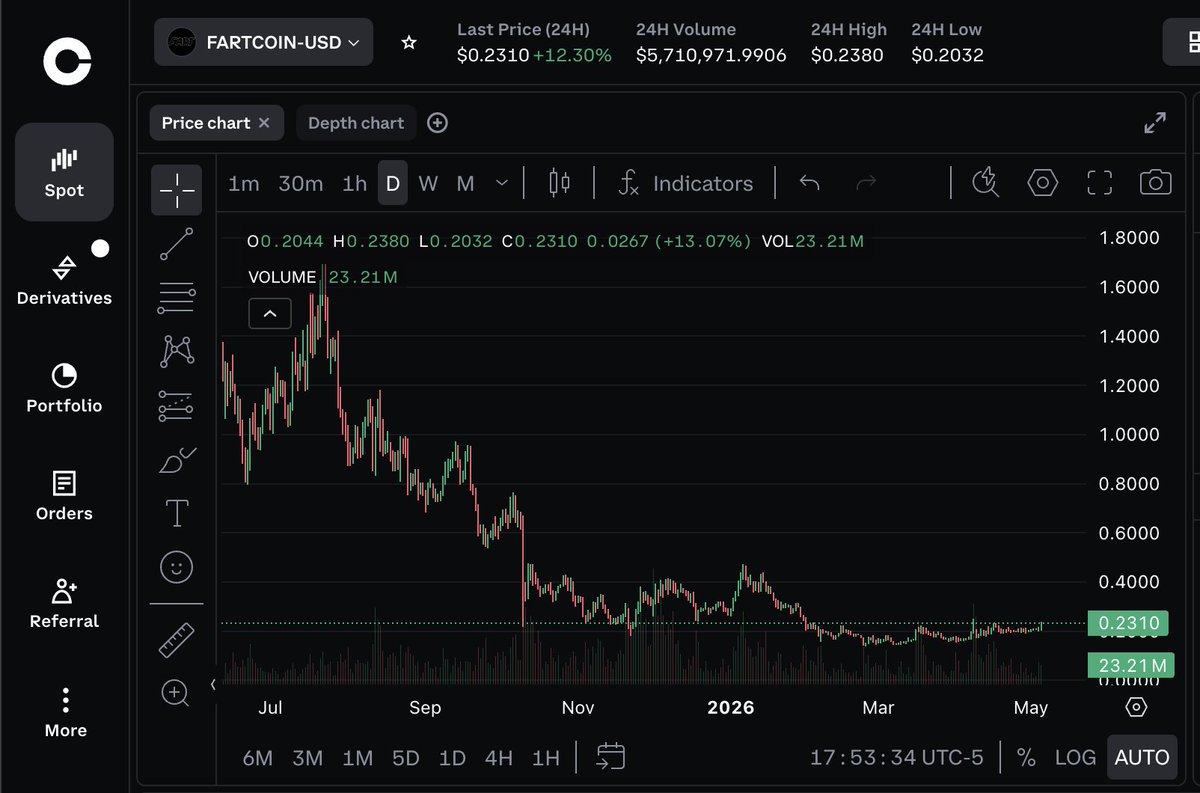
My whole tenure was protecting U.S. retail from tokens with actual utility like $XMR, $KAS, and quai-network:native.
Instead we focused on listing pristine crypto assets like $RAVE, $USELESS, $FARTCOIN, and $TRUMP.
Pictures unrelated.
Ok so we are making the assumption Hal is Satoshi. Fair enough.
This email is not endorsing liberty dollars. It is matching the irreversible nature of Bitcoin with existing systems (at the time) to facilitate Bitcoin to USD trade.
The very concept of Bitcoin with mined PoW and adjusting difficulty is designed to remove custodians from the value chain.
Interesting example of Liberty Reserve and its ultimate downfall and rug pull of the holders. This is exactly why you don’t want to use custodial stables.
You misunderstand why PoW was used in the first place. It wasn’t by accident, it was by design. It links the cost of producing a Bitcoin with its market value. This creating sound money without intermediaries.
Liberty Reserve predated Bitcoin. Satoshi was aware of Liberty Reserve. PoW was the improvement. Eliminating custodians and 3rd parties was the point.
@EliBenSasson@PrimordialAA He built centralized infrastructure and was surprised when the one server controlling hundreds of millions of dollars was exposed. This isn’t crypto or defi.
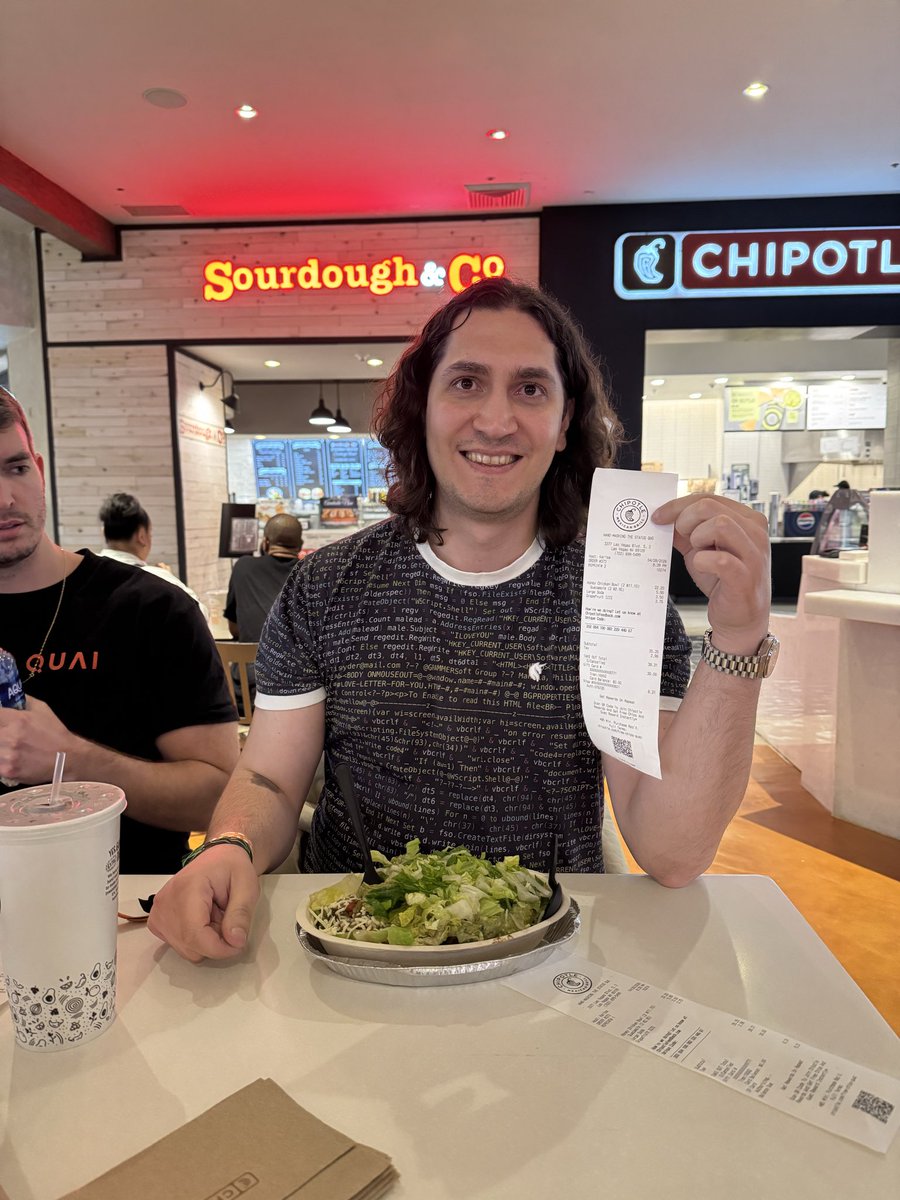
I just paid for my Chipotle dinner with Zcash
(honey chicken with brown rice, black beans and salad)
At a Bitcoin conference where everyone is tapping their credit cards lol
@brt2412 That's what a checksum is for! If you accidentally type a 1 instead of an I, or if a broken keyboard adds an extra character, the checksum will no longer match the rest of the address. Most wallets (Quai wallets for example) will then reject the transaction.
@shaf_eth@0xalank@mechanikalk That would depend on what the miners (validators) of the network decide to do. A trustless system has less trust built-in because you have to convince an order of magnitude more people to agree. That is democratic.
@0xalank@mechanikalk The network is only as decentralized as the number of validators that run it. Arbitrum has very few, and thanks to PoW, Quai has very many. That doesn't mean it's *impossible* to change or upgrade, just significantly more difficult to do so. And that's better for anti-censorship.
@brt2412 For what it’s worth, it is theoretically possible to decode a PUF (the chip in the card). It’s not easy today, but it might be feasible in 5 years or so. Here’s an example: https://t.co/w0DaXiJBCX?
@TwhitNub101@mattman With all due respect, https://t.co/tMeIozy04j is definitely logging all your prompts and responses and using it to train their next model. Even through openrouter. They train on everything they can get their hands on, including Claude itself.
This is for all the haters. The FUDers. Those who said crypto is dead. To those who gave up on the vision.
Bitcoin is compromised, Ethereum is institutionalized, and Solana is centralized.
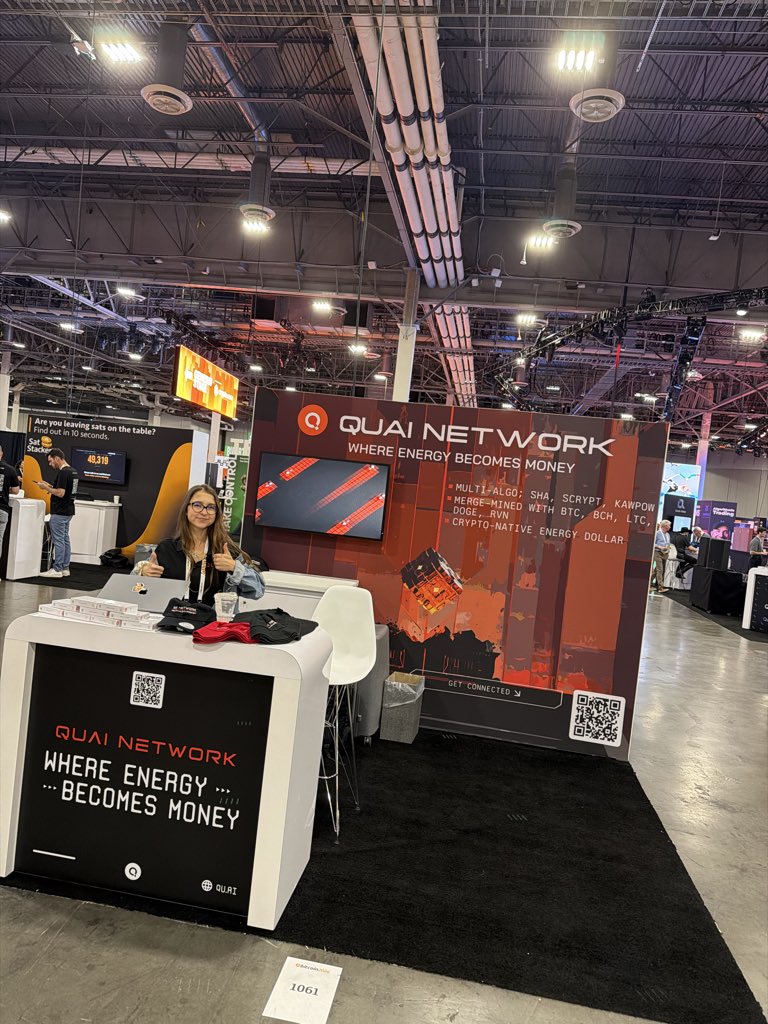
For the people, we present you an escape hatch called @QuaiNetwork.
The future of money is energy based. Ask your AI about it.
Now live: $QUAI
$QUAI powers @QuaiNetwork, the world's first energy-based monetary system, built on scalable Proof-of-Work with 50,000+ TPS.
Start trading today → https://t.co/6pmgoej39g