Get Ready.. Prepare yourself to witness history unfold right before your eyes! 🚀
For the first time ever, the entire Orientale Basin, a massive and mysterious region on the Moon’s surface, has been fully captured thanks to the efforts of NASA’s Artemis II crew. This remarkable achievement marks a huge step forward in space exploration, revealing a breathtaking new view of our celestial neighbor. The clarity and detail in this historic image are absolutely stunning!
🌕🛰️ As we move further into space, it reminds us of the endless wonders still waiting to be discovered.
For the first time in its 25-year history, the ISS has every visiting vehicle port filled at once.
NASA has confirmed that all eight docking ports on the current configuration of the International Space Station are simultaneously occupied, marking a logistical milestone for the orbiting laboratory. Assembly of the ISS began in 1998, but only now has its visiting spacecraft infrastructure been pushed to this full-capacity limit.
This orbital traffic jam features a mix of cargo and crew vehicles from multiple space agencies and commercial partners. On the U.S. segment, Northrop Grumman’s Cygnus-23 cargo spacecraft is attached to the Unity module, while two SpaceX Dragon capsules—CRS-33 for cargo and Crew-11 for astronauts—occupy Harmony’s forward and space-facing ports.
The Russian segment hosts two Progress freighters, Progress 92 and Progress 93, at the Poisk and Zvezda modules, respectively, alongside two Soyuz spacecraft. Soyuz MS-28 recently delivered a new crew, while Soyuz MS-27 is preparing to return three passengers to Earth with a landing in Kazakhstan planned for early December. Completing the lineup is Japan’s new HTV-X1 cargo craft, berthed to Harmony’s nadir port, demonstrating JAXA’s next-generation resupply capability.
Coordinating eight docked vehicles demands precise choreography from mission control teams using tools like the Canadarm2 robotic arm to reposition spacecraft and maintain safe clearances. This record-setting configuration showcases how international and commercial traffic can be managed in low Earth orbit, offering a preview of the complex traffic patterns future space stations and lunar gateways will need to handle.
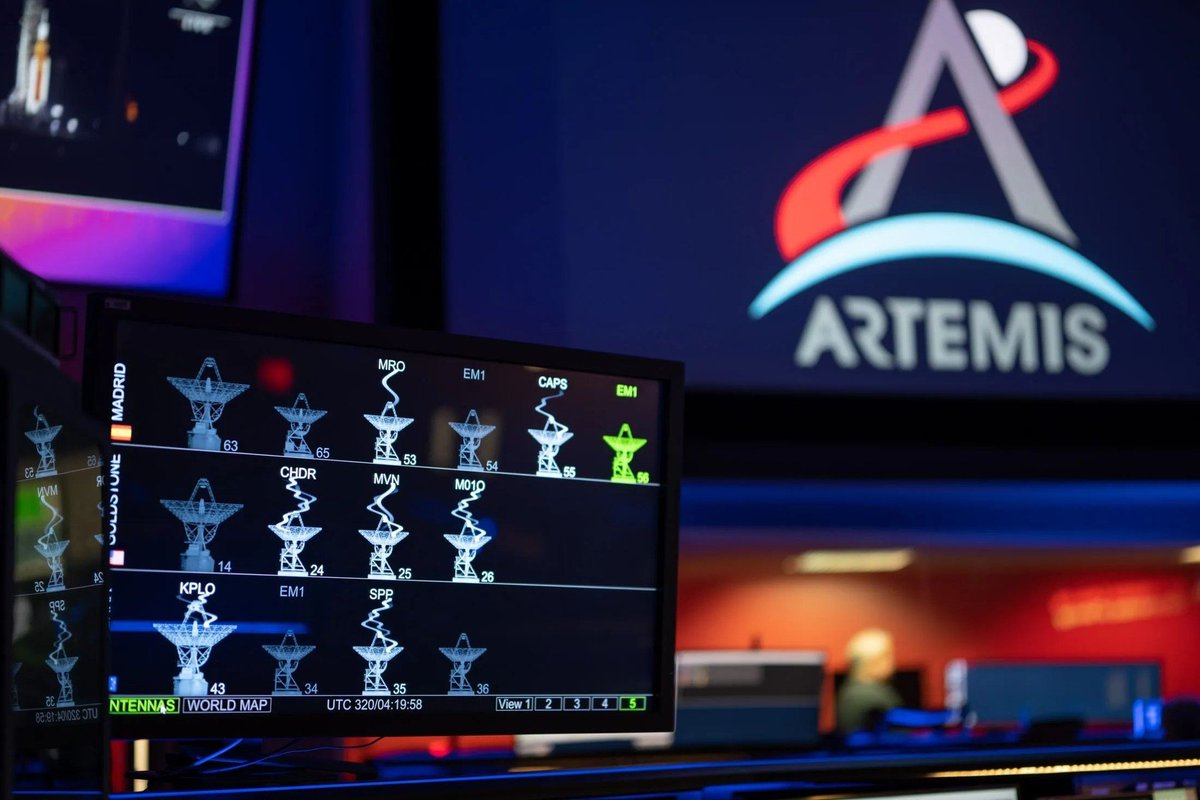
Ever wonder how we talk with our spacecraft at the Moon, Mars, and beyond? We have an array of antennas around the Earth that track them 24/7—and you can follow along as they stay in touch.
Watch our Deep Space Network in real time: https://t.co/4taEPkzt80
@TheJeffPutnam Condolences to you and your family, Jeff. Dogs are Family. And we are their pack. I know when the time comes for my LexiBeast to go, I will be a blubbering mental case.
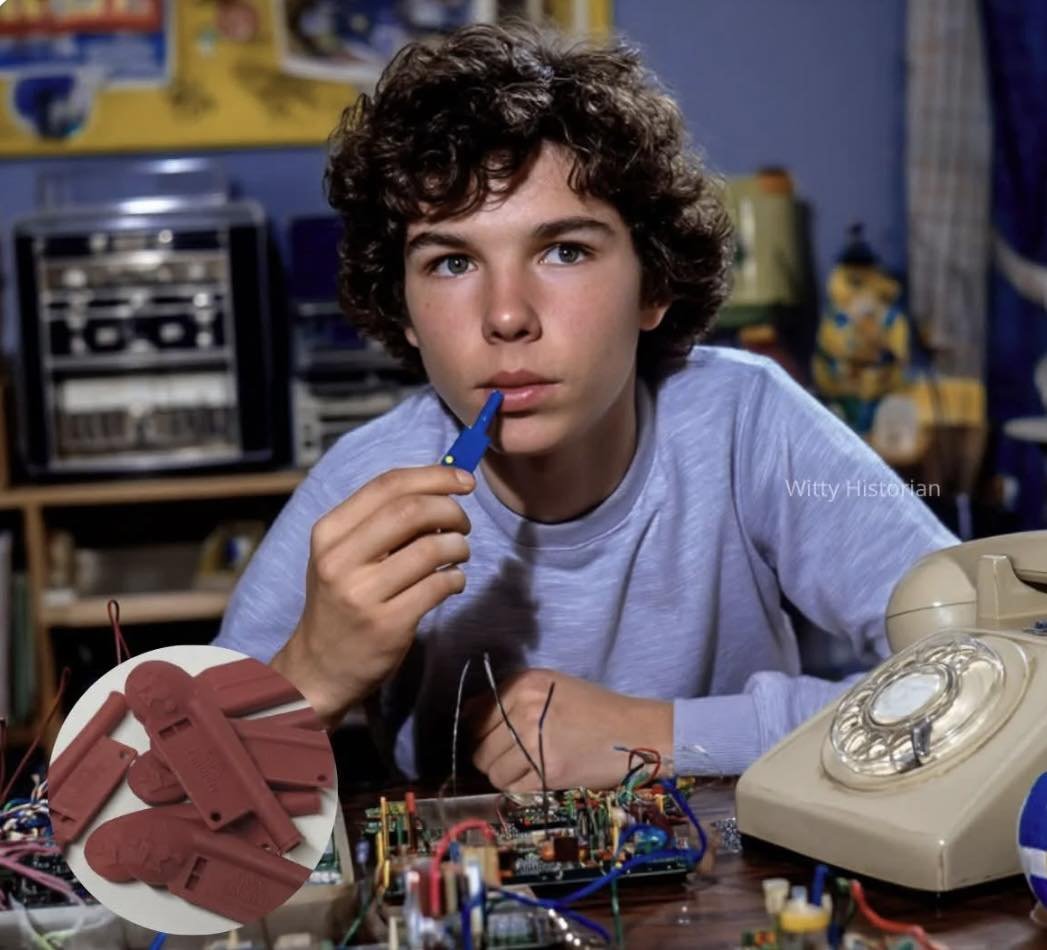
Anybody else remember these good old days?
"In the 1960s, a kid playing with a toy whistle from a Cap’n Crunch cereal made an odd discovery. The whistle produced a 2600-hertz tone, the same sound used by AT&T to control its phone network. That unlocked a loophole in the system, allowing them to hack into AT&T and get free long distance calls.
When pranksters and tech-savvy youth discovered this, they learned they could mimic the signal, tricking the network into granting free international calls. These early experimenters, dubbed “phone phreaks,” laid the groundwork for what would later become modern hacking culture.
The most famous of them, John Draper (nicknamed “Captain Crunch”) built electronic devices called “blue boxes” that reproduced the whistle’s tone with precision. Even a young Steve Jobs and Steve Wozniak were captivated by the trick, selling their own blue boxes at college before founding Apple. What began as childlike curiosity revealed the fragility of the world’s largest communications system and marked the dawn of digital rebellion.
Added Fact: The 2600 Hz tone became so iconic that a hacker magazine, 2600: The Hacker Quarterly, was later named in its honor."