New paper!! "Climate education that builds hope and agency, not fear," in @AGU_Eos by myself, Meghan Duffy (@duffy_ma), Jacquelyn Gill (@JacquelynGill) and Carly Ziter (@carlyziter).
https://t.co/j6qESU8KDz
"UC San Diego begins requiring climate-change course to graduate in 2028" -- Bravo to @UCSanDiego for raising the bar for the rest of us:
https://t.co/hgoYfhTyo8
Ended my first week @NYBG learning about all of the amazing work New York City is doing to care for nature and make its green spaces safe and accessible. A lot of work to be done but a lot to be hopeful for 👏 🍃
@MagdaGarbowski @PNASNews Why does this matter? Species invasions are altering the functional composition of communities in ways that change ecosystem-level productivity, nutrient cycling, and symbioses.
#InvasivePlants change ecosystems! Ecosystems with more invasive species have faster leaf and root traits, are shorter, shallower, and less reliant on mycorrhizae. Paper by @MagdaGarbowski in @PNASNews
Check out this amazing video summary. https://t.co/MEX19uvSSC
Plant invasion leads to communities that are on the fast, 'do-it-yourself' side of the trait spectrum - resource acquisitive and less dependent on symbionts. This shift is remarkably consistent across grassland, forest, and desert ecosystems. Led by @MagdaGarbowski
New paper out in PNAS. We show how trait differences between native and introduced plants shift the functional composition of plant communities across the United States https://t.co/Sie6cXYOiV
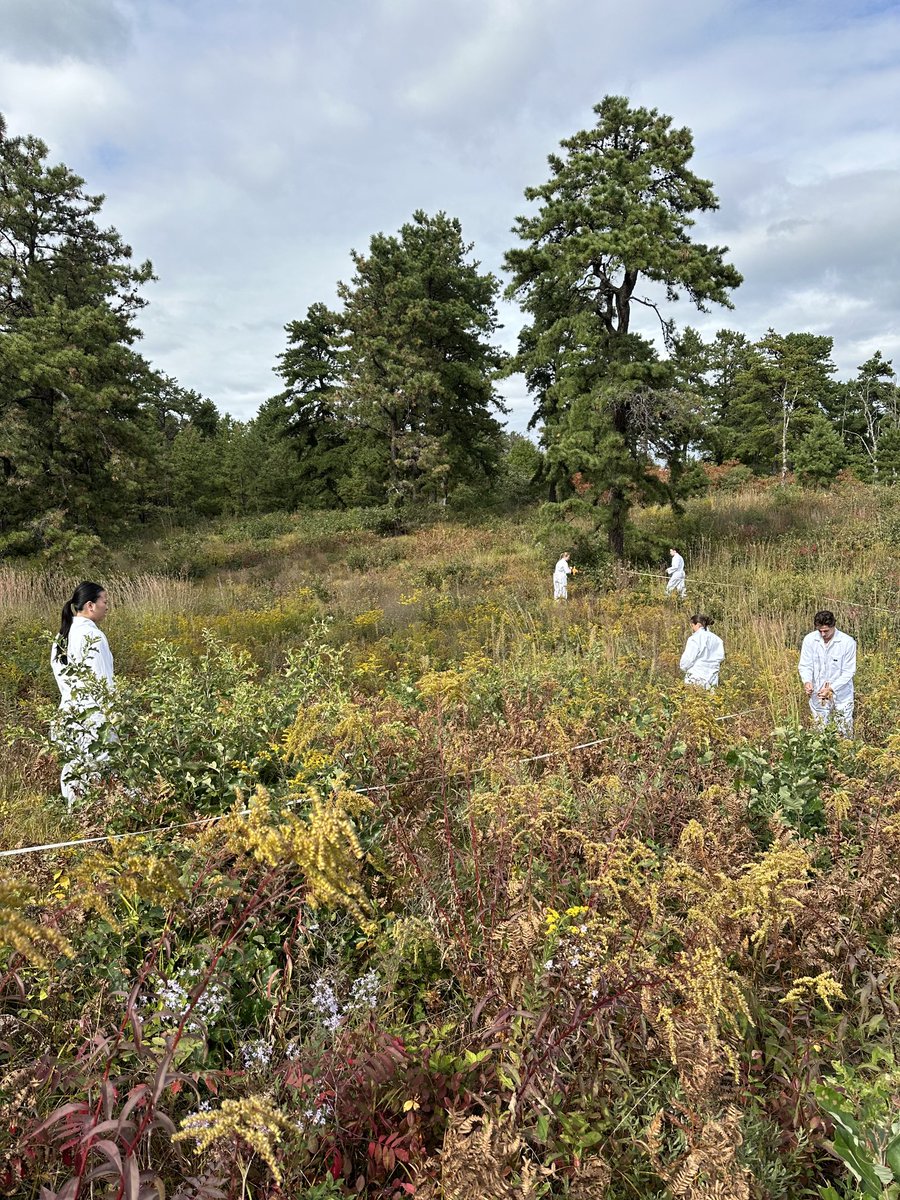
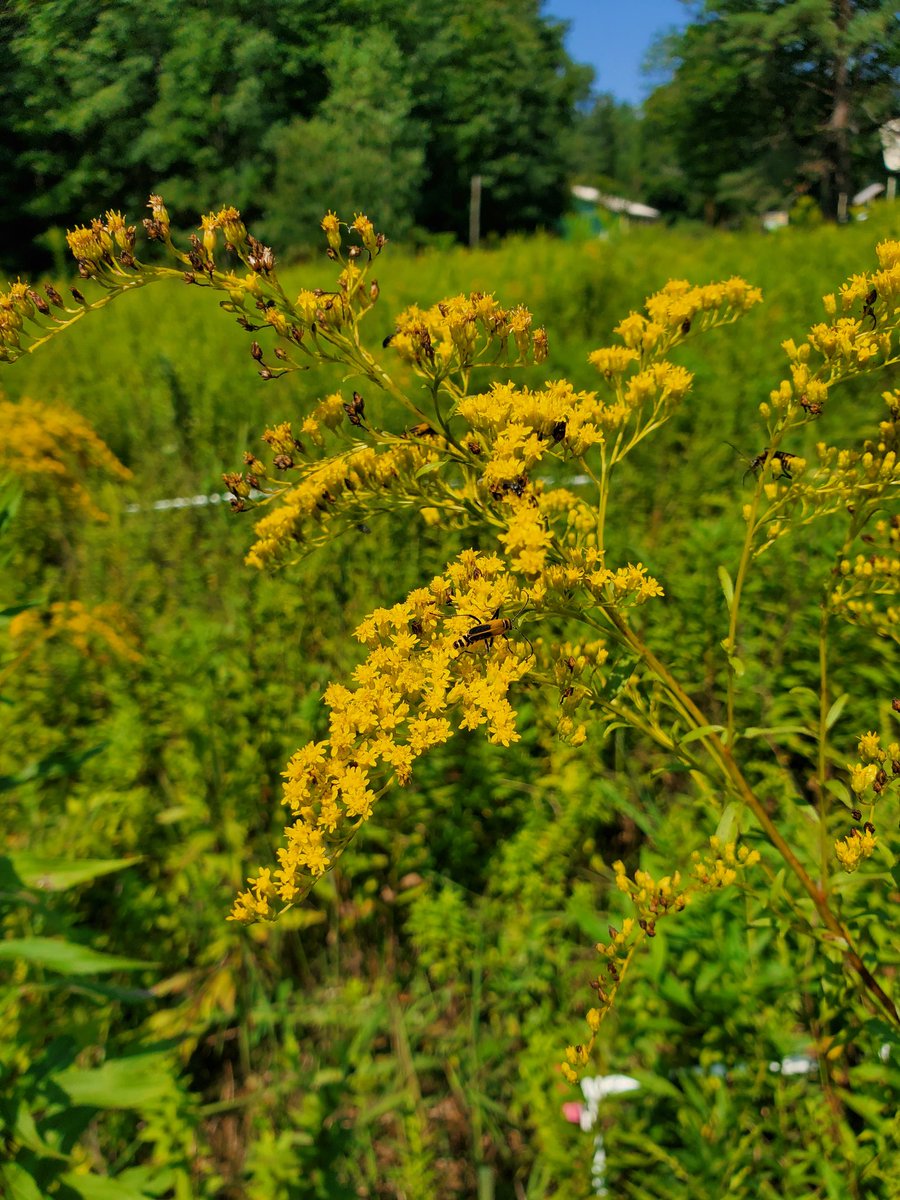
Just me (+ the pollinators, and the 8ft tall goldenrods) harvesting biomass at my new @DragnetGlobal site this year at @AlbanyPineBush. Nice to be in the field, workin' hard 💪
I had a very stimulating week at #ESA2024, doing a deep dive into #UrbanEcology. Coincidentally, I found this @NYSDEC fact page about the benefits of trees. Wonderful sources at the bottom for anyone working on the benefits of forests incl. urban forests.
https://t.co/OIeHQ7kyYb