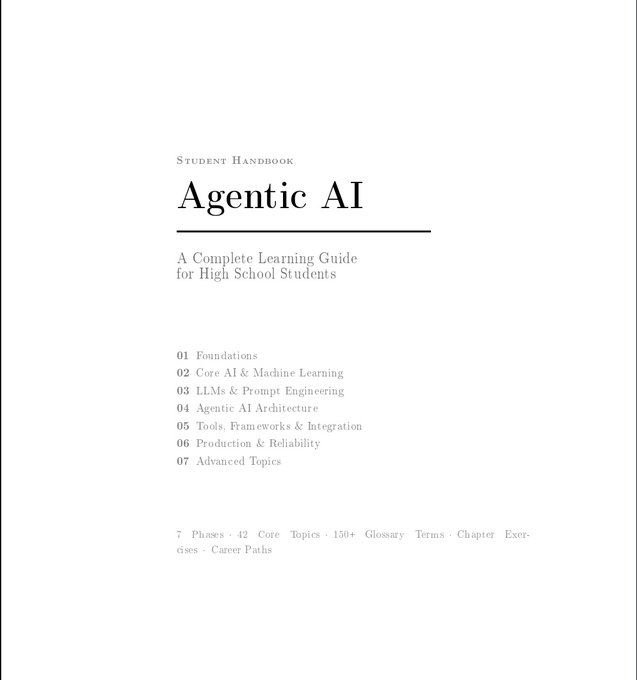
This is the best site on the internet to learn harness engineering.
Free. Completely.
Most AI engineers have never heard the term.
https://t.co/bwDbTTYsjM
Bookmark this site.
Then read this setup ↓
CURSOR. COPILOT. CLAUDE CODE. NONE OF THEM ACTUALLY UNDERSTAND YOUR CODEBASE.
They read 2,000 lines at a time. They guess at function signatures. They suggest refactors that break 30 files downstream. Then they tell you "I've completed the change!"
Lum1104 just open sourced the fix.
It's called Understand Anything. A multi-agent pipeline that pre-computes the entire structure of your repo into a knowledge graph, so when your AI agent asks "what depends on this function?", it gets a real answer instead of a hallucination.
What the graph actually contains:
→ Every file, function, class, and import as a node
→ Every dependency, call chain, and inheritance as an edge
→ Architectural layer for each node (API, Service, Data, UI, Utility)
→ Plain-English summary attached to every node
→ Guided tours through the architecture in dependency order
Here's the wildest part:
Diff Impact Analysis. Before you commit a change, it tells you exactly which parts of the system you're about to break. Your AI agent gets this for free now.
Works with Claude Code, Cursor, Codex, GitHub Copilot, Gemini CLI, KIMI CLI, and 8 more platforms.
14.7K stars. 1.4K forks. 6 releases. MIT license.
One honest note: building the graph runs through your LLM, so big repos cost real tokens. The output is a JSON file you commit and reuse forever, so it's a one-time tax per major change.
"AI that understands your codebase" was a marketing line.
This is the actual fix.
Repo in the first comment.
A better way to study Deep Learning with PyTorch Live Course: follow the full YouTube course arc, not scattered clips.
Good save when you want the path, not a one-off video: Tensors, Gradient Descent & Linear Regression (Part 1 of 6) → GANs for Image Generation (Part 6 of 6).
𝗖𝗼𝗺𝗽𝘂𝘁𝗲𝗿 𝗩𝗶𝘀𝗶𝗼𝗻:
↳ Deep Learning with PyTorch Live Course - Working with Images & Logistic Regression (Part 2 of 6)
↳ Deep Learning with PyTorch Live Course - Image Classification with CNNs (Part 4 of 6)
↳ Deep Learning with PyTorch Live Course - GANs for Image Generation (Part 6 of 6)
𝗠𝗼𝗿𝗲 𝘁𝗼𝗽𝗶𝗰𝘀:
↳ Deep Learning with PyTorch Live Course - Tensors, Gradient Descent & Linear Regression (Part 1 of 6)
↳ Deep Learning with PyTorch Live Course - Training Deep Neural Networks on GPUs (Part 3 of 6)
↳ Deep Learning with PyTorch Live Course - ResNet, Regularization and Data Augmentation (Part 5 of 6)
Best use: treat it as a map of the field. Watch once for the arc, then revisit the parts where you need implementation depth.
Link is in the first comment 👇
♻️ Share this with your network if you found it useful or insightful.
Google acaba de liberar sus skills oficiales para agentes de IA:
13 habilidades compatibles con Claude Code, Cursor, Copilot y otros agentes del mercado.
Estas skills funcionan como complementos que amplían lo que los agentes pueden hacer, permitiéndoles ejecutar tareas avanzadas y automatizar flujos de trabajo complejos sin necesidad de configuraciones interminables.
Lo mejor de todo: son completamente GRATIS y OPEN SOURCE, así que cualquiera puede integrarlas y empezar a sacarles partido desde el primer minuto.
Un paso enorme para democratizar el desarrollo con agentes.
GUÁRDALO 🙇♂️
Derin Öğrenme tekniklerini kavramak isteyenler için Python uygulamalı, Türkçe’ye çevrilmiş ve 1000 sayfalık oldukça iyi bir kaynak.
İlgilenenler aşağıdaki linkten ulaşabilir
İngilizce PDF
https://t.co/bKuhTYqiI4
Türkçe PDF
https://t.co/pccR4JgpO4
Para que la IA genere código sin romper tu sistema de diseño, creamos DESIGN.md. 🎨🤖
Un formato open-source desde Google Labs que le enseña a los agentes de IA las reglas exactas de tu marca, para que dejen de "adivinar".
Te explicamos cómo funciona. 🧵👇
Best accounts to follow from each frontier lab to stay constantly up to date
Anthropic
@karpathy
- must-follow account for AI; recently joined Anthropic
@bcherny
- Claude Code creator, always shares great tips
@trq212
- also a Claude Code developer; writes amazing articles on CC
OpenAI
@polynoamial
- works on reasoning research, shares a lot of technical details
@gabriel1
- Sora developer, great career path
@jxnlco
- works on dev experience, shares a lot about Codex
Google AI
@OfficialLoganK
- all the major Google Gemini and AI Studio updates
@ammaar
- product and design; shares great things about vibe-coding in Google AI Studio
@fofrAI
- cool use cases for generative models
Cursor
@leerob
- the loudest voice behind Cursor updates
@ericzakariasson
- shares great insights on using Cursor
@mntruell
- Cursor’s CEO; major releases and usage updates
xAI
@milichab
- recently joined xAI, shares updates on Grok
@skcd42
- also covers major Grok releases
15 mil estrellas en GitHub en menos de 24 horas.
Este proyecto es del famoso creador de contenido PewDiePie y lo está explotando.
Se llama Odysseus y es una especie de ChatGPT/Claude, pero pensado para usarse en IA local.
Tiene agentes con tools, MCP, archivos y memoria.
Funciona en Windows, macOS y Linux:
https://t.co/xylKxBFQie
Conoce esta herramienta totalmente GRATUITA y de CÓDIGO ABIERTO para aprender y enseñar a programar. 🧩✨
La sintaxis compleja y las pantallas negras intimidan a cualquiera que esté empezando. Te presentamos Blockly, la solución para que te enfoques en la lógica y no en el código:
✅ Visual e intuitivo: Transforma líneas de comandos complejas en bloques fáciles de conectar.
✅ Cero frustraciones: Olvídate de los errores de sintaxis o de que tu código falle por un punto y coma.
✅ Personalizable: Permite integrar este editor visual directamente dentro de tu propia app.
Conoce cómo implementarlo aquí: https://t.co/JpYbd0eeiL
One of the new, buzzy jobs in Silicon Valley is the AI Forward Deployed Engineer (FDE), an engineer who is embedded within a client organization to help customize solutions, such as building and tuning agentic workflows that suit the client’s particular needs. I’ve heard from people who are wondering anew about the FDE career path since OpenAI and Anthropic started building new teams to place FDEs within client organizations.
The rise of FDEs for AI workloads is one way AI is creating new jobs (and why the jobpolcalypse narrative of upcoming job market collapse is false -- there will be many AI and non-AI jobs). However, I believe there will be far more AI Engineer jobs than FDEs, as I explain below.
The FDE role was pioneered about two decades ago by Palantir, which sent engineers to government locations to work on secure, air-gapped networks. In addition to having good technical skills, FDEs need communication skills and sometimes business skills. For example, they may need to speak with clients to understand their needs, formulate a strategy to prioritize projects, explain complex technology, and respectfully push back if a client asks for something unrealistic. They’re enjoying a resurgence because of the amount of work involved in taking an off-the-shelf LLM and building it into a custom agentic workflow that fits particular business needs.
However, I believe the number of AI Engineer jobs will be far larger. A company might accept a few FDEs to be embedded within its organization. But most companies will want far more of their own employees working on their projects. While my organizations do hire FDEs, we hire far more AI Engineers! Also, a common client concern is that it is hard to find vendor-neutral FDEs �� they are, after all, there to deeply integrate a particular vendor’s product into a company. In this moment when it’s hard to predict which AI service will be the best one in a year’s time, optionality (the ability to pick whatever vendor turns out to fit best in the future) is very valuable. In contrast, letting FDEs tightly bind a company’s processes significantly reduces optionality.
Right now, I see surging demand for AI Engineers who can build software applications using AI software components (like LLM prompting, agentic frameworks, evals, etc.) and effectively use AI coding agents (like Claude Code, Codex, Antigravity CLI, and OpenCode). As the AI Engineer role matures, I expect it to fragment into more specialized roles, like the generic Software Engineer role from decades ago fragmented into frontend, backend, mobile, data engineering, devops, and so on.
What will be the future, specialized AI engineering roles? I don’t know. Perhaps there will be AI FDEs, LLMOps Engineers, Evals Engineers, AI Data Engineers, Harness Engineers, and other roles we don’t have names for yet. But for now, I see a lot of AI engineers who are generalists create a lot of value. Skilled AI Engineers are in very high demand! As our field continues to mature over the coming decade, I look forward to new specializations within AI Engineering that create even more job opportunities.
[Original text: The Batch newsletter]
He descubierto Webwright (de Microsoft) y me ha volado la cabeza 🔥
Es una herramienta que permite a la IA (como Claude o ChatGPT) usar internet de forma mucho más inteligente.
En vez de hacer clic por clic como un robot torpe, la IA puede hacer tareas completas de una sola vez: investigar, rellenar formularios, comparar precios, recopilar datos, etc.
Ejemplos que ya probé:
- Analizar competidores automáticamente
- Buscar información complicada en varias webs
- Automatizar tareas repetitivas
Si usas IA en tu día a día, esto es otro nivel.
Link abajo 👇
Today we reduced headcount by 22%. The business is the strongest it's ever been. So I think it's important to be direct about what I'm seeing and why.
First, I made this decision and I own it. I did it because the way to operate at the highest level of productivity is changing, and to win the future, ClickUp needs to change with it.
Second, this wasn't about cutting costs. Most savings from this change will flow directly back into the people who stay. We'll be introducing million-dollar salary bands. If you create outsized impact using AI, you'll be paid outside of traditional bands.
Most importantly, I have the deepest gratitude for those affected. We're doing this from a position of strength specifically so we can take care of people properly. Everyone affected receives a package aimed at honoring their contributions and easing the transition.
I only see two options: wait for this to play out gradually in the market or be honest about what I'm seeing and act proactively.
THE 100X ORGANIZATION
The primary change is that we're restructuring around what I call 100x org. The goal is 100x output. The roles required to build at the highest level are fundamentally different than they were a year ago.
Incremental improvements to existing systems won't get us there. We need new ones. That means creating enough disruption to rebuild rather than iterate on what's already broken.
The common narrative is that AI makes everyone more productive. It doesn't. Many of the workflows of today, if left unchanged, create bottlenecks in AI systems.
These roles will evolve. But waiting for that to happen naturally means falling behind now.
The 100x org is actually heavily dependent on people - infinitely more than today. This is only possible with 10x people that have embraced and adopted new ways of working.
THE BUILDERS, AGENT MANAGERS, AND FRONT-LINERS
— THE BUILDERS: 10X ENGINEERS
I don't think most companies have internalized what's actually happening with AI in engineering. The common narrative is that AI makes all engineers more productive. That may be true in isolation, but at an organization level - that is the farthest thing from reality.
Here's what we've validated recently at ClickUp: the great engineers, the ones who can orchestrate, architect, and review, are becoming 100x engineers. They're not writing code. They're directing agents that write code. The skill is judgment.
AI makes the best engineers wildly more productive, and everyone else using AI slows these engineers down.
Think about it - the bottlenecks are (1) orchestration - telling AI what to do, and (2) reviewing - what AI did. Everything is leapfrogged and no longer needed.
So who do you want orchestrating and reviewing code?
And how do you want your best engineers to spend their time?
If your best engineers are spending time reviewing other people's code, then this is inherently an inefficient bottleneck. These engineers can review their agent's code much faster than reviewing human code.
The new world is about enabling your 10x engineers to become 100x.
The wrong strategy is to push every engineer to use infinite tokens. Companies doing this are celebrating 500% more pull requests. But customer outcomes don't match the volume of code being generated.
I call this the great reckoning of AI coding, and every company will face this soon if not already.
More code is just another bottleneck to the best engineers, and ultimately to your company's impact as well.
— THE BUILDERS: 10X PRODUCT MANAGERS
Product management and design roles are merging.
Designers that have customer focus, become more like product managers.
And product managers that have intuition for UX become more like designers.
The bottleneck of user research is gone. It takes us just one mention of an agent to kickoff research and analyze results.
The bottleneck of product <> design iteration is also gone. The product builder iterates on their own, along with agents and skills that ensure alignment with quality and strategy.
Also controversial today - I believe that the wrong strategy is to have your PMs shipping code - that just introduces another bottleneck that the best engineers will waste their time on.
To be clear, PMs should be coding but they should do this in a playground to iterate, validate, and scope. That code should not go to production.
Everything outside of managing systems, orchestrating AI, and reviewing output becomes a bottleneck.
That's why the other roles that are critical along with these are the systems managers (to reduce bottlenecks) along with a bottleneck you can't replace - customer meeting time.
— THE SYSTEM MANAGERS
Ironically, the people that automate their jobs with AI will always have a job. They become owners of the AI systems - agent managers. We have many examples of these people at ClickUp.
The underlying systems in which we operate are absolutely critical to get right. I think most companies are delusional to think they can iterate on existing systems and compete in this new world.
You must create enough disruption so that old systems are deprecated entirely. If there's any definition for 'AI native' that's what it is.
— THE FRONT-LINERS
In a world that will become saturated with AI communication, the human touch will matter more than anything to customers.
This is a bottleneck that you shouldn't replace - even when agents are high enough quality to do video meetings.
One-on-one meeting time with customers is something that shouldn't be automated. The systems around the meetings should be - so that front-liners spend nearly 100% of their time with customers.
REWARDING 100X IMPACT
In a world where companies are able to do so much more with less, where does that excess money go?
In our case, much of the savings in this new operating model will flow directly back to those that enabled it.
We must reward people that create productivity accordingly. This aligns incentives on both sides. Plus, in a world where your best people create 100x impact, you can't afford to lose them.
You should aim to retain these employees for decades. The context they have and their ability to efficiently orchestrate and review will be nearly impossible to replace.
Compensation bands of today should be thrown out the door. We're introducing $1 million cash/year salary bands with a path available to nearly everyone in the company if they produce 100x impact by creating or managing AI systems.
THE FUTURE
Nearly every company will make changes like these. The ones that do it proactively will define what comes next.
The future is not fewer people. It's different work, new roles, and better rewards for those who embrace it. We're already seeing entirely new roles emerge, like Agent Managers, that didn't exist a year ago.
ClickUp is positioning to lead this shift, not just internally, but for our customers too. I've never been more certain about where we're headed.







![AndrewYNg's tweet photo. One of the new, buzzy jobs in Silicon Valley is the AI Forward Deployed Engineer (FDE), an engineer who is embedded within a client organization to help customize solutions, such as building and tuning agentic workflows that suit the client’s particular needs. I’ve heard from people who are wondering anew about the FDE career path since OpenAI and Anthropic started building new teams to place FDEs within client organizations.
The rise of FDEs for AI workloads is one way AI is creating new jobs (and why the jobpolcalypse narrative of upcoming job market collapse is false -- there will be many AI and non-AI jobs). However, I believe there will be far more AI Engineer jobs than FDEs, as I explain below.
The FDE role was pioneered about two decades ago by Palantir, which sent engineers to government locations to work on secure, air-gapped networks. In addition to having good technical skills, FDEs need communication skills and sometimes business skills. For example, they may need to speak with clients to understand their needs, formulate a strategy to prioritize projects, explain complex technology, and respectfully push back if a client asks for something unrealistic. They’re enjoying a resurgence because of the amount of work involved in taking an off-the-shelf LLM and building it into a custom agentic workflow that fits particular business needs.
However, I believe the number of AI Engineer jobs will be far larger. A company might accept a few FDEs to be embedded within its organization. But most companies will want far more of their own employees working on their projects. While my organizations do hire FDEs, we hire far more AI Engineers! Also, a common client concern is that it is hard to find vendor-neutral FDEs �� they are, after all, there to deeply integrate a particular vendor’s product into a company. In this moment when it’s hard to predict which AI service will be the best one in a year’s time, optionality (the ability to pick whatever vendor turns out to fit best in the future) is very valuable. In contrast, letting FDEs tightly bind a company’s processes significantly reduces optionality.
Right now, I see surging demand for AI Engineers who can build software applications using AI software components (like LLM prompting, agentic frameworks, evals, etc.) and effectively use AI coding agents (like Claude Code, Codex, Antigravity CLI, and OpenCode). As the AI Engineer role matures, I expect it to fragment into more specialized roles, like the generic Software Engineer role from decades ago fragmented into frontend, backend, mobile, data engineering, devops, and so on.
What will be the future, specialized AI engineering roles? I don’t know. Perhaps there will be AI FDEs, LLMOps Engineers, Evals Engineers, AI Data Engineers, Harness Engineers, and other roles we don’t have names for yet. But for now, I see a lot of AI engineers who are generalists create a lot of value. Skilled AI Engineers are in very high demand! As our field continues to mature over the coming decade, I look forward to new specializations within AI Engineering that create even more job opportunities.
[Original text: The Batch newsletter]](https://pbs.twimg.com/media/HJvWmCHagAAnTxQ.jpg)





