If you're a senior researcher (i.e., associate professor or more senior), and you'd consider moving to the University of Toronto to take up a Canada Impact+ Research Chair (1 million/year in funding), email me. Discretion guaranteed.
++Please share to help me spread the word!++
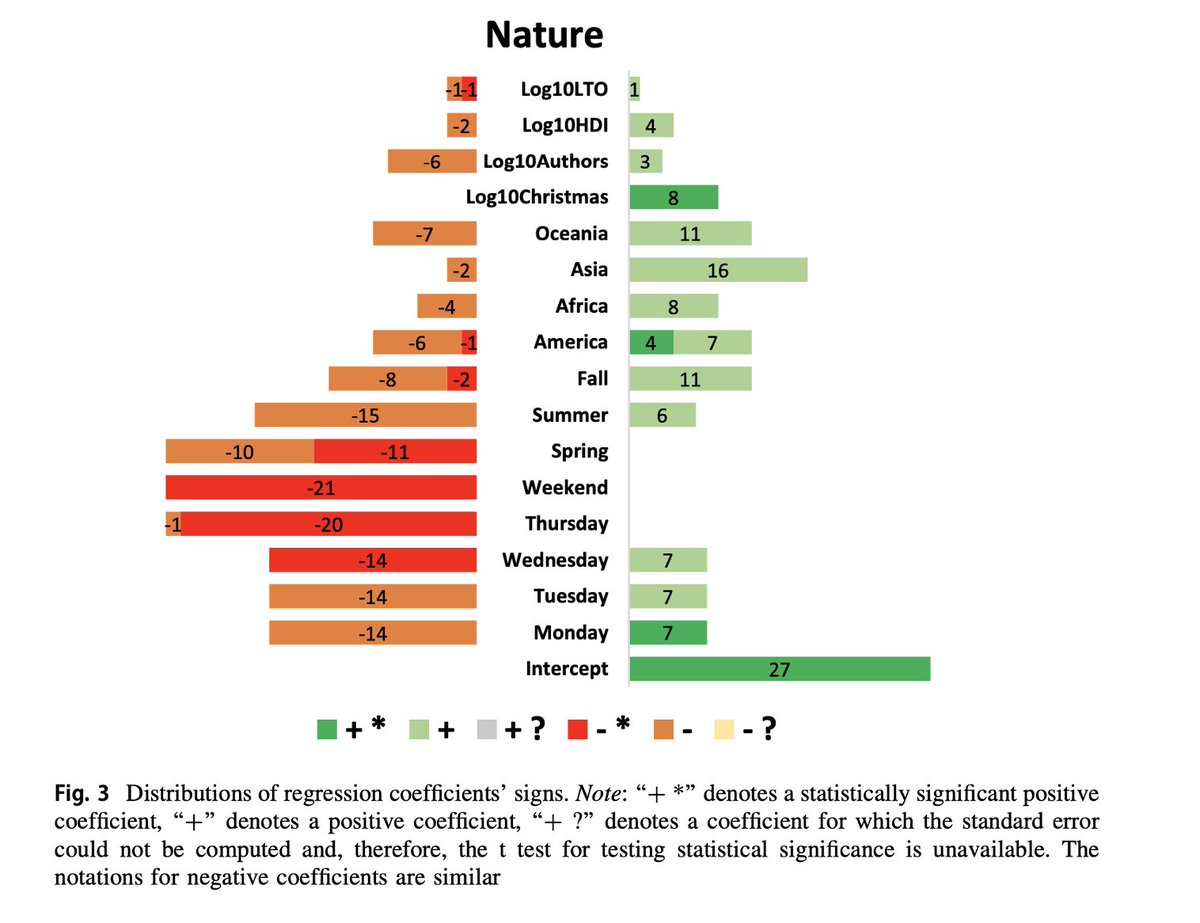
Papers submitted on Tuesdays are more likely to be accepted by Nature whereas Wednesdays seem the most likely day to submit and secure acceptance to PLOS ONE. For Cell, Mondays and Tuesdays seem the best submission days in case of accepted papers.
https://t.co/6w5AraWMzG
Attention scientists from all over the world🙃
The Call for Letters of Intent for #HFSPResearchGrants 2027 is now open!
Get your international & interdisciplinary team. It's time to put your bold research idea into practice!
🔗https://t.co/5NuUBYBUkC
📅 15 Dec 2025–26 Mar 2026
"I watched my advisor publish 21 papers in 1 year. Meanwhile, I spent 8 months on a single study that might never see daylight. I felt like I was failing at academia."
A PhD friend told me yesterday ⤴️
Then she shared what changed her perspective completely.
Those 21 papers were strategic collaborations solving critical problems across multiple fields.
Her single study? That was preventing outbreaks in rural communities!
She realized she was comparing apples to oranges.
This and other conversations with my PhD friends taught me something important about research careers:
𝗧𝗵𝗲𝗿𝗲 𝗮𝗿𝗲 𝗺𝘂𝗹𝘁𝗶𝗽𝗹𝗲 𝗽𝗮𝘁𝗵𝘀 𝘁𝗼 𝗶𝗺𝗽𝗮𝗰𝘁:
→ The deep-dive specialist (months/years on one breakthrough)
→ The strategic collaborator (connecting dots across projects)
→ The methodology expert (enabling others' discoveries)
→ The translator (making research accessible and actionable)
Quality research isn't about doing less work.
It's about doing purposeful work
⤴️ whether that's deep solo research or strategic collaboration.
---------------------
𝗥𝗲𝗹𝗮𝘁𝗮𝗯𝗹𝗲?
🔄 Retweet (& like)
Follow @RaziaAliani to get more useful Research content in your feed.
Get FREE exclusive tips on using AI in research:
🔗 link in bio
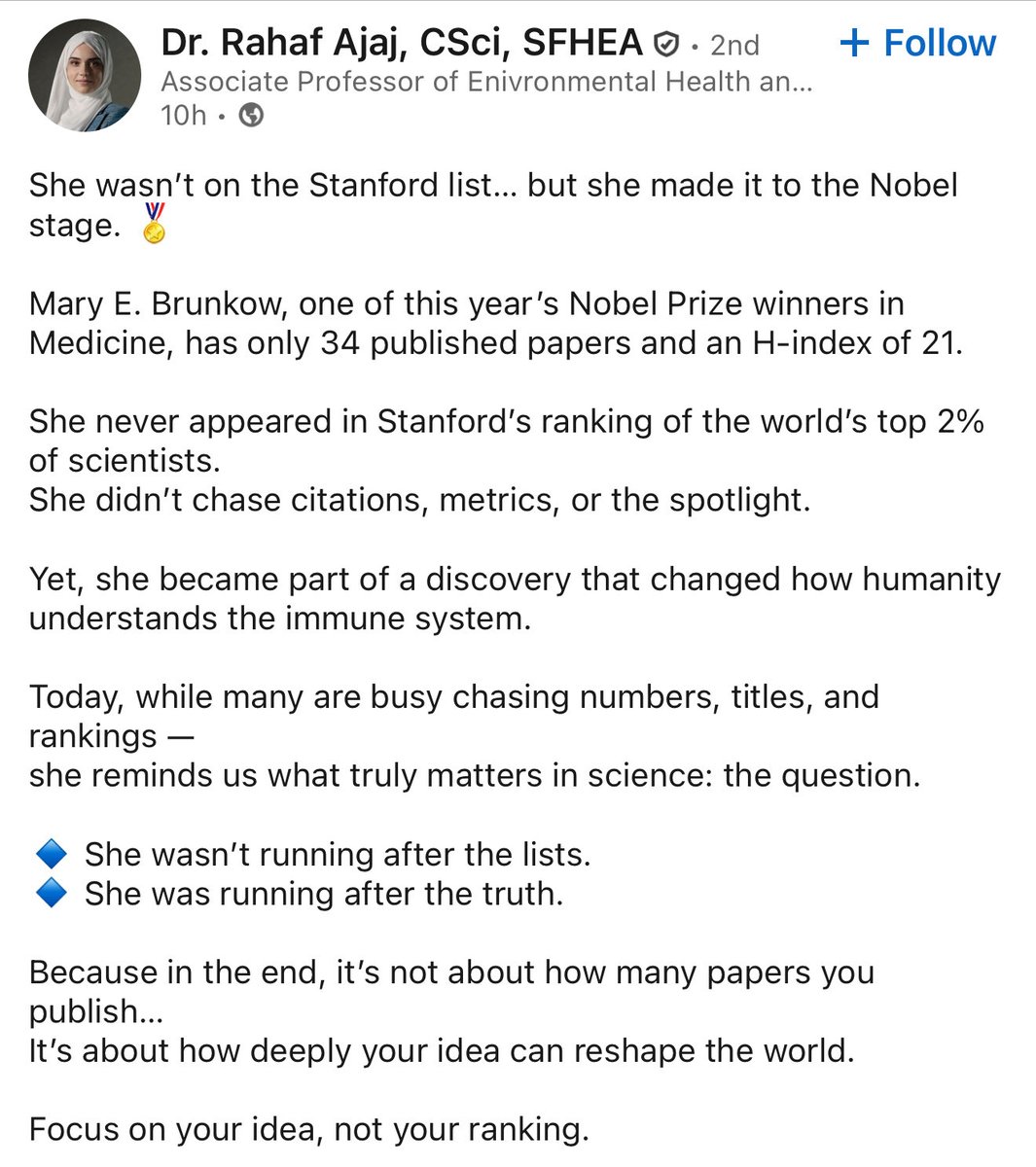
✅✅ A reminder by Dr. Rahaf Ajaj:
She wasn’t on the Stanford list… but she made it to the Nobel stage. 🏅
Mary E. Brunkow, one of this year’s Nobel Prize winners in Medicine, has only 34 published papers and an H-index of 21.
She never appeared in Stanford’s ranking of the world’s top 2% of scientists.
She didn’t chase citations, metrics, or the spotlight.
Yet, she became part of a discovery that changed how humanity understands the immune system.
Today, while many are busy chasing numbers, titles, and rankings —
she reminds us what truly matters in science: the question.
🔹 She wasn’t running after the lists.
🔹 She was running after the truth.
Because in the end, it’s not about how many papers you publish…
It’s about how deeply your idea can reshape the world.
Focus on your idea, not your ranking.
Every paper tells a story:
→ We didn't understand X. ⤵︎
We thought Y might be true. ⤵︎
We tested it. ⤵︎
→ Here's what we found. ⤵︎
Here's what it means. ⤵︎
→ Here's what we should explore next. 🛑
If your paper doesn't follow this arc:
Your readers will get lost.
Xiulin Fan and colleagues present an electrolyte framework that predicts how ions and solvents interact to guide the design of high-energy lithium metal batteries with excellent performance. https://t.co/6GQ0mThzdF
Happy to share my recent publication - bridging the gap between lab and fab development of perovskite solar cells, next step towards commercial solutions
From lab to fab: Bridging the quality divide of scalable perovskite so... https://t.co/7ejexAAvBs
This question has bother me a lot...
For early career scientists — is the publication game about impact factor or publication count? What’s more strategic for long-term success?
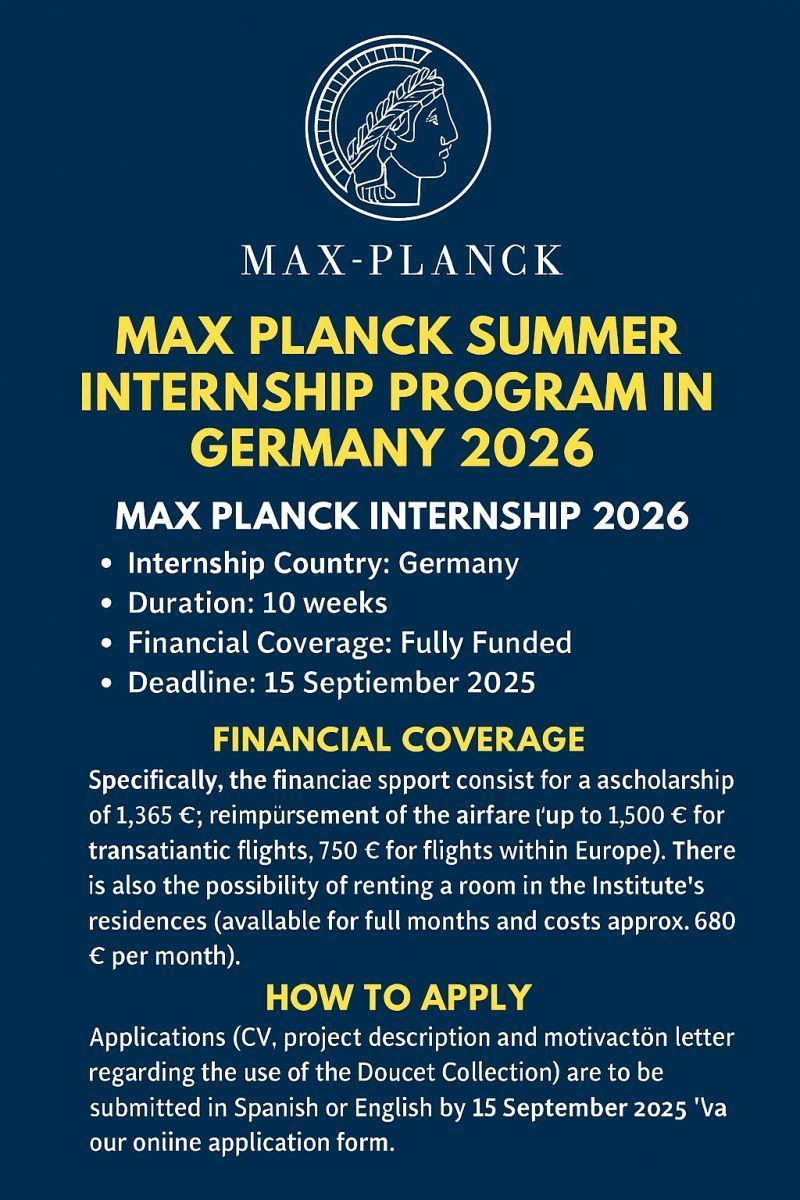
Summer Internship in @maxplanckpress Institutes for 10 weeks
A fully funded summer internship in Germany designed for UG and PG students in Biology, Chemistry, Computer Science, Math, Neuroscience, Physics, Psychology.
Apply at https://t.co/SPWM1ELSlR
Apply by 15th Sep 2025
Stop hiding your best insights in the middle of paragraphs.
Lead with them.
Build from them.
Let them drive your narrative forward.
Academic writing isn't a scavenger hunt.
Give readers the Benjamins upfront,
then show them how you got them.
Why don’t 2D layers stick on CsPbI₃?
Because spacer cations can’t compete until now.
We use fluorination to boost interdiffusion and anchoring groups to lock them in place.
Result: 21.6% efficiency
🔹 950 h @ 85 °C stability
🔹 19.8% on 16 cm² modules https://t.co/PXeMyJrbMb