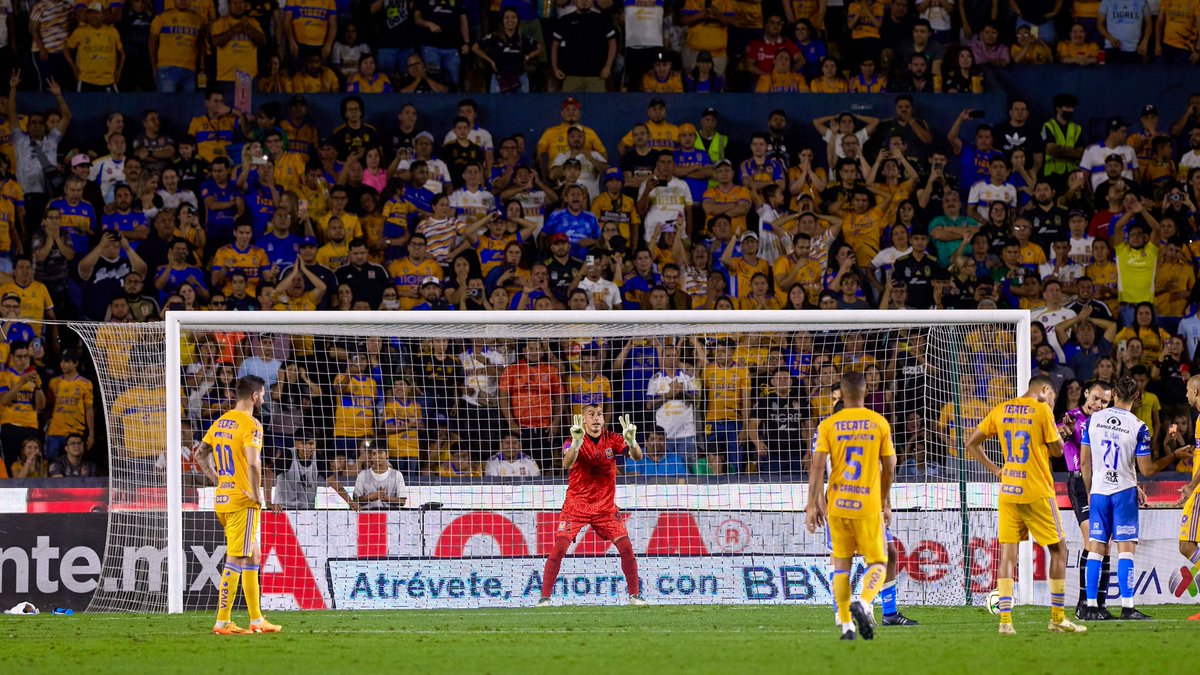
"El que avisa, no traiciona"
"Una mas para el cuaderno"
"Al margen del resultado, partanse la madre"
"Somos los pinches tigres"
"El corazón sobre todo"
Pónganle la frase que quieran... Siempre quedan historias por escribir...
Vamos Tigres Carajo 💪🏽
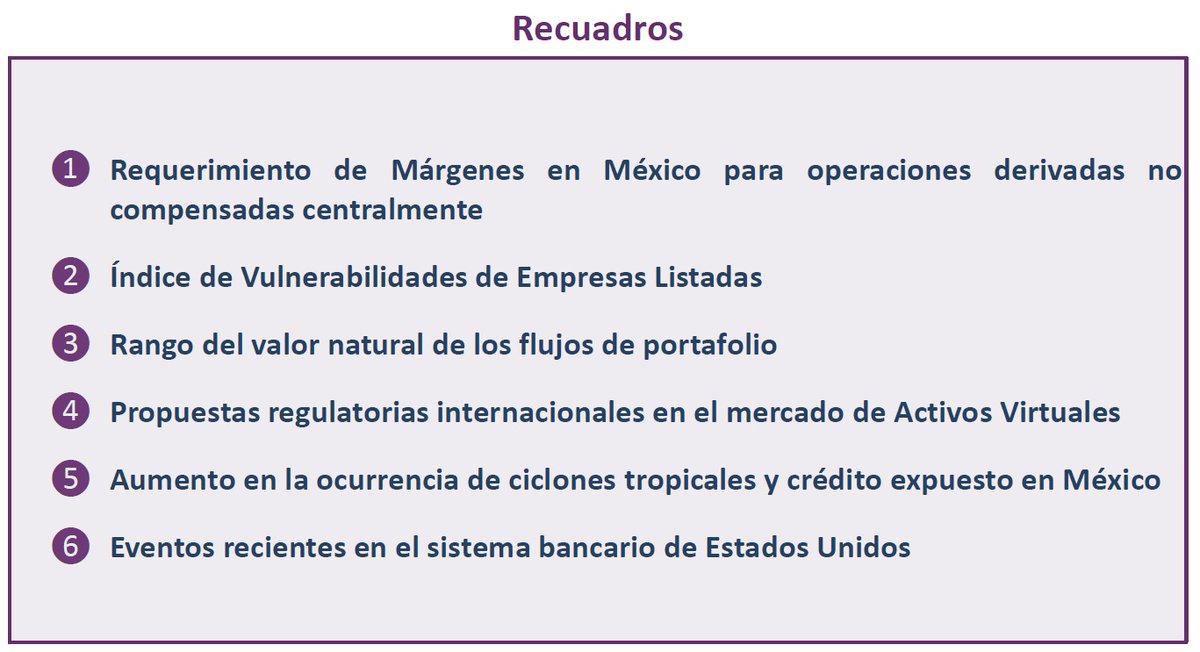
En 1 año tan significativo para BRECHAS DE GÉNERO, recomiendo el recuadro del último Reporte Estabilidad Financiera 🇲🇽🇲🇽🇲🇽 Las brechas en el crédito aumentan en un contexto de incertidumbre macrofinanciera. #gerdergaps
In a year so significant for GENDER GAPS: english below
No te pierdas mañana la transmisión en vivo de la presentación del Reporte de Estabilidad Financiera a junio de 2024. [12:30 horas] https://t.co/qkxS70ZaXx
🚨🚨 We wrote a new WORLD BANK entry BLOG on CAPITAL FLOWS. Medium-term oscillations in capital flows contain important information for the performance of the real sector and for financial stability. https://t.co/Pykmb7tvBV a través de @worldbank w/ @LorenzoMenna1 & @jemqcool
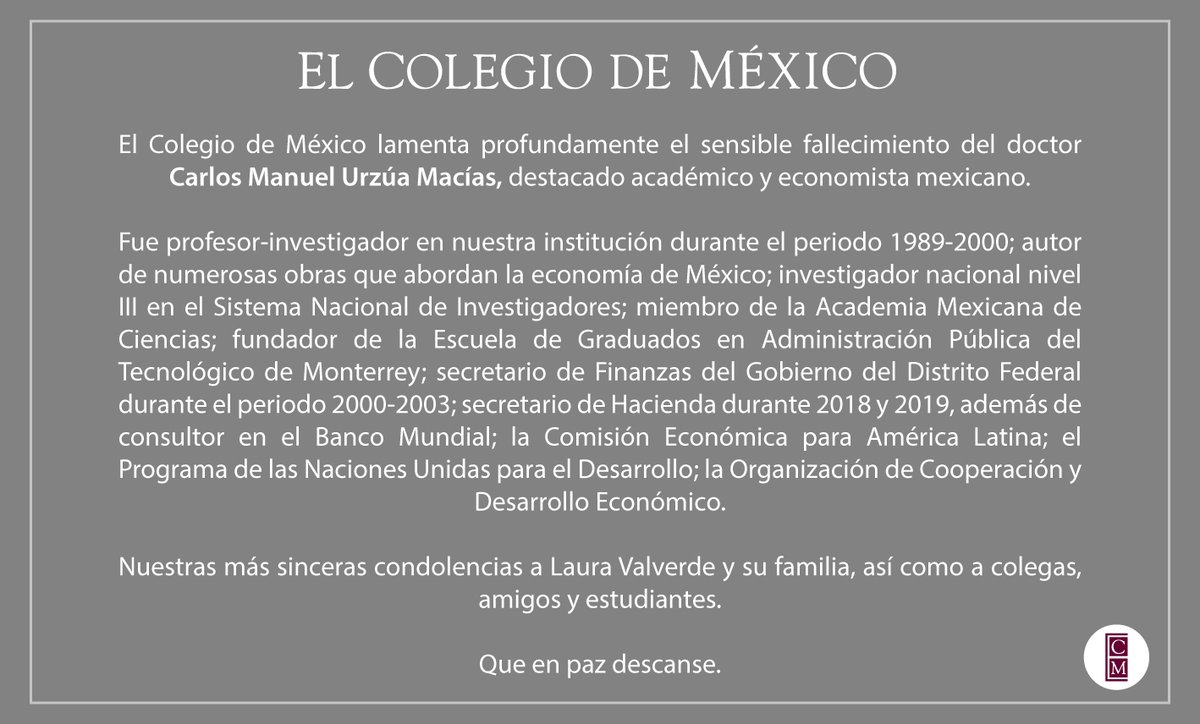
El Colegio de México lamenta profundamente el sensible fallecimiento del doctor Carlos Manuel Urzúa Macías, destacado académico y economista mexicano.
Nuestras más sinceras condolencias a su familia, colegas, amigos y estudiantes.
Que en paz descanse.
Ya disponible Nueva sección de INDICADORES DE ALERTA TEMPRANA en Reporte de Estabilidad Financiera del Banco de México.
Check out the new section on EARLY WARNING INDICATORS in the Financial Stability Report of the Bank of Mexico.#financialstability#emergingmarkets
Nature rejected her paper for not being original,
University of Pennsylvania (her employer) demoted her,
and yesterday Katalin Karikó won the Noble Prize in physiology.
In mid-2000s, Karikó and her Drew Weismann submitted their paper on mRNA (messenger Ribonucleic Acid) to Nature.
Nature desk rejected their paper for being "an incremental contribution" only. The paper was later published in another journal, Immunity.
Earlier in her career at the University of Pennsylvania, Karikó was demoted because her applications for grants kept getting rejected.
But Karikó persevered and kept on going.
In 2013, she joined BioNTech, a German company founded by two scientists, Uğur Şahin and Özlem Türeci. In 2018, BioNTech partnered with Pfizer to develop mRNA vaccines against the influenza virus.
When the COVID-19 hit the world, Karikó's research helped Pfizer to produce the first vaccine against the disease.
I don't know how the Nature editors who desk rejected Karikó's paper and the Penn administration who demoted her feel about Karikó Nobel Prize.
Takeaway: Many academics and scientists worry about getting published in "prestigious" journals. Instead of worrying about prestige, we should try to put our work out as quickly as possible like Karikó did.
Once you put your work out without caring about prestige, two good things happen:
1. Your work will lead to newer opportunities.
2. You will start getting feedback from the scholarly community, which you can use to iterate and improve.
Here's another interesting Nobel Prize story.
Peter Higgs, a British physicist, joined the University of Edinburgh in 1956. By 1964, Higgs has published his groundbreaking work about subatomic particles.
After 1964, Higgs published less than 10 papers.
When his department would ask him how many papers, he published in a given year, he would reply "None."
It happened so often that he stared feeling like an "embarrassment to the department."
The University of Edinburgh, however, never fired Higgs because in 1980 he had been nominated for the Nobel Prize.
Higgs retired in 1996 and stayed on as an emeritus professor at Edinburg.
In 2012, experiments conducted at the CERN laboratory confirmed Higgs work and the existence of Higgs Particle.
And in 2013, Higgs was awarded the Noble Prize in physics and the University of Edinburgh got rewarded for being patient.
No te pierdas mañana la transmisión en vivo de la presentación del Reporte de Estabilidad Financiera a junio de 2023. [12:30 horas] https://t.co/qkxS70ZaXx
"In everybody’s life there’s a point of no return. And in a very few cases, a point where you can’t go forward anymore. And when we reach that point, all we can do is quietly accept the fact. That’s how we survive"
The global economy is gradually recovering from the pandemic and Russia’s invasion of Ukraine, but downside risks dominate. Our latest #WEO projects 2.8% global growth for this year and 3% for 2024. https://t.co/JZdagPn6ni