So if you’re getting annoyed with the AI overview at the top of your Google search page, Ruby Granger recently shared a very useful trick: just type “-ai” at the end of your query and it will give you the results without AI, like the Google we once had.
Our experts are keeping a close eye on changes to #Medicaid eligibility - including some that take effect tomorrow, affecting people with certain immigration statuses.
Get accurate info here: https://t.co/Y5zmfYblMV
Most people do not want to be famous. They want to reach the end and know their life mattered to someone. Faithfulness in small, unwitnessed things is how that happens, and God sees and affirms all of it.
Much of life is lived in the "in-between" places where we don't have answers. What has kept me going is faith in the character of God. I cannot doubt in the dark what God has shown me in the light. He is good, and He is fair when life isn't. His love is our anchor of hope.
Just now finding out about @weatherchannel’s retro option, music and everything, and I am weeping openly. Feels so good to be back baby https://t.co/ksAqfptyKS
Researchers at UC Irvine took saliva samples from a choir before and after performing Beethoven. One antibody, the most abundant in your entire body, spiked 240%.
That antibody is called secretory immunoglobulin A. Mouthful of a name, but it does a simple job: it coats your throat, gut, and airways and acts as your body’s first barrier against every cold, flu, and respiratory virus you breathe in. Your body makes more of it than all other antibody types combined.
The 2000 study found this antibody rose 150% during rehearsals and 240% during the live performance. A separate 2004 study from the University of Frankfurt tested what happens when choir members just listen to the same music instead of singing it. The antibody barely moved. And their mood actually got worse.
Marathon runners show the exact opposite. A study of 98 competitive runners found this same antibody dropped 21 to 31% after the race. 17% came down with colds or throat infections within two weeks. Cross-country runners tracked over a full season saw it fall to 40% of their starting level by November. Running was suppressing the same antibody that singing was tripling.
It works through the vagus nerve, the longest nerve in your body. It runs from your brain down through your chest to your gut and controls your “rest and digest” mode. When you sing, your vocal cords physically vibrate against it where it wraps around your voice box. You’re also breathing from deep in your belly with long, slow exhales, which tells your nervous system to calm down. Your stress hormones drop. Your immune system responds.
A 2016 study from the Royal College of Music and Imperial College London tested 193 cancer patients and carers across five choirs in South Wales. One hour of group singing lowered cortisol (the body’s main stress hormone) and raised five different immune signaling proteins. The people with the worst depression scores improved the most.
You don’t need to be good at it. The boost comes from the physical act, the vibration and the breathing, not the melody. Trained soprano or shower singer, your body responds the same way.
One caveat: that 240% number came from a live performance, where adrenaline and emotional intensity were at their peak. Singing along to the radio probably produces a smaller spike. And these are temporary boosts, not permanent changes. But the 193 cancer patients in the 2016 study weren’t performing Beethoven on stage. They were just singing together for an hour in community choirs.
“Darkness cannot drive out darkness; only light can do that. Hate cannot drive out hate; only love can do that.”
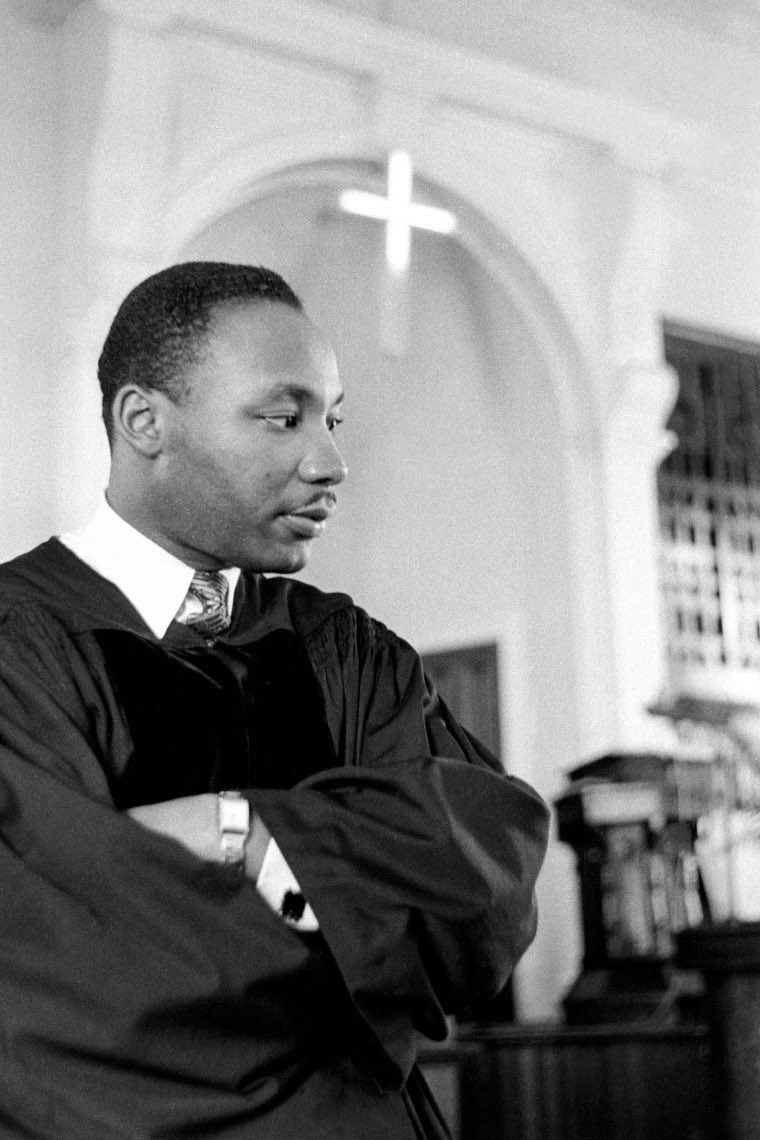
Honoring Dr. Martin Luther King Jr.’s legacy of faith, love and courage today.