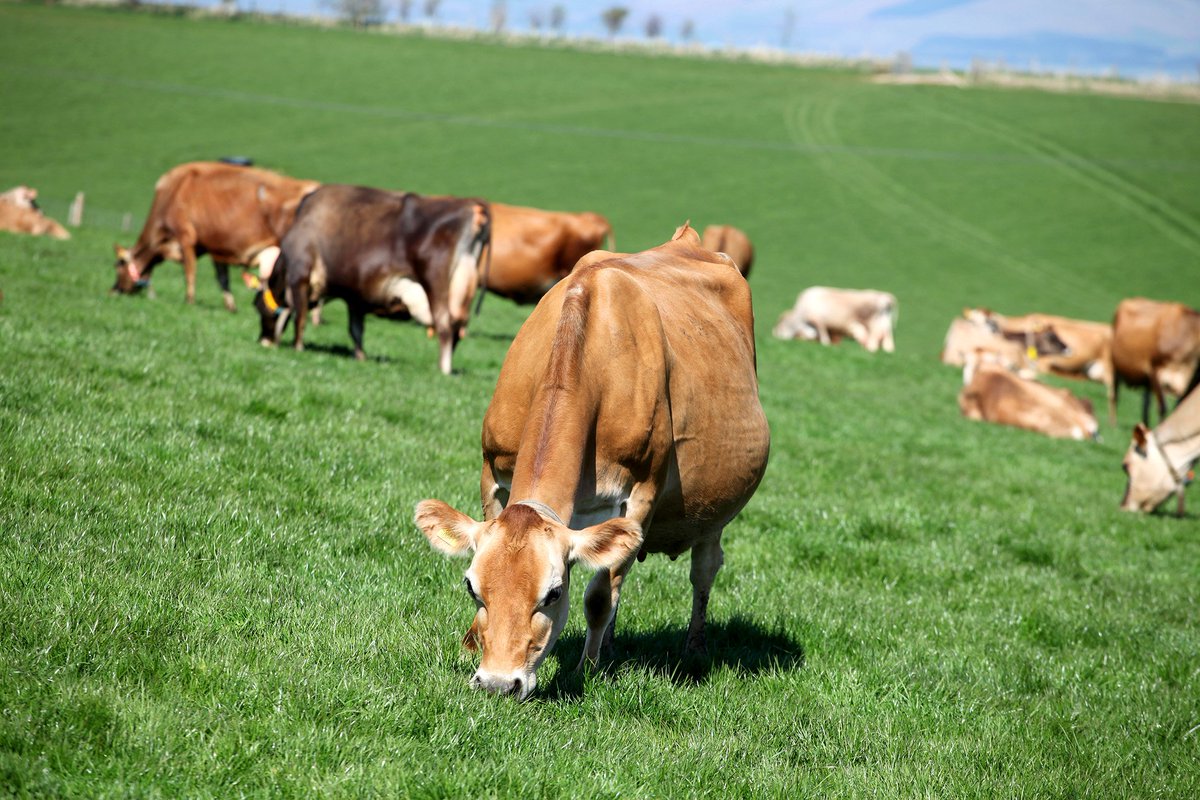
There is an animal that:
- Walks to her own food on her own legs
- Eats grass humans cannot digest
- Drinks rainwater that falls whether she's there or not
- Needs no pesticide, herbicide, irrigation, factory, or refinery
- Builds topsoil 30 to 50 times faster than nature
- Fertilises the ground that grew her dinner
- Supports dozens of wildflower, insect, and bird species
- Reproduces herself once a year, free of charge
- Produces meat, milk, butter, cheese, cream, leather, tallow, suet, bone, and broth
- Delivers complete protein, every fat-soluble vitamin, haem iron, B12, zinc, and choline
- Has done all of this, on the same hillsides, for ten thousand years
- Runs on sunlight
And we have spent thirty years being told this animal is the problem.
The fermentation tank in Singapore, drawing power from a fossil fuel grid, fed on monoculture soy from a deforested Brazilian plain, producing a beige paste with twenty-two ingredients, is the solution.
The audacity is breathtaking.
@BuyEnglishMade William Tyndale who contributed more to English language and literature than even Shakespeare. He was thanked by being burned at the stake in Belgium in 1536. Extraordinary.
A tenant farmer in the Cairngorms says land that sold for £500 an acre a few years ago now goes for £5,000. He is being moved off ground his family has worked for generations, because he cannot outbid the people buying it. The buyers are corporations, and they have no intention of farming a single acre of it.
Here is how the trick works. A company keeps emitting carbon exactly as before. Same factories, same flights, same supply chain, same product. Then it buys a Scottish hillside, plants some trees, and announces to the world that it is now carbon neutral, or, if it is feeling brave, carbon negative. The emissions never fell. It simply bought a landscape to point at.
Take BrewDog. In 2020 it bought a 9,300-acre Highland estate, propped up with public grant money, and promised a million trees and the crown of the world's first carbon negative beer business, removing twice the carbon it emitted, forever. By 2023 roughly half of the 500,000 trees it had managed to plant were dead, killed by drought, with critics noting the planting was drying out the peat and releasing carbon of its own. The advertising regulator ruled its carbon-negative claims misleading. In 2024 it quietly dropped the badge and dismissed the entire carbon credit market as a flood of cheap schemes whose benefit was "questionable, maybe even non-existent." Then it sold the estate to a firm whose actual business is selling carbon offsets.
That is the whole model in one story. Public money in. Dead trees out. A green halo worn for four years and then dropped. The farmer who used to be on that land, gone. The hillside passed to a company that exists purely to sell other people the right to keep polluting.
This is no fringe case. In one recent year, half of every estate sold in Scotland went to investment funds, corporations and charitable trusts rather than anyone who would farm it. A third of the deals for plantable land are now done off-market, in secret, precisely so the local community never gets the chance to bid.
So this is what net zero looks like on the ground. A man who produced food is priced out of his own glen. A corporation that produced emissions buys the glen, calls itself a force for good, and sells the carbon. The land stops feeding anyone. Nobody's emissions actually went down by a gram.
The food was real. The farmer was real. The carbon saving is a line in a slide deck.
And we have somehow decided the villain in all this is the man with the sheep.
Things the cow needs:
- Grass
- Rain
- A field
Things oat milk needs:
- A monoculture of oats on prime arable land
- Synthetic nitrogen fertiliser, made from natural gas
- Glyphosate, sprayed pre-harvest
- A processing plant
- Industrial enzymes
- Stabilisers and emulsifiers
- Added vegetable oil to fake the mouthfeel of dairy fat
- Added calcium to fake the calcium of dairy
- Added vitamin D to fake the vitamin D of dairy
- Added B12, because there isn't any in oats
- Tetra paks
- A refrigerated supply chain
- A marketing budget
- A celebrity endorsement
- A weekly column in The Guardian
- The continued cooperation of people willing to pay £2.40 a litre for water with oats in it
Things that have changed about what the cow needs in the last ten thousand years:
- Nothing
Things that have changed about what her replacement needs in the last ten years:
- Quite a lot, apparently
There may be a lesson in this.
There usually is.
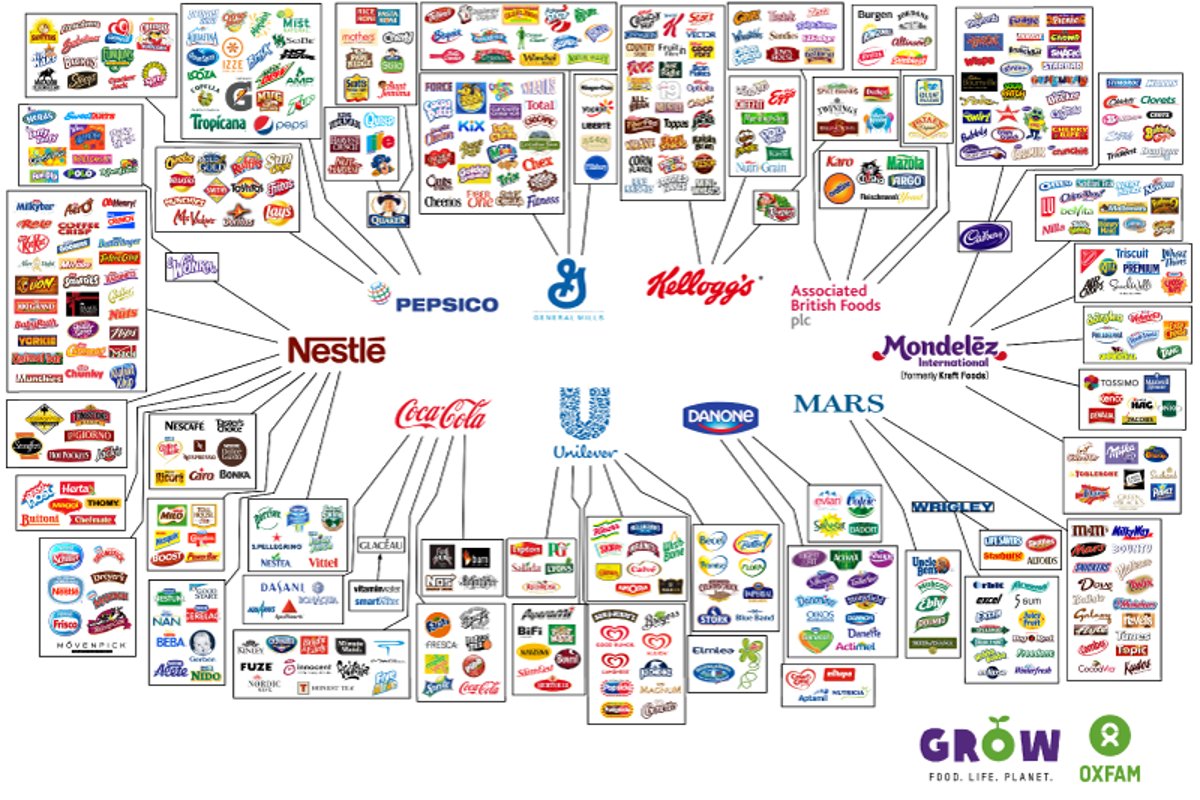
Every food problem we now have was created by the same set of corporations that now sells you the solutions.
Unilever sells you the seed oil that drives the inflammation, then sells you the Dove moisturiser for the inflamed skin and the Vaseline for the dry patches.
Kellogg's sells you the cereal that produces the 11am blood sugar crash, then sells you the protein bar for the afternoon slump and the granola for the evening "healthy snack."
Coca-Cola sells you the drink that drives the metabolic dysfunction, then owns Smartwater, Glacéau, and Innocent smoothies for when you decide to "detox."
Nestlé sells you the chocolate, the diet chocolate, the protein chocolate, the cereal, the bottled water, the infant formula, and the wellness powder you stir into the milk afterwards. Then owns a major stake in L'Oréal, for the skin problems that follow.
PepsiCo sells you the crisps, the fizzy drink, the "healthier" baked crisps, the Quaker oats for breakfast, the Tropicana juice, and the Gatorade for when you go to the gym to undo it.
Mondelez sells you the biscuit, the chocolate, the cracker, the cheese spread, and the gum to mask the breath afterwards.
One chain. Multiple revenue streams. Every stage of the metabolic decline has a product attached to it, sold by the same five companies wearing different labels.
Step off the chain.
The chain is the problem.
Not the cow. Not the farmer. Not the butter. Not the egg.
Myth: "We need to eliminate cattle to stop climate change."
Let's check in on Gerald's emissions, in context.
The headline argument has, on closer inspection, never met Gerald.
UK total emissions, by sector:
Transport: 28%
Energy: 21%
Business: 18%
Residential: 17%
Agriculture: 11%
Industrial processes: 4%
Public sector: 1%
Of the 11% from agriculture, the bulk is livestock methane and nitrous oxide. Of that, beef cattle specifically account for somewhere around 3-4% of UK emissions. Net off the carbon being sequestered in the soil under permanent pasture, and the figure for grass-fed British beef drops to between 1 and 2%. Some peer-reviewed LCAs of well-managed grazing systems put the net at zero. A few put it negative.
Gerald, as a single Hereford cross, is responsible for somewhere between a millionth and a ten-millionth of UK emissions, on a closed biogenic carbon loop, while building topsoil at 1.4 tonnes per hectare per year.
You could eliminate Gerald and the climate would not notice.
You could eliminate every cow in Britain, end British beef entirely, and the climate would notice maybe 2% of the UK's contribution to a global problem driven by transport, energy, and the cement industry.
You would lose:
- 65% of British farmland's only food output
- Most of British biodiversity's working management
- The soil-building function of the entire pastoral economy
- Wool, leather, dairy, and the small economies attached
- 200,000 direct jobs
- 100,000 family farms
In exchange for: a number so small it sits comfortably inside the margin of error on the cement industry.
The deal, when written down, is embarrassing.
The deal is being proposed anyway, with great confidence, by people who have not been outside.
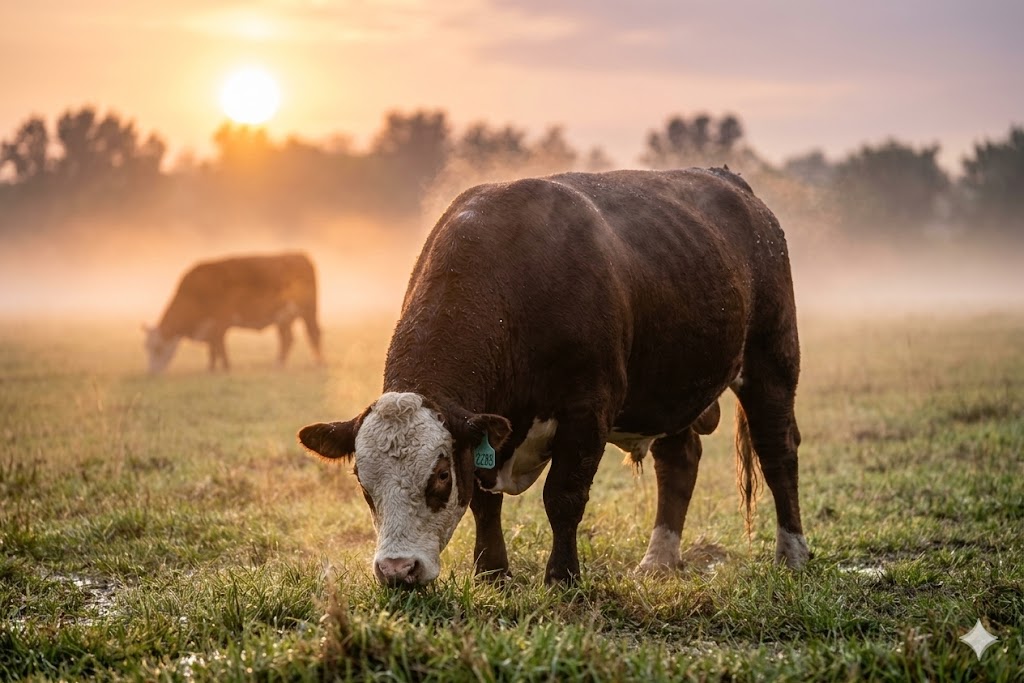
Gerald is in the south corner.
The cement plant is, somehow, not on anyone's poster.
Curious.
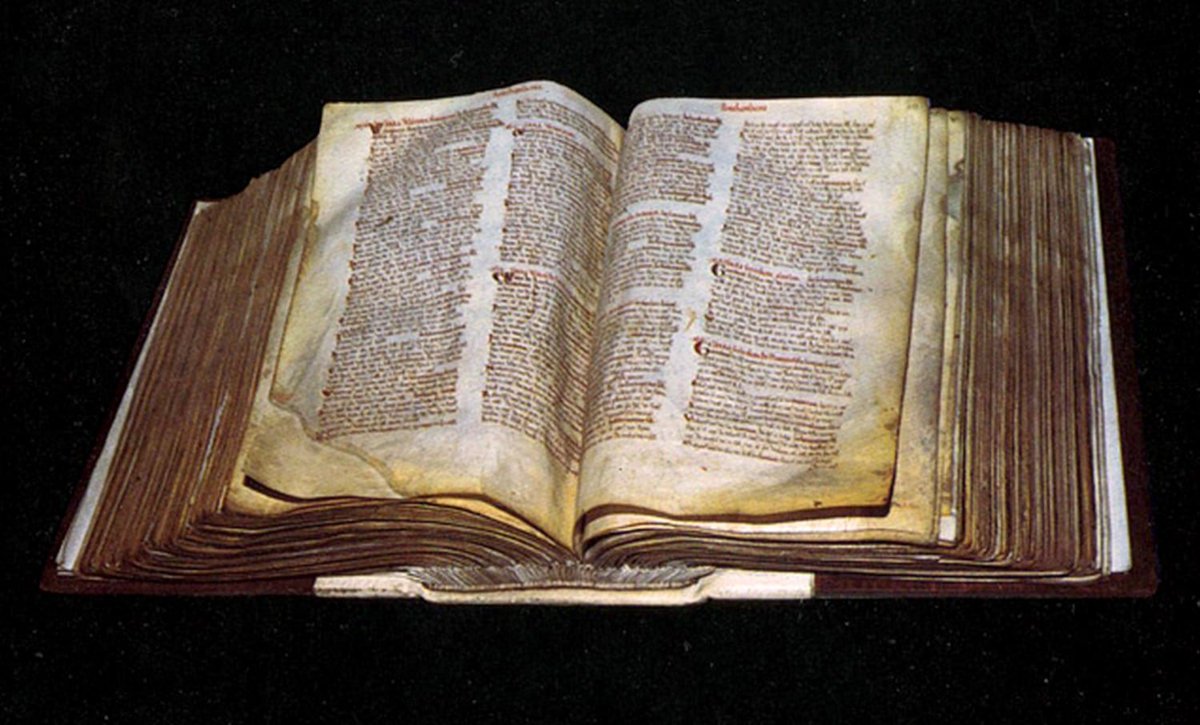
The Domesday Book, compiled for William the Conqueror in 1086, contains an astonishingly detailed accounting of the livestock of England.
Sheep: approximately 6.5 million.
Cattle: approximately 1.2 million.
Goats: approximately 120,000.
Pigs: approximately 760,000.
This was compiled by royal commissioners who walked, rode, and in some cases sailed to every manor in England and recorded what they found. It is one of the most complete pre-modern economic surveys ever conducted.
The population of England in 1086 was approximately 2 million humans.
That is three sheep for every person. More than one ruminant of some kind per person if you include cattle and goats.
England, nearly a thousand years ago, was an agricultural economy built almost entirely on ruminants. Without them there was no wool, no meat, no leather, no tallow for candles, no parchment for writing. The monasteries ran on wool. The nobility ran on beef. The peasants ran on sheep cheese and the occasional eaten old ewe.
The country's current sheep population, 32 million, is five times what it was under William the Conqueror.
The country has fifty times the human population.
The ratio of sheep to humans has dropped by a factor of ten.
We are now being told there are too many sheep.
The Domesday scribes would be confused.
The Domesday scribes were not confused very often.
If you are old enough to remember driving in Britain in the 1980s, you will remember the windscreen.
You could not see through it by July. A journey from Leeds to London in August ended with a front bumper that looked like it had been through a war and a windscreen that needed a proper scrubbing with a sponge at the services. Insects on the headlights. Insects in the wing mirrors. Insects packed into the radiator grille so densely that mechanics had to fish them out. This was simply the weather of the British summer, the cost of moving through a country that was still, in living memory, full of flying things.
Get in a car now. Drive the same route. Stop at the services.
The windscreen is clean.
The Bugs Matter survey, run by Kent Wildlife Trust and Buglife since 2004, has been measuring exactly this. Volunteers clean their numberplate, drive a journey, count the splats on a grid. Between 2004 and 2021, the UK average fell by roughly 59 per cent. England alone: 65. Kent: over 70. The 2024 update found a further 63 per cent drop on top of that.
The windscreen phenomenon has the data to back it up now.
And not just the insects. Between 1970 and 2024, the UK Farmland Bird Index fell by 62 per cent. Turtle doves down 99. Grey partridge down 94. Tree sparrow down 90. A generation of British children has grown up without ever hearing a turtle dove call, because there are, in functional terms, no turtle doves left to call.
Defra's own bulletin lists the causes without embarrassment. Loss of mixed farming. The switch from spring to autumn sowing, which took away the winter stubble the small birds had been feeding on since the Neolithic. The grubbing up of hedgerows to make fields bigger for bigger machines. Increased fertiliser. Increased pesticide.
Specifically, the pesticides. Neonicotinoids on oilseed rape. Glyphosate sprayed as a pre-harvest desiccant on wheat and barley. Chemicals applied in combinations and volumes that would have seemed psychotic to a farmer in 1950, applied to grow the crops that feed directly into the plant-based shakes marketed to people who believe they are helping the environment.
The insects died in the fields where the crops were grown. The birds that used to eat the insects, starved. The windscreen, accordingly, is clean.
None of this happened on the permanent pasture that cattle graze. A herb-rich meadow grazed by cattle has more pollinators, more ground-nesting birds, more beetles, more everything per hectare than the arable field next door. The South Downs and the Welsh uplands and the Cotswold commons where sheep and cattle have been grazing for a thousand years are the places British biodiversity is still, just, holding on.
The countryside did not empty because of the cow.
It emptied because we replaced the cow with the combine harvester, the meadow with the oilseed rape, and the hedgerow with another half-acre of monoculture that needed spraying fourteen times a season to keep it alive.
When someone tells you eating a steak is destroying British wildlife, ask them what was on the field before it became the soy farm, the rape farm, the wheat farm that produced the oat milk in their fridge.
It was grass.
And on the grass, there were cattle.
And when the cattle were there, the windscreen needed cleaning.
A reasonable audit of what the British farmer is actually doing, measured against what he is currently being accused of.
What he is doing:
- Up at 5am. Earlier in lambing. Finished at 9pm last night. Doesn't consider this notable.
- Producing 60% of the food eaten in the UK.
- On a land area smaller than Oregon.
- Maintaining 400,000 miles of hedgerow.
- Several hundred thousand miles of stone wall.
- The entire drainage infrastructure of the lowlands.
- Every postcard the country has ever printed.
- Sequestering carbon into the soil beneath his livestock at rates that offset a significant fraction of his sector's emissions. Not widely discussed.
- Feeding, clothing and tanning a population that has mostly forgotten where any of this comes from.
- Lambing in March at his own expense.
- Calving in April on no sleep.
- Silage in June on three hours a night.
- Harvest in August.
- Ploughing in October.
- Feeding stock through January in conditions any urban professional would call a humanitarian emergency.
- Watching his son decide whether to take over the farm, knowing what the answer is likely to be.
- Earning less per hour than the barista who served the coffee to the journalist writing the article about him.
What he is not doing:
- Destroying the ozone layer. Hasn't been near it.
- Flying almonds in from California.
- Clearing the Amazon.
- Running a data centre.
- Operating a private jet.
- Producing microplastics.
- Failing to recycle his packaging. He hasn't got any.
- Causing the climate crisis. The climate crisis is two hundred years of industrial activity he wasn't around for.
- Lobbying Parliament. Can't afford it. He's in a field.
- Complaining about any of this. He hasn't got the time.
The audit concludes.
The defendant is out feeding the cattle.
He'll be back for supper if the tractor holds up.
Loving this account.
Educational, entertaining, bursting a lot of pompous bubbles… what’s not to love?
Give him a follow and meet some wonderful animals too.
In the grounds of Chillingham Castle in Northumberland, behind a wall built in 1270, there is a herd of wild cattle.
They have been there, in that specific park, for approximately 700 years.
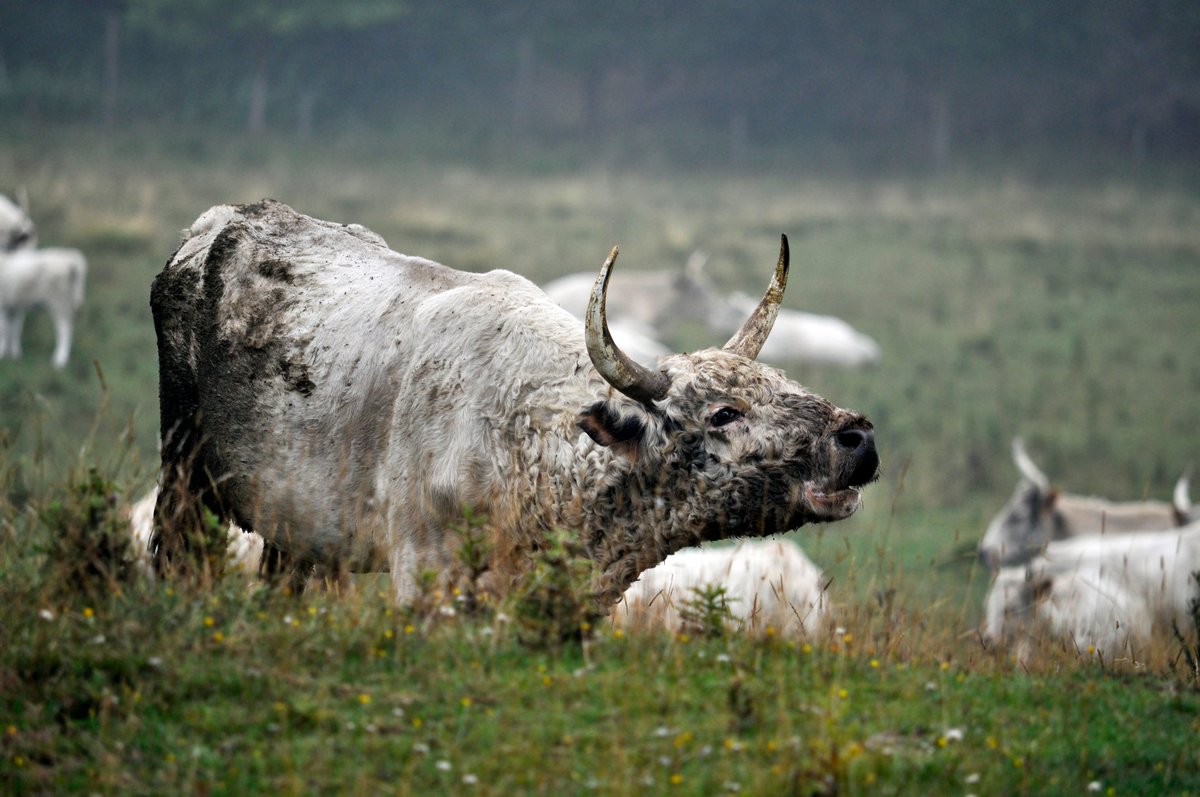
They are white. Small. Horned. They look vaguely like the cattle on a medieval tapestry, which is roughly what they are. The Chillingham herd is the last surviving population of genuinely wild cattle in Britain, and genetically the closest living relative of the aurochs, the wild ancestor of every domestic cow on earth.
When the estate was enclosed in the 13th century, a group of cattle was trapped inside the wall. Nobody moved them. Nobody bred them with outside stock. Nobody managed them. The wall went up, the cattle kept being cattle, and the door, essentially, was never opened again.
Seven centuries later, they are still there.
No selective breeding. No herd improvement programme. No artificial insemination. No supplementary feed beyond what the park produces. They eat the grass. They calve unassisted. The bull fights for dominance. The old are taken by winter. The young grow up in a social structure nobody taught them.
They have the lowest genetic diversity of any mammal on earth that isn't officially endangered. By every textbook in conservation genetics, they should have collapsed a dozen times over from inbreeding depression.
They have not. They are, by veterinary standards, extraordinarily healthy. Disease resistance better than modern breeds. Fertility steady. Calving success high. They carry on regardless.
What can be learned from Chillingham.
The first is that a cattle population, left alone on land suited to them, finds its own equilibrium. No committee is required. No spreadsheet. No grass-measuring device. The cattle work it out. They have worked it out for 700 years.
The second is that the park itself is a functioning ecosystem, maintained by those cattle. The wildflowers, the ancient oaks, the soil structure, the bird populations, are all shaped by continuous low-intensity grazing by a small wild herd. It is one of the most biodiverse small landscapes in England.
The third, and most inconvenient to the modern argument, is that cattle and wild land are not in conflict. The Chillingham herd is wild cattle, on wild land, in steady state, for longer than most European countries have existed in their current form.
They are a living contradiction to almost every modern claim made about bovines and ecosystems.
They are not on anybody's emissions chart.
They have never been invited to a conference.
They are behind their wall, in Northumberland, quietly doing what cattle have been doing since before the Norman Conquest.
They will probably still be doing it when the current debate has been forgotten.
A newborn sperm whale can’t swim. It starts sinking the second it’s born. If nobody pushes it to the surface, it drowns in mile-deep water.
On July 8, 2023, a sperm whale named Rounder went into labor off the coast of Dominica. Researchers from Project CETI, a $33 million AI initiative out of MIT, Harvard, and Northeastern that’s trying to decode whale language, happened to be there doing routine fieldwork. They had drones in the air and underwater microphones running. What they captured over the next six hours just got published in two papers, one in Science and one in Scientific Reports.
Eleven whales gathered at the surface before Rounder even started delivering. Her mother, Lady Oracle, was there. So was her daughter Accra. Three generations in the water. But the wild part: half those whales belonged to a completely separate bloodline that normally keeps its distance from Rounder’s family. On a typical day, these two family lines split off to hunt in different areas and rarely cluster together. For the birth, they all converged before labor started. The unrelated family somehow knew it was coming.
The delivery took 34 minutes. Sperm whale calves come out tail-first with their flukes still folded from the womb. They haven’t developed the oil-filled organ in their heads that helps adult whales float, so the moment they’re born, they’re dead weight in the ocean. Every adult whale in the group, related and unrelated, started taking turns pushing the calf up to breathe. They kept this rotation going for three hours. When a pod of pilot whales (known to be aggressive toward sperm whales) and a large group of Fraser’s dolphins showed up during delivery, the adults formed a wall around the newborn until the threat passed.
The underwater audio is where it gets interesting. CETI’s microphones picked up the whales changing their vocal patterns during the birth. The click-based sounds they use to talk to each other shifted at specific moments, and vowel-like structures appeared in the recordings. This builds on what CETI found in 2024 when they ran machine learning on over 8,700 recorded whale calls and discovered sperm whale communication isn’t a basic 21-sound code. It’s a system of about 300 distinct sound combinations, with the whales adjusting rhythm and timing in real time, speeding up and slowing down the way a musician does mid-performance. A 2025 follow-up from UC Berkeley found these clicks also contain vowel patterns, something scientists had assumed only humans could produce.
Sperm whales carry the largest brain of any animal on the planet. About 9 kg. Roughly six times heavier than yours. The evolutionary analysis in the new Science paper suggests this kind of cooperative birthing goes back over 36 million years, to the common ancestor of all toothed whales. The calf was spotted a year later, swimming with its family.
This is the most satisfying news you’ll hear today !
Do you remember when a group of boys, strangers to each other, formed a human chain to save a dog from fast flowing water?
Today, local authorities unveiled a “Unity Statue” at the same place to celebrate human unity.
Things scientists have blamed for climate change since 2020:
- Beef
- Dairy
- Lamb
- Wool production
- Cheese
- Leather
- Burping cows
- Sheep on hillsides
- The British uplands generally
Things scientists have not been given equivalent grant funding to investigate:
- 100 companies producing 71% of global emissions
- Aviation doubling since 1990
- Container shipping running on bunker fuel
- Data centres consuming more electricity than entire countries
- Fast fashion producing 10% of all carbon emissions annually
- $13 trillion in annual fossil fuel subsidies
Gerald's methane budget for the year: about 100kg.
Estimated annual emissions of a single superyacht: 7,000 tonnes.
One of these has a lobby group.
Spoiler: it's not Gerald.
Bait & switch on Assisted Dying.
1: get it through the Commons by saying don’t worry about the details, the Lords will scrutinise it; and
2: shrill protests that Lords are “holding it up,” causing a “constitutional crisis” when they give the scrutiny you promised.
Yes: scrutiny = so important and revealed multiple flaws in the 🏴Bill just as in 🏴one.
Please focus on increasing support for #palliativecare and our #nhs
First vote was 70-56 the other way. It’s becoming really clear that this kind of legislation falls apart under scrutiny.
Time to move forward and confront the huge challenges facing social care, palliative care and the NHS.
@DrCalumMiller@LoisMcLatch Diaries can be changed. Appointments can be rearranged. Schedules can be altered. Meetings can be rescheduled.
It may be inconvenient but priorities should speak/shout for themselves. Come on, gentlemen; time to stand up and speak out.
Assisted suicide in Scotland “will require a degree of reprioritisation”, according to the Government.
In black and white they are telling you that they are going to cut healthcare funding so they can afford to kill people instead.
This is not what society should be doing.