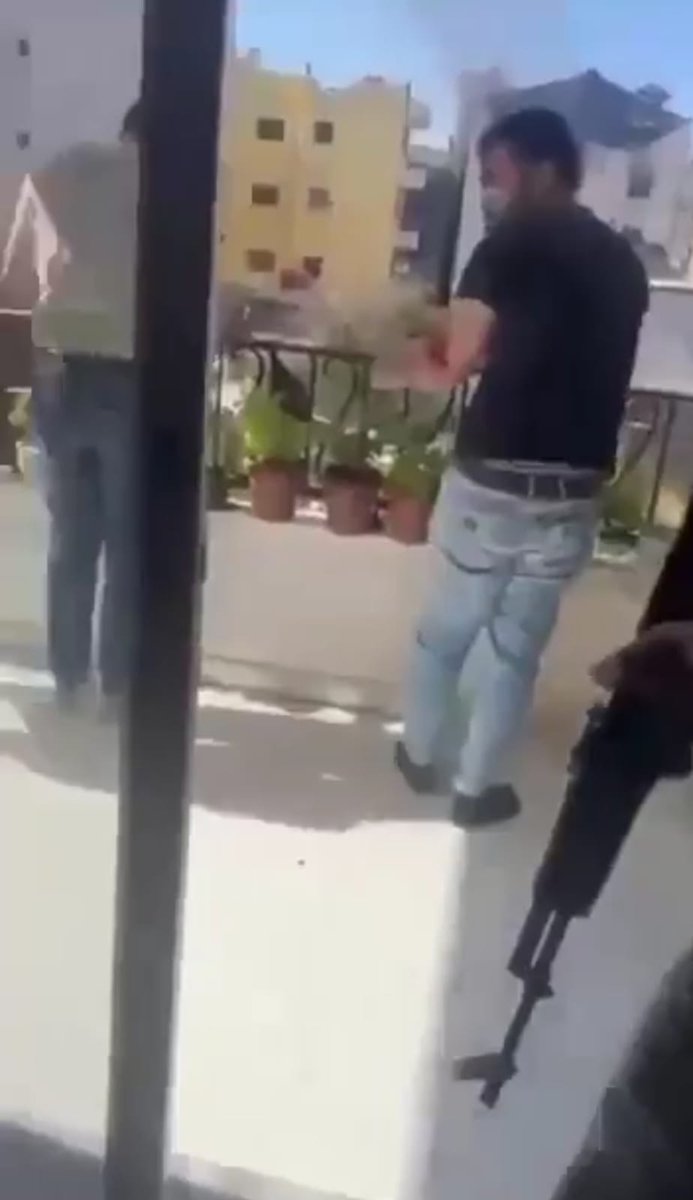
Aanval op de grotendeels Christelijke stad Suqaylabiyah in Syrië [ten noordwesten van Homs en Hama] door bewapende Sunni-groepen uit het nabijgelegen Qalaat al Madiq.
Minorities in the New Syrian Order
By @ajaltamimi - A fine overview. Here are high points of Aymenn's conclusion:
"There are real questions about the long-term trajectory of the country, which increasingly looks to be an authoritarian, Sunni Arab-centric order in which Sharaa retains power indefinitely, while minorities are officially afforded toleration but are made to feel and acknowledge Sunni supremacy in the new order.
In such a scenario, abuses against members of minority communities- such as assassinations and attacks on non-Sunni religious sites- are likely to continue, and minorities may increasingly be inclined to leave the country as they feel they have no future in the new order or identification with it.
Policy-makers should continue to engage constructively with the new government but do so in a more critical manner, first and foremost by urging the government to implement real accountability for those implicated in violations against minorities. ...
Policy-makers should also do more to encourage the government to take consistent measures against sectarian incitement against minorities and discourage Sunni-centric populism, while urging the authorities to commit to free elections and to develop a long-term vision of the country in which belonging is based on citizenship regardless of ethnicity or religion. The long-term vision should be a democratic political system that allows for competing political parties but is devoid of sectarian identity politics where positions of power are apportioned on the basis of ethnicity and religious sect.
https://t.co/MleL74K6iy
Satellite imagery confirms that Azerbaijan has destroyed the largest church in Stepanakert, the capital of Artsakh/Nagorno-Karabakh. Just another step in erasing all Armenian presence from the region.
De dag na het Trump-Iran staakt-het-vuren gaat Israel gewoon door met het bombarderen van Libanon. 254 mensen gedood, 1165 gewonden. Zelfs voor Libanese begrippen zijn dit ongekende aantallen.
Oh nee. Niet alleen drama voor mensen ook voor cultureel erfgoed. Berichten vanuit Teheran dat een vd mooiste & oudste paleizen is geraakt door Israel/VS. Hopelijk valt schade mee, maar wat een drama als dit klopt. Het was recentelijk gerenoveerd.
Voor mensen die het offensief van "het Syrische leger" tegen de Koerdische SDF volgen, is het belangrijk om het volgende te realiseren: "Het Syrische leger" bestaat niet, in de zin dat dit geen klassiek, centraal aangestuurd leger is.
"Het Syrische leger" bestaat uit honderden verschillende milities - sommigen bestaande uit jihadisten, anderen Islamisten, weer anderen pro-Turkije, anderen Arabische stammen en ook zitten er AlQaeda-groepen tussen en buitenlandse jihadisten.
Tevens vallen sommige groepen onder het ministerie van Binnenlandse zaken, anderen onder Ministerie van defensie en weer anderen vallen overal buiten (vooral centraal-Aziatische jihadisten aanwezig in Syrie) maar doen wel mee aan de huidige gevechten tegen de Koerdische SDF.
De strategie van "het Syrische leger" wordt bepaald door de interim president in Damascus. Maar omdat het leger min of meer een zooitje ongeregeld is en uit zoveel verschillende groepen bestaat, worden bevelen niet of maar ten dele uitgevoerd. Oorlog is sowieso al chaotisch, maar oorlog door milities is nog weer een graadje erger, wreder en chaotischer omdat iedereen maar wat doet er er geen mechanisme bestaat om uitwassen te stoppen of te straffen.
Dus mensen, geloof al die Turkse- en Damascus-propaganda niet waarin wordt beweert dat Koerden in Sheikh Maqsoud zijn begonnen met beschietingen. Kijk gewoon naar de kaart: Sheikh Maqsoud is een PIEPKLEINE enclave in een zee van HTS (ex-AlQaeda) en pro-Turkse-groepen.
Moord op 3 Amerikanen door lid van Syrische regeringstroepen vandaag in Palmyra is zo'n ongelooflijke f*** up voor Al Shara'a/Jolani.
Als Damascus zegt: "Ja maar de dader was IS, niet HTS." Dan is de vraag: Wat doet een IS-lid in vredesnaam in Syrie's regeringsleger?!
Als ze zeggen: "Dader was geen IS." Dan is de vraag: Hoe kan het dat strijders in het nieuwe Syrische leger blijkbaar zo radicaal zijn dat ze de eerste de beste keer dat ze Amerikaanse soldaten tegenkomen hen doodschieten?
Pijnlijk pijnlijk allemaal voor Jolani en z'n zorgvuldig opgebouwde gematigde imago.
Interview met journalist en auteur Jens De Rycke (@jens_rycke) over de politieke ontwikkelingen in Azerbeidzjan en Armenië. Met hoofdrollen voor Donald Trump en Vladimir Poetin.
| @DoorbraakBE
https://t.co/X5OoGqNBxq
'Een oorlog eindigt meestal met een compromisvrede. Geen droomscenario, maar liever dat dan de voortschrijdende aftakeling van Europa en de voort durende duizendvoudige "vernietiging van menselijke lichamen"’. Mijn opinie van 1 augustus #AlaskaSummit
https://t.co/3Aad3JgT5K
Toen Jazidivrouwen tot slaven werden gemaakt door #IS was iedereen te druk met het maken van excuses voor de slavernij 150 jaar eerder. Toen duizenden Alawitische burgers in maart aan de kust werden afgeslacht had iedereen het te druk met het schrijven van rapporten over het belang van rechten voor minderheden in het nieuwe Syrië. Toen de Druzen in juli werden afgemaakt en onder de voet werden gelopen in Suwayda was het Westen te druk met de herdenking van 30 jaar na de Srebrenica-massamoord.
Ik ben wel enigszins klaar met al deze poppenkast.
1/ A gruesome vid appeared online showing uniformed fighters in Suwayda forcing 3 Druze men to jump to their death from a balcony.
Some claim it's an old ISIS-clip.
It is not.
I found the exact location, I identified the victims &spoke to their family members.
Thread:
Dit wil ik toch even kwijt.
Vandaag is het 30 jr geleden dat de Srebrenica-massamoord plaatsvond. Ruim 8,000 Bosnische Moslims geëxecuteerd door Bosnische Serviers. De grootste massamoord in Europa sinds de Tweede Wereldoorlog.
Ik woonde en werkte toen in Bosnië als correspondent, zat vaak in Sarajevo, had Karremans weleens geïnterviewd over een militaire telefoonlijn en was aanwezig bij de terugkeer in Zagreb van Dutchbat uit Srebrenica. Een jaar ofzo later liep ik met twee collega's in de velden nabij Srebrenica waar we tientallen lichamen vonden van doodgeschoten Bosnische Moslimmannen. Die lagen daar nog altijd. Schedels, geraamtes. Een waar killing fields. Echt zeer gruwelijk allemaal.
Dertig jaar na Srebrenica moet ik denken aan drie andere massamoorden die recentelijk plaatsvonden (en in zekere zin nog doorgaan).
De massamoord uitgevoerd door Hamas vanuit Gaza op 7 oktober op 1200 Israëlische mannen, vrouwen en kinderen.
En later de massamoord van het Israëlische leger op tenminste 10,000 tot 25,000 Palestijnse vrouwen en kinderen in Gaza.
En als derde, de massamoord, in maart dit jaar op tenminste 1700 Alawitische mannen, jongens en ook een aantal vrouwen en kinderen in Syrië. Al zijn er ook bronnen die zeggen dat er 4,000 Alawieten zijn vermoord.
En het schokkende hieraan zijn niet alleen de massamoorden zelf, maar ook de selectieve reacties van veel mensen erop.
Van die Westerse activisten die wel Srebrenica herdenken, maar de Hamas-massamoord eigenlijk wel okay vinden. "Want Israël had het er zelf naar gemaakt".
Of Israeliers en aanhangers die terecht huilen om de gedode burgers van 7 oktober maar dan kort daarop met droge ogen beweren dat er geen onschuldige Palestijnen zijn. En dus is het ook geen probleem als kinderen worden gedood. "Want zo'n kind groeit toch alleen maar op tot terrorist."
En dan de massamoord op de Alawieten in Syrië van afgelopen maart. 1700 tot 4000 doden. Mannen, jongens, families, gehele dorpen en wijken uitgeroeid - net als in Srebrenica. En veel moorden werden dan ook nogeens gefilmd door de daders. Maar ja, Volgens de meeste Westerse media (die elk jaar keurig Srebrenica herdenken) waren die Alawieten slechts Assad-aanhangers die eerder een paar politiemannen van het nieuwe regime hadden gedood. Dus tja, dan vraag je zelf om problemen en moet je niet zeiken als je later wordt uitgemoord. Dan heet het plots geen massamoord maar "het gevolg van een gewapend conflict"
Da's dus dezelfde redenering die door Serviers wordt gebruikt om de Srebrenica-massamoord goed te praten.: "Bosnische Moslims in Srebrenica hebben ook Serviers vermoord, dus wij reageerden slechts."
En trouwens, ook de Duitsers in WOII gebruikten deze redenering om de razzia, deportatie en massamoord in Putten goed te praten. Tja, jullie schoten ons eerst dood, wij reageerden enkel - aldus de Duitse versie.)
Het herdenken van massamoorden is inmiddels een soort Febo-ervaring geworden. Pick and choose. De ene massamoord wel, de andere massamoord niet. Ik heb daar een slecht gevoel bij.
Syrian forces massacred 1,500 Alawites. The chain of command led to Damascus.
By @mokhbersahafi
A Reuters investigation found 40 distinct sites of killings, looting and arson during three days of sectarian massacres following an Assad loyalist insurgency.
The chain of command led from the attackers directly to men serving alongside Syria’s new leaders in Damascus. The killings now threaten Syria's fragile transition....
At least a dozen factions now under the new government’s command, including foreigners, took part in the March killings, Reuters found.
Nearly half of them have been under international sanctions for years for human rights abuses, including killings, kidnapping, and sexual assaults.
Syria’s government, including the Defense Ministry and president’s office, did not respond to a detailed summary of the findings of this report or related questions from Reuters about the role of government forces in the massacres.
Among the units Reuters found to be involved were the government's General Security Service, its main law-enforcement body back in the days when HTS ran Idlib and now part of the Interior Ministry; and ex-HTS units like the elite Unit 400 fighting force and the Othman Brigade. Also involved were Sunni militias that had just joined the government’s ranks, including the Sultan Suleiman Shah Brigade and Hamza division, which were both sanctioned by the European Union for their role in the deaths. The EU has not sanctioned the ex-HTS units. The United States hasn’t issued any sanctions over the killings.
President al-Sharaa has ordered a committee to investigate the violence and set up “civil peace” mediations...
Killings continue to this day, Reuters has found.
Syria’s new government has said it feared losing control of the coast to the uprising of Assad supporters. It issued unequivocal orders on March 6 to crush an attempted coup of “Fuloul ,” or “remnants” of the regime, according to six fighters and commanders and three government officials.
Many men who received the commands had been wearing government uniforms for just a few months and shared an interpretation of Sunni Islam notorious for its brutality.
Some that day eagerly interpreted the word “fuloul” to mean any and all Alawites, a minority of 2 million people whom many in Syria blame for the crimes of the Assad family, who are Alawite.
The fighters, many of them masked, mustered in the new government’s heartland of Idlib, Homs, Aleppo and Damascus. And when armored convoys rolled out to western Syria, the militias’ cries of “Sunnis, Sunnis” rose in the night along with rhyming slogans calling for people to “slaughter the Alawites,” according to videos verified by Reuters.
Many of the videos showed fighters humiliating Alawite men, forcing them to crawl and howl like dogs. Others, some filmed by the fighters themselves, showed piles of bloodied bodies.
Among the dead were entire families, including women, children, the elderly and disabled people in dozens of predominantly Alawite villages and neighborhoods.
In one neighborhood, 45 women were among the 253 dead. In another village, 10 of 30 killed were children. In at least one case, an entire Alawite town was emptied almost overnight, its hundreds of residents replaced by Sunnis.
The first question arriving fighters asked residents was telling, according to more than 200 witnesses and survivors: “Are you Sunni or Alawite?”
Around sundown on March 6, the checkpoint and other GSS posts across Latakia and Tartous provinces came under attack and dozens of security forces died.
According to the new government and residents of the regions, the attackers were led by officers still loyal to Assad.
The officers were joined by young men who lost their livelihoods when the new government fired thousands of Alawite employees and dismantled Assad’s security apparatus, according to interviews with residents. One community leader described the uprising as a spontaneous decision of desperate people.
Pro-Assad forces also staged attacks in Baniyas, the biggest city in Tartous. They seized the main road and hospital and attacked the new government’s security headquarters, according to Aboul Bahr, a security official stationed in Baniyas who was spending that night in Idlib. Reuters could not independently verify his account.
Al-Sharaa said 200 security forces were killed in the uprising but the government has not released names or an updated tally. The Defense Ministry did not respond to questions from Reuters about an updated number of forces killed or the role of government-affiliated forces in the massacres of Alawites.
Nanar Hawach, a senior analyst at the International Crisis Group, said the killings eroded the new government’s legitimacy among Syrians, especially minorities.
“Deploying units known for hostility toward communities they view as adversaries, and with a track record of abuse, led to predictable outcomes,” Hawach said. “They failed to uphold their basic duty to protect.”
Al-Mukhtareyah, the first village off the M4 highway connecting Idlib and Latakia, came under attack around 6 a.m.
Swarms of men, including many in GSS uniforms, broke down doors to pull men outside, forcing some to crawl and dragging others away, eight witnesses told Reuters. The shooting lasted about an hour. When it was over, 157 people were dead – nearly a quarter of Al-Mukhtareyah’s population, according to a list from a community leader that Reuters verified with multiple surviving residents.
They included 28 members of the Abdullah family; 14 from the Darwish family; and 11 from the al-Juhni family, according to the lists compiled by survivors and community leaders.
“The bullets were raining down on us, sister. We didn’t know where to go and how to escape,” said a woman who lost her father and brothers.
Another woman who lost 17 relatives shared a screenshot from a video verified by Reuters. She pointed to a pile of bodies in the screenshot and said: “This is my family.”
The elite HTS force called Unit 400 moved into Sonobar in December, promising that the town would be left in peace under the new leadership, three villagers told Reuters. They described life as tense, but bearable.
Early on March 7, the Unit 400 men and hundreds of reinforcements converged and started killing. In all, according to 17 witnesses, nine separate factions attacked.
One young man said he saw Unit 400 fighters opening fire as they entered his house. Eleven relatives died. He survived by hiding in an upstairs pantry.
Another faction that attacked was the Sultan Suleiman Shah Brigade,
She traced an arrow onscreen toward a dead man in a pale jacket and sent it to Reuters. “This is my husband.”
Another group identified themselves as fighters for the Jayish al-Islam militia.
Jayish al-Islam’s media officer posted pictures on Facebook of fighters heading to the coast on March 7. He also posted a copy of an amnesty document he claimed was found on the body of the Assad-era policeman indicating that the dead man had broken the pledge he signed not to take up arms against the new government.
“There is no safety, no stability in our country except by purging them,” wrote Hamza Berqidar, the media officer. The post received 160 likes.
A screenshot of a Facebook post by Jayish al-Islam’s media officer, Hamza Berqidar. He claimed the document was found on the body of a dead pro-Assad policeman and was proof that Alawites who received amnesty betrayed their pledge not to take up arms against the new government.
The dead man's family said he was never part of the insurgency and fighters dragged him from his home with six relatives before killing them all.
One woman from Sonobar told Reuters the fighters commandeered her living room.
“Do you know who we are?” one asked her. She said she replied: “You’re the army!”
No, she said they told her. “We are jihadists from Jayish al-Islam. We came to teach you Islam.”
In all, 236 residents of Sonobor were killed, according to lists reviewed by Reuters and verified with multiple residents.
Just as in Sonobar, survivors said the attackers left a message on the walls: “Sunni men passed through here. We came to shed your blood.”
Nearer the coast, the residents of Qurfays despaired. The town and the white-domed shrine at its center are named for Ahmed Qurfays, a revered Alawite religious figure.
Forces from the Othman Brigade, along with Unit 400, had taken up positions in the village after Assad's fall, according to two survivors and one person with relatives there
On Friday, with news of the killings spreading around the region, villagers chose four respected residents to mediate with the Othman Brigade fighters.
They sat in a semicircle on a farmhouse balcony outside Qurfays, and the villagers tried to persuade the fighters that the town harbored no Assad supporters and there was no need for them to stay and fight.
“They insisted on staying, because they said there was a plan already in place,” said a person familiar with the talks. The sound of automatic weapons and anti-aircraft guns rattled in the distance.
The fighters and mediators left the farmhouse and headed back to the village. While they had been talking, a half-dozen men were shot to death there, and their bodies were strewn across the shrine’s yard and steps, according to two witnesses.
“None of these men were carrying weapons, and no one was part of the former army. One of the men was mentally ill,” one of the witnesses said.
Around 50 worshippers were beaten inside the shrine, said the other witness, who was among the injured.
Still, it felt like perhaps they’d escaped the mass death they’d heard about elsewhere. On Saturday morning, the witnesses said, they realized they were wrong.
A new convoy of 80 vehicles arrived. Someone fired once in the air, and then, as though awaiting a signal, the militia members opened fire. In all, 23 people died over two days, according to photos of the dead shared with Reuters.
Looting continued as Qurfays mourned, said the witness who was beaten inside the shrine. The man said his brother was killed.
He said one of the Unit 400 men told him crying was banned and that the village should be thankful just for being allowed to bury their dead.
“I couldn’t cry,” the man said. ��I didn’t have the courage to cry.”...
In Baniyas, near where the pro-Assad attack on the checkpoint touched off the revenge killings, there were 253 bodies to bury, according to the lists of the dead shared with Reuters.
In the town of Jableh, the toll stood at 77 Alawites, according to 30 family members....
Read the rest.
https://t.co/OM31hC3PFx
-Zelfmoordenaar blaast zichzelf op in een Grieks Orthodoxe kerk op zondag in Damascus, Syrië.
-Tenminste 15 doden onder de aanwezigen.
-Verantwoordelijkheid nog niet officieel opgeëist maar vermoedens dat dader behoorde tot Islamitische Staat (IS).
Na de Alawieten zijn nu dus de Druzen aan de beurt, terwijl Syrie's Christenen en Koerden vrezen met grote vrees. Grotesk gewoon dat de EU -die het thuis de godganse dag heeft over rechten van minderheden- net $2,5 miljard heeft gedoneerd aan de nieuwe machthebbers in Damascus.
Horror draadje dit. Massaexecuties, moordpartijen. Srebrenica-achtige toestanden in Syrie. Alawieten worden vermoord door HTS-strijders vd nieuwe regering.
Niet onlogisch dat NL blij was met val Assad. Maar hoe kan NL na vandaag relaties onderhouden met deze nieuwe regering?