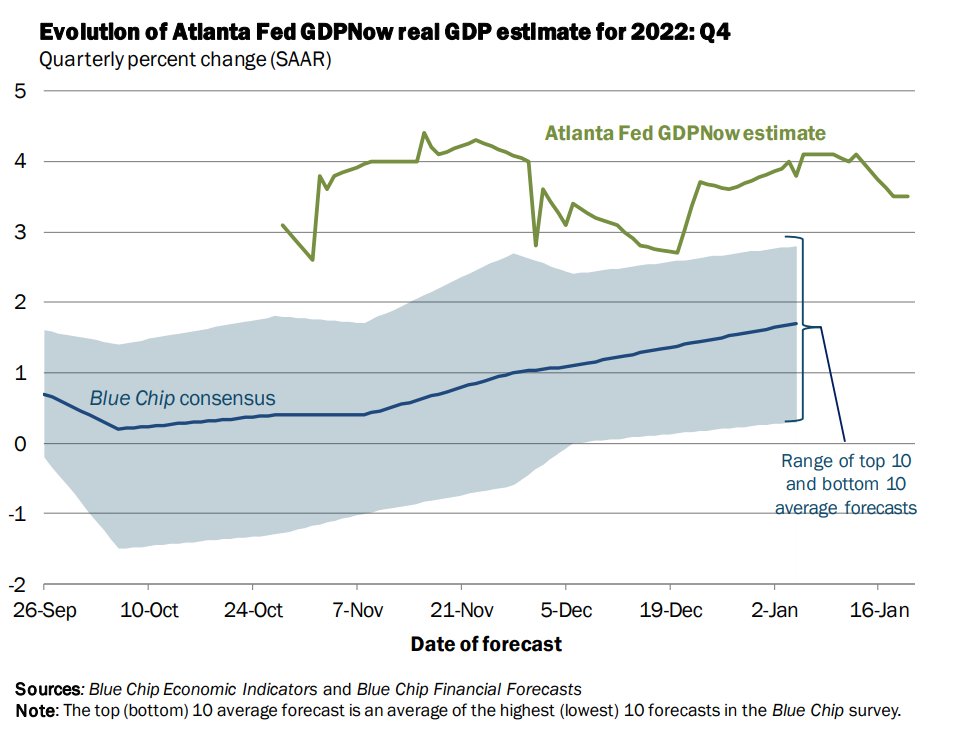
On January 20, the #GDPNow model nowcast of real GDP growth in Q4 2022 is 3.5%. https://t.co/T7FoDdgYos #ATLFedResearch
Download our EconomyNow app or go to our website for the latest GDPNow nowcast. https://t.co/NOSwMl7Jms
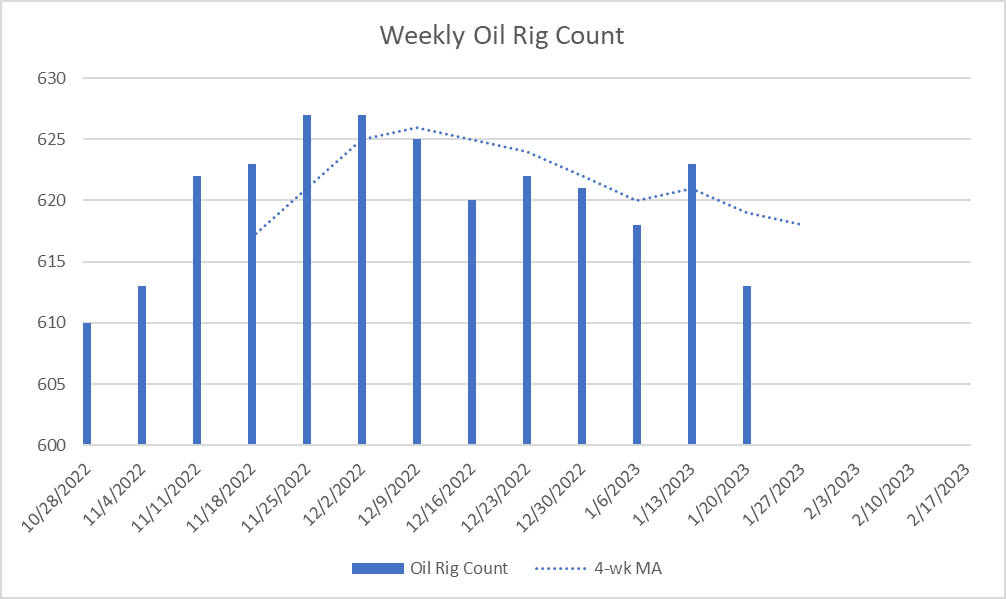
Baker-Hughes weekly oil rig count fell 10 to 613 in the week ending January 18, a two standard-deviation drop from the 13-period trailing average. The overall trend is falling again. #OOTT
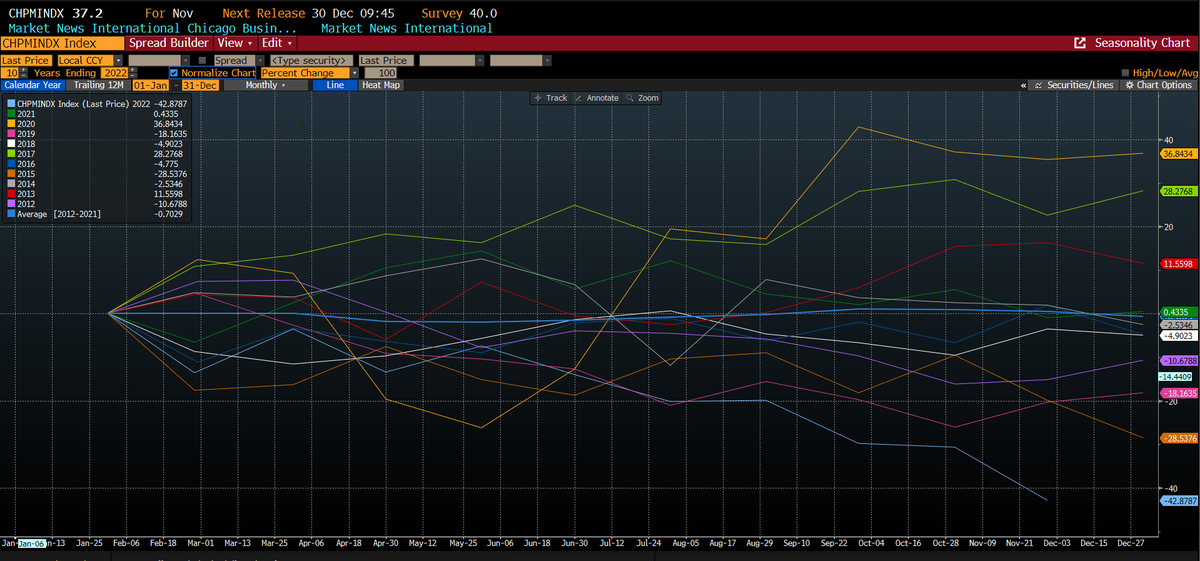
The Chicago PMI would have to rise at least 4.7 points (12.6%) to 41.95 to keep from being the worst December reading in the last 11 years. The Bloomberg survey median is 40.0, while the top forecaster (First Trust Portfolios) calls for 38.9. Upside surprise past 42.0?
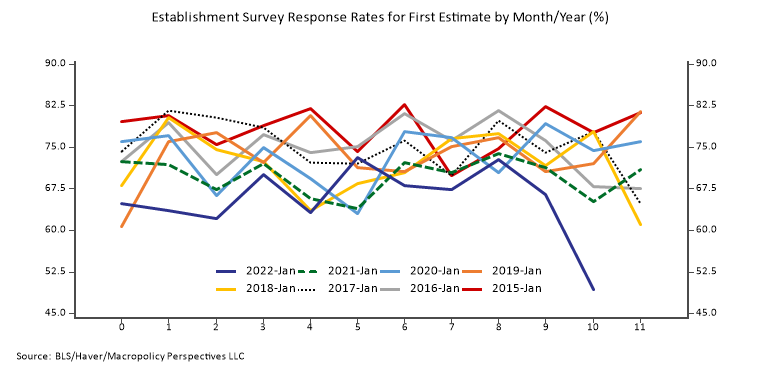
Sources at BLS highlight that the response rate for the establishment survey that give us payrolls and wages absolutely crashed in November so a lot more noise in the data
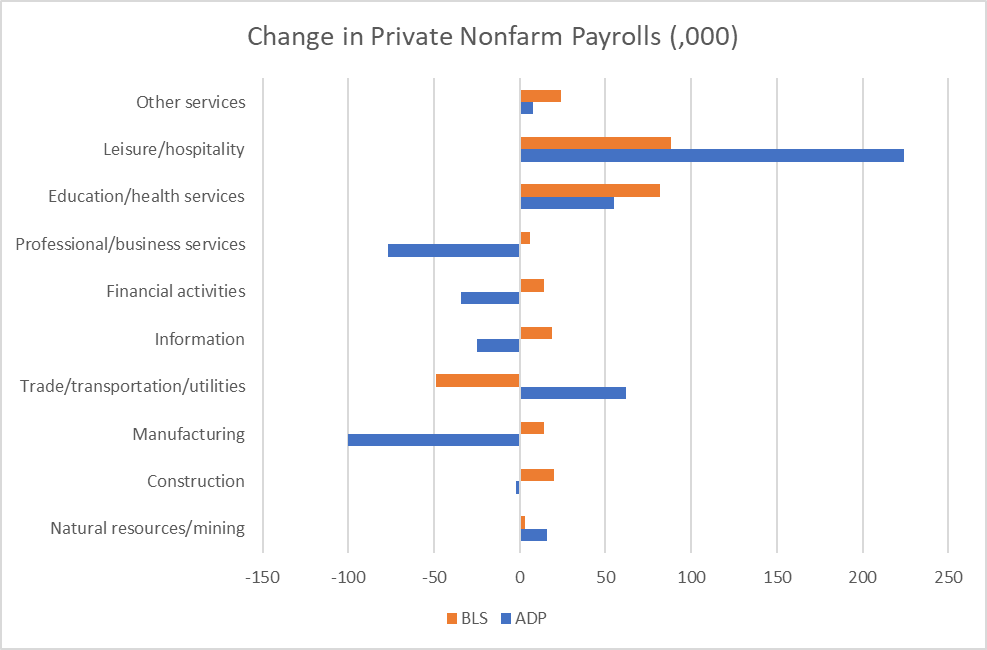
ADP estimated the wrong magnitude of November's change in private nonfarm payrolls in 80% of industries and the wrong direction of change in 60% of industries. Largest estimation errors were in Manufacturing, Trade/Transportation/Utilities, and Professional/Business Services.
"...it makes sense to moderate the pace of our rate increases as we approach the level of restraint that will be sufficient to bring inflation down. The time for moderating the pace of rate increases may come as soon as the December meeting." #PowellatBrookings
Growth in real gross domestic income (GDI) averaged +1.6% in the first half of 2022, whereas growth in real GDP averaged -1.1%. The average of growth in real GDI and real GDP in H1 was +0.25%, with both quarters showing positive growth. #norecessionyet
Household data show employment declined by 315k in June, leaving the net change since April at just +6k. The labor force participation rate fell 0.1-pp to 62.1%, while the employment-to-population ratio fell 0.2 to 59.9.
In the latest installment of the Fed's Beige Book, "moderately" and "modestly" appear almost with almost equal frequency, 30x for the former and 32x for the latter, which does not offer much.
Our May regional business surveys indicate that firms’ expectations about inflation a few years out tend to be significantly lower than the current rate of inflation. https://t.co/mWBRMCRiWp
At 17.6, the Philly Fed index of general business activity is only the lowest since February (16.0) or December (15.4), but the index of future new orders sank to 3.7 in April, down from 22.0 in March and a 6-month average of 22.0. Demand outlook downshift