@patrickmagee I'd say that's nearly 100% of companies, and yes, this is the problem. If each company dedicated a few hours once a month to fixing the libraries they depend on, or donating money, the problem would be solved.
Jeg forstår ikke Evida’s brug af queueit for aflæsning af forbrug. Der er tale om en hurtig validering af 2 nøgler ,der skal matche (simpel læse model), og derefter kan de gemme aflæsningen i en kø der stille, roligt og asynkront kan opdatere deres bagvedliggende systemer 🤕
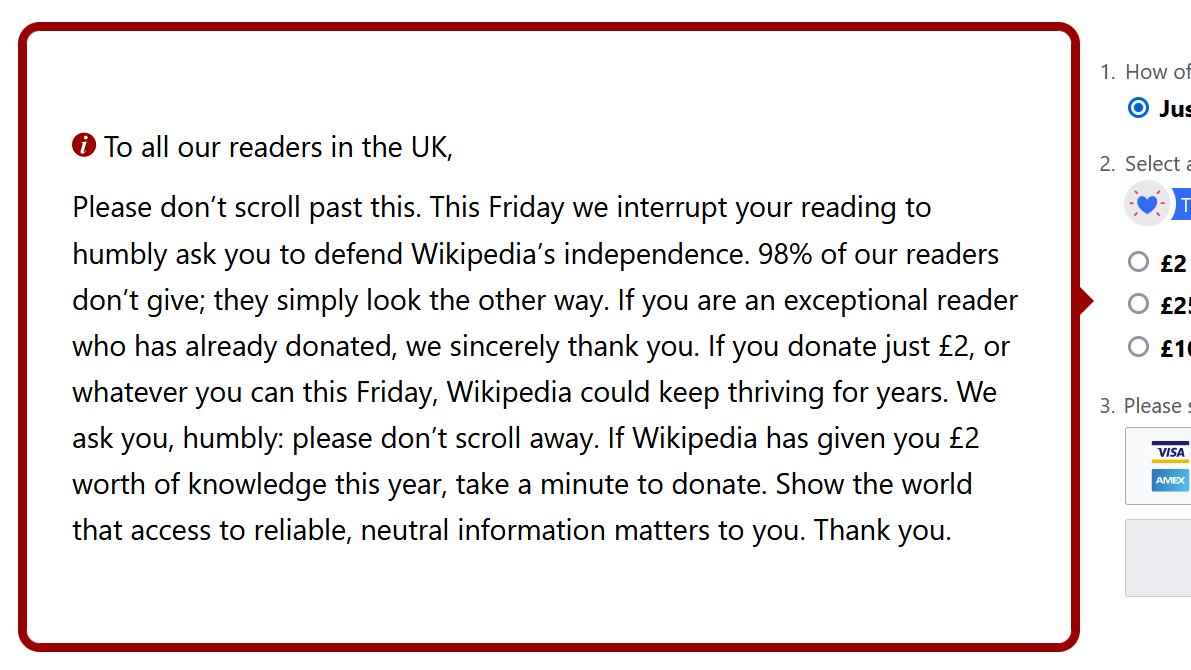
If you use Wikipedia, you've seen pop-ups like this. If you're like me, you may have donated as a result.
Wikipedia is an amazing website, and the appeals seem heartfelt. But I've now learnt the money isn't going where I thought...
"Events are actions..."
Events are *not* actions and don't necessarily represent future actions. A command represents the potential for future action. An event is a factual record that an action took place.
Consumers should translate events to commands to react to the events.
@kelseyhightower Many retailers have been building up inventories at a rate that far exceeded their current sales in the hope that people would buy when items were in stock. Some financial analysts predicted the current status long ago and they predict that prices soon will go down substantially
-= The Myth That Renewables Need Weeks Of Battery Storage =- 🧵
This one has been circling a lot recently, so I might as well nip it in the bud. It goes like this: "To save the planet with renewables, you need weeks of battery storage to keep the lights on. Impossible!"
As event-driven architecture continues to gain in popularity, I feel the need to remind folks about the risks of coupling caused by sharing raw business data via events, often occurring with noun-oriented services (like User, Product, Order, etc).
https://t.co/bR3kBM4FS7