A great year for $QANX comes to an end and a more bullish year awaits it in 2025 - mainnet launch.
Key highlights of the video:
- IBM Partnership: QANplatform became an official IBM Business Partner, introducing the QAN Q-Cluster—a tamper-proof, self-auditing system that utilizes AI for log anomaly detection and incorporates quantum-resistant blockchain technology.
- Government Adoption: An EU country implemented QANplatform’s quantum-resistant technology to protect its cybersecurity infrastructure against potential quantum computing attacks.
- Testnet Launch: The platform launched its multi-language, quantum-resistant testnet, allowing developers to code smart contracts in any programming language, enhancing accessibility and fostering innovation within the developer community.
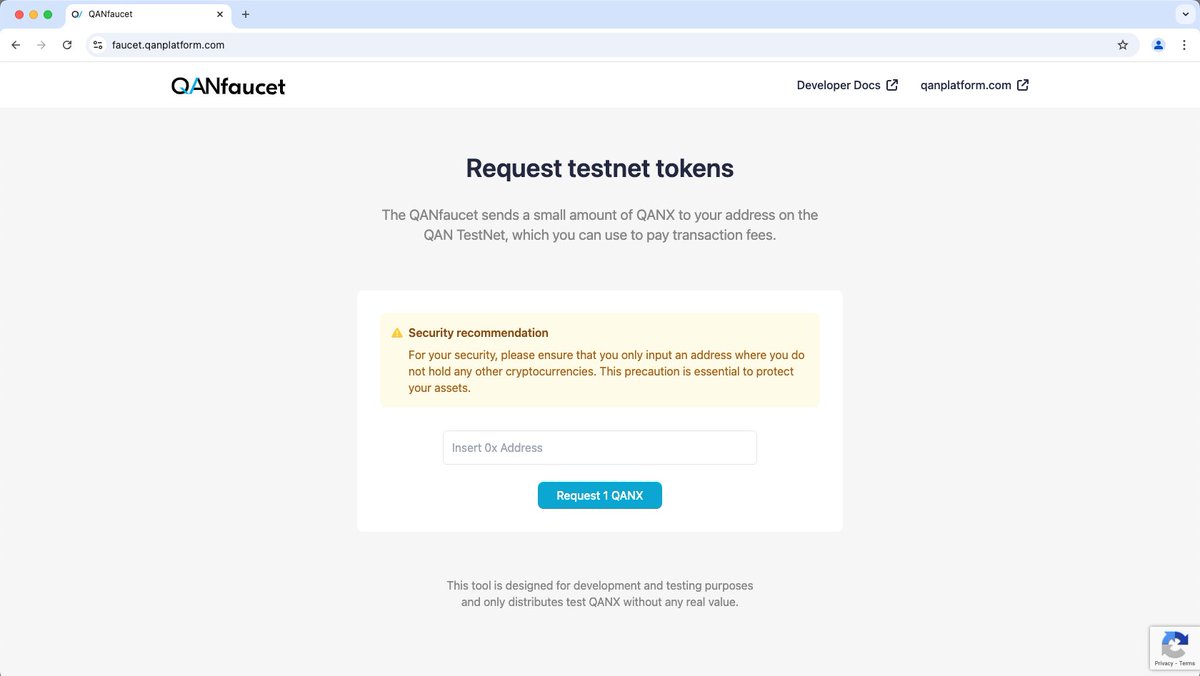
Exciting news for the QAN TestNet!
We've just launched a Web Faucet, making it even easier to get your QAN TestNet tokens. Already got our Telegram Faucet? Now you have options 🙂
Just hit up the link to grab your tokens directly from the Web Faucet. 🚀
👉 https://t.co/2xzuczOdM6
Test it out, and let us know what you think!
#QANplatform
👨💻Today QAN API documentation has been fine-grained giving developers more in-depth understanding about how to access and communicate with the QAN TestNet.
https://t.co/eKmlmSCfAA
Recent hacks have once again highlighted a critical issue: many projects are not doing enough to secure their funds and their users' funds.
This vulnerability poses a significant risk to the entire ecosystem, making it more important than ever for users to take security into their own hands. 🔒
We are committed to addressing this issue by expanding our outreach efforts to ensure our tools are available to as many users and projects as possible. We already have thousands of Aegis users, and we’re targeting even more to bolster the security of the Web3 space.
But what does this mean for $LSS holders? 🤔
More projects and more users joining our ecosystem means more growth and value. With the introduction of LSS Boost, a necessary feature for all users to fully leverage our offerings, the growth of our security tools translates directly into value generation for $LSS holders.
📈 The bigger the Lossless ecosystem, the more value it has. We’ve designed LSS Boost to scale with our expanding user base, ensuring that as more users adopt our security tools, the value of $LSS continues to grow.
Stay secure, stay smart, and join us in making Web3 a safer place for everyone!
Aegis Snap is here!
Scan smart contracts directly from your @MetaMask wallet without committing a transaction, making your #Web3 experience risk-free.
Available for MetaMask Flask first, we expect final steps towards full release soon.
Get Aegis Snap👇
https://t.co/0HBPqRcBjg
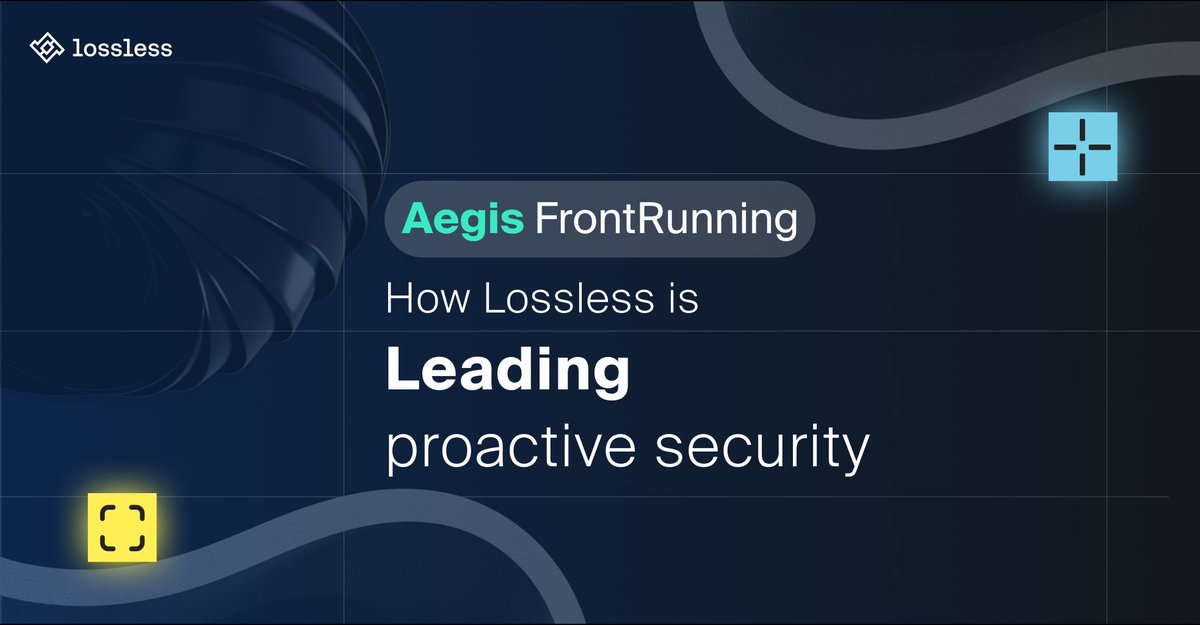
Since launching FrontRunning on #Aegis dApp, we've witnessed a dramatic shift in how our users manage risk and navigate the #Web3 landscape.
Let's explore some key use cases that demonstrate how Aegis dApp is revolutionizing proactive security:
1. Instant Protection: The most straightforward benefit is the ability to instantly safeguard your assets from any threat with a single click. Drainers have zero chance of emptying your wallet.
2. Key Compromise Resilience: Even if your keys are compromised, attackers cannot modify your Aegis settings. Any unauthorized withdrawal attempt triggers a secure transfer of your funds.
3. Rescuing Locked Assets: A unique use case emerged where Aegis saved a user's assets after their wallet was compromised. The attacker drained all ETH, leaving other assets stranded. With FrontRunning activated via Telegram, the user triggered the drainer with a small ETH amount, enabling the safe transfer of remaining assets to a new wallet.
These are just a few examples of how Aegis dApp is empowering users to take control of their security in the Web3 world.
🚨Giveaway Alert 🚨
500 USDT to win in the next 24 hours. Rules:
1) 💜+ RT + follow
2) 🏷️ Tag 3 of your favorite alpha callers / KOLs
3) 🟣 Comment with your SOL wallet address
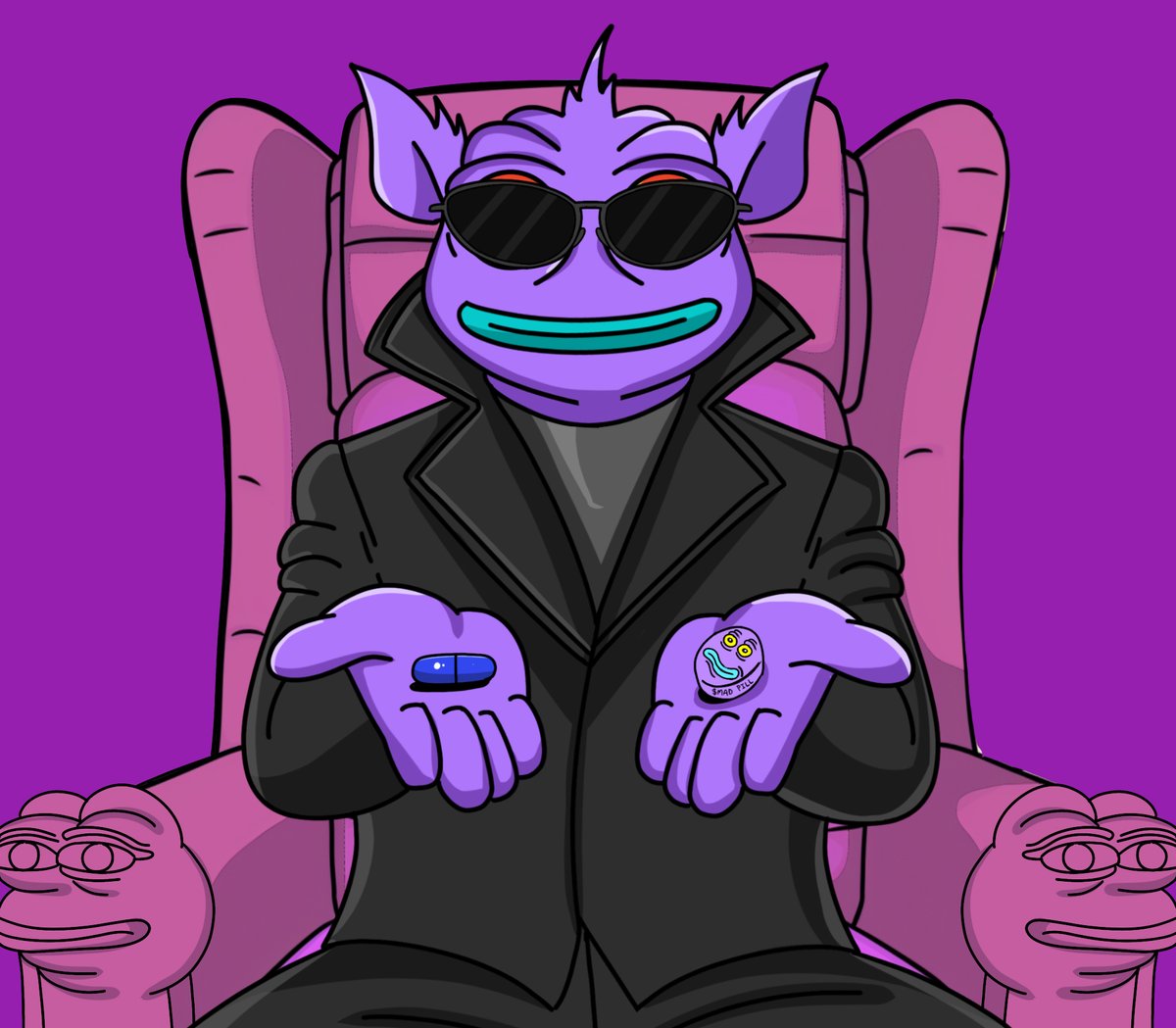
Let's get that f*cking MAD pill 😈
5 Lucky Winners will be picked and announced on our Telegram (link in bio)
#MemesAfterDark #MAD
We are excited to announce our partnership with @Kommunitas1!
Kommunitas, a decentralized crowdfunding ecosystem for #Web3 projects, will integrate Lossless Protocol in its offerings for new projects.
Together, we're setting new security standards to bring more secure crowdfunding solutions to the community.
We're thrilled to see Binance's proactive support for small and medium-sized projects with real utility and strong communities! 🤝
https://t.co/GuKcH693vu
This presents a great opportunity for projects such as $LSS, which is the at bleeding edge of #Web3 security, with strong community support.
We’re incredibly excited about what’s ahead!
We are proud to announce that QANplatform has rolled out the world’s first quantum-resistant and EVM-compatible blockchain testnet, where developers can code smart contracts in any programming language.
https://t.co/2Q9hQDrLxv
🔵 How SDKs work on the QAN TestNet?
QANplatform's focus is to lower the entry barriers for developers in the web3 space. #QANplatform not only allows developers to build smart contracts and web3 solutions in any programming language, but our goal is also to provide Software Development Kits (SDKs) in as many languages as possible.
In a nutshell, SDK is a library that makes it easier for developers to interact with a blockchain with specific API calls in their preferred programming language.
At the beginning, the QAN TestNet will support SDKs in 3 programming languages (JavaScript, Python, Go), which we will scale up to a minimum of 10 in the upcoming months, with frequent new SDK releases.
With SDKs available in 10 programming languages, QANplatform will lead the market as the most user-friendly blockchain platform with the highest number of available SDKs.
QAN TestNet launch: May 7th 2024
Following the completion of the primary tests on the QAN TestNet, the #QANplatform team is currently finalizing the most comprehensive developer documentation we have ever released. After years of dedicated effort, on May 7th, we will proudly introduce the world's first quantum-resistant and Ethereum-compatible blockchain testnet that enables developers to code smart contracts in any programming language. Only 13 days are left until the beginning of a new era in Web3 Operating Systems.
"Existing blockchains can’t adopt post-quantum cryptography without significant user impact" says
@pmjohann Co-Founder and CTO of #QANplatform in his new interview with @BitcoinCom
Read the full interview👇
https://t.co/eR4cNnKNTt
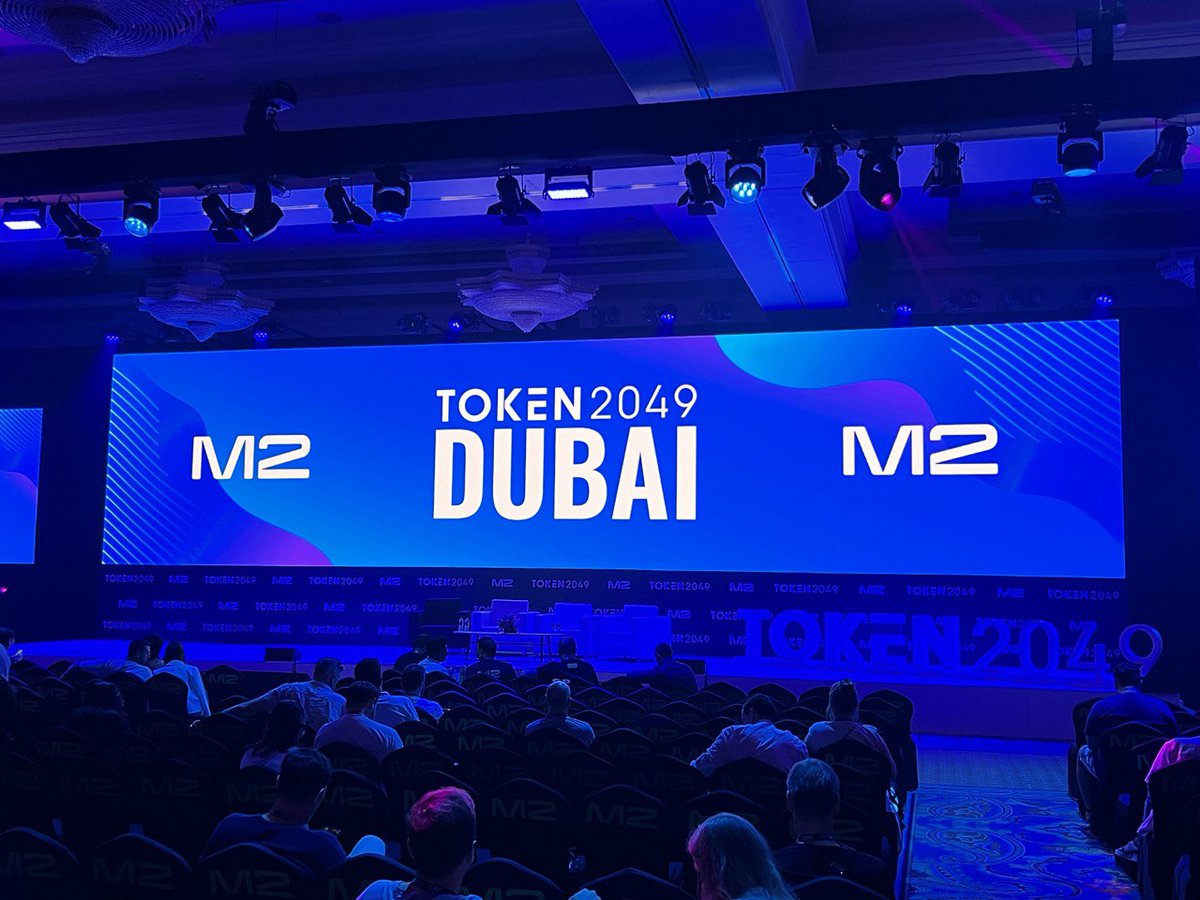
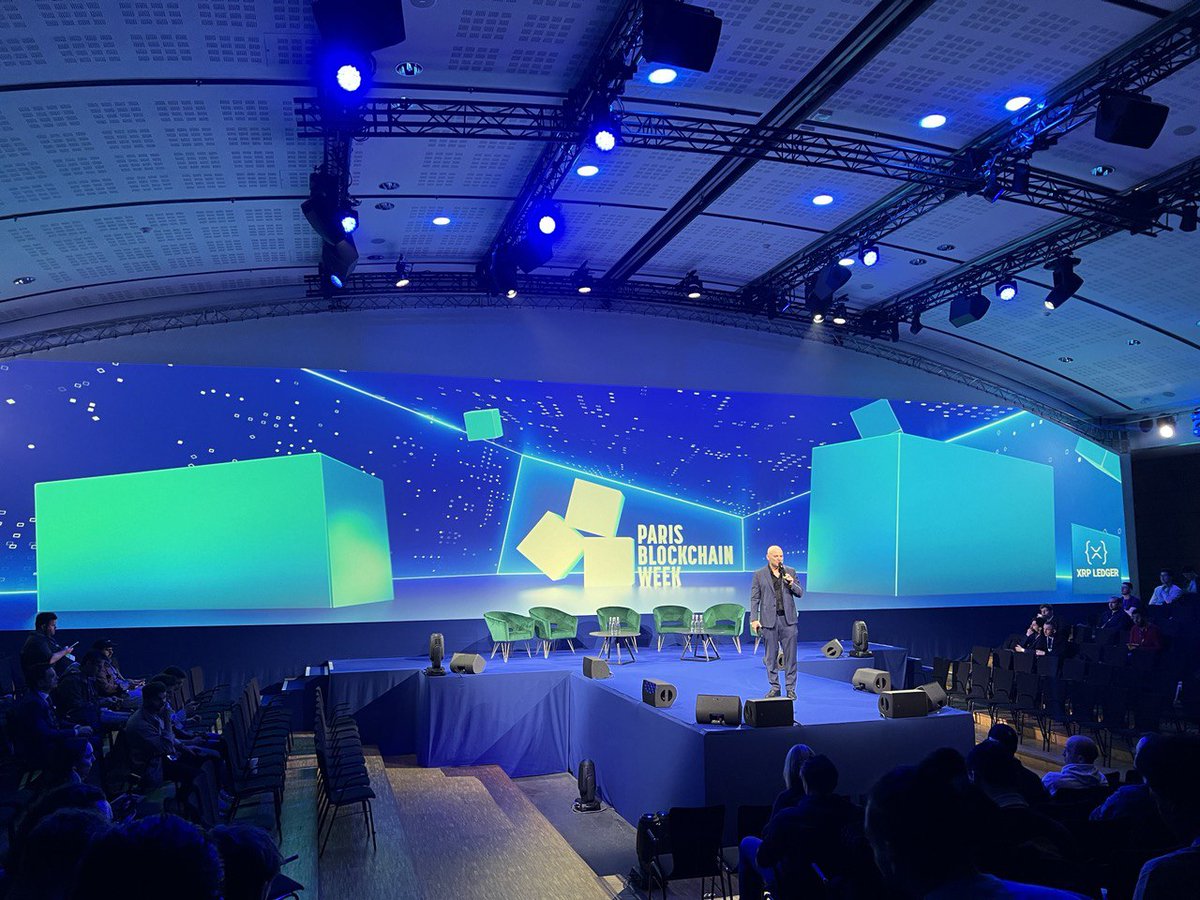
During the last two weeks, #QANplatform has been on a whirlwind adventure, attending three conferences across two continents, along with numerous industry-related side events! 🌍 Grateful for the positive feedback received and the connections made, both within and beyond the web3 space. Thank you @ParisBlockWeek@BlLife_Forum@token2049
🎉Happy #WorldQuantumDay to all quantum computing enthusiasts! Today, we celebrate the exciting developments and possibilities in the quantum world.
Let's explore how #blockchain's cybersecurity is impacted by quantum computers.
1/ What is quantum computing?
Quantum computing is a rapidly-emerging technology that harnesses the laws of quantum mechanics to solve problems too complex for classical computers.
2/ Supercomputers vs. Quantum Computers:
Supercomputers use massive parallelism with thousands of CPUs solving a problem at once. Quantum computers utilize qubits that exist as 0, 1, or in superposition, exploring multiple outcomes simultaneously for faster problem-solving.
3/ How fast are quantum computers?
According to researchers from Google, the Frontier supercomputer, currently the world's most powerful, would require over 47 years to process the same calculations, whereas the Sycamore quantum computer achieved it in mere seconds.
4/ What are quantum computers used for?
Powerful quantum computers with sufficient stable qubits will be able to tackle complex optimization problems, streamline resource allocation, enhance decision-making processes, and break today's cybersecurity standards.
5/ Why is quantum computing a threat?
Today's cryptographic algorithms (RSA, EC) used by the whole internet – including banks, email providers, social media, blockchain platforms, etc .– will be cracked by quantum computers. Everyone needs to switch to post-quantum security.
6/ Do we need to worry today?
Yes. Quantum computers are a threat even today, because hackers can steal data today and decrypt it later when quantum computers with enough power (qubits) arrive. This method is called "Store now, decrypt later".
7/ What are the alarming recent events?
Apple implemented post-quantum cryptography for iMessage. NATO and WEF raised concerns about the quantum threat. The European Commission published a recommendation on post-quantum cryptography.
8/ How far are quantum computers?
From small startups to IT giants like Google, Honeywell, or IBM, and governments—all of them are investing heavily in building quantum computers. IBM leads the way with its 1,121-qubit quantum computer, Condor, revealed in December 2023.
9/ How far really?
We are already having the wrong conversation in cryptography if we argue about whether we have 1, 3, or 5 years before quantum computers will break today's security algorithms. We must always be ahead of the curve when it comes to cybersecurity.
10/ How can we switch to quantum-resistant security?
Centralized authorities like governments, companies, organizations can switch their IT security to post-quantum cryptography much easier than blockchain platforms.
11/ How is blockchain technology affected by quantum computer attacks?
All cryptocurrency wallets relying on Elliptic Curve (EC) cryptography which have at least one outgoing transaction will break. Hackers will be able to steal your cryptocurrency.
12/ Why is blockchain in greatest risk?
People often overlook that blockchains are decentralized. Existing public blockchains like Ethereum, Solana, Polkadot, etc. cannot adopt post-quantum cryptography without significant user impact. According to Vitalik Buterin: "few users would lose their funds".
13/ Can a blockchain fork fix this?
Pseudonymity of blockchain will backfire at post-quantum migration because it will be impossible to tell legitimate owners migrating their own funds and data or hackers stealing all of it. In this case, billions of "free money" and data could land in hackers' hands if they start migrating on the real owners' behalf making the affected blockchains immediately worthless. There is simply no secondary authentication mechanism to prevent this from happening in case of already running blockchains.
14/ How QANplatform solves this?
#QANplatform is developing a quantum-resistant hybrid blockchain designed to be secure against quantum computer attacks from the start. QANplatform implemented the NIST primary recommended post-quantum algorithm called CRYSTALS-Dilithium in Go programming language. To ensure quantum resistance and Ethereum compatibility, QAN developed a custom cross-signature protocol known as the QAN XLINK.
15/ Is QAN's quantum-resistant technology in use?
The live QAN Enterprise Blockchain (also known as QAN Private Blockchain) is already quantum-resistant. QAN recently announced that the first EU country has implemented QANplatform's quantum-resistant technology.
16/ Join the QAN TestNet launch in April!
QANplatform is launching the world's first quantum-resistant and Ethereum-compatible blockchain testnet, where developers can code smart contracts and web3 solutions in any programming language.